

Mori Atlas logo
National parkDehing Patkai National Park

Explore the mapped boundaries and diverse primate habitat within this Assam national park.

Dehing Patkai National Park: India's Premier Lowland Rainforest Protected Landscape

Dehing Patkai National Park represents the largest contiguous stretch of lowland tropical rainforests in India, situated in Assam. This protected area, recently designated as a national park, offers an unparalleled opportunity to explore a complex four-layered forest ecosystem. Discover its extensive mapped boundaries, understand its critical role as a stronghold for diverse wildlife, particularly its exceptional primate populations and its status as a vital elephant reserve within the broader geographic context of northeastern India.

Lowland RainforestNational ParkAssamNortheast IndiaElephant ReservePrimate Habitat

Dehing Patkai National Park

National park

Park overview

Structured park overview, official facts, and landscape profile for Dehing Patkai National Park

Dehing Patkai National Park park facts, protected area profile, and essential visitor context
Review the core facts for Dehing Patkai National Park, including designation, size, terrain, visitor scale, habitats, and operating context in one park-focused overview.

About Dehing Patkai National Park

Dehing Patkai National Park represents one of India's most significant conservation achievements in recent years, protecting what remains of the magnificent lowland rainforests that once covered much of upper Assam. The park's elevation from wildlife sanctuary to national park status in 2020 reflects growing recognition of its ecological importance both nationally and internationally. Situated in a region of exceptional biodiversity, the park sits within a broader landscape that extends across multiple districts and even crosses into Arunachal Pradesh, making it part of a transboundary conservation complex of considerable regional importance. The rainforest here is characterized by its multi-layered structure, with towering emergent trees reaching above the canopy, supported by a complex understory of smaller trees, shrubs, epiphytes, and ground vegetation. This vertical stratification creates diverse microhabitats that support the park's extraordinary species richness. The area's isolation and relatively limited human interference have allowed ecological processes to continue relatively undisturbed, though the surrounding landscape has been modified by tea plantations and other development. The park's creation represents not just a conservation milestone but also acknowledges the deep cultural connections between local communities and these forests, as evidenced by the diverse ethnic groups who have inhabited the region for generations.

Quick facts and research context for Dehing Patkai National Park

Dehing Patkai National Park is situated in upper Assam near the border with Arunachal Pradesh, occupying portions of Dibrugarh and Tinsukia districts. The protected area was declared a wildlife sanctuary in 2004 and upgraded to national park status in December 2020, with official notification following in June 2021. The park forms part of the larger Dehing Patkai Landscape, a vast lowland rainforest ecosystem that represents the most extensive remaining tract of such forest in India. The climate is distinctly tropical with annual rainfall exceeding 4,000 millimeters, creating conditions that support extraordinary biodiversity. The Hollong tree, Assam's state tree, dominates the emergent canopy layer of this multi-strata rainforest.

Park context

Deeper park guide and search-rich context for Dehing Patkai National Park

Dehing Patkai National Park history, landscape, wildlife, and travel context
Explore Dehing Patkai National Park through its history, landscape character, ecosystems, wildlife, conservation priorities, cultural context, and seasonal travel timing in a structured park guide built for atlas discovery and search intent.

Why Dehing Patkai National Park stands out

Dehing Patkai National Park is renowned as the largest tract of lowland rainforests in India and serves as a critical habitat for diverse wildlife, particularly primates and Asian elephants. The park harbors at least seven primate species including the endangered Hoolock gibbon and capped langur, making it one of India's most primate-rich protected areas. It also forms part of the Dehing Patkai Elephant Reserve under Project Elephant, supporting significant populations of Asian elephants alongside Bengal tigers, clouded leopards, and other major wildlife. The park's global significance is further underscored by its role as a crucial site for the white-winged wood duck, a species of international conservation concern. The avifauna is exceptional, with nearly 300 bird species recorded, including several threatened vulture species and the great pied hornbill.

Dehing Patkai National Park history and protected-area timeline

The protection history of Dehing Patkai reflects a gradual recognition of the area's exceptional ecological significance. The potential for wildlife conservation in this region was first identified in the late 1980s during a primate survey, which recognized the area as the "Upper Dehing Wildlife Sanctuary." Subsequently, in the early 1990s, a study focusing on the white-winged wood duck revealed the global importance of this site for that endangered species, leading to recommendations that the area be upgraded to national park status. The government responded by declaring the area a wildlife sanctuary on June 13, 2004, providing initial statutory protection. Over the following years, the significance of the area continued to gain recognition, and it was designated as the Dehing Patkai Elephant Reserve under India's Project Elephant initiative, acknowledging its importance for Asian elephant conservation. After years of advocacy by conservationists and local authorities, the Government of Assam made the pivotal decision to elevate the protected area to national park status, officially declaring this upgrade on December 9, 2020. The Forest Department of Assam subsequently issued the official notification confirming national park status on June 9, 2021, completing the transformation from wildlife sanctuary to full national park protection.

Dehing Patkai National Park landscape and geographic character

The landscape of Dehing Patkai National Park is dominated by the characteristic features of lowland tropical rainforest, representing the most extensive example of this ecosystem type in India. The terrain consists of undulating hills and valleys carved by ancient river systems, with the forest covering these landforms in continuous stands of varying density and species composition. The rainforest exhibits a complex four-layered structure, with the emergent layer dominated by towering trees such as the Hollong, the state tree of Assam, which rises conspicuously above the main canopy. Below this primary canopy, multiple understory layers support diverse tree species, shrubs, epiphytes, and climbers, creating the dense, humid conditions typical of tropical rainforests. The forest floor, while receiving limited sunlight, supports a ground cover of ferns, herbaceous plants, and seedling regeneration. The region's climate is strongly tropical, receiving over 4,000 millimeters of annual rainfall distributed across most months, maintaining the humid conditions that sustain this elaborate forest ecosystem year-round.

Dehing Patkai National Park ecosystems, habitats, and plant life

The ecological character of Dehing Patkai is defined by its status as a dipterocarp-dominated lowland rainforest, an ecosystem type that has become increasingly rare across the Indian subcontinent. The forest's vegetation reflects the wet tropical conditions, with species adapted to high rainfall and persistent humidity forming the dominant plant communities. The tree canopy is composed primarily of dipterocarp species, with associated genera including Mesua, Castanopsis, Shorea, and Vatica creating the diverse species assemblages typical of this forest type. The multi-layered structure supports extraordinary epiphytic diversity, with numerous orchid and bromeliad species colonizing the branches and trunks of forest trees. Ferns, wild bananas, arums, and diverse lianas further contribute to the complex vegetation structure. This botanical richness creates the foundation for the park's exceptional animal diversity, as the various plant species provide food, shelter, and microhabitats for countless animal species. The forest type classified according to Champion and Seth's system represents the upper Assam valley tropical evergreen forest, a classification that reflects both the geographical setting and the distinctive species composition of these rainforests.

Dehing Patkai National Park wildlife and species highlights

Dehing Patkai National Park harbors extraordinary wildlife diversity, with the rainforest ecosystem supporting remarkable concentrations of species across multiple taxa. The primate community is particularly impressive, with at least seven species recorded including the slow loris, Assamese macaque, stump-tailed macaque, pig-tailed macaque, Rhesus monkey, capped langur, and Hoolock gibbon, making this one of India's most primate-rich protected areas. The mammalian fauna includes nearly 50 species, featuring large carnivores such as Bengal tigers, leopards, and clouded leopards, alongside herbivores including Asian elephants, gaurs, sambar deer, and barking deer. Smaller mammals include the Chinese pangolin, various civets, the binturong, and several squirrel and porcupine species. The reptile population is similarly diverse, with 47 species documented, ranging from snakes to lizards. The butterfly diversity is exceptional, with over 310 species recorded, reflecting the rich plant communities that sustain these insects through their life cycles. The avifauna is equally impressive, with nearly 300 bird species representing 174 genera and 51 families, the majority being resident species while others include winter visitors and altitudinal migrants from the Himalayas. Notable species include the globally significant white-winged wood duck, several threatened vulture species, and various hornbills.

Dehing Patkai National Park conservation status and protection priorities

Dehing Patkai National Park represents a conservation priority of considerable national and international significance, protecting what remains of India's largest lowland rainforest ecosystem. The park's global importance is underscored by its designation as a crucial site for the white-winged wood duck, a species of international conservation concern that depends on the intact forest wetlands found here. The area's inclusion in Project Elephant as the Dehing Patkai Elephant Reserve highlights its significance for Asian elephant conservation, a species facing increasing pressure across its range. The elevation from wildlife sanctuary to national park status in 2020 reflects growing institutional recognition of the need for enhanced protection, though the transition also acknowledges that the surrounding landscape remains under pressure from various development pressures. The park forms part of a larger conservation landscape that includes areas in Arunachal Pradesh, emphasizing the importance of transboundary approaches to wildlife conservation in this region. The challenge moving forward involves balancing conservation objectives with the legitimate needs of local communities while addressing the broader landscape-level pressures that affect wildlife populations both within and beyond the park boundaries.

Dehing Patkai National Park cultural meaning and human context

The Dehing Patkai region possesses a rich cultural heritage reflecting the diverse ethnic communities who have inhabited these forests for generations. More than a dozen distinct ethnic groups reside in the broader landscape, including indigenous Assamese communities such as the Tai Phake, Khamyang, Khampti, Singpho, Nocte, Chutia, Ahom, Kaibarta, Moran, and others. Many of these communities maintain deep historical connections to the landscape, with some having inhabited the region for centuries. The area also reflects the colonial period, when tea tribes were brought to Assam by the British to work in the expanding tea plantations, adding another layer to the region's demographic complexity. These communities have developed relationships with the forest environment that include traditional resource use patterns and cultural practices tied to the landscape. The park's management must navigate the intersection between conservation objectives and the historical presence of these communities, recognizing that effective conservation ultimately depends on engaging with local stakeholders in meaningful ways.

Top sights and standout views in Dehing Patkai National Park

Dehing Patkai National Park stands as India's premier lowland rainforest protected area, offering visitors and researchers alike access to one of the most biodiverse ecosystems in the country. The primate viewing opportunities are exceptional, with the park supporting seven primate species including the charismatic Hoolock gibbon and the distinctive capped langur. Elephant encounters are possible within the park, which forms part of a recognized elephant reserve under national conservation programs. The birdlife is spectacular, with nearly 300 species including the rare white-winged wood duck, multiple hornbill species, and various raptors. The four-layered rainforest structure, with its emergent Hollong trees, epiphytic orchids, and dense understory, provides a visually impressive setting that conveys the ecological richness of intact tropical forest. The recent elevation to national park status marks this as a conservation area of growing importance in India's protected area network.

Best time to visit Dehing Patkai National Park

The best time to visit Dehing Patkai National Park coincides with the winter months from October through March, when the region experiences drier conditions and more comfortable temperatures compared to the hot and humid summer season. During winter, wildlife becomes more active and visible as animals seek out water sources and the forest canopy thins slightly, improving sighting opportunities. The monsoon season from June through September brings extremely heavy rainfall exceeding 4000mm annually, making access difficult and the forest environment challenging to navigate. The post-monsoon period in October and November offers a transitional experience with recovering vegetation and reasonable wildlife activity. Visitors should be prepared for humid conditions throughout the year given the tropical rainforest setting, with the summer months from April to June being particularly hot and uncomfortable for outdoor activities.
Park location guide

Geography guide, regional context, and park location map for Dehing Patkai National Park

Dehing Patkai National Park park geography, regions, and map view in India
Understand where Dehing Patkai National Park sits in India through a broader geographic reading of the surrounding landscape, nearby location context, and its mapped position within the national park landscape.

How Dehing Patkai National Park fits into India

India is a South Asian country bordered by the Indian Ocean, Arabian Sea, and Bay of Bengal. It shares land borders with Pakistan, China, Nepal, Bhutan, Bangladesh, and Myanmar. The country has a population of over 1.4 billion people and operates as a federal parliamentary republic with its capital in New Delhi.

Wider geography shaping Dehing Patkai National Park in India

India occupies the Indian subcontinent in South Asia, bordered by the Arabian Sea to the southwest, the Bay of Bengal to the southeast, and the Indian Ocean to the south. It shares land borders with Pakistan to the west, China, Nepal, and Bhutan to the north, and Bangladesh and Myanmar to the east. The territory also includes the Andaman and Nicobar Islands in the Indian Ocean.

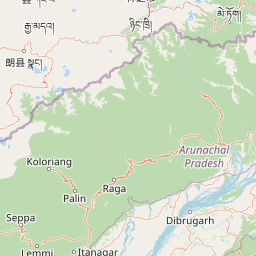
Map view of Dehing Patkai National Park

Use this park location map to pinpoint Dehing Patkai National Park in India, understand its exact geographic position, and read its mapped placement within the surrounding landscape more clearly.

Pigeon | © OpenStreetMap contributors

Location context for Dehing Patkai National Park

AssamDibrugarh districtTinsukia district
Park atlas

Compare Dehing Patkai National Park with Other Protected Areas, Mapping Northeast India's Extensive Rainforest Conservation Landscapes

Discover Other National Parks and Protected Areas Near Dehing Patkai National Park
Browse a curated selection of additional national parks and protected areas, offering geographic and ecological context around Dehing Patkai National Park within the lowland rainforests of Northeast India. Compare the regional spread of conservation efforts and understand how these interconnected landscapes contribute to the rich biodiversity of the Indo-Burma hotspot.
Illustration of a landscape with green mountains, a river, bare trees, and a waterfall under a colorful sky
National parkAssam

Dibru-Saikhowa National Park: Mapped Protected Landscape and Regional Geography

Explore Assam's protected natural terrain and park boundaries.

Dibru-Saikhowa National Park represents a key protected area, providing valuable insight into the natural geography and landscape context of Assam. As a designated national park, its mapped boundaries and distinct regional setting are crucial for understanding the distribution of conservation lands in northeastern India. Explore the geographic specifics and atlas relevance of Dibru-Saikhowa National Park for a structured view of this protected landscape.

Area
350 km²
Established
1999
IUCN
II
Relief
Lowland
National parkArunachal Pradesh

Namdapha National Park: A National Park Detailed Entry for Geographic and Atlas Exploration

Explore mapped boundaries and regional landscape context in Arunachal Pradesh.

Namdapha National Park serves as a key protected area, offering a unique opportunity for structured geographic discovery. This entry focuses on its designation as a national park, providing detailed information about its mapped landscape, regional setting within Arunachal Pradesh, and overall protected territory context. It is designed to assist users in understanding the park's boundaries and its significance within a broader atlas framework.

Area
1,985 km²
Established
1983
IUCN
II
Relief
Mountain
National parkArunachal Pradesh

Mouling National Park: Explore Arunachal Pradesh National Park Geography and Protected Landscape

Mapped protected areas and regional geographic context.

Mouling National Park in Arunachal Pradesh offers a unique opportunity to explore the mapped boundaries and geographic characteristics of a significant protected landscape. This page provides structured insights into its role as a national park, detailing its regional setting and contributing to a broader atlas of protected areas. Understand the distinct natural terrain and landscape context that define this protected area within India.

Area
483 km²
Established
1986
IUCN
II
Relief
Mountain
Watercolor painting of green hills, fields, and a body of water
National parkAssam

Kaziranga National Park National Park: Protected Landscape and Geographic Atlas

Mapped boundaries and regional landscape context for this Assam natural area.

Delve into the detailed geographic profile of Kaziranga National Park, a prominent National Park located in Assam, India. This section focuses on its mapped protected area extent, its unique landscape characteristics within the Brahmaputra valley, and its role as a key natural landmark in northeastern India's atlas. Understand the structured geographic data and protected land identity that makes Kaziranga National Park a distinct entity for exploration.

Area
1,090 km²
Established
1905
IUCN
II
Relief
Lowland
National parkKachin State

Hkakaborazi National Park: National Park Protected Landscape and Map Explorer

Explore its mapped boundaries and regional geography in Kachin State.

Hkakaborazi National Park serves as a critical protected area within Kachin State, offering a unique geographic profile for atlas and map exploration. This dedicated entry focuses on its identity as a national park, detailing its mapped landscape context and its role within the broader protected areas network. Understand the specific geographic features and boundaries that define this important natural landscape, essential for any detailed cartographic or regional study.

Area
3,810 km²
Established
1998
IUCN
II
Relief
Mountain
National parkSonitpur

Nameri National Park: A Protected Landscape within Sonitpur's Geography

Explore the mapped terrain and national park boundaries.

Nameri National Park represents a significant protected natural area, contributing to the regional geography of Sonitpur, India. This page offers an atlas-oriented perspective, detailing the park's mapped landscape and its designation as a national park. Understand the geographic context and the protected land's specific identity within this mapped region.

Area
200 km²
Established
1978
IUCN
II
Relief
Mountain
National parkAssam

Orang National Park: Assam's Key Floodplain Protected Landscape

Explore mapped boundaries and terrain context of this national park.

Orang National Park, located in Assam, India, is a significant protected area celebrated for its unique alluvial floodplain terrain and critical role in conservation. This national park provides a focused atlas-style view of grassland and wetland ecosystems, essential habitats for iconic species like the great Indian one-horned rhinoceros and Bengal tiger. Its geographical setting along the Brahmaputra River contributes to a dynamic landscape, offering rich context for understanding protected area distribution and regional natural features. Discover the mapped boundaries and ecological significance of this important protected land.

Area
78.81 km²
Established
1985
IUCN
II
Relief
Lowland
Wildlife reserveTrashigang District

Sakteng Wildlife Sanctuary: Protected Area and Wildlife Reserve in Bhutan's Trashigang District

Mapping the mountainous terrain and unique temperate ecosystems.

Sakteng Wildlife Sanctuary is a vital protected area in eastern Bhutan, recognized as a wildlife reserve. Spanning approximately 742 square kilometers within Trashigang District, it features a dramatic mountainous terrain characterized by steep valleys and alpine meadows. The sanctuary's landscape transitions from forested slopes to subalpine conifer forests, representing Bhutan's easternmost temperate ecosystems and offering rich geographic context for atlas exploration.

Area
742.46 km²
Established
2003
IUCN
IV
Relief
Mountain

Common questions about visiting, size, designation, and location context for Dehing Patkai National Park

Dehing Patkai National Park FAQs for park facts, access, geography, and protected area context
Find quick answers about Dehing Patkai National Park, including protected-area facts, park geography, trail and visitor context, and how the park fits into its surrounding country and regional landscape.
MoriAtlas Explorer

Continue Your Protected Areas Search Across the Global Atlas

Deepen your exploration by continuing the structured search for national parks and protected areas worldwide. Utilize the comprehensive filtering capabilities to compare different conservation landscapes and refine your understanding of global park geography. Discover more about the distribution and characteristics of protected natural areas.

Global natural geography