
Why Bohemian Switzerland National Park stands out
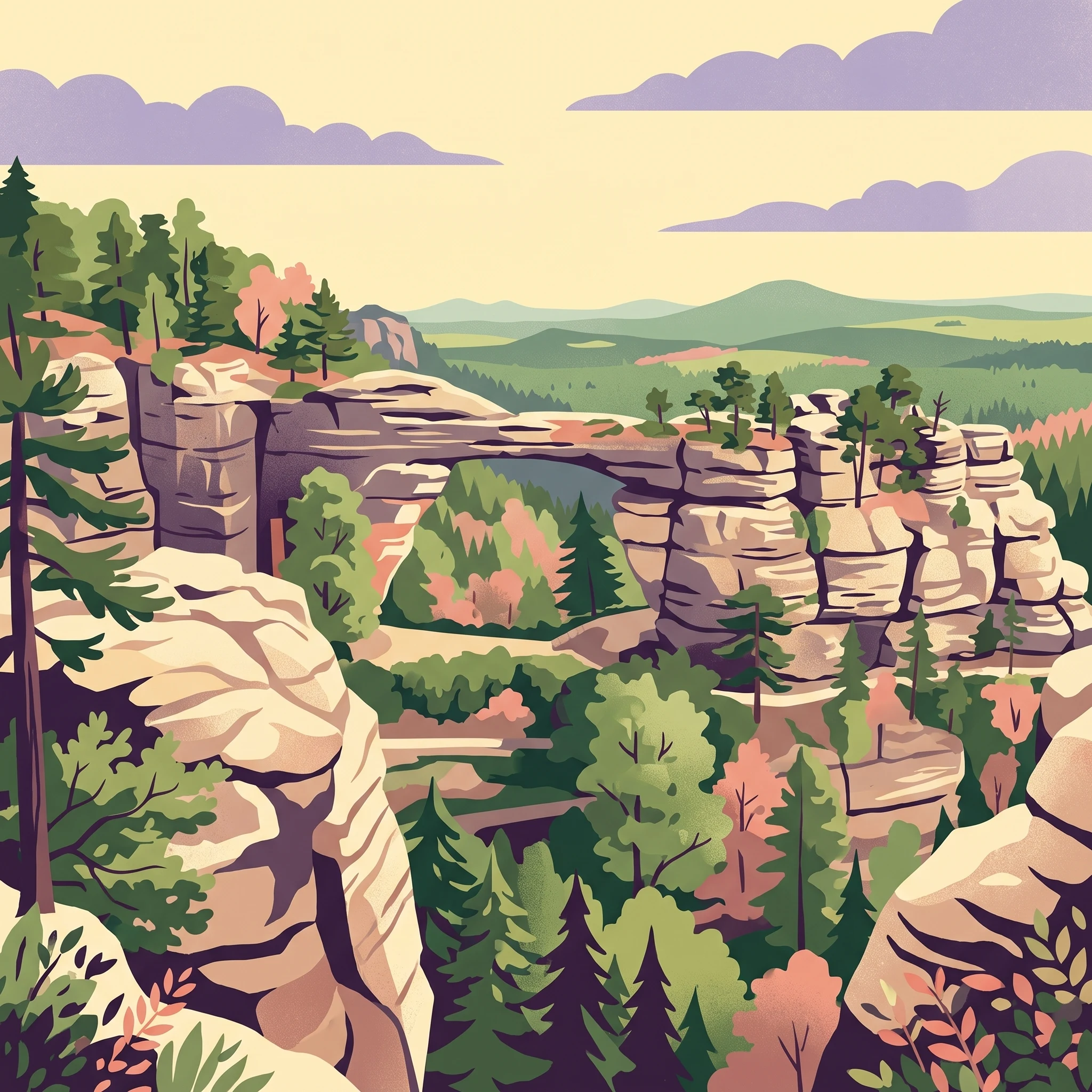
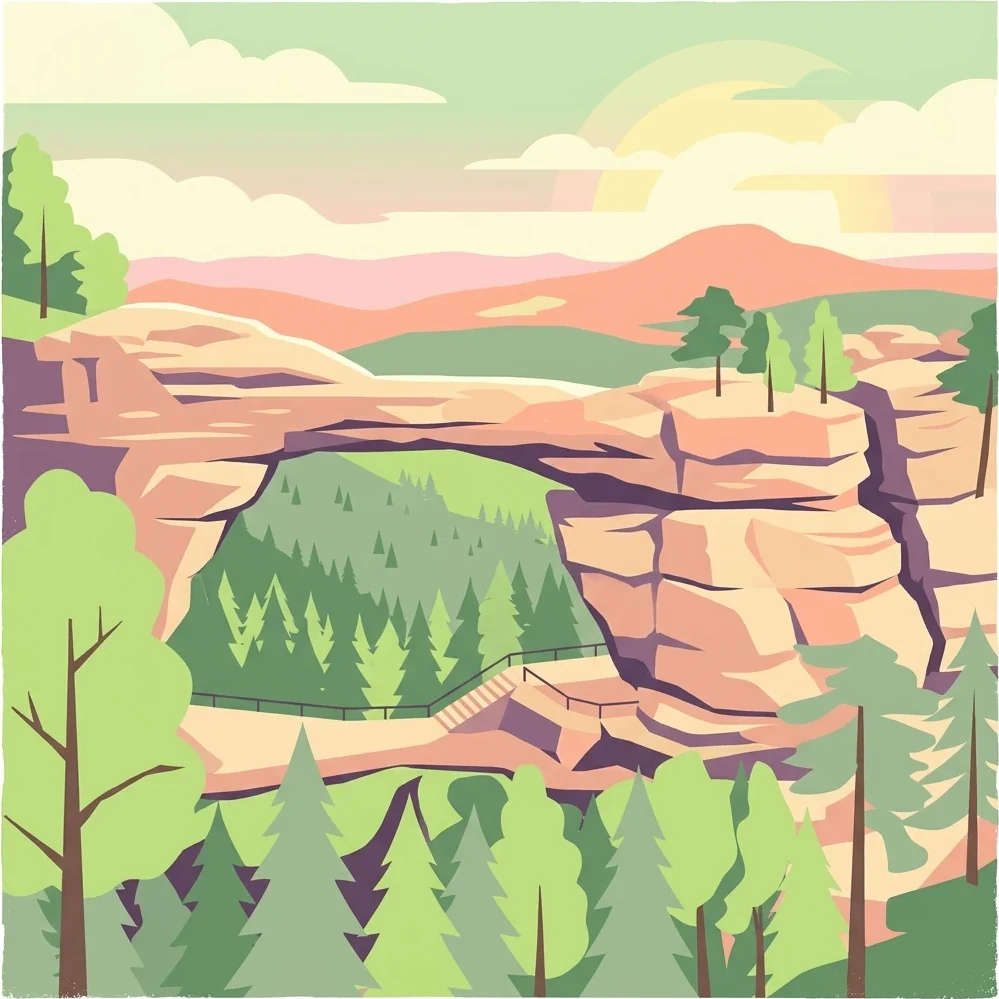
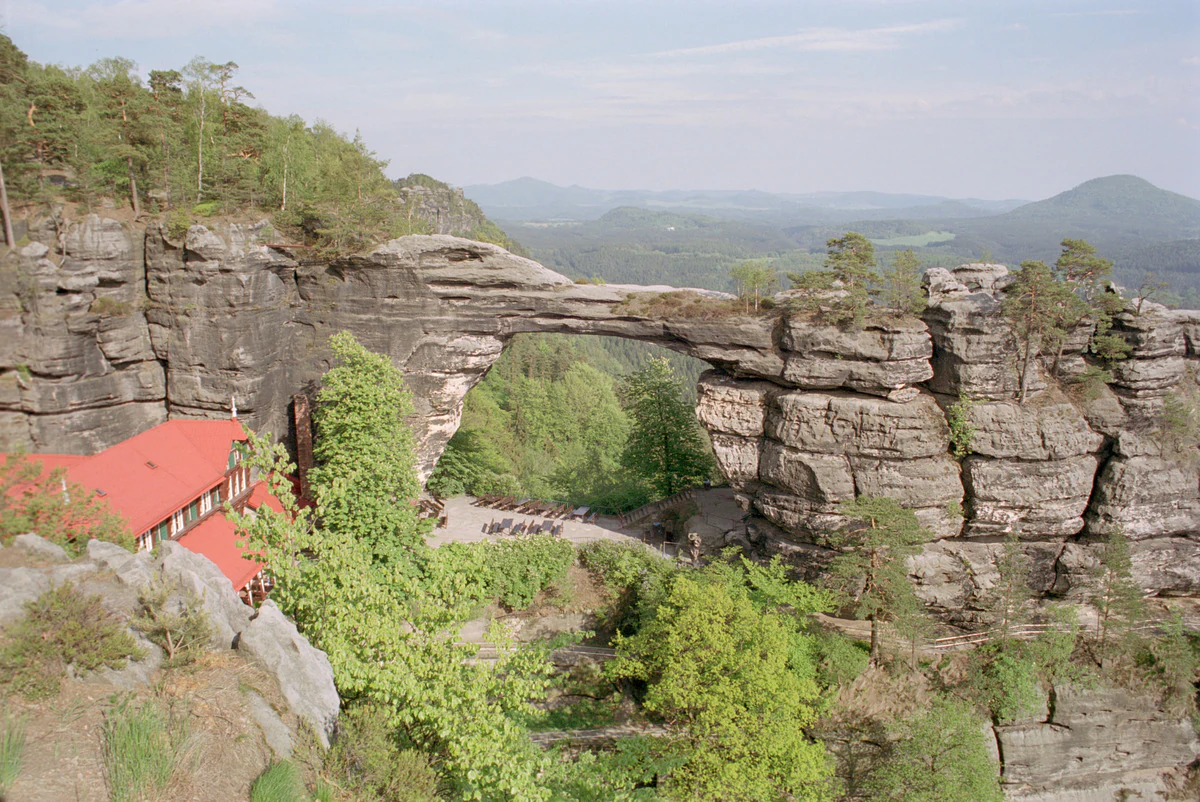
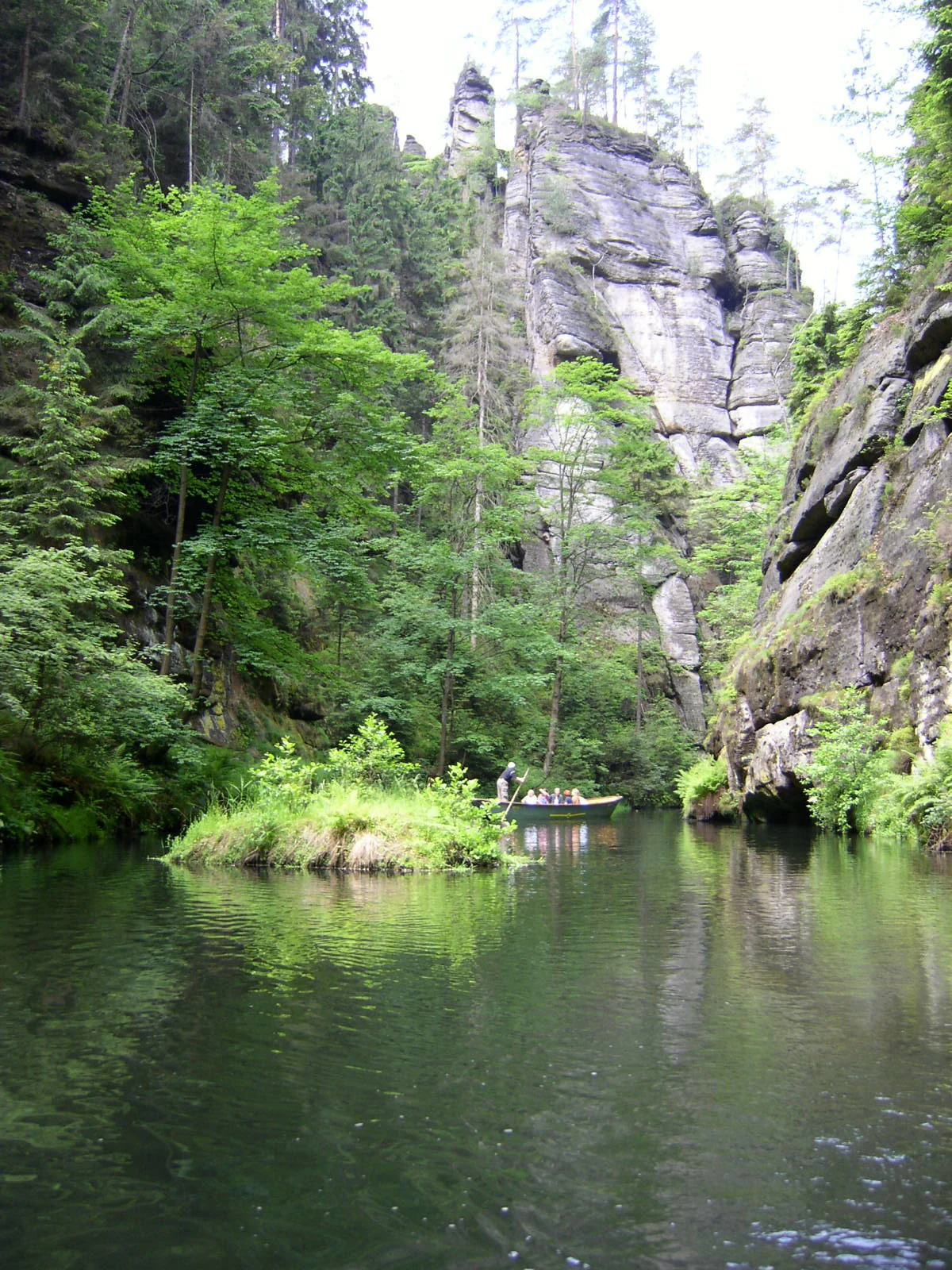
Bohemian Switzerland is best known for its extraordinary sandstone rock formations and the Pravčická brána (Pravčická Gate), the largest natural sandstone arch in Europe, which has become the symbol of the entire region. The park features the dramatic Kamenice Gorge, a spectacular rock ravine carved by the Kamenice River, and a collection of medieval rock castles built into cliff faces to guard historic trade routes. The landscape is characterized by deeply incised valleys, vertical sandstone walls, and rock towers that have inspired artists and composers since the Romantic era, including Carl Maria von Weber, who set his opera Der Freischütz in the vicinity.
Bohemian Switzerland National Park history and protected-area timeline
The Bohemian Switzerland region has a rich human history dating back to medieval times when numerous castles were constructed to guard the important trade routes passing through the sandstone valleys. Several of these castles served as hideouts for robber barons, and the region's strategic importance is reflected in the density of fortification remains found throughout the area. The territory was sparsely populated in ancient times by Germanic, Slavic, and Celtic tribes, but was colonized in the 12th century by German-speaking settlers. Until the end of World War II, the area was home to German Bohemians, later known as Sudeten Germans. Following the war, the German population was expelled, and the region has been almost exclusively Czech since that time. The area first began attracting significant tourism in the second half of the 19th century, when Romantic-era artists and composers found inspiration in the dramatic landscape. The entire region was placed under protection as the Elbe Sandstone Mountains Protected Landscape Area in 1972. When Saxon Switzerland achieved national park status in 1990, efforts intensified to establish corresponding protection for the Czech side. After years of debate and resistance from hunting and forestry interests, the Czech government approved the creation of Bohemian Switzerland National Park in 1999, and the park was officially established on January 1, 2000, encompassing the valuable forest and rock landscape, the Kamenice Gorge, and the Růžovský vrch area. The national park headquarters are located in Krásná Lípa, with information offices in Hřensko and Jetřichovice.
Bohemian Switzerland National Park landscape and geographic character
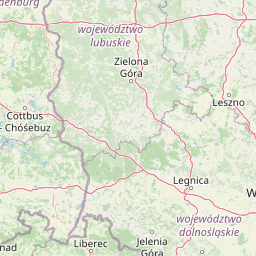
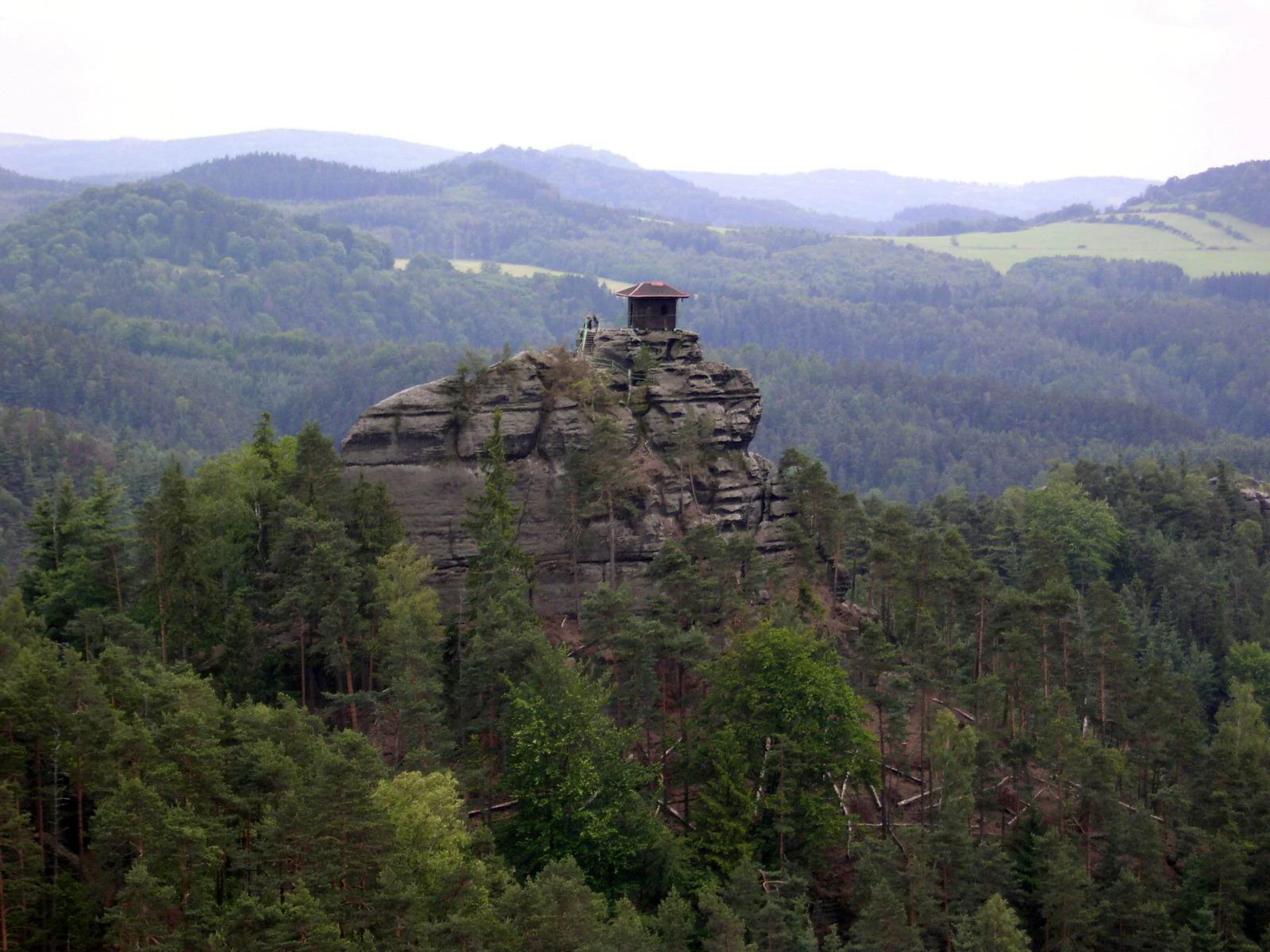
The landscape of Bohemian Switzerland National Park is defined by its dramatic sandstone terrain, one of the most distinctive in Europe. The region features towering vertical sandstone cliffs that rise above deep, narrow gorges carved by the Kamenice River and its tributaries. The terrain is characterized by a network of canyon-like valleys with steep, often overhanging walls, and scattered sandstone rock towers that have been shaped by millions of years of erosion. The highest point in the park, Růžovský vrch, rises to 619 meters and represents a volcanic basalt intrusion that contrasts with the surrounding sandstone, standing as a unique geological feature within the park. The park extends eastward into the Lusatian Mountains and westward into the Ore Mountains, creating a transition zone between different mountain systems. The Elbe River briefly forms the park's border, and the right-bank position of the protected area places it on the western edge of the Czech Republic's portion of the Elbe Sandstone Mountains. The landscape supports a network of well-maintained villages with traditional Upper Lusatian houses, creating a cultural dimension to the natural terrain.
Bohemian Switzerland National Park ecosystems, habitats, and plant life
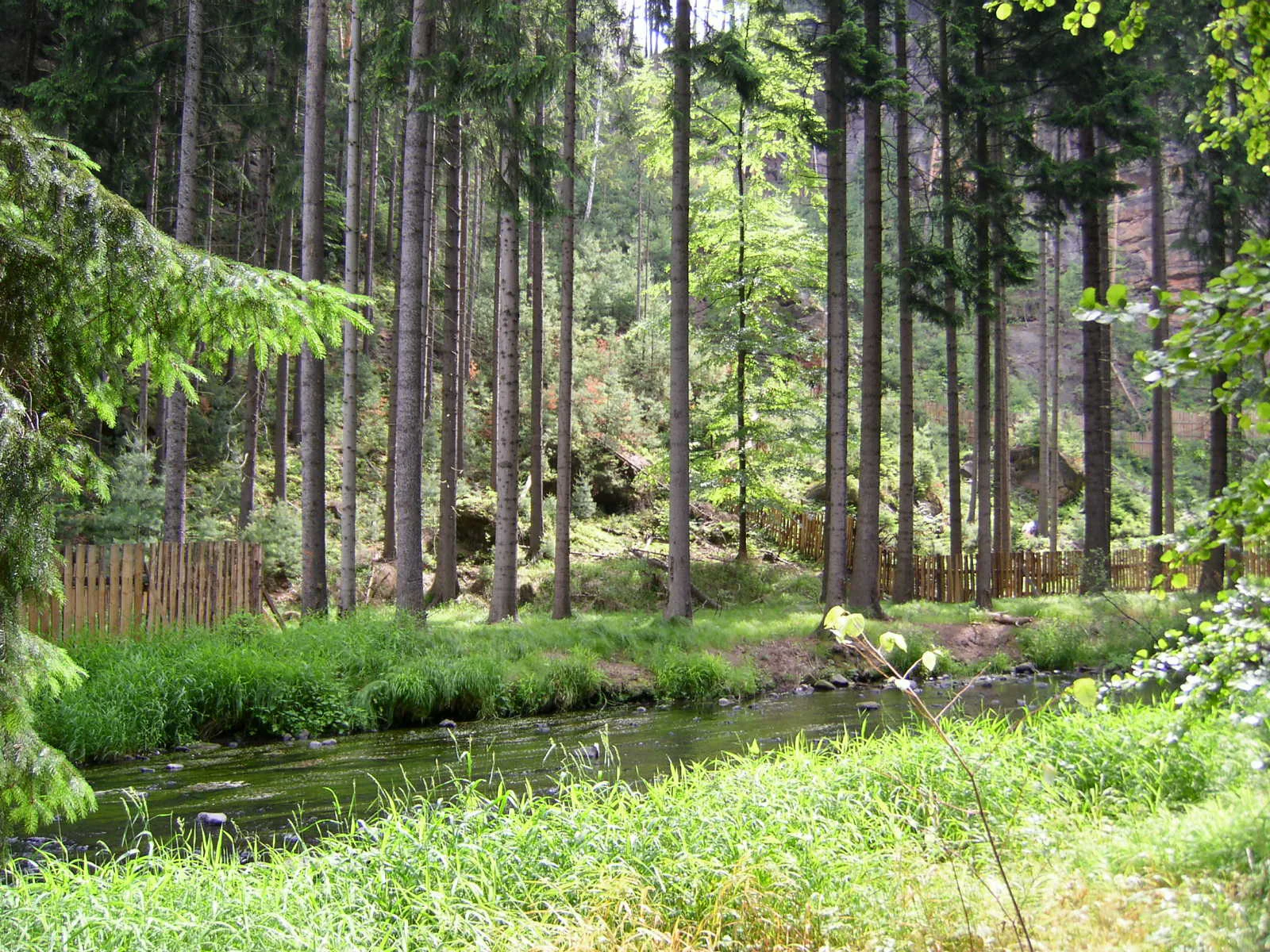
The nature of Bohemian Switzerland reflects the dramatic diversity of its terrain and geological history. The park's unique combination of deep gorges, rock walls, plateaus, and forest-covered slopes creates a variety of microhabitats that support both warm-loving species on the higher, sun-exposed plateaus and cold-loving species in the deep, shaded ravines. The vegetation is adapted to the sandstone substrate, which creates conditions of low nutrient availability and specific water drainage patterns. The originally heavily forested area remained relatively inaccessible to humans for long periods, allowing nature to persist in a relatively pristine state. The protected status established first in 1972 and upgraded to national park in 2000 has preserved this ecological diversity while allowing natural processes to continue. The park forms part of a larger transboundary conservation unit with Saxon Switzerland National Park in Germany, supporting the movement of species across the international boundary and maintaining ecological connectivity in this distinctive Central European landscape.
Bohemian Switzerland National Park wildlife and species highlights
The wildlife of Bohemian Switzerland is adapted to the diverse habitats created by the park's dramatic terrain and varied microclimates. The deep gorges and rock walls provide nesting sites for numerous bird species, while the forested slopes support typical Central European woodland communities. The contrast between the warm, sun-exposed plateaus and the cool, shaded ravines creates ecological niches that support both thermophilic species adapted to warmer conditions and species requiring cooler, more humid environments. The forest cover, which originally dominated the entire area, provides habitat for mammals common to the Central European forest biome. The transboundary connection with Saxon Switzerland National Park facilitates the movement of wildlife across the international boundary, supporting population connectivity in this mountainous border region.
Bohemian Switzerland National Park conservation status and protection priorities
Bohemian Switzerland National Park represents a crucial conservation achievement in Central Europe, protecting a unique geological landscape that has no equivalent on the continent. The decision to establish the national park in 2000, after years of negotiation and resistance from various interest groups, reflects the recognition of the area's exceptional natural value. The park protects not only the dramatic sandstone formations and deep gorges but also the forests and ecological communities that have persisted in this relatively inaccessible mountain region. As part of the larger Saxon-Bohemian Switzerland transboundary conservation area, the park contributes to international conservation efforts and supports ecological connectivity across the Czech-German border. The protection of the Růžovský vrch area, with its volcanic basalt geology, adds geological diversity to the conservation framework. The park's establishment in 2000 completed the protection of both sides of the Elbe Sandstone Mountains, creating a unified transboundary protected area that preserves one of Europe's most distinctive landscapes.
Bohemian Switzerland National Park cultural meaning and human context
The cultural landscape of Bohemian Switzerland reflects centuries of human presence in this mountainous border region. The medieval period saw the construction of numerous castles and rock fortifications to control the trade routes passing through the sandstone valleys, and the remains of these structures, including Šaunštejn Castle and Falkenštejn Castle, still dot the landscape. The region's history as part of the Austro-Hungarian Empire and later the Czech lands is reflected in the German place names and architectural traditions visible in the villages. Prior to World War II, the area was home to German Bohemians, and the expulsion of this population after the war fundamentally changed the demographic character of the region. The traditional Upper Lusatian houses found in the villages represent a distinctive regional architectural style. The region's artistic heritage dates to the 19th century when Romantic artists and composers were inspired by the wild landscape, establishing a tradition of cultural association with the natural environment that continues today.
Top sights and standout views in Bohemian Switzerland National Park
Bohemian Switzerland National Park protects one of Europe's most remarkable sandstone landscapes, featuring the Pravčická brána, the continent's largest natural sandstone arch, which has become the symbolic landmark of the entire region. The Kamenice Gorge offers one of the most spectacular hiking experiences in Central Europe, with its narrow rock walls and rushing water creating a dramatic canyon environment. Medieval rock castles built into cliff faces, including Šaunštejn and Falkenštejn, add historical dimension to the natural landscape. The park's transboundary position adjacent to Saxon Switzerland National Park creates one of the few large, connected protected areas in Central Europe. The Růžovský vrch area preserves both the highest point in the park and unique volcanic basalt geology amid the dominant sandstone terrain.
Best time to visit Bohemian Switzerland National Park
Bohemian Switzerland can be visited throughout the year, with each season offering a different perspective on the landscape. Spring and early summer bring the forest into full leaf, creating lush green surroundings for the rock formations and gorges. Autumn offers dramatic color changes in the deciduous forests and typically clearer visibility for photography. Winter transforms the landscape with snow on the rock formations, though some trails may be more challenging. The deep gorges can be cooler and retain snow longer, while the exposed plateaus experience more direct sunlight. The park's popularity means that peak summer weekends can be busy at major attractions like Pravčická brána, so visiting on weekdays or during the shoulder seasons provides a more tranquil experience of this remarkable landscape.