Mori Atlas logo
National parkGesäuse National Park

Discover the mapped protected landscape of Gesäuse National Park in Styria, Austria.

Gesäuse National Park: Austria's Dramatic Alpine Gorge National Park Detailed Geography

Gesäuse National Park is a premier protected alpine wilderness located in the scenic region of Styria, Austria. This national park safeguards a significant portion of the Gesäuse range within the Ennstal Alps, celebrated for its dramatic water gap where the Enns river carves through steep limestone peaks. Spanning over 12,000 hectares, the park offers a deep dive into rugged alpine terrain and vital protected ecosystems, making it a key destination for atlas-based geographic discovery and understanding regional conservation efforts.

Alpine MountainsNational ParkAustriaEnnstal AlpsEndemic SpeciesProtected Area

Gesäuse National Park

National park

Park overview

Structured park overview, official facts, and landscape profile for Gesäuse National Park

Gesäuse National Park park facts, protected area profile, and essential visitor context
Review the core facts for Gesäuse National Park, including designation, size, terrain, visitor scale, habitats, and operating context in one park-focused overview.

About Gesäuse National Park

Gesäuse National Park occupies a remarkable position in Austria's protected area network, safeguarding one of the most geologically dramatic landscapes in the eastern Alps. The park encompasses the heart of the Gesäuse mountains, a limestone subrange of the Ennstal Alps characterized by towering peaks, sheer rock walls, and the spectacular gorge through which the Enns river has carved its path over millennia. The area stretches across multiple municipalities including Johnsbach, Weng im Gesäuse, Landl, and Sankt Gallen, with the park headquarters located in Weng. The physical geography is defined by extreme relief energy—the difference between valley floors and mountain ridges is often dramatic, creating diverse microclimates and ecological niches within a relatively compact area. Recent expansion announced in October 2023 increased the park by 113 hectares through a cooperation agreement with the Austrian Federal Railways (ÖBB), filling previous gaps in the protected area network. The park's management operates under a dual-zone system, with the vast majority designated as a nature zone where natural processes are allowed to proceed without active intervention, while a smaller preservation zone accommodates traditional land uses and necessary infrastructure.

Quick facts and research context for Gesäuse National Park

Gesäuse National Park spans the Ennstal Alps in Styria, Austria, protecting a dramatic alpine landscape centered on the Enns river water gap between Admont and Hieflau. The park ranges in elevation from 490 meters in the valley floors to 2,369 meters at Hochtor, the highest peak. Over 99 percent of the land is owned by the Steiermärkische Landesforste (Styrian Provincial Forests), and the area was formally designated as an IUCN Category II protected area in December 2003. The park is organized into a nature zone covering roughly 75 percent of the area, which will eventually be left to develop without human intervention, and a preservation zone that permits limited traditional uses such as alpine pastoral farming.

Park context

Deeper park guide and search-rich context for Gesäuse National Park

Gesäuse National Park history, landscape, wildlife, and travel context
Explore Gesäuse National Park through its history, landscape character, ecosystems, wildlife, conservation priorities, cultural context, and seasonal travel timing in a structured park guide built for atlas discovery and search intent.

Why Gesäuse National Park stands out

Gesäuse National Park is best known for its dramatic alpine gorge where the Enns river cuts through the Gesäuse mountains, creating one of Austria's most visually striking natural passages. The park has gained particular recognition for its extraordinary biodiversity and endemism, hosting 30 endemic plant species and 195 endemic animal species within its boundaries, making it a recognized hotspot in the northeastern Kalkalpen. The park also stands out for its exceptional darkness, a rare quality in densely populated Central Europe, making it one of the least light-polluted locations in the region and an outstanding destination for stargazing.

Gesäuse National Park history and protected-area timeline

The establishment of Gesäuse National Park represents the culmination of over a century of conservation advocacy in Styria. Early proposals for protecting this landscape emerged in 1913, when the first suggestions for a nature park in the Niederen Tauern region were made alongside plans for hydroelectric development in the Gesäuse. In 1958, the Styrian provincial government declared the Gesäuse and adjacent Ennstal valley as the first nature protection areas in the province, providing initial legal recognition to the area's natural values. The movement toward full national park status accelerated in 1977 when the provincial parliament passed a resolution supporting creation of a National Park Niederere Tauern, followed by years of studies and sometimes contentious public debate. A precursor association formed in autumn 1997 advocated for the national park, while a opposing protection society formed in 1998. Multiple referendums in 2001 produced mixed results, but the provincial parliament passed the National Park Act in March 2002, with the regulations and management plan taking effect in March 2003. International recognition by the IUCN followed in December 2003, confirming the park's Category II status. The tourism association Alpenregion Nationalpark Gesäuse was established in 2006, and the significant expansion announced in 2023 demonstrates continued growth in protection scope.

Gesäuse National Park landscape and geographic character

The landscape of Gesäuse National Park is defined by the dramatic encounter between water and rock in the Ennstal Alps. The Enns river, one of Austria's significant waterways, has carved a spectacular water gap through the Gesäuse mountains, creating a steep-sided gorge that serves as the dramatic centerpiece of the park. The valley floor sits at approximately 490 meters elevation, while the surrounding peaks rise sharply to 2,369 meters at Hochtor, creating a vertical span of nearly 1,900 meters. The Gesäuseberge themselves present a classic alpine character with their jagged limestone summits, precipitous rock faces, and debris-covered slopes. Along the valley floors, the river is fed by tributaries including the Johnsbach and Hartelsgraben, creating a complex hydrological network. The combination of steep terrain, deep valleys, and exposed rock creates a landscape of considerable visual drama, with the changing seasons bringing distinct moods—from the turbulent waters of spring snowmelt to the clear, sharp conditions of winter.

Gesäuse National Park ecosystems, habitats, and plant life

The ecological character of Gesäuse National Park is shaped by four primary habitat types that form the foundation of its biodiversity: water, forest, alpine meadows, and rock. The Enns river and its tributaries create dynamic aquatic environments, while approximately half the park is forested. Valley forests include riparian woodlands and maple-ash communities, while higher elevations feature spruce-fir-beech forests that were historically managed for timber production. At higher elevations, snow-heath pine forests survive as glacial relicts, and the park contains the easternmost populations of Swiss stone pine (Zirbe). Above the tree line, mountain pine (Latsche) forms dense krummholz communities. The extreme topographic variation allows alpine species to descend into lower elevations through avalanche chutes and debris channels, creating unusual ecological mixing. The park's position away from major urban centers has preserved exceptionally dark night skies, ranking it among the least light-polluted sites in Central Europe—a characteristic that also indicates the relatively intact natural darkness of the ecosystem.

Gesäuse National Park wildlife and species highlights

Gesäuse National Park supports a rich fauna that reflects the diversity of its alpine and forest habitats. The park hosts approximately 90 breeding bird species, including 17 species listed under Annex I of the EU Birds Directive and 24 species considered threatened at the national level. Among the notable invertebrates are several butterfly species protected under the FFH Directive, including the Apollo butterfly, thyme ant-blue, Russian bear, dark green fritillary, and scabious fritillary. The Alpenbock longhorn beetle represents another protected invertebrate species. Among vertebrates, the park supports populations of yellow-bellied toad (Gelbbauchunke), bullhead fish (Koppe), Ukrainian brook lamprey, and European otter. Bat species include the common pipistrelle and lesser horseshoe bat. The endemism is particularly striking, with 195 endemic animal species recorded, including the Northern giant eye (a harvestman spider) and the Styrian damselfly beetle, both confined to this portion of the northeastern Kalkalpen.

Gesäuse National Park conservation status and protection priorities

Gesäuse National Park plays a significant role in conserving the biodiversity of the northeastern Kalkalpen, one of Europe's most species-rich alpine regions. The recognition of the area as an endemism hotspot—containing both 30 endemic plant species and 195 endemic animal species—underscores its conservation importance at the European scale. In 2018, approximately 85 percent of the park was formally designated as protection forest under Austrian forestry law, which exempts property owners from mandatory interventions against bark beetle infestations, allowing natural forest dynamics to proceed in most of the park. This approach reflects the park's ultimate goal of achieving complete non-intervention in the nature zone. The presence of numerous FFH Directive species—including butterflies, beetles, amphibians, fish, and mammals—demonstrates compliance with European conservation standards. The park's dark-sky values also represent a conservation dimension beyond biodiversity, protecting the natural nocturnal environment that is increasingly rare in populated Europe.

Gesäuse National Park cultural meaning and human context

The human context of Gesäuse National Park is intertwined with the traditional alpine communities that have shaped the landscape over centuries. The park encompasses settlements including Admont, Johnsbach, Weng, Hieflau, Landl, and Sankt Gallen, which now fall within the national park boundaries and cooperate through the tourism association. Traditional alpine pastoral practices have historically shaped the meadows and grasslands, and the preservation zone explicitly accommodates continued extensive alpine farming. The area has historical connections to mining and resource extraction, as evidenced by the Johnsbach copper mining trail. These communities now find themselves at the heart of a protected area, with tourism and conservation forming new pillars of the regional economy alongside continued traditional land uses.

Top sights and standout views in Gesäuse National Park

Gesäuse National Park offers visitors the experience of walking through one of Austria's most dramatic alpine gorges, where the Enns river thunders through the Gesäuse mountains. The Nationalparkpavillon at Gstatterboden provides panoramic views of the Hochtor group, while the Weidendom near Johnsbach—a living willow structure—offers unique nature education experiences. Several themed trails traverse the park, including the Au-Erlebnispfad through the Lettmair Au wetland, the Wilde John trail, and the Luchs Trail connecting to adjacent protected areas. The park's exceptional darkness makes it a destination for astronomical observation, while the concentration of endemic species in the northeastern Kalkalpen provides unique opportunities for nature study. The recent expansion demonstrates ongoing commitment to completing the protection network in this remarkable alpine landscape.

Best time to visit Gesäuse National Park

The optimal time to experience Gesäuse National Park depends on the desired activities and conditions. Summer months (June through September) offer the most accessible trail conditions and the full range of hiking opportunities, with the valley trails and higher paths generally snow-free. Autumn brings the golden colors of changing foliage and reduced crowds, though higher trails may experience early snowfall. Winter transforms the landscape into a quiet alpine wonderland, though trail access becomes more limited and winter sports activities are concentrated in designated areas outside the core wilderness zone. Spring (May and early June) sees the river running high with snowmelt and wildflowers emerging in the lower meadows. The dramatic scenery of the Enns gorge is compelling year-round, while the exceptional dark-sky conditions make the park particularly rewarding for stargazing on clear nights during any season when visitor activity is minimal.
Park location guide

Geography guide, regional context, and park location map for Gesäuse National Park

Gesäuse National Park park geography, regions, and map view in Austria
Understand where Gesäuse National Park sits in Austria through a broader geographic reading of the surrounding landscape, nearby location context, and its mapped position within the national park landscape.

How Gesäuse National Park fits into Austria

Austria is a landlocked country in Central Europe, bordered by Germany, Czech Republic, Slovakia, Hungary, Slovenia, Italy, Switzerland, and Liechtenstein. The country is a federal semi-presessional republic composed of nine states, with Vienna as its capital and largest city. It has a population of approximately 9.1 million people.

Wider geography shaping Gesäuse National Park in Austria

Austria is located in Central Europe, lying in the Eastern Alps. It is bordered by Germany and Czech Republic to the north, Slovakia to the northeast, Hungary to the east, Slovenia and Italy to the south, and Switzerland and Liechtenstein to the west.

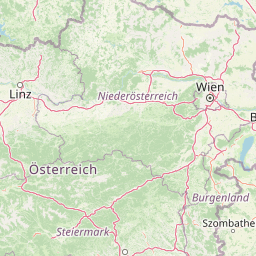
Map view of Gesäuse National Park

Use this park location map to pinpoint Gesäuse National Park in Austria, understand its exact geographic position, and read its mapped placement within the surrounding landscape more clearly.

Pigeon | © OpenStreetMap contributors

Location context for Gesäuse National Park

Styria
Park atlas

Trace the broader geographic spread of protected landscapes across Styria and the surrounding Ennstal Alps.

Continue Your Park Discovery: Explore National Parks and Protected Areas Near Gesäuse National Park
Browse other national parks and protected areas within Austria, expanding your view of alpine conservation and river gorge ecosystems around Gesäuse National Park. Gain a deeper understanding of regional park geography and protected-area distribution by comparing diverse landscapes across Styria and beyond.
National parkUpper Austria

Kalkalpen National Park: Ancient Beech Forests and Karst Protected Landscape

Explore mapped boundaries and unique alpine terrain.

Kalkalpen National Park is a premier protected area in Upper Austria, celebrated for harboring Central Europe's largest remaining ancient beech forests and an extensive karst landscape. This designation underscores its critical role in preserving old-growth forest ecosystems and unique geological formations within the Northern Limestone Alps. Discover the mapped terrain and regional geography that define this significant natural reserve, offering a profound look into the continent's ecological history and protected natural heritage.

Area
208.25 km²
Established
1997
IUCN
II
Relief
Mountain
Watercolor illustration showing mountain ranges, forests, and a river under a light sky.
National parkBavaria

Berchtesgaden National Park: Protected Landscape and Regional Geographic Context in Bavaria

Mapped natural terrain and protected area exploration.

Berchtesgaden National Park represents a crucial protected landscape situated in Bavaria, Germany. This entry provides detailed information focused on its protected area status, unique geographic setting, and mapped natural terrain. It serves as a gateway to understanding the park's specific identity within the regional atlas of Germany, offering insights into its boundaries and its significance as a curated natural landscape for discovery.

Area
210 km²
Established
1978
IUCN
II
Relief
Mountain
Watercolor illustration of a landscape with green hills, a body of water, and trees under a soft sky
National parkGyőr-Moson-Sopron

Fertő-Hanság National Park: Central European Wetland and Salt Lake Protected Area

Mapped Geographic Boundaries and Landscape Context

Fertő-Hanság National Park, situated in Győr-Moson-Sopron, Hungary, is a vital protected landscape renowned for its shallow salt lake and expansive marshlands. This page provides an atlas-focused discovery of its protected area, highlighting the unique interplay of reed beds and alkaline grasslands. Understand the park's geographic setting and its role as a significant wetland ecosystem for bird populations and specialized flora.

Area
235.88 km²
Established
1991
Relief
Lowland
Climate
Temperate
Watercolor painting showing a landscape with rolling terrain, water features, and distant mountains
National parkBurgenland

Neusiedler See-Seewinkel National Park: Protected Steppe Lake Landscape in Burgenland

Explore mapped wetland geography and birdwatching significance.

Neusiedler See-Seewinkel National Park showcases a rare steppe lake environment and extensive wetland habitats at the eastern edge of Austria, within the Burgenland region. This protected area is globally recognized for its exceptional avian diversity and the unique ecological mosaic formed by reed beds, salt marshes, and seasonal pools. Explore its mapped boundaries and distinctive Pannonian geography for a deep understanding of this vital European protected landscape.

Area
97 km²
Established
1993
IUCN
II
Relief
Lowland
Watercolor illustration of a river flowing through a forested valley with mountains in the background
National park

Triglav National Park: A Mapped Alpine Protected Landscape in Slovenia

Julian Alps geography, glacial lakes, and karst terrain.

Triglav National Park is Slovenia's premier protected area, covering 880 square kilometers of the Julian Alps. This page details its dramatic alpine geography, including Mount Triglav, glacial valleys, and significant karst features. Understand the mapped boundaries and landscape context of this national park, a key entry in the MoriAtlas geographic discovery resource for understanding protected lands.

Area
880 km²
Established
1981
IUCN
II
Visitors
1.6M annual
National park

Hohe Tauern National Park: Map of Austria's Largest Alpine Protected Landscape

Discover glacial terrain and mountain park geography in the Austrian Alps.

Hohe Tauern National Park, Austria's largest protected area, offers a profound exploration of high alpine landscapes. This national park is defined by its towering peaks, expansive glacier systems, and deeply carved glacial valleys. Examining its mapped boundaries reveals the sheer scale of this protected alpine terrain, providing crucial context for understanding regional geography and the unique natural systems it preserves across the Central Eastern Alps.

Area
1,806 km²
Established
1981
IUCN
II
Relief
Mountain
National park

Thayatal National Park: Austria's Smallest Protected Landscape and Dramatic River Valley

Explore the mapped geography of a breakthrough valley and its rich biodiversity.

Thayatal National Park, Austria's smallest national park, offers a concentrated study in protected landscape discovery. Its core feature is the spectacular Thaya River breakthrough valley, a deep gorge cutting through gneiss terrain with steep, forested slopes. This page provides context for its mapped protected area, highlighting its exceptional biodiversity and its role as a transboundary conservation zone with the adjacent Czech Podyjí National Park. Understand the geographic setting and unique landscape character of this significant natural region.

Area
13.3 km²
Established
2000
IUCN
II
Relief
Mountain
National parkSouth Moravian Region

Podyjí National Park: Explore Czech Republic's Intact River Canyon Ecosystem

Mapped Boundaries and Protected Landscape of South Moravia

Podyjí National Park, situated in the South Moravian Region, offers a profound look into one of Central Europe's most ecologically preserved river valleys. This national park is defined by its dramatic 220-meter deep Dyje River canyon, featuring rocky cliffs, stone seas, and a rich mosaic of forest and steppe habitats. MoriAtlas provides structured geographic information to analyze its unique landscape context, biodiversity, and role as a protected natural area within the Czech atlas.

Area
63 km²
Established
1991

Common questions about visiting, size, designation, and location context for Gesäuse National Park

Gesäuse National Park FAQs for park facts, access, geography, and protected area context
Find quick answers about Gesäuse National Park, including protected-area facts, park geography, trail and visitor context, and how the park fits into its surrounding country and regional landscape.
MoriAtlas Explorer

Continue Your Protected Areas Search Across the Global Atlas

Deepen your exploration by continuing the structured search for national parks and protected areas worldwide. Utilize the comprehensive filtering capabilities to compare different conservation landscapes and refine your understanding of global park geography. Discover more about the distribution and characteristics of protected natural areas.

Global natural geography