Mori Atlas logo
Natural monumentMount Vottovaara

Explore the mapped boundaries and terrain of this significant protected area in the Republic of Karelia.

Mount Vottovaara Natural Monument: Discover Protected Landscape and Regional Geography in Karelia

Mount Vottovaara stands as a notable natural monument within the Republic of Karelia, offering a unique focus for atlas-based geographic discovery. This protected landscape provides insights into regional terrain and its mapped boundaries, serving as a key point for understanding the natural geography of Russia. MoriAtlas facilitates exploration of Mount Vottovaara's specific identity as a protected area, helping users contextualize its place within the broader atlas of natural monuments and landscapes.

Rock FormationNatural MonumentSámi HeritageGeological SiteBoreal ForestRepublic of Karelia

Mount Vottovaara

Natural monument

Park overview

Structured park overview, official facts, and landscape profile for Mount Vottovaara

Mount Vottovaara park facts, protected area profile, and essential visitor context
Review the core facts for Mount Vottovaara, including designation, size, terrain, visitor scale, habitats, and operating context in one park-focused overview.

About Mount Vottovaara

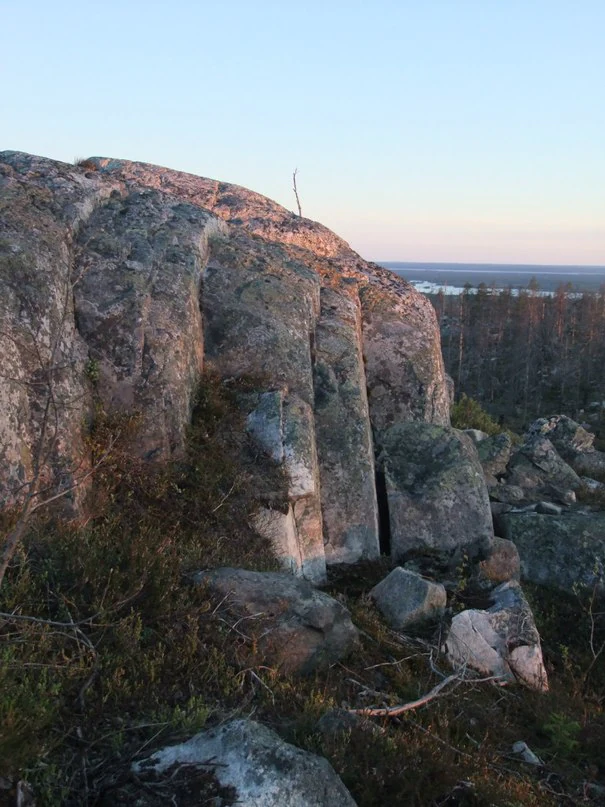
Mount Vottovaara represents one of the most geologically and culturally significant landmarks in the Republic of Karelia. The formation sits within the western wing of the Yangozero synclinorium, the second largest structural feature on the Karelian Craton after the Onega synclinorium. The mountain's landscape is defined by its elongated ridge, oriented in a roughly north-south direction, and characterized by a mosaic of exposed bedrock, boulder fields, and surrounding forested terrain. The stone formations that appear across the plateau constitute the most distinctive visual feature, with rounded boulders present both in clustered arrangements and in isolated positions. The area's ecological setting includes coniferous forest typical of the boreal zone, with the mountain rising above the surrounding woodland as a prominent topographic feature. The protected status granted in 2011 reflects recognition of both the site's geological significance and its cultural heritage value, though scientific consensus regarding the origins of the stone arrangements remains divided.

Quick facts and research context for Mount Vottovaara

Mount Vottovaara rises 417.3 meters above sea level as the highest summit of the West Karelian Upland in Russia's Republic of Karelia. The mountain covers approximately 6 square kilometers and extends as a ridge for about 7 kilometers. It was designated a natural monument in August 2011, protecting over 1,500 hectares of terrain. The geological composition consists of ancient Jotnian quartzites and quartzite-sandstones with significant fault structures. The toponym is of Sámi origin, translating to Mountain of Victory.

Park context

Deeper park guide and search-rich context for Mount Vottovaara

Mount Vottovaara history, landscape, wildlife, and travel context
Explore Mount Vottovaara through its history, landscape character, ecosystems, wildlife, conservation priorities, cultural context, and seasonal travel timing in a structured park guide built for atlas discovery and search intent.

Why Mount Vottovaara stands out

Mount Vottovaara is best known for its remarkable concentration of stone formations across the plateau, particularly the numerous rounded boulders that dot its landscape. These stone clusters have attracted archaeological interest due to their possible connection to Sámi cultic practices dating back thousands of years. The mountain's elevated position made it a significant site for ancient hunters and fishermen who would ascend to offer gifts to sacred stones before seasonal activities. The toponym itself carries cultural weight, with Vottovaara translating from the Sámi language as Mountain of Victory.
Mount Vottovaara history and protected-area timeline

The history of Mount Vottovaara encompasses both geological processes spanning hundreds of millions of years and human interaction extending back millennia. The geological foundation was established during the Jotnian period, with quartzite and sandstone deposits subsequently fractured by tectonic activity. The formation was subsequently shaped by glacial processes during the post-glacial period. Human presence in the region dates to the Stone Age, with archaeological evidence suggesting continuous occupation by the Sámi people for approximately 5,000 to 6,000 years. The first documentation of the stone formations as potentially man-made structures came from Sergei Simonyan, a local historian from the Sukkozero settlement, in the late 1970s. Following this, archaeological investigations in the early 1990s by M.M. Shakhnovich and I.S. Manyukhin concluded that the stones served a cultic purpose connected to Sámi religious practices. In August 2011, the Government of the Republic of Karelia formally declared the Vottovaara mountain complex a natural monument, establishing the current protected status that covers more than 1,500 hectares.

Mount Vottovaara landscape and geographic character

The physical landscape of Mount Vottovaara is defined by its ridge formation rising prominently above the surrounding terrain of the West Karelian Upland. The mountain reaches 417.3 meters at its highest point, making it the tallest summit in the region. The ridge extends approximately 7 kilometers in a submeridional direction, creating a distinctive north-south oriented backbone across the terrain. The surface is dominated by exposed Jotnian quartzites and quartzite-sandstones, with the bedrock fractured by numerous fault structures that create varied terrain conditions. The plateau areas host numerous boulder fields, with the vast majority of stones being rounded glacial boulders. In certain locations, larger boulders remain in positions that suggest original placement. The surrounding landscape includes several lakes, with Votto river and lakes Vottoozero, Vottomuks, and Keivotto located in proximity to the mountain. The broader terrain consists of typical boreal forest covering the lower elevations.

Mount Vottovaara ecosystems, habitats, and plant life

The ecological character of Mount Vottovaara reflects its position within the boreal forest zone of northern Russia. The surrounding vegetation consists primarily of coniferous forest species adapted to the relatively harsh climate of the region. The mountain itself rises above the tree line in its upper sections, exposing bedrock and boulder fields that support limited vegetation. The area's ecological significance is enhanced by the presence of numerous lakes in the vicinity, which provide habitat for various aquatic species and contribute to the overall biodiversity of the region. The interspersion of forest, rocky terrain, and water bodies creates a diverse landscape that supports multiple habitat types within a relatively limited area.

Mount Vottovaara wildlife and species highlights

The wildlife context of Mount Vottovaara is closely tied to the broader boreal ecosystem of Karelia and the historical significance of the region for the Sámi people. Historical accounts indicate that the area was significant for reindeer, both as a species present in the region and as the focus of hunting activities. The mountain lies at the intersection of seasonal migration routes for reindeer, with the stability and predictability of these routes making the area particularly important for traditional hunting practices. The surrounding lakes provided fish reserves that supported fishing activities, while the forest environment supported various other species typical of the boreal zone. The cultural practices of the Sámi, including hunting and fishing, shaped the human-wildlife relationship in this landscape for thousands of years.

Mount Vottovaara conservation status and protection priorities

Mount Vottovaara was declared a natural monument by decree of the Government of the Republic of Karelia in August 2011, establishing formal protection for the mountain complex and surrounding territory. The protected area covers more than 1,500 hectares, encompassing not only the mountain itself but also the surrounding landscape that contributes to its ecological and cultural context. The conservation designation reflects recognition of both the geological significance of the quartzite formations and the cultural heritage value associated with the site's potential Sámi connections. However, scientific opinion regarding the stone formations remains divided, with some researchers categorizing certain stone clusters as natural glacial deposits while recognizing that some structures may represent modern additions commemorating visits to the mountain.

Mount Vottovaara cultural meaning and human context

Mount Vottovaara holds significant cultural importance stemming from its connections to the Sámi people, the indigenous inhabitants of the broader northern region. The toponym itself is of Sámi origin, with Votto deriving from the word meaning to conquer, overcome, or win, and vaara translating as mountain. This yields the translation Mountain of Victory, a name unique in northern Russia and Scandinavia given the clustering of similarly named geographic features in the vicinity. Archaeological evidence indicates the area was used by Sámi hunters and fishermen for approximately 5,000 to 6,000 years, with the mountain serving as a site for ritual activities before the hunting and fishing seasons. Hunters would ascend the mountain to offer gifts to the sieidi, or sacred stones, in hopes of ensuring successful outcomes. The proximity of fish-rich lakes and the position at reindeer migration route intersections made the location strategically important for subsistence activities.

Top sights and standout views in Mount Vottovaara

Mount Vottovaara stands as the highest point of the West Karelian Upland at 417.3 meters, offering commanding views over the boreal landscape of central Karelia. The mountain's plateau hosts an extraordinary concentration of stone formations, particularly rounded glacial boulders, that have attracted scholarly interest regarding their possible cultic origins and connection to ancient Sámi religious practices. The site was officially protected as a natural monument in 2011, with over 1,500 hectares now preserved. The toponym carries cultural weight, with Vottovaara translating as Mountain of Victory from the Sámi language, and the mountain is surrounded by a unique cluster of identically named geographic features including a river and three lakes. The combination of geological significance, potential archaeological importance, and cultural heritage makes this site distinctive within the region.

Best time to visit Mount Vottovaara

Mount Vottovaara can be visited throughout the year, with each season offering a different character to the landscape. The summer months provide the most accessible conditions for exploring the mountain and its stone formations, with the boreal forest in full growth and the terrain fully accessible. Autumn brings distinctive coloration to the surrounding forest as the needles and understory vegetation change, while winter transforms the landscape with snow cover that can make the exposed rocks and boulders particularly striking against the white terrain. The location in the Republic of Karelia ensures significant seasonal variation in daylight, temperature, and weather conditions. Visitors seeking to experience the cultural dimension of the site may find the shoulder seasons of late spring and early autumn particularly evocative, though the site is accessible year-round.
Park location guide

Geography guide, regional context, and park location map for Mount Vottovaara

Mount Vottovaara park geography, regions, and map view in Russia
Understand where Mount Vottovaara sits in Russia through a broader geographic reading of the surrounding landscape, nearby location context, and its mapped position within the national park landscape.

How Mount Vottovaara fits into Russia

Russia is a transcontinental nation spanning eleven time zones, bordered by fourteen countries. It is the world's largest country by area, covering 17,098,246 km². Moscow is the capital and largest city, while Saint Petersburg is the second-largest and a major cultural centre.

Wider geography shaping Mount Vottovaara in Russia

Russia spans Eastern Europe and North Asia, covering 17,098,246 km². It shares land borders with fourteen countries, more than any other nation, and spans eleven time zones. The landscape includes vast plains, mountain ranges such as the Urals and Caucasus, and extensive coastlines along the Arctic Ocean, Pacific Ocean, Baltic Sea, Black Sea, and Caspian Sea.

Map view of Mount Vottovaara

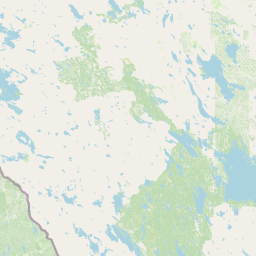
Use this park location map to pinpoint Mount Vottovaara in Russia, understand its exact geographic position, and read its mapped placement within the surrounding landscape more clearly.

Pigeon | © OpenStreetMap contributors

Location context for Mount Vottovaara

Republic of Karelia
Park atlas

Trace the West Karelian Upland's protected landscapes, comparing similar geological sites and natural monuments in the region.

Explore Nearby Protected Areas and Parks Beyond Mount Vottovaara, Republic of Karelia
Browse other protected areas and natural monuments located in the Republic of Karelia and the broader West Karelian Upland, offering diverse geological features and boreal forest landscapes. Comparing these regional parks provides essential geographic context and highlights the unique conservation efforts across northwestern Russia.
National parkNorth Karelia

Petkeljärvi National Park: Distinct Protected Landscape and Esker Formations in North Karelia

Discover Finland's unique esker ridges and boreal forests.

Petkeljärvi National Park represents a distinctive protected landscape in North Karelia, Finland, celebrated for its prominent esker formations that define its topography. The park showcases light Scots pine forests growing on sandy soils, creating an open forest character that sets it apart. Visitors can explore the mapped geography, including winding ridges, wetlands, and lake scenery, alongside preserved historical fortifications from the Continuation War, offering a rich blend of natural and cultural heritage within this compact national park.

Area
7 km²
Established
1956
IUCN
II
Visitors
17.3K annual
National parkNorth Karelia

Patvinsuo National Park: Protected Landscape Geography and Map Context

National park exploration in North Karelia, Finland.

Patvinsuo National Park stands as a vital protected area within North Karelia, Finland. This page serves as an atlas entry point, detailing the park's geographic scope, mapped boundaries, and its significance as a protected landscape. Users can explore the regional context and understand the natural terrain that characterizes this important Finnish national park, facilitating structured geographic discovery.

Area
105 km²
Established
1982
IUCN
II
Visitors
18.6K annual
Watercolor illustration of a landscape featuring green vegetation, rolling hills, and a body of water under a pastel sky
National parkNorth Karelia

Koli National Park: Protected National Park in North Karelia, Finland

Explore mapped landscape and regional geography.

Koli National Park represents a significant protected area within the eastern Finnish region of North Karelia. This page offers detailed geographic context and insight into the park's mapped landscape, essential for understanding its place within the broader atlas of Finland's natural terrain. Discover the protected boundaries and regional setting of this key national park.

Area
30 km²
Established
1991
IUCN
II
Visitors
249.8K annual
Watercolor illustration showing a lake with forested shores and mountains in the background
National parkRepublic of Karelia

Ladoga Skerries National Park: National Park Protected Landscape & Geography

Mapped boundaries and regional context in the Republic of Karelia.

Discover Ladoga Skerries National Park, a key protected area recognized as a national park within the Republic of Karelia. This page provides essential context for understanding its mapped boundaries, the natural terrain it encompasses, and its geographical significance within the broader regional landscape. Utilize this information for structured atlas exploration of protected natural environments, focusing on the distinct identity of Ladoga Skerries National Park.

Area
1,220 km²
Established
2017
IUCN
II
Relief
Lowland
National parkKainuu

Hiidenportti National Park: Kainuu Protected Area and Geographic Landscape Context

Explore mapped boundaries and regional geography in eastern Finland.

This MoriAtlas entry details Hiidenportti National Park, a designated national park situated in the Kainuu region of Finland. It serves as a vital hub for understanding the protected area's mapped landscape, its specific geographic characteristics, and its position within the regional atlas of eastern Finland's natural terrain. Dive into the structured details that define Hiidenportti National Park's protected identity and its contribution to the geographic understanding of the taiga-forested regions.

Area
45 km²
Established
1982
IUCN
II
Visitors
11.3K annual
National parkEtelä-Savo

Kolovesi National Park: Mapped Protected Landscape in Etelä-Savo, Finland

Explore its geographic identity and mapped park boundaries.

Kolovesi National Park is a significant protected area located in the Etelä-Savo region of Finland, characterized by its presence within the Finnish lake district. This detailed page provides an atlas-centric view, emphasizing the park's mapped geographic features and its status as a protected natural landscape. Users engaging with MoriAtlas can understand Kolovesi National Park's unique landscape context and its precise location within the regional geography of southeastern Finland.

Area
61 km²
Established
1990
IUCN
II
Visitors
17.2K annual
Watercolor painting of a lake surrounded by forests with mountains in the background and a sunset sky
National parkFinland

Tiilikkajärvi National Park: Finland's Unique Protected Landscape with Sandy Shores and Eskers

Mapped geography of a distinctive Finnish national park.

Tiilikkajärvi National Park showcases a unique combination of natural features within Finland's protected lands. The park's core is the Tiilikkajärvi lake, almost entirely encircled by expansive sandy beaches and dramatic esker peninsulas. These glacial landforms create a striking visual contrast with the surrounding boreal forests and rare undrained aapa bogs. Explore the mapped landscape context and protected area identity of this significant Finnish natural environment.

Area
72 km²
Established
1982
IUCN
II
Visitors
26.1K annual
National parkArkhangelsk Oblast

Vodlozersky National Park: A Protected National Park within Arkhangelsk Oblast's Geography

Explore the mapped boundaries and natural landscape of this national park.

Vodlozersky National Park serves as a significant protected landscape within the Arkhangelsk Oblast region. This national park detail page provides focused access to its geographic identity, mapped terrain, and protected area status. Utilize MoriAtlas to understand the specific context of Vodlozersky National Park and its role in the regional atlas of natural areas, enhancing your geographic discovery.

Area
4,280 km²
Established
1991
IUCN
II
Visitors
1K annual

Common questions about visiting, size, designation, and location context for Mount Vottovaara

Mount Vottovaara FAQs for park facts, access, geography, and protected area context
Find quick answers about Mount Vottovaara, including protected-area facts, park geography, trail and visitor context, and how the park fits into its surrounding country and regional landscape.
MoriAtlas Explorer

Continue Your Protected Areas Search Across the Global Atlas

Deepen your exploration by continuing the structured search for national parks and protected areas worldwide. Utilize the comprehensive filtering capabilities to compare different conservation landscapes and refine your understanding of global park geography. Discover more about the distribution and characteristics of protected natural areas.

Global natural geography