Mori Atlas logo
National parkTriglav National Park

Explore the mapped geography and protected alpine landscapes centered on Mount Triglav.

Triglav National Park: Slovenia's Sole National Park in the Julian Alps

(Triglavski narodni park)

Triglav National Park represents the heart of Slovenia's natural heritage, encompassing 880 square kilometers of dramatic alpine terrain within the Julian Alps. This protected landscape, centered around the iconic Mount Triglav, radiates outward through glacial valleys, limestone peaks, and significant karst formations. Discover the mapped boundaries and geographic context of this unique national park, a vital component of the MoriAtlas geographic discovery platform.

Alpine parksKarst landscapesJulian AlpsMountain parksGlacial lakesUNESCO Biosphere Reserve
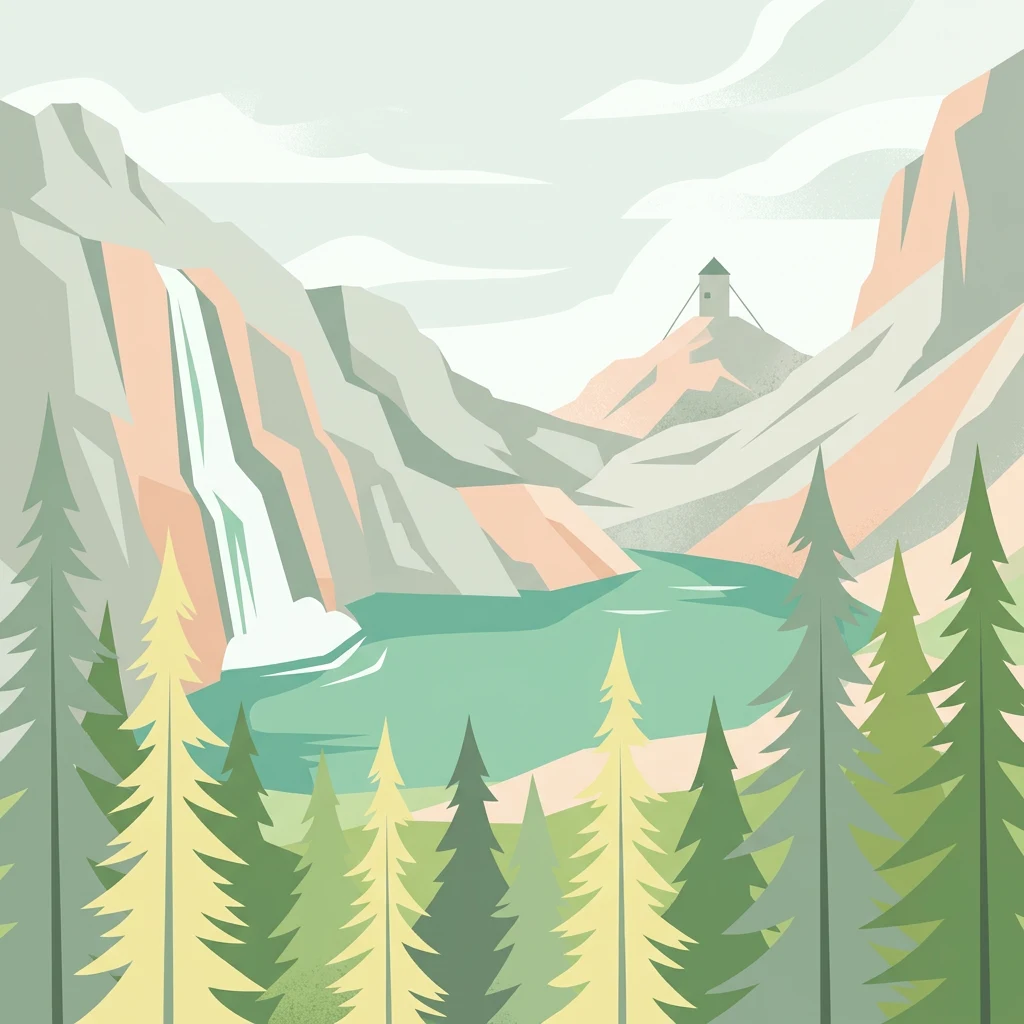
Stylized illustration showing a mountain landscape with a waterfall, lake, and coniferous trees

Triglav National Park

National park

Park overview

Structured park overview, official facts, and landscape profile for Triglav National Park

Triglav National Park park facts, protected area profile, and essential visitor context
Review the core facts for Triglav National Park, including designation, size, terrain, visitor scale, habitats, and operating context in one park-focused overview.

About Triglav National Park

Triglav National Park serves as the crown jewel of Slovenia's protected area system, preserving the most spectacular alpine landscapes in a country where the Alps dominate the northwestern frontier. The park's establishment in 1981 marked the culmination of decades of advocacy that began with a 1906 proposal by seismologist Albin Belar to protect the Triglav Lakes Valley area. Though early efforts faced legal obstacles—the laws of that era prohibited restrictions on pasture—the idea persisted through the work of naturalists and mountaineers. The name Triglavski narodni park was first used in 1926 by Professor Fran Jesenko, and the first formal protection came in 1924 through a twenty-year lease arrangement. Permanent protection followed in 1961, with the modern national park finally taking shape in 1981 when the area expanded to 838 square kilometers. A 2010 expansion incorporated the settlement of Kneške Ravne, bringing the total to 880 square kilometers. The park today operates under the management of Javni zavod Triglavski narodni park, with visitor centers located at Bled, Trenta, Stara Fužina in Bohinj, Radovna, Kobarid, and Mojstrana.

Quick facts and research context for Triglav National Park

Triglav National Park occupies the southeastern portion of the Alpine massif in northwestern Slovenia, representing approximately 4% of the country's total area. The park spans an elevation range from 180 meters at the Tolminka River to 2,864 meters at Mount Triglav, creating dramatic ecological transitions across this relatively compact alpine territory. The protected area encompasses eight municipalities including Bohinj, Bled, Gorje, Jesenice, Kranjska Gora, Bovec, Tolmin, and Kobarid. The park's hydrological significance extends beyond its borders, as waters originating in the Julian Alps supply two major river systems serving broader regional needs.

Park context

Deeper park guide and search-rich context for Triglav National Park

Triglav National Park history, landscape, wildlife, and travel context
Explore Triglav National Park through its history, landscape character, ecosystems, wildlife, conservation priorities, cultural context, and seasonal travel timing in a structured park guide built for atlas discovery and search intent.

Why Triglav National Park stands out

Triglav National Park is best known for its dramatic alpine scenery centered on Mount Triglav, a symbol of Slovenia that dominates the Julian Alps with its distinctive three-headed silhouette. The park protects the Triglav Lakes Valley, a chain of glacial lakes nestled in a remote high alpine basin, and Lake Bohinj, the largest permanent lake in Slovenia. The Soča River watershed within the park contains numerous waterfalls, including Boka Falls at 106 meters, the tallest in the country. The park also encompasses exceptional karst landscapes with over 600 registered caves, making it one of the world's most significant caving regions. The Triglav Lakes Valley represents one of the oldest proposed protected areas in Europe, with conservation efforts dating back to 1906.
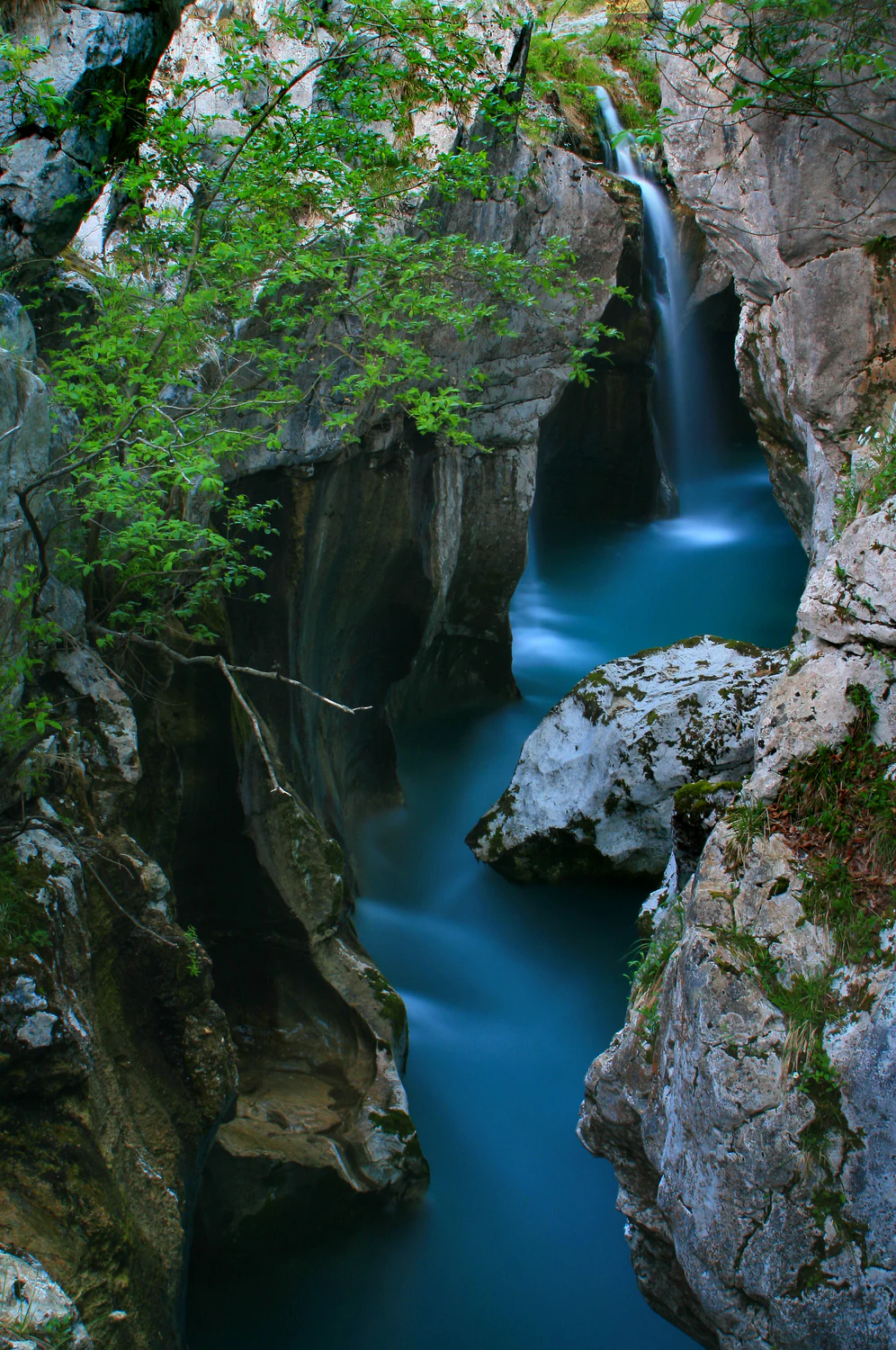
A waterfall cascading through rocky cliffs with a blue river flowing below, surrounded by lush green foliage
Great Gorges of the Soča River in Triglav National Park

Triglav National Park history and protected-area timeline

The protection of Triglav National Park traces its origins to the early twentieth century when seismologist and naturalist Albin Belar first proposed safeguarding the Triglav Lakes Valley area in 1906 or 1908. This pioneering proposal failed due to the absence of any legal framework for nature protection and contemporary laws that prohibited restrictions on traditional pastoral activities. In 1920, the Nature Protection Section of the Slovene Museum Society together with the Slovene Mountaineering Society submitted a formal memorandum to the Provincial Government for Slovenia, explicitly referencing Belar's proposal and advocating for protection modeled after other European nations. This effort resulted in 1924 when these organizations secured a twenty-year lease on approximately 14 square kilometers of the Triglav Lakes Valley, designated as an Alpine Conservation Park though permanent protection remained elusive. The name Triglavski narodni park was first coined in 1926 by Fran Jesenko, embedding the concept into Slovene conservation discourse. After the lease expired, renewed efforts faced obstacles from pastoral interests and unclear jurisdictional authority until the People's Republic of Slovenia declared the Triglav Lakes Valley a permanent national park in 1961 with an area of roughly 20 square kilometers. The modern national park was officially established in 1981 through legislation that expanded the protected area to 838 square kilometers and provided a new management framework. A subsequent law in 2010 slightly modified boundaries while incorporating the community of Kneške Ravne at the request of its inhabitants, bringing the park to its current 880 square kilometers.

Triglav National Park landscape and geographic character

The landscape of Triglav National Park exemplifies the dramatic geology of the Julian Alps, a subset of the Eastern Alps characterized by steep limestone peaks, deep glacial valleys, and extensive karst phenomena. Mount Triglav rises to 2,864 meters as the park's centerpiece, its distinctive three-peaked form serving as an iconic symbol of Slovenian national identity. The mountain's northern face spans three kilometers and rises over 1,000 meters, making it the largest vertical wall in the Eastern Alps. Radiating from this central peak, the valley of Vrata leads to the Triglav north wall, while other valleys including Krma, Kot, and the Triglav Lakes Valley spread outward through the protected landscape. The park encompasses significant karst terrain, with Upper Triassic carbonates creating extensive underground cave systems. Glacial action has sculpted the high mountain plateaus and carved the U-shaped valleys that characterize the region. The Soča River and its tributaries have cut dramatic gorges including the Tolmin Gorges, while the park's many waterfalls—most concentrated in the Soča watershed—add to the alpine drama. The lakes, all of glacial origin, include Lake Bohinj at the valley floor and smaller high-altitude lakes such as Krnsko jezero and the Triglav Lakes.
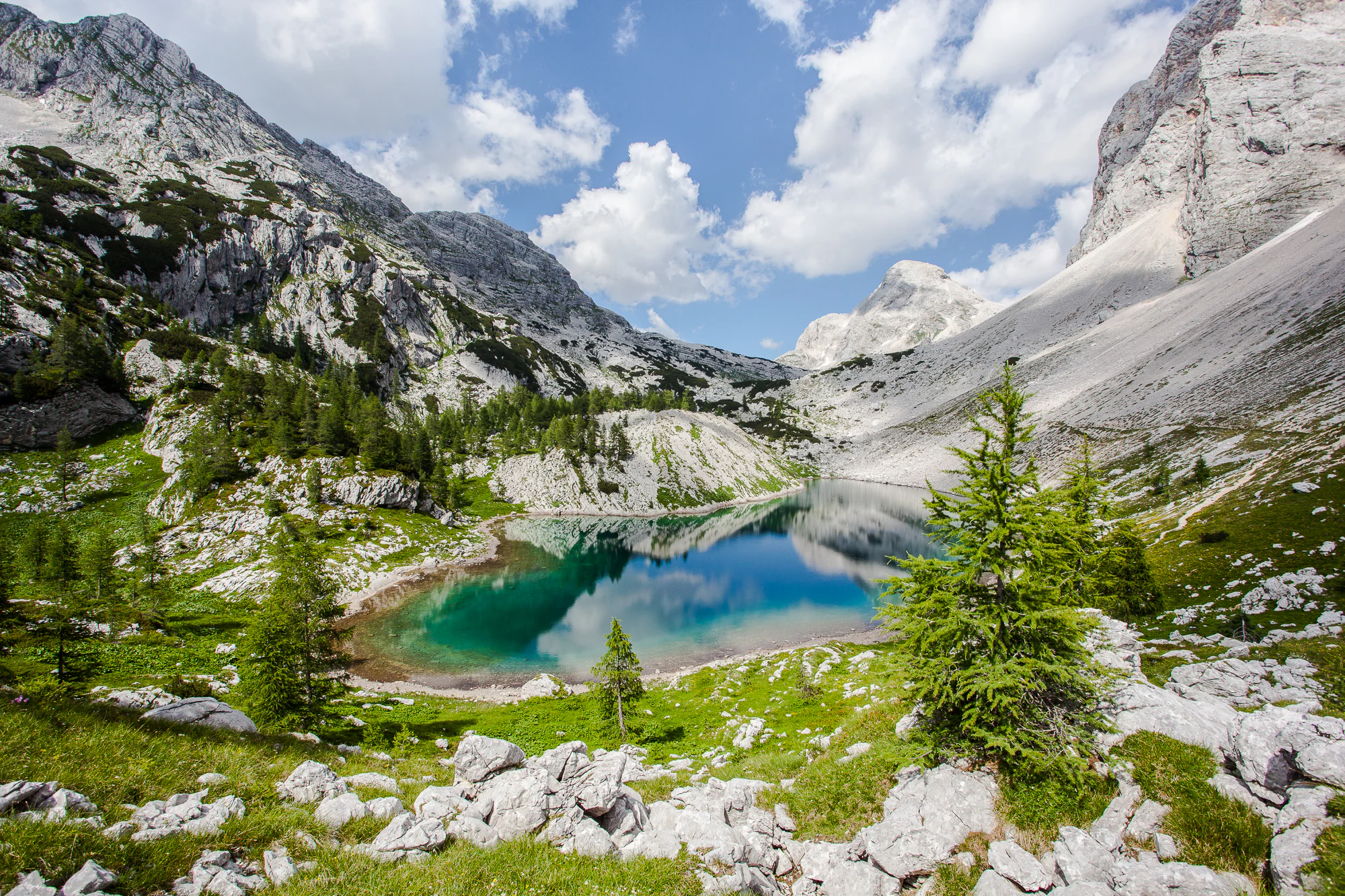
Mountain lake surrounded by rocky slopes and green vegetation under a partly cloudy sky
Kidney Lake in Triglav National Park with mountain backdrop

Triglav National Park ecosystems, habitats, and plant life

The nature of Triglav National Park reflects the ecological transitions created by its dramatic elevation range and position at the crossroads of Alpine and Mediterranean influences. Alpine vegetation dominates the high elevations, while the southwestern portions of the park bear the imprint of Mediterranean climate due to proximity to the Adriatic Sea. The park protects over fifty-nine species of ethnobotanical significance, with thirty-seven species classified under Slovenia's medicinal plant categories. Areas such as Črna prst on Bohinj's southern edge have been botanical research destinations for two centuries. The park's ecosystem diversity encompasses sharp high mountain zones with their characteristic flora, more welcoming environments in the intermediate valleys, and southern areas influenced by maritime conditions. The high karst plateaus contain numerous entrances to cave systems that plunge over a kilometer into the mountainside, with underground cave development closely tied to Pleistocene glaciation. The wetlands of the Pokljuka area including Veliko Blejsko barje, Goreljek, and Šijec represent the southernmost mountain bogs in Europe.
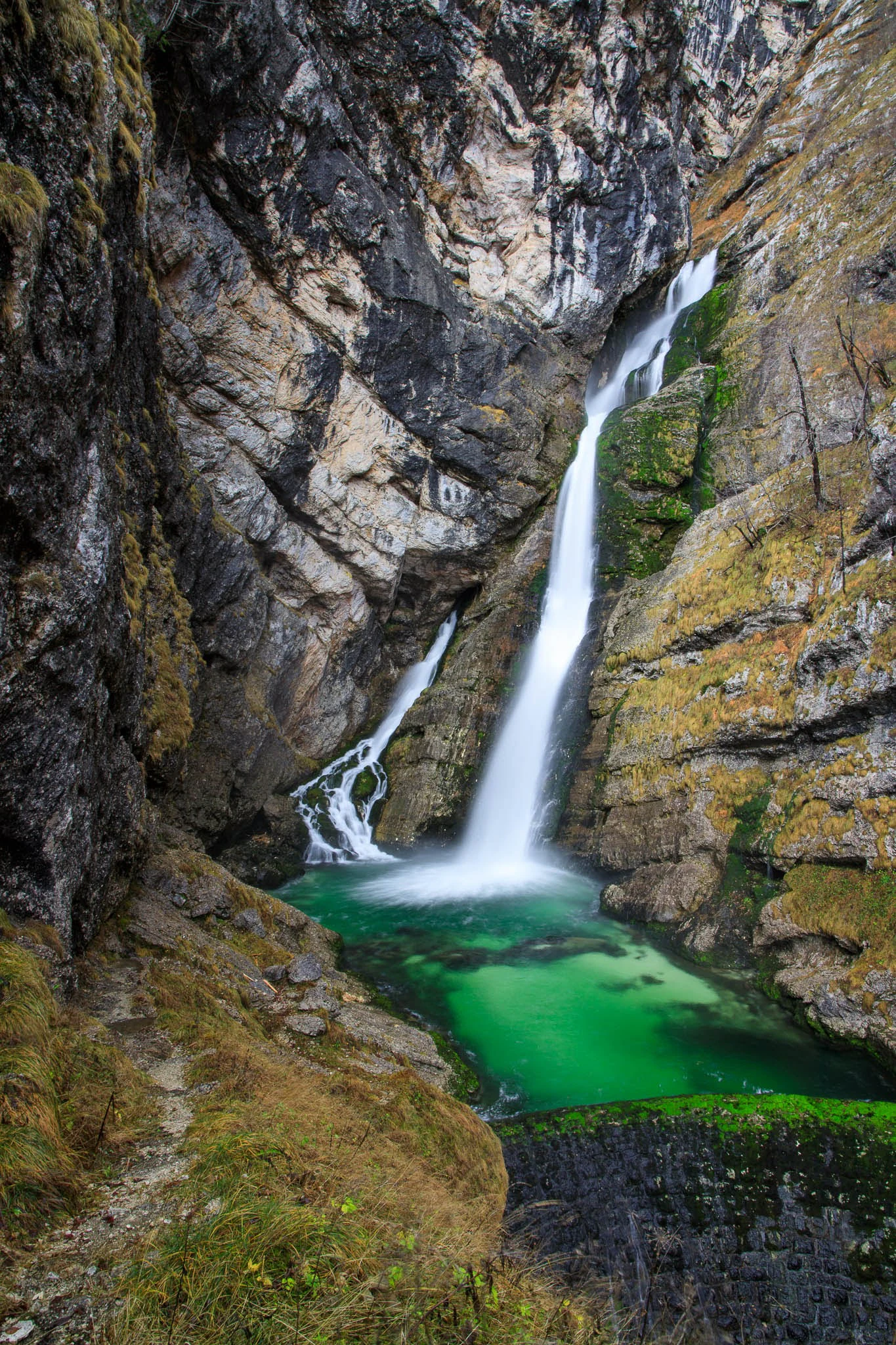
Waterfall flowing into a greenish pool between steep rocky cliffs with a narrow trail on the left
Savica Waterfall cascading into a turquoise pool beneath rocky cliffs in Triglav National Park

Triglav National Park wildlife and species highlights

Triglav National Park provides habitat for over 700 animal species, though the available source material provides limited specific information about the park's fauna. The protected status of the area ensures the preservation of alpine habitats that support diverse wildlife communities typical of the Julian Alps. The park's various elevations and habitat types—from valley floors through forest zones to alpine meadows and bare rock—create conditions supporting different species assemblages. High-altitude species including Alpine chamois and Alpine ibex inhabit the rocky peaks and alpine zones, while forest-dwelling species occupy the wooded valleys. The lakes and rivers support aquatic life, with Krnsko jezero historically known for its population of marble trout known as pisanci. Birdlife includes species characteristic of alpine and forest habitats. The Soča River watershed within the park provides spawning grounds for migratory fish species.
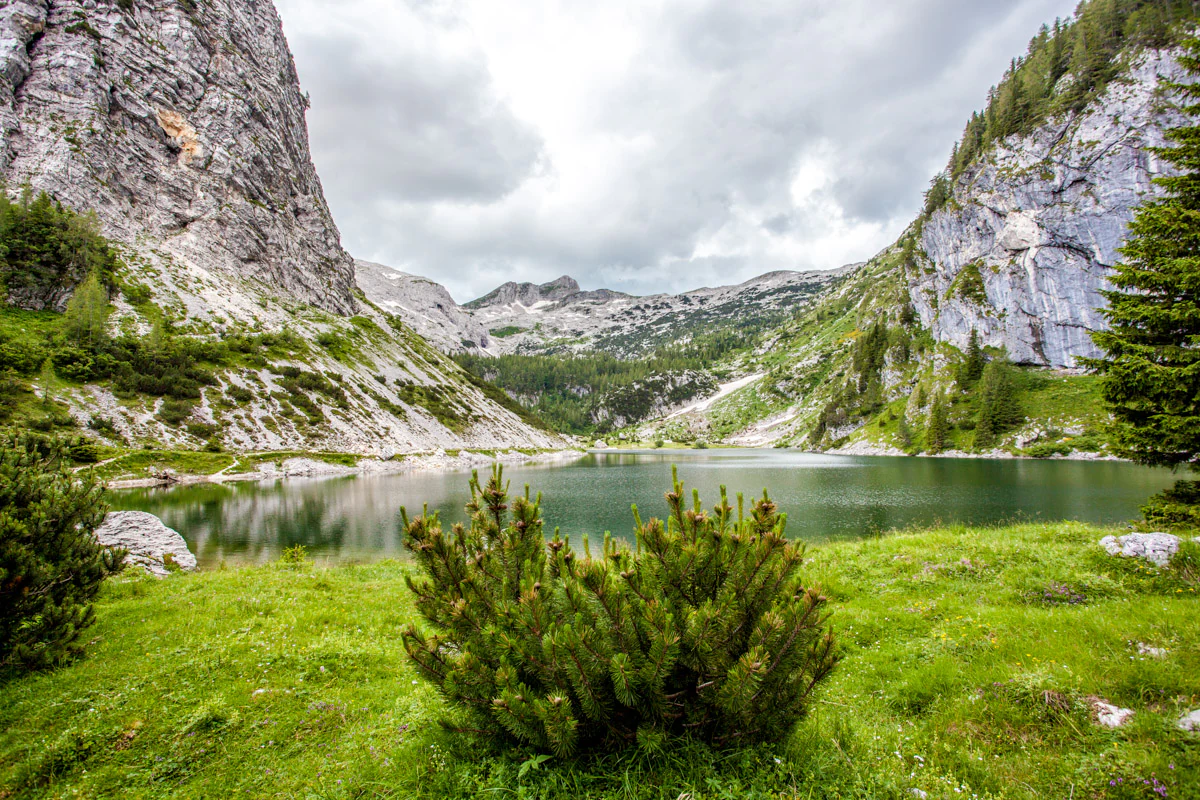
A clear lake surrounded by steep rocky cliffs and lush green meadows under a partly cloudy sky
Lake Krn, a serene alpine lake surrounded by rocky cliffs and green meadows in Triglav National Park

Triglav National Park conservation status and protection priorities

Triglav National Park holds IUCN Category II designation as a national park, though the Slovenian implementation has faced documented challenges in meeting full Category II criteria. The park's protection framework is reinforced by multiple legislative instruments including the Slovenian Constitution, environmental protection law, nature conservation legislation, water law, agricultural-forestry law, and the Alpine Convention with its protocols. The Julian Alps were designated as a UNESCO Biosphere Reserve in 2003, with this status renewed through 2023, reflecting international recognition of the region's ecological significance. Conservation challenges noted in official assessments include the presence of permanent settlements within the core zone, inadequate spatial planning particularly regarding road construction, unmanaged traffic including unauthorized aerial activity, issues related to mass visitation and noisy events, unresolved status of mountaineering infrastructure, and inadequate regulation of natural resource use including forestry, hunting, and grazing. The park's significance extends beyond Slovenia as the Julian Alps represent a critical component of European alpine ecosystems and watershed systems serving both the Adriatic and Black Sea basins.

Triglav National Park cultural meaning and human context

Human settlement within Triglav National Park traces its origins to the Iron Age or Halstatt period around 800 BCE, with settlement density increasing during Roman times and especially with the arrival of Slavs. Today's settlements within and adjacent to the park formed from the thirteenth century onward, developing as clustered and roadside villages in alpine valley bottoms near watercourses, scattered settlements on elevated terraces and sunny slopes, and isolated farms in remote valley sections. Within the park boundaries, twenty-one settlements exist entirely while another twelve lie partially within the park, with a total population of approximately 2,444 residents. The Bohinj area features clustered villages and hamlets including Stara Fužina and Studor with their distinctive traditional architecture. The western portions of the park exhibit more dispersed settlement patterns in valleys including Trenta, Soča, Vrsnik, Lepena, and Bavšica. Historical economic activities that shaped the cultural landscape included ironworks known as fužinarstvo, charcoal production called oglarstvo, alpine pastoralism known as planšarstvo, and forestry. The park contains numerous mountain huts and shelters serving hikers and climbers, along with cultural heritage sites including churches such as the Church of St. John the Baptist at Bohinj Lake, the Church of the Holy Spirit at Javorca from World War I, and ethnographic museums at Stara Fužina and Studor.
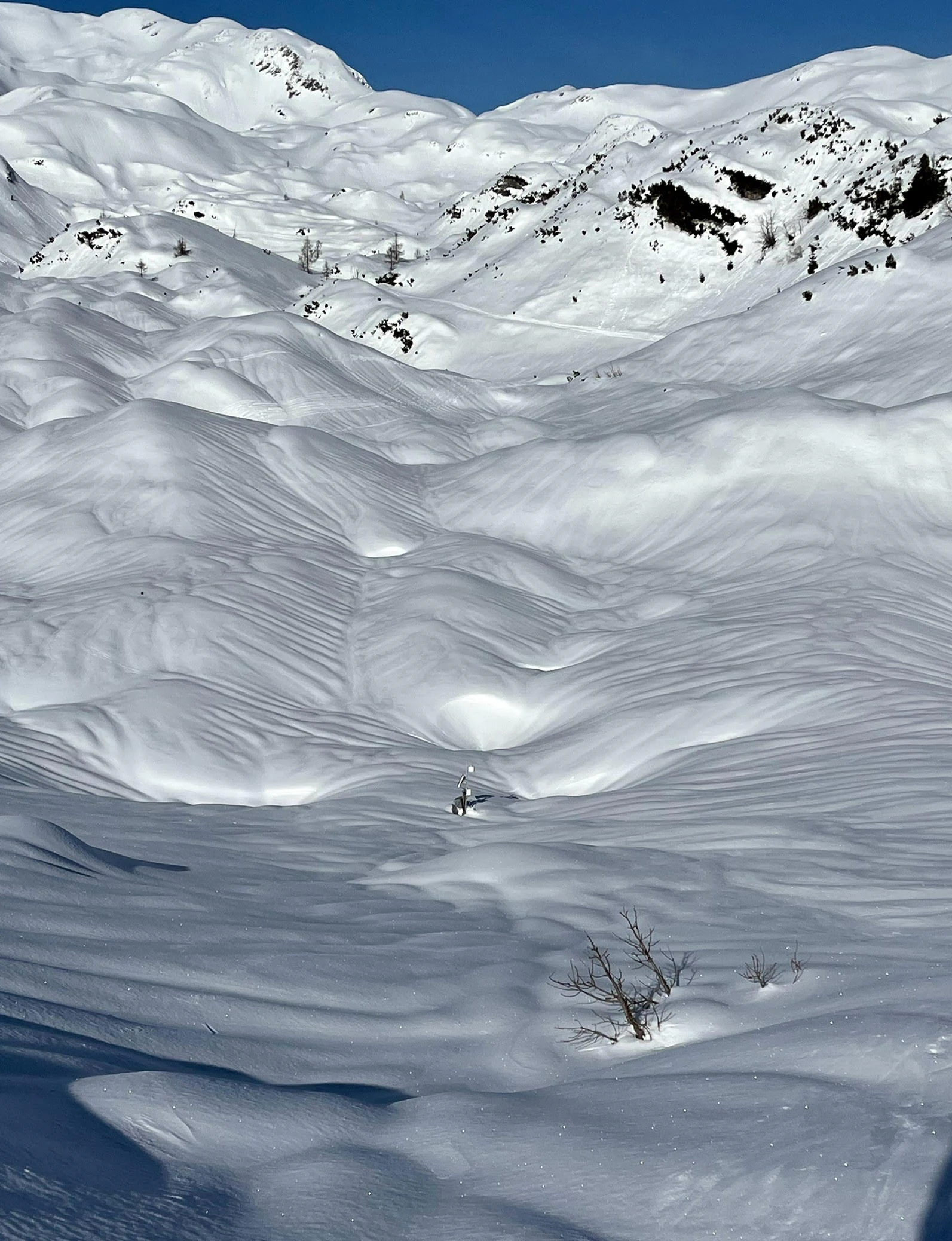
Snow-covered mountain landscape with undulating snowdrifts, sparse trees, and a small human figure in the distance under a clear blue sky
Snow-covered mountain terrain of Mrzla Komna, site of Slovenia's lowest temperature record

Top sights and standout views in Triglav National Park

Triglav National Park offers exceptional natural attractions including the summit of Mount Triglav with Aljažev Tower at its peak, the Triglav Lakes Valley with its chain of glacial lakes, Lake Bohinj as Slovenia's largest permanent lake, and the dramatic Soča River gorges. The park contains over 600 registered caves making it one of the world's premier caving destinations, with notable depth records including Čehi II at 1,373 meters. Boka Falls at 106 meters ranks as Slovenia's tallest waterfall. The Julian Alps were designated a UNESCO Biosphere Reserve in 2003. Information centers operate at Bled, Trenta, Bohinj, Radovna, Kobarid, and Mojstrana. The park spans eight municipalities and is the only national park in Slovenia, representing approximately four percent of the country's territory.
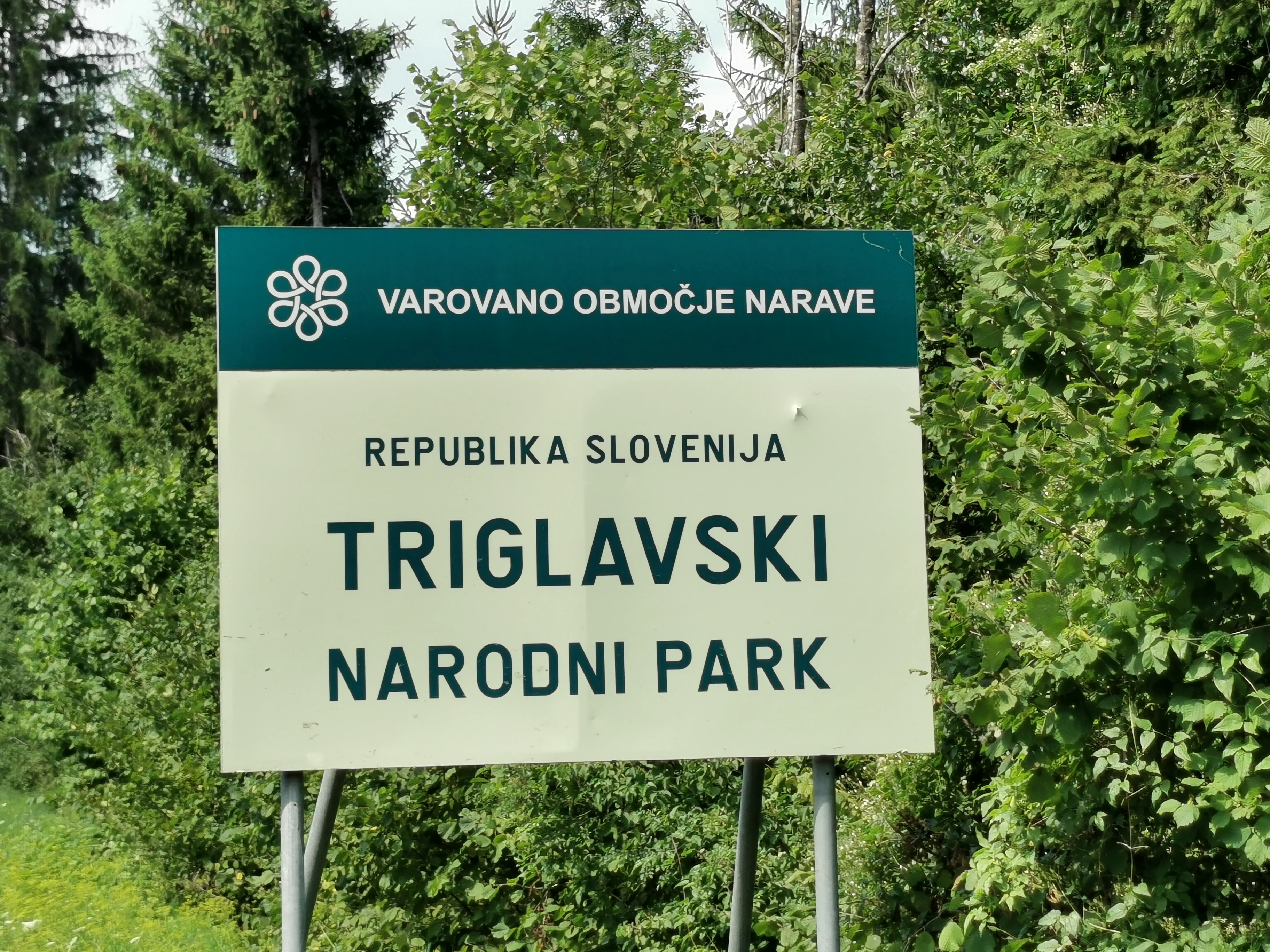
Green and white sign for Triglav National Park in Slovenia surrounded by green foliage and trees
Sign indicating 'Triglavski narodni park' in Slovenia

Best time to visit Triglav National Park

The best time to visit Triglav National Park depends on interests and tolerance for conditions. Summer months from June through September offer the most accessible conditions for hiking and outdoor activities, with warm temperatures in the valleys and accessible high mountain trails. Spring and early summer bring snowmelt feeding waterfalls to their peak flow. Autumn provides clearer skies, fewer crowds, and spectacular fall foliage in the forests. Winter transforms the park into a skiing and winter recreation destination, though many high-elevation trails become inaccessible and avalanche risk increases. The alpine climate means conditions vary dramatically with elevation—valley temperatures may be comfortable while summits remain cold and snowy even in summer. Those seeking to avoid peak visitor numbers might consider shoulder seasons, though some facilities and trails may have limited availability outside the main summer season.
Park location guide

Geography guide, regional context, and park location map for Triglav National Park

Triglav National Park park geography, regions, and map view in Slovenia
Understand where Triglav National Park sits in Slovenia through a broader geographic reading of the surrounding landscape, nearby location context, and its mapped position within the national park landscape.

How Triglav National Park fits into Slovenia

Slovenia is a developed European country with a population of approximately 2.1 million people. It declared independence from Yugoslavia in 1991 and joined the European Union in 2004. The country features diverse geography including the Julian Alps, forests, and a short Adriatic coastline.

Wider geography shaping Triglav National Park in Slovenia

Slovenia is located in Central and Southeast Europe, bordered by Italy to the west, Austria to the north, Hungary to the northeast, and Croatia to the south and southeast. It has a 46.6 km coastline on the Adriatic Sea. The terrain is mostly mountainous and forested, with the Julian Alps in the northwest.

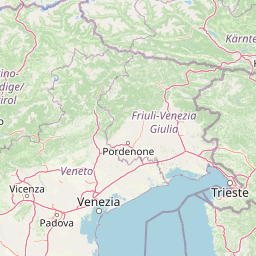
Map view of Triglav National Park

Use this park location map to pinpoint Triglav National Park in Slovenia, understand its exact geographic position, and read its mapped placement within the surrounding landscape more clearly.

Pigeon | © OpenStreetMap contributors

Location context for Triglav National Park

Julian Alps

Explore the Diverse Habitats, Glacial Valleys, and Karst Terrain Defining this Iconic Julian Alps Protected Area

Triglav National Park Photos: Visual Guide to Slovenia's Majestic Alpine Landscapes and Protected Scenery
Browse a curated collection of Triglav National Park images to visually understand its dramatic alpine scenery, towering peaks, pristine glacial lakes, and unique karst formations. These park photographs offer an essential atlas-style reference, illustrating the geological diversity and ecological character that define Slovenia's only national park.

A waterfall cascading through rocky cliffs with a blue river flowing below, surrounded by lush green foliage

Aljaž Tower on a rocky mountain summit under a dramatic sky with distant peaks

Mountain lake surrounded by rocky slopes and green vegetation under a partly cloudy sky

Waterfall flowing into a greenish pool between steep rocky cliffs with a narrow trail on the left

A clear lake surrounded by steep rocky cliffs and lush green meadows under a partly cloudy sky

Rocky mountain peak with patches of snow under clear blue sky

Snow-covered mountain landscape with undulating snowdrifts, sparse trees, and a small human figure in the distance under a clear blue sky

Green and white sign for Triglav National Park in Slovenia surrounded by green foliage and trees

A river flows through a gravelly bed surrounded by dense forest with a mountain peak in the background under a cloudy sky

Park atlas

Compare adjacent alpine landscapes, karst regions, and related protected zones in the Julian Alps

Discover Other National Parks and Protected Areas Near Triglav National Park
After exploring Triglav National Park, browse other national parks and protected areas to compare diverse alpine scenery, glacial lakes, and extensive karst systems across the Julian Alps. Discover regional park geography and contextual landscapes, tracing the spread of protected zones beyond Slovenia's sole national park.
National park

Hohe Tauern National Park: Map of Austria's Largest Alpine Protected Landscape

Discover glacial terrain and mountain park geography in the Austrian Alps.

Hohe Tauern National Park, Austria's largest protected area, offers a profound exploration of high alpine landscapes. This national park is defined by its towering peaks, expansive glacier systems, and deeply carved glacial valleys. Examining its mapped boundaries reveals the sheer scale of this protected alpine terrain, providing crucial context for understanding regional geography and the unique natural systems it preserves across the Central Eastern Alps.

Area
1,806 km²
Established
1981
IUCN
II
Relief
Mountain
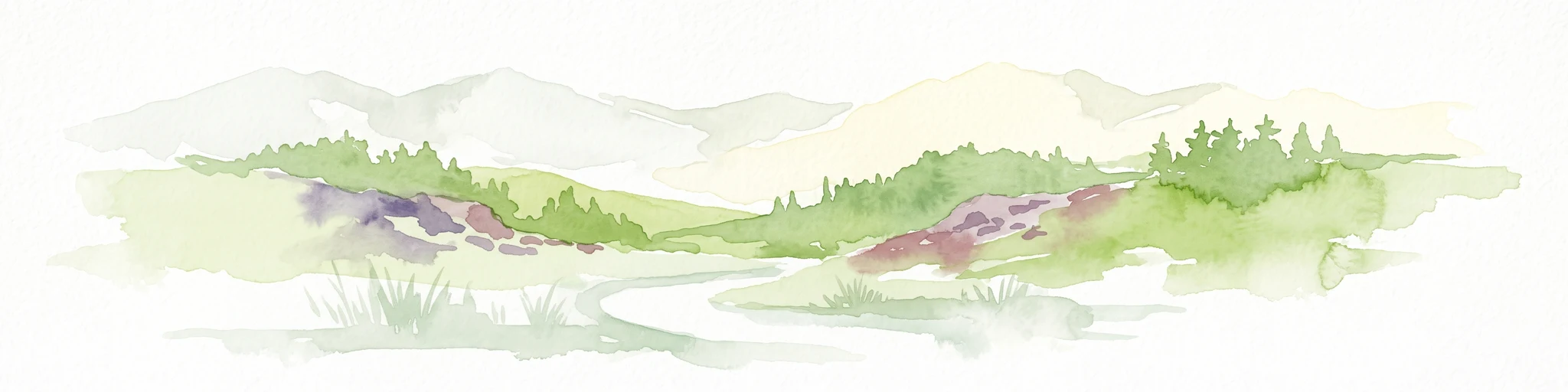
Watercolor illustration of a mountainous landscape with green forests, a lake, and distant pink-hued mountains under a light sky
National parkPrimorje-Gorski Kotar County

Risnjak National Park: Protected Mountain Landscape in Primorje-Gorski Kotar

Explore karst terrain and regional geographic context.

Risnjak National Park represents a substantial protected area within the rugged mountain geography of Croatia's Gorski Kotar region. This national park is distinguished by its dramatic karst formations, diverse alpine flora reaching from forested slopes to rocky summits, and the significant natural landmark of the Kupa River's source. Discover its mapped boundaries and the ecological importance of this unique landscape situated in Primorje-Gorski Kotar County.

Area
63.5 km²
Established
1949
Visitors
16.8K annual
Relief
Mountain
National parkProvince of Belluno

Dolomiti Bellunesi National Park: National Park, Province of Belluno Protected Landscape

Explore mapped boundaries and regional geography

This entry details Dolomiti Bellunesi National Park, a distinct national park situated within the Province of Belluno. It provides essential geographic context and protected landscape information, enabling users to understand the park's boundaries and its role within the regional terrain. Dive into the mapped features and discover the atlas-driven details of this significant Italian protected area.

Area
32 km²
Established
1988
IUCN
II
Relief
Mountain
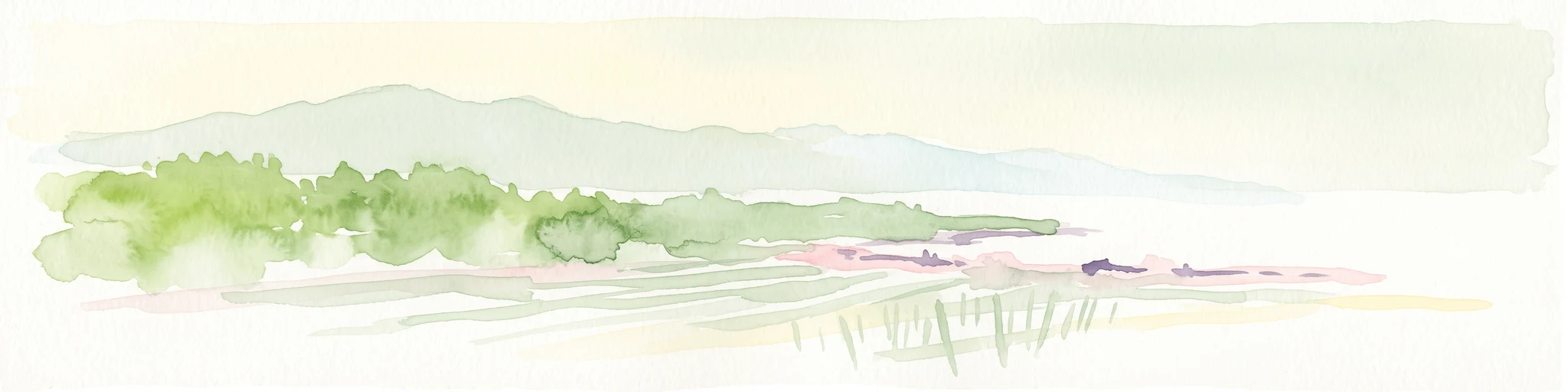
Watercolor illustration showing mountain ranges, forests, and a river under a light sky.
National parkBavaria

Berchtesgaden National Park: Protected Landscape and Regional Geographic Context in Bavaria

Mapped natural terrain and protected area exploration.

Berchtesgaden National Park represents a crucial protected landscape situated in Bavaria, Germany. This entry provides detailed information focused on its protected area status, unique geographic setting, and mapped natural terrain. It serves as a gateway to understanding the park's specific identity within the regional atlas of Germany, offering insights into its boundaries and its significance as a curated natural landscape for discovery.

Area
210 km²
Established
1978
IUCN
II
Relief
Mountain
Watercolor painting of coastal landscape with green islands, trees, and calm water under a soft sky
National park

Brijuni Islands National Park: Adriatic Protected Landscape and Historical Atlas

Mapped boundaries, regional geography, and ecological context.

Brijuni Islands National Park is a significant protected area comprising a Croatian archipelago in the northern Adriatic Sea. This national park showcases a unique Mediterranean landscape blending natural habitats with extensive archaeological sites, offering a rich context for atlas-based exploration. Understanding Brijuni Islands National Park contributes to a broader appreciation of regional geography and the mapped distribution of protected lands.

Area
7.5 km²
Established
1983
Relief
Lowland
Climate
Mediterranean
National parkStyria

Gesäuse National Park: Detailed Protected Landscape and Alpine Geography in Styria

Explore Austria's dramatic river gorge and rugged peaks.

Gesäuse National Park in Styria represents a significant alpine protected area, characterized by the striking Enns river gorge cutting through the Gesäuseberge. This national park offers a unique geographic context, showcasing steep limestone peaks, dramatic rock faces, and a rich hydrological network. Discover the mapped boundaries and protected landscape of one of Austria's most visually striking natural passages, ideal for detailed atlas exploration and understanding alpine conservation.

Area
110 km²
Established
2002
IUCN
II
Relief
Mountain
National parkUpper Austria

Kalkalpen National Park: Ancient Beech Forests and Karst Protected Landscape

Explore mapped boundaries and unique alpine terrain.

Kalkalpen National Park is a premier protected area in Upper Austria, celebrated for harboring Central Europe's largest remaining ancient beech forests and an extensive karst landscape. This designation underscores its critical role in preserving old-growth forest ecosystems and unique geological formations within the Northern Limestone Alps. Discover the mapped terrain and regional geography that define this significant natural reserve, offering a profound look into the continent's ecological history and protected natural heritage.

Area
208.25 km²
Established
1997
IUCN
II
Relief
Mountain
Watercolor illustration of a landscape with rolling hills, scattered trees, and a winding river.
Protected landscape

Medvednica Nature Park: Mapped Protected Landscape and Central European Karst Geography

Explore protected area boundaries and natural terrain.

Medvednica Nature Park stands as a significant protected landscape, renowned for its complex karst topography and extensive cave networks, including the notable Veternica cave. Located immediately north of Zagreb, Croatia, this park offers a rich tapestry of central European mountain geography, dominated by dense beech and oak forests. Its unique features, such as the karst fields and rounded ridges, contribute to its distinct identity within Croatia's protected areas. MoriAtlas maps its geography, providing context for its ecological value and recreational significance.

Established
1981
Relief
Mountain
Climate
Temperate
Access
Moderate access

Common questions about visiting, size, designation, and location context for Triglav National Park

Triglav National Park FAQs for park facts, access, geography, and protected area context
Find quick answers about Triglav National Park, including protected-area facts, park geography, trail and visitor context, and how the park fits into its surrounding country and regional landscape.
MoriAtlas Explorer

Continue Your Protected Areas Search Across the Global Atlas

Deepen your exploration by continuing the structured search for national parks and protected areas worldwide. Utilize the comprehensive filtering capabilities to compare different conservation landscapes and refine your understanding of global park geography. Discover more about the distribution and characteristics of protected natural areas.

Global natural geography