Why Chūbu-Sangaku National Park stands out
Chūbu-Sangaku is best known as Japan's premier alpine hiking destination, centered around the famous Kamikōchi valley and the dramatic peaks of the Northern Alps. The park encompasses some of Japan's most iconic mountain landscapes, including the jagged granite spires of Mount Yari, the sweeping ridgelines of Mount Hotaka, and the volcanic slopes of Mount Norikura. The park is famous for its dramatic gorges and escarpments, its role as the birthplace of Japan's longest river, and its accessibility to some of the most spectacular alpine scenery in the country. The combination of high-altitude terrain, alpine meadows, pristine rivers, and world-class hiking infrastructure makes this the most-visited mountain national park in Japan.
Chūbu-Sangaku National Park history and protected-area timeline
Chūbu-Sangaku National Park was established on December 4, 1934, as part of Japan's pioneering national park system. Along with Daisetsuzan National Park in Hokkaido, Akan National Park in eastern Hokkaido, Nikkō National Park near Tokyo, and Aso Kujū National Park in Kyushu, Chūbu-Sangaku was one of Japan's original five national parks designated in that foundational wave of protected-area establishment. The selection of this mountain region for early national park status reflected both the area's outstanding natural beauty and its significance in Japanese cultural consciousness as a sacred mountain landscape.
The establishment of the park came during a period of increasing environmental awareness in Japan, as the nation sought to preserve representative examples of its diverse natural landscapes. The Hida Mountains had long been important in Japanese religion and culture, with many peaks considered sacred sites. The park's creation formalized protections for these lands that had been informally valued for centuries. Over the decades since its establishment, the park has been expanded and refined as understanding of its ecological values has grown, though its core boundary has remained largely consistent with the original 1934 designation.
Chūbu-Sangaku National Park landscape and geographic character
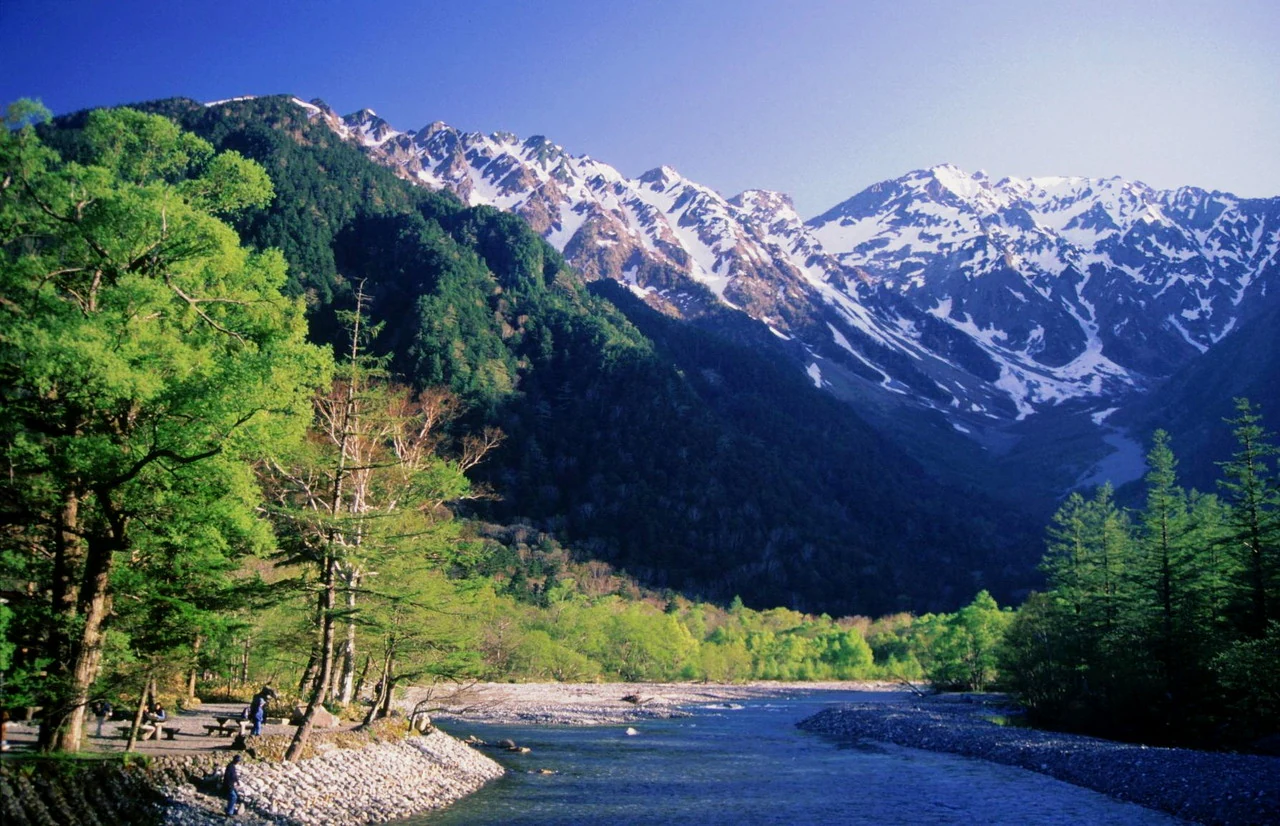
The landscape of Chūbu-Sangaku National Park is defined by the spectacular terrain of the Hida Mountains, also known as the Northern Alps, which form one of Japan's most dramatic mountain ranges. The park encompasses rugged peaks, sharp ridgelines, deep valleys, and dramatic gorges carved by millennia of glacial and erosional processes. Multiple summits exceed 3,000 meters, creating an environment of stark alpine beauty with rock faces, scree slopes, and permanent snow fields. The park is home to dramatically shaped escarpments and steep-walled ravines that showcase the powerful geological forces that shaped this landscape. Notable peaks include Mount Yari, whose sharp granite spire is one of Japan's most recognizable mountains, the broad massif of Mount Hotaka, the volcanic profile of Mount Norikura, and the symmetrical peak of Mount Tate. Between the peaks, the park contains beautiful highland basins and valley floors that provide more accessible terrain for visitors while maintaining the overall sense of alpine wilderness.
Chūbu-Sangaku National Park ecosystems, habitats, and plant life
The ecological character of Chūbu-Sangaku reflects the diversity of Japan's high mountain environments, transitioning through distinct altitudinal zones from mixed forest at lower elevations through subalpine conifer forests to alpine meadows and exposed rock at the highest summits. The park's elevation range creates significant habitat diversity, supporting plant communities adapted to everything from cool temperate conditions to harsh alpine environments. The pristine river systems, fed by snowmelt and spring sources, maintain cold, clear waters that support specialized aquatic ecosystems. The forest zones contain characteristic Japanese alpine species, while the alpine zones support specialized herbaceous vegetation adapted to short growing seasons and extreme conditions. The ecological integrity of these systems depends on the protection afforded by national park status, which has preserved this mountain landscape from major development while allowing sustainable visitor access.
Chūbu-Sangaku National Park wildlife and species highlights
The wildlife of Chūbu-Sangaku reflects the diverse habitats created by the park's altitudinal range and mountainous terrain. The forests support populations of Japanese macaques, Japanese serows, and various deer species, while the higher elevations provide habitat for species adapted to alpine conditions. The park's rivers and streams contain native fish species, and the area supports a variety of bird life including species associated with mountain and forest habitats. The combination of forest, alpine meadow, and rocky terrain creates varied wildlife habitats throughout the park. While specific species details are limited in available sources, the protected status of this large mountain area has helped preserve ecological corridors and habitats important for maintaining wildlife populations in the Japanese Alps.
Chūbu-Sangaku National Park conservation status and protection priorities
Chūbu-Sangaku National Park plays a crucial role in conserving Japan's alpine ecosystems and mountain landscapes. As one of the country's original national parks, it established precedent for protecting representative natural areas and has maintained that conservation function for nearly a century. The park protects not only spectacular scenery but also important ecological systems, including the headwaters of Japan's longest river. The IUCN Category II designation reflects the park's primary purpose of protecting natural ecosystems while allowing compatible recreational use. Management by Japan's Ministry of the Environment balances visitor access with conservation imperatives, addressing the particular challenges of managing a heavily-used mountain park. The long-term protection of this alpine landscape ensures that its ecological values, scenic qualities, and cultural significance are preserved for future generations.
Chūbu-Sangaku National Park cultural meaning and human context
The Hida Mountains have held cultural and religious significance in Japan for centuries, with many peaks considered sacred in the Shugendo tradition of mountain worship. The area's spiritual importance contributed to its preservation and ultimately to its designation as a national park. Traditional practices of pilgrimage to mountain temples and shrines established a cultural relationship with these landscapes that predates modern conservation. The highland valley of Kamikōchi has been a destination for spiritual retreat and aesthetic appreciation for generations, with its natural beauty celebrated in Japanese art and literature. This cultural context adds depth to the park's significance beyond its ecological and scenic values, connecting visitors to a longer tradition of appreciating Japan's mountain landscapes.
Top sights and standout views in Chūbu-Sangaku National Park
Chūbu-Sangaku National Park offers Japan's most comprehensive alpine hiking experience, with highlights including the renowned Kamikōchi valley with its iconic mountain views, challenging ascents to dramatic peaks like Mount Yari and Mount Hotaka, and exploration of spectacular gorges and ravines throughout the Northern Alps. The park provides access to Japan's highest mountain terrain outside of Hokkaido, with trails suitable for all skill levels from casual valley walks to technical mountaineering routes. The dramatic scenery of the Hida Mountains, with their sharp peaks and sweeping ridgelines, ranks among Japan's most photographed landscapes. The opportunity to walk beside the headwaters of Japan's longest river adds a unique dimension to visits. The combination of accessibility, scenic quality, and trail infrastructure makes this Japan's most important mountain recreation area.
Best time to visit Chūbu-Sangaku National Park
Chūbu-Sangaku National Park offers distinct seasonal experiences throughout the year. Summer months, particularly July through September, provide the most reliable access to the park's high-altitude trails, with warm conditions in the valleys and wildflower displays in alpine meadows. The autumn season brings spectacular fall color to the forests and clear mountain weather, though high-elevation trails begin closing as temperatures drop. Winter transforms the park into a pristine snowscape, though trail access becomes limited and conditions become suitable only for experienced winter mountaineers. Spring brings the gradual melting of snow and emerging green vegetation, though muddy conditions and residual snow can affect trail accessibility. The peak hiking season occurs during the Japanese summer holidays in July and August, when visitor numbers are highest. For those seeking fewer crowds while maintaining good access, the shoulder seasons of early June and late September offer excellent conditions with reduced visitation.