National parkSerbia

Đerdap National Park
Explore Serbia's largest national park along the Danube River.
Đerdap National Park, in Serbia. Landscapes: mountains, valleys, and cliffs.
- Area
- 637.87 km²
- Established
- 1974
- IUCN
- II
- Relief
- Mountain
Discover and navigate Serbia's protected landscapes and natural terrain distributions.
Explore maps and profiles of protected areas in Serbia, including Đerdap and Tara.
Comparing land scale, establishment history, and climate zones across Balkan reserves.
Known protected area
Area data available for 11 of 16 parks.
Median park size
Median across 11 parks with known area.
Explore Serbia's Mapped Protected Areas, Regional Terrain, and Conservation Landscapes on MoriAtlas
Serbia is a landlocked country in Southeast and Central Europe, bordered by eight neighboring countries. With a population of approximately 6.6 million, it operates as a unitary parliamentary republic with Belgrade as its capital. The country has a rich history dating back to medieval statehood in the 7th century and has been independent since 2006 following the dissolution of Serbia and Montenegro.
Serbia is a landlocked nation in the Balkans region of Southeast and Central Europe. It borders Hungary, Romania, Bulgaria, North Macedonia, Croatia, Bosnia and Herzegovina, and Montenegro. The country claims a border with Albania through the disputed territory of Kosovo. Serbia has been continuously inhabited since the Paleolithic era and was part of various Roman provinces before medieval Serbian states emerged. The Serbian Kingdom achieved recognition in 1217, reaching its territorial peak as an empire in 1346. After centuries of Ottoman rule interrupted by Habsburg control, Serbia gained independence in 1878 and became a kingdom in 1882. Following Yugoslav periods and a 2006 independence referendum, Serbia is now a unitary parliamentary republic.
Browse the diverse protected landscapes and natural heritage mapped across Serbia's varied geographic terrain.
Explore Serbia's largest national park along the Danube River.
Đerdap National Park, in Serbia. Landscapes: mountains, valleys, and cliffs.
Discover Serbia's iconic protected mountain landscape and its unique botanical heritage.
Tara National Park is a significant protected area in Serbia, celebrated for its exceptional botanical value and dramatic mountainous terrain. It is the last refuge for Pančić's spruce, a living fossil conifer, and hosts a remarkable diversity of Balkan flora. The park's landscape is defined by steep limestone cliffs, deep river valleys like the Drina canyon, and expansive forest ecosystems, offering a unique geographic study of protected lands. Explore its mapped features and discover a vital conservation area within the Dinaric Alps.
Discover Dinaric Alps protected terrain and landscape context.
Zlatibor Protected Landscape offers a distinct exploration of mountainous terrain and protected natural areas in Serbia. Situated in the Dinaric Alps, its landscape is defined by rolling upland plateaus, dense coniferous forests, and open alpine meadows, creating a visually rich environment. The park's geography includes notable karst features and extensive cave systems, complemented by the natural boundaries of significant rivers. Delve into the mapped protected area to understand its landscape character, from the highest peak at Tornik to the unique geological formations and the rare endemic pine subspecies, providing a concrete geographic perspective for atlas-based discovery.
Explore Balkan biodiversity and unique geographic terrain.
MoriAtlas presents Kopaonik National Park, a key protected area celebrated for its extraordinary endemic plant species and its distinctive mountainous geography. This national park safeguards a significant biodiversity hotspot within the Balkans, characterized by a prominent mountain plateau and peaks exceeding 2,000 meters. Discover the park's varied terrain, from forested slopes to subalpine meadows, and understand its role in regional natural landscapes. Utilize our map-based exploration tools to grasp Kopaonik National Park's protected boundaries and its unique place in geographic context.
Discover unique island mountain geography and Serbian Orthodox heritage.
Investigate Fruška Gora National Park, an extraordinary protected landscape rising from the Pannonian Plain. This national park is celebrated for its ancient forests, significant paleontological sites with fossils spanning millions of years, and an exceptional density of 17 historic Serbian Orthodox monasteries. MoriAtlas provides essential geographic context and mapped boundaries for understanding this unique island mountain within its regional context, ideal for structured atlas exploration.
Mapped protected landscape and regional geography discovery
Stara Planina National Park is a newly established national park in eastern Serbia, notable for its extensive mountain terrain and designation within the Balkan Mountains. This protected area features the distinctive Kopren plateau, Tupavica waterfall, and rugged landmarks, all contributing to its unique geographic identity. MoriAtlas provides a structured atlas view of Stara Planina National Park, detailing its protected boundaries and landscape context for comprehensive discovery.
Explore Avala's mapped terrain and natural monument significance.
Avala Natural Monument offers a unique protected landscape and significant geographic context for the Belgrade metropolitan area. As one of Serbia's oldest protected natural sites, its distinct mountain terrain, geological composition, and panoramic views provide a rich subject for atlas-based discovery. Explore the mapped boundaries and natural features that define this prominent Serbian natural monument.
Explore the mapped terrain and protected wetland landscape.
Delve into the geographic specificity of Veliko Ratno Ostrvo, a nature reserve defined by its river island location on the Danube near Belgrade. This page offers an atlas-style view of the protected area, detailing its mapped boundaries and landscape context within Serbia. Understand Veliko Ratno Ostrvo as a key protected natural asset for regional geographic discovery.
Understand the protected landscape and park boundaries of Lake Palić.
Delve into the specifics of Lake Palić, a designated protected area in Serbia. This resource offers a deep dive into the park's mapped landscape, helping to illustrate its protected boundaries and geographic significance. Gain a clear understanding of its regional context and its contribution to the atlas of protected natural areas within Serbia.
Explore distinct geological formations and rich avian habitats.
The Vršac Mountains Protected Landscape offers a unique geographic perspective as one of Serbia's Pannonian island mountains, emerging dramatically from the surrounding plains. This protected area is recognized for its striking gneiss and schist formations, its status as Vojvodina's highest elevation, and its exceptional importance for birdwatching, hosting over 120 species. Delve into the mapped terrain and geological character that distinguish this vital natural region.
Mapped terrain, historic monasteries, and biodiversity near Belgrade.
Kosmaj, a unique protected landscape and island mountain, presents a compelling study in regional geography and mapped terrain for atlas enthusiasts. Rising prominently near Belgrade, its landscape is characterized by dense deciduous forests of beech and oak blanketing its steeper slopes, along with distinct peaks like Mali Vis and Goli Vis. This area serves as a vital watershed source and boasts significant biodiversity, offering a rich context for understanding Serbia's natural and historic environments through structured geographic data and map exploration.
Mapping the unique limestone cliffs and river valley terrain.
Delve into the atlas details of Sićevo Gorge, a protected landscape in Serbia defined by its spectacular limestone cliffs and the Nišava River canyon. This page provides a structured overview of its dramatic topography, intricate karst formations, and the regional geographic context. Understand the mapped boundaries and the unique geological character that makes this gorge a standout feature in Serbia's natural landscape.
Understand how Serbia is shaped by terrain, ecosystems, and seasonal conditions
Serbia is a landlocked country in the Balkans, spanning parts of Southeast and Central Europe. It occupies a strategic position in the heart of the Balkan Peninsula, bordered by Hungary to the north, Romania to the northeast, Bulgaria to the southeast, North Macedonia to the south, Croatia to the northwest, Bosnia and Herzegovina to the west, and Montenegro to the southwest. The terrain varies from rolling plains in the north to mountainous regions in the south and east.
Serbia's natural landscape includes diverse ecosystems across its mountainous and plains regions. The Dinaric Alps extend through the western parts while the Carpathian mountain range touches the eastern border. The country features several protected areas, national parks, and river valleys including the Danube, which forms part of its northern border.
Serbia experiences a continental climate with cold winters and warm summers. The northern regions tend to be colder with more continental weather patterns, while southern areas have milder temperatures influenced by Mediterranean air masses.
Related topics and popular queries
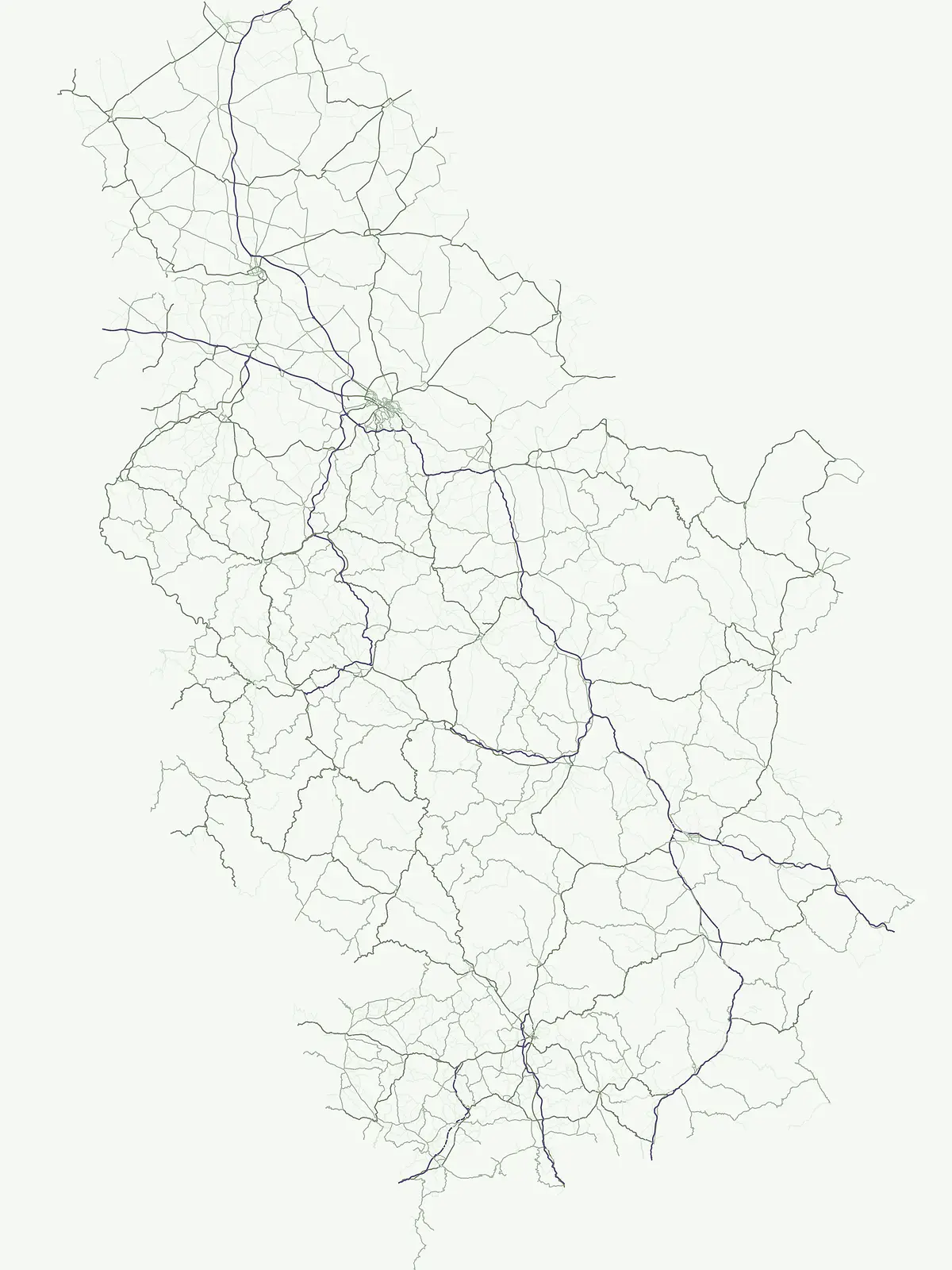
Visualize the mapped geography and spatial distribution of Serbia's diverse protected landscapes.
Gain insights into Serbia's protected landscapes, mapped geographic distribution, and key questions for park exploration.
Compare regional protected landscapes and expand your atlas view across countries neighboring Serbia.

Parks and protected areas in Romania, including Danube Delta and Retezat.

Parks and protected areas in Albania, including Butrint and Primeval Beech Forests of the Carpathians and Other Regions of Europe.

Parks and protected areas in Croatia, including Plitvice Lakes and Paklenica.

Parks and protected areas in Hungary, including Hortobágy and Aggtelek.

Parks and protected areas in Slovenia, including TNP and Škocjan Caves.

Parks and protected areas in Bosnia and Herzegovina, including Sutjeska and Una.

Parks and protected areas in North Macedonia, including Lake Ohrid and Mavrovo.

Parks and protected areas in Bulgaria, including Pirin and Central Balkan.
Protected area types
To deepen your understanding of Serbia's conservation strategy, continue exploring the specific details for each represented designation type. This route allows for a classification-focused approach to discovering the nation's protected lands, providing insights into their geographic distribution and landscape context within the broader Serbian geography. Understand how these distinct categories contribute to the country's protected area network.
Find a park and explore its geography, habitats, and monthly climate.