Why Fiordland National Park stands out
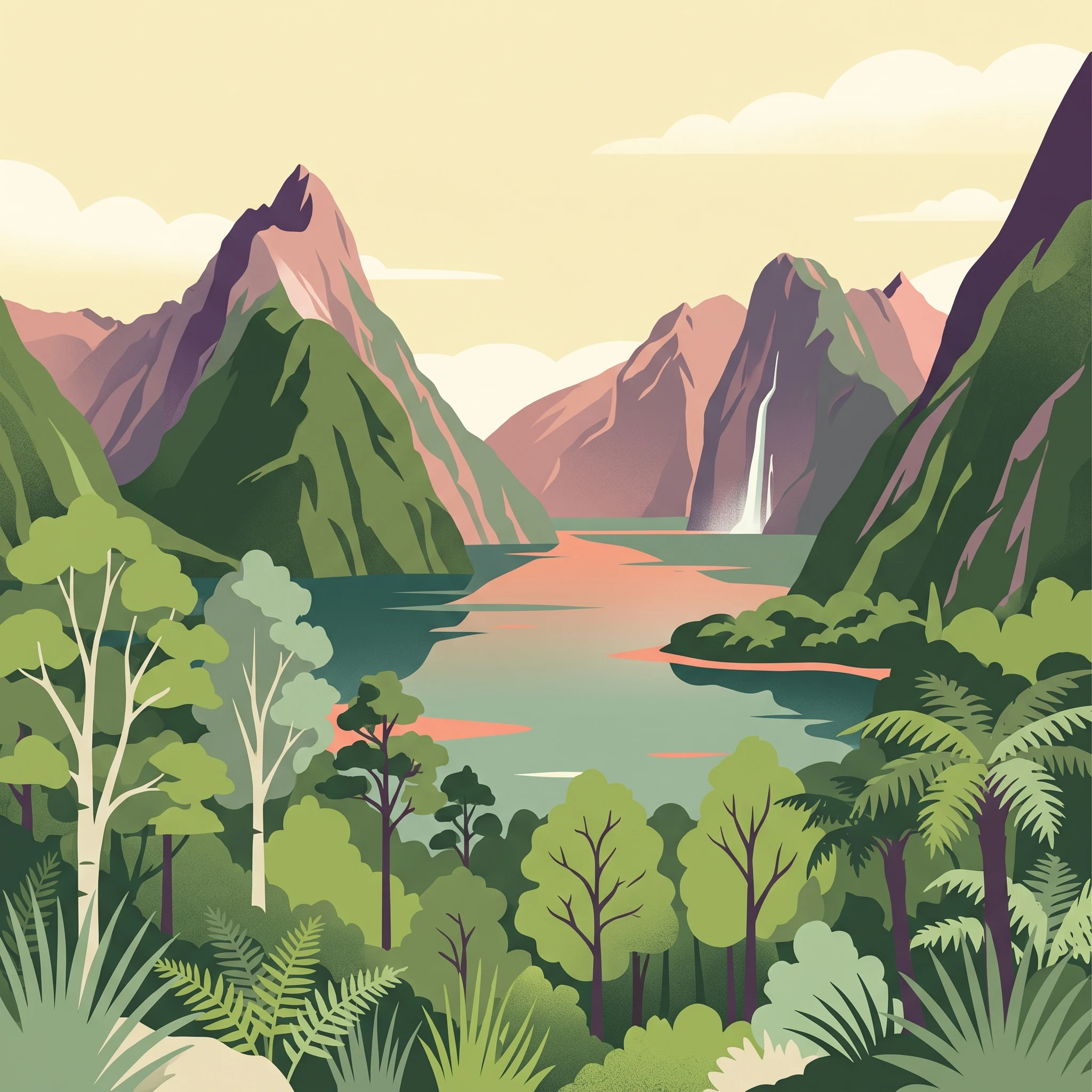
Fiordland National Park is best known for its spectacular fiord landscape, particularly Milford Sound with its iconic Mitre Peak rising 1,692 metres from the water. The park protects the largest remaining tract of unmodified vegetation in New Zealand and serves as a sanctuary for endangered endemic species including the critically endangered kākāpō, the only flightless parrot in the world, and the takahē, once thought extinct. The Milford Track, opened in 1889 and described as the Finest Walk in the World, remains one of New Zealand's most famous tramping routes. The combination of dramatic alpine peaks, deep glacial valleys, pristine rainforests, and rare wildlife makes Fiordland one of New Zealand's most significant natural heritage areas.
Fiordland National Park history and protected-area timeline
The human history of Fiordland extends back over a thousand years to the arrival of Māori settlers, particularly the Ngāi Tahu iwi, who found the fiords provided crucial havens along a rugged coastline rich in forest resources and birdlife. In Māori mythology, the fiords were carved by the deity Tū Te Rakiwhanoa, while another legend describes the creation of sandflies by Hine-nui-te-pō to prevent people from becoming idle in the face of such beauty. European exploration began with Captain James Cook's circumnavigation of the South Island in 1770, though he did not enter Dusky Sound until his second voyage in 1771. Austrian naturalist Andreas Reischek explored Fiordland in the late 1880s, collecting bird specimens despite the loss of many to water damage. The movement to protect Fiordland began in 1904 when 10,000 square kilometres were set aside as a national reserve, following advocacy from future Prime Minister Thomas Mackenzie and Southland Commissioner John Hay. The Milford Track's opening in 1889 by Quintin McKinnon and Donald Sutherland established Fiordland as a premier wilderness destination, gaining international fame after a 1908 London Spectator article proclaimed it the Finest Walk in the World. Formal national park status came in 1952 under the National Parks Act, making Fiordland the third national park in New Zealand, coinciding with the opening of Homer Tunnel providing road access to Milford Sound.
Fiordland National Park landscape and geographic character
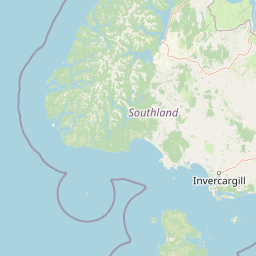
The landscape of Fiordland National Park is defined by the powerful geological forces of glaciation that carved deep U-shaped valleys into the ancient granite basement of the South Island. Fifteen fiords indent the western coastline, the most famous being Milford Sound / Piopiotahi, where Mitre Peak rises dramatically 1,692 metres above the water, and Mount Pembroke reaches 2,015 metres. Other notable fiords include Doubtful Sound / Patea and Tamatea / Dusky Sound, the latter being the largest at 40 kilometres in length. The southern ranges of the Southern Alps form the backbone of the park, with the Darran Mountains containing peaks exceeding 2,500 metres including Mount Aspiring / Tititea visible to the north. Further south, the Franklin, Stuart, and Murchison Mountains reach around 2,000 metres, while the Kepler, Princess, and Cameron Mountains to the south top out at 1,500 to 1,700 metres. The glaciation also created numerous lakes including Lake Te Anau, New Zealand's second-largest lake, and Lake Manapouri, both featuring glacier-carved arms that mirror the appearance of the coastal fiords. Further south, Lake Monowai, Lake Hauroko, and the remote Lake Poteriteri, the largest lake in New Zealand without road access, complete the freshwater landscape. Among the world's highest waterfalls, Sutherland Falls, drops 580 metres via three cascades, while Browne Falls, Humboldt Falls, and numerous temporary waterfalls add to the dramatic hydrology.
Fiordland National Park ecosystems, habitats, and plant life
Fiordland National Park contains the largest contiguous area of unmodified vegetation in New Zealand, a testament to the region's relative inaccessibility and protected status. The dense forests that cling to steep valley sides are dominated by silver beech and mountain beech of the Nothofagus genus, interspersed with podocarp species including rimu, totara, and kahikatea. The understory is exceptionally rich, featuring a diverse array of shrubs and ferns with crown fern (Blechnum discolor) often forming dominant ground cover. The forest floor supports extensive mosses and liverworts, creating a lush, multilayered environment. This extraordinary vegetative complexity is supported by the region's exceptional rainfall, exceeding seven metres annually in many areas, which fuels the Fiordland temperate forests ecoregion. However, these native ecosystems face ongoing pressure from introduced species, particularly red deer and common brushtail possums, which continue to impact forest composition and structure despite decades of management efforts.
Fiordland National Park wildlife and species highlights
Fiordland National Park serves as a critical sanctuary for many of New Zealand's most threatened endemic species, representing one of the nation's most important refuges for native wildlife. The park protects several bird species found nowhere else on Earth, most notably the critically endangered kākāpō, the world's only flightless parrot, which survives in wild populations only within Fiordland's predator-free islands. The takahē, the largest living member of the rail family, was rediscovered in the Murchison Mountains in 1948 after being presumed extinct, and a 500-square-kilometre specially protected area now ensures the survival of the last wild population, which reached approximately 300 birds by 2016. The mōhua (yellowhead), a small insectivorous bird once widespread in New Zealand's forests, persists in significant numbers within the park. The southern brown kiwi and the Fiordland crested penguin, both vulnerable species, are found almost exclusively within Fiordland. The park also protects dolphins, bats, reptiles, and numerous insects. Multiple offshore islands, including Anchor Island, Chalky Island, and Resolution Island, have been established as dedicated conservation sanctuaries for these endangered species.
Fiordland National Park conservation status and protection priorities
Fiordland National Park occupies approximately fifteen percent of New Zealand's total conservation estate, yet receives less than one percent of the Department of Conservation's pest-control budget, highlighting the challenge of balancing protection across such an extensive and remote landscape. The park's significance was recognized internationally through its designation as part of the Te Wāhipounamu World Heritage Area in 1990, acknowledging outstanding natural values including geological processes, ecosystems, and biodiversity. The Takahē Recovery Programme represents one of New Zealand's most successful conservation initiatives, protecting the last wild population of this remarkable bird in the Murchison Mountains Specially Protected Area. Offshore islands serve as crucial refuges for multiple endangered species, with programs transferring takahē, kākāpō, mōhua, little spotted kiwi, and other species to predator-free sanctuaries. The Save Manapouri campaign of the 1960s, which successfully opposed raising Lake Manapouri for hydroelectric production, established an important precedent for environmental advocacy in New Zealand. Marine reserves protect significant underwater areas within several fiords, extending protection into the marine environment. Management continues to address invasive species, including ongoing possum control through aerial 1080 poison dropping and efforts to reduce deer populations.
Fiordland National Park cultural meaning and human context
Fiordland holds deep significance for Ngāi Tahu, the principal Māori iwi of the South Island, whose history in the region extends back over a thousand years. The fiords were important resources for traditional life, providing safe harvens along a rugged coastline, access to abundant birdlife including kākāpō, and quantities of pounamu (greenstone) from Milford Sound. The Māori names for the fiords, including Piopiotahi for Milford Sound, Patea for Doubtful Sound, and Tamatea for Dusky Sound, reflect this enduring connection to the landscape. Several islands within the park are sacred to Māori, and the protection of taonga (treasured objects) remains culturally significant. The park has also become internationally recognizable through its use as a filming location for major productions including The Lord of the Rings and The Hobbit trilogies, where Milford Sound and surrounding areas portrayed the Misty Mountains. More recent films including Alien: Covenant, Mission: Impossible – Fallout, and X-Men Origins: Wolverine have also utilized Fiordland's dramatic scenery, cementing its status as one of the world's most recognizable natural landscapes.
Top sights and standout views in Fiordland National Park
Fiordland National Park offers exceptional wilderness experiences across its vast terrain, with the Milford Sound / Piopiotahi fiord and Mitre Peak representing the most iconic scenery. The multi-day Milford, Kepler, Hollyford, and Routeburn tracks provide access to the park's remote interior, while boat tours allow visitors to experience the fiords from water level. The park's population of endangered species including takahē and kākāpō represents a remarkable conservation success story. Sutherland Falls, among the world's highest waterfalls, and numerous other cascades add to the dramatic landscape. The combination of alpine peaks, ancient rainforests, and rare wildlife makes Fiordland one of the world's outstanding natural areas.
Best time to visit Fiordland National Park
Fiordland can be visited year-round, though the character of the experience changes significantly with the seasons. The summer months from December to February offer the longest daylight hours and the most stable weather, making this the peak season for tramping, boating, and general exploration. Winter from June to August transforms the landscape with snow-dusted peaks and dramatic storm activity, though access to some areas becomes more difficult and the famous Milford Road may require chain-equipped vehicles. The shoulder seasons of autumn and spring present intermediate conditions, with autumn offering possible clearer weather and spring bringing new growth to the forests. The high rainfall characteristic of Fiordland means that wet conditions can be expected at any time, and visitors should be prepared for the possibility of several days of rain during their stay. The sandflies, infamous throughout Fiordland, are present year-round and particularly active during warmer months.