Mori Atlas logo
National parkRakiura National Park

Discover mapped boundaries and diverse terrain of this subantarctic island's protected wilderness.

Rakiura National Park: New Zealand's Remote Protected Landscape & Atlas Exploration

Rakiura National Park represents the protected heart of New Zealand's Stewart Island, a vast expanse of rugged, forested hills and pristine coastlines. As the nation's most geographically isolated national park, it offers an unparalleled opportunity for atlas-driven discovery of one of its least disturbed natural environments. Explore the mapped boundaries and unique subantarctic landscape that define this significant protected area, providing critical context for understanding New Zealand's diverse geography.

New Zealand national parksIslandsLowland forestsKiwi habitatBirdwatchingRemote wilderness

Rakiura National Park

National park

Park overview

Structured park overview, official facts, and landscape profile for Rakiura National Park

Rakiura National Park park facts, protected area profile, and essential visitor context
Review the core facts for Rakiura National Park, including designation, size, terrain, visitor scale, habitats, and operating context in one park-focused overview.

About Rakiura National Park

Rakiura National Park represents a unique addition to New Zealand's protected area network as the nation's newest national park, established in 2002 to preserve the exceptional natural values of Stewart Island / Rakiura. The park covers nearly 1,400 square kilometres, accounting for approximately 85% of the island's total land area, making it one of the most comprehensively protected landscapes in the country. The park's territory is composed of former nature reserves, scenic reserves, and State Forest areas that were consolidated into a unified national park designation. Unlike the mountainous terrain that characterizes most of New Zealand's national parks, Rakiura is predominantly a lowland forest environment with rolling hills, coastal plains, and an extensive indented shoreline. The park excludes the settlement area around Halfmoon Bay (Oban), the island's only town, as well as certain roads and private or Māori-owned land parcels that remain outside the protected boundary. The establishment of Rakiura National Park marked a significant achievement in New Zealand's conservation history, creating a protected area that preserves not only significant ecological habitats but also the cultural heritage embodied in the island's Māori name and mythology.

Quick facts and research context for Rakiura National Park

Rakiura National Park spans roughly 1,400 square kilometres on Stewart Island, making it the 14th and newest of New Zealand's national parks. The park was officially opened on 9 March 2002 by Prime Minister Helen Clark, Minister of Conservation Sandra Lee, and mountaineer Sir Edmund Hillary. Unlike most New Zealand national parks, Rakiura is predominantly lowland forest rather than alpine terrain, covering the majority of a subantarctic island that sits roughly 30 kilometres south of the South Island's southern coast. The park is managed by New Zealand's Department of Conservation and contains three major tramping tracks: the three-day Rakiura Track, the eight-to-ten-day Northwest Circuit, and the challenging nine-day Southern Circuit.

Park context

Deeper park guide and search-rich context for Rakiura National Park

Rakiura National Park history, landscape, wildlife, and travel context
Explore Rakiura National Park through its history, landscape character, ecosystems, wildlife, conservation priorities, cultural context, and seasonal travel timing in a structured park guide built for atlas discovery and search intent.

Why Rakiura National Park stands out

Rakiura National Park is best known as New Zealand's premier destination for wild kiwi viewing, offering what many consider the best opportunity anywhere in the country to observe these iconic flightless birds in their natural habitat. The absence of introduced stoats and ferrets on Stewart Island has allowed kiwi populations to thrive, with approximately 15,000 Southern brown kiwi (tokoeika) inhabiting the island. The park is also notable for its extensive network of tramping tracks through pristine lowland forest, its rugged coastline with isolated sandy beaches, and its significance as a breeding ground for endangered yellow-eyed penguins. The park's cultural connection to Māori mythology, symbolized by the entrance chain sculpture representing the island as the anchor of Māui's canoe, adds a distinctive cultural dimension to the natural landscape.

Rakiura National Park history and protected-area timeline

Rakiura National Park was officially established on 9 March 2002, becoming the 14th national park in New Zealand's system and the most recent addition to the country's network of protected areas. The park's opening ceremony was attended by Prime Minister Helen Clark, Minister of Conservation Sandra Lee-Vercoe, and the celebrated mountaineer Sir Edmund Hillary, underscoring the national significance of this protected area designation. The park was created through the consolidation of various former protected area categories, including nature reserves, scenic reserves, and State Forest lands that together encompassed the bulk of Stewart Island. The creation of the national park followed decades of advocacy for stronger protection of the island's unique natural values. A notable feature at the park's entrance is the chain sculpture designed by Southland sculptor Russell Beck, which was unveiled as part of the park's opening ceremony. This sculpture represents Māori mythology concerning the origins of the New Zealand landscape, specifically the belief that the South Island formed the canoe of the demigod Māui and that Rakiura served as the canoe's anchor, earning the island the alternative name Te Punga o Te Waka a Māui. A duplicate of this sculpture was erected in Bluff in 2008, representing the opposite end of the mythological chain connecting the islands.

Rakiura National Park landscape and geographic character

Rakiura National Park protects the diverse terrain of Stewart Island, a subantarctic island characterized by a rugged landscape of forested hills, extensive coastlines, and remote wilderness areas. The island's topography consists of rolling hills and lower mountain ranges, notably the Tin Range in the east, which rise to elevations of around 700 to 900 metres above sea level. The park's landscape is extensively indented with coves, inlets, and harbours, particularly along the eastern coast where Paterson Inlet provides a deep natural harbour. The coastline features numerous sandy beaches, some of which are extremely isolated and accessible only by foot or boat, including the notable Mason Bay on the western coast. The park's interior is dominated by lowland forest communities, with the terrain generally characterized by soft, rounded ridges and valleys rather than the sharp alpine peaks found in New Zealand's northern national parks. The Freshwater Depression, a significant lowland area, lies in the western portion of the island and is crossed by the Northwest Circuit track.

Rakiura National Park ecosystems, habitats, and plant life

The ecological character of Rakiura National Park is defined by extensive lowland podocarp forests dominated by kāmahi, tōtara, and rimu trees, creating a canopy environment that supports diverse understory and ground-layer plant communities. As one of New Zealand's few large lowland forest ecosystems within a national park, Rakiura provides habitat for plant species that have been displaced from much of the mainland by human activity and introduced species. The park's coastal ecosystems include significant breeding habitat for seabirds and shorebirds, while the forest interior supports populations of native birds, insects, and other endemic fauna. The absence of several introduced mammalian predators that have devastated native wildlife elsewhere in New Zealand, particularly stoats and ferrets, has allowed Stewart Island to retain relatively intact ecological communities. The island's position in the subantarctic zone influences its climate and vegetation patterns, creating conditions that differ from both the mainland and more northern islands.

Rakiura National Park wildlife and species highlights

Rakiura National Park supports remarkable birdlife, most notably the Southern brown kiwi (tokoeika), which represents the largest of New Zealand's kiwi species. The park offers what is widely regarded as the best opportunity in New Zealand for observing kiwi in the wild, with an estimated population of 15,000 individuals inhabiting Stewart Island. The absence of stoats and ferrets has allowed this population to thrive, making wild kiwi sightings a realistic expectation for visitors, particularly during evening hours near the track huts. Coastal areas of the park serve as breeding habitat for the endangered yellow-eyed penguin, one of the world's rarest penguin species. The South Island kākā, a large parrot species, is commonly observed near Halfmoon Bay and Ulva Island, while weka, curious flightless birds, can be found on the offshore islands surrounding Stewart Island. Historically, the Tin Range area within the park was significant as a refuge for the kākāpō, the world's only flightless parrot, with individuals discovered there in the 1970s when the species was presumed nearly extinct.

Rakiura National Park conservation status and protection priorities

Rakiura National Park represents a critical conservation asset for New Zealand, protecting the majority of the nation's third-largest island and preserving ecological communities that have remained relatively intact compared to mainland areas. The park's significance is heightened by the absence of several introduced predator species that have caused catastrophic declines in native wildlife throughout the rest of New Zealand, allowing populations of threatened species to persist at levels not achievable in other protected areas. The park provides crucial habitat for endangered species including the yellow-eyed penguin and supports one of the healthiest kiwi populations in the country. The establishment of the national park consolidated protection over areas previously designated as nature reserves, scenic reserves, and state forests, creating a unified management framework for the island's natural values. The proximity of the park to Codfish Island / Whenua Hou, where kākāpō recovery efforts have been concentrated, demonstrates the broader conservation network of which Rakiura forms an essential component.

Rakiura National Park cultural meaning and human context

Rakiura National Park encompasses landscapes of deep cultural significance to Māori, the indigenous people of New Zealand. The island's Māori name Rakiura translates to land of glowing skies, while the alternative name Te Punga o Te Waka a Māui identifies the island as the anchor of the demigod Māui's canoe in traditional mythology. This mythological heritage is physically represented at the park's entrance by Russell Beck's chain sculpture, which symbolizes the connection between Rakiura and the South Island as described in Māori creation narratives. The park excludes certain Māori-owned land parcels from its boundary, reflecting the recognition of indigenous property rights within New Zealand's protected area framework. The island's human history includes traditional Māori settlement and resource use, with the coastal areas and marine environments complementing the terrestrial protected area.

Top sights and standout views in Rakiura National Park

Rakiura National Park offers visitors several outstanding features that distinguish it within New Zealand's protected area network. The Rakiura Track, a three-day 32-kilometre circuit through lowland forest to Port William and Paterson Inlet, provides a highly regarded backcountry experience with excellent kiwi viewing opportunities near the huts. The park's three major tramping routes—the Rakiura Track, the 125-kilometre Northwest Circuit, and the 70-kilometre Southern Circuit—cater to different experience levels and time commitments, from a three-day introduction to challenging multi-week expeditions. The opportunity to see kiwi foraging in the wild at night represents a unique wildlife experience not easily replicated elsewhere in New Zealand. The park's remote island setting, accessible by ferry or flight from the South Island, offers a wilderness atmosphere distinctly different from the more visited national parks of the mainland.

Best time to visit Rakiura National Park

Rakiura National Park can be visited year-round, though the subantarctic location means weather conditions can be changeable and often damp throughout the seasons. Summer months from December to February generally offer the most stable conditions and longer daylight hours for tramping, while the winter months from June to August can bring cold, wet conditions and shorter days that make longer backcountry trips more challenging. The shoulder seasons of autumn and spring present intermediate conditions with the possibility of both fine weather and periods of rain. Because the park's kiwi are nocturnal, evening and nighttime hours provide the best opportunities for kiwi sightings along the tracks, regardless of season. The park's popularity means that advance booking for hut spaces on the Rakiura Track is advisable during the peak summer period.
Park location guide

Geography guide, regional context, and park location map for Rakiura National Park

Rakiura National Park park geography, regions, and map view in New Zealand
Understand where Rakiura National Park sits in New Zealand through a broader geographic reading of the surrounding landscape, nearby location context, and its mapped position within the national park landscape.

How Rakiura National Park fits into New Zealand

New Zealand is an island nation in the southwestern Pacific Ocean comprising two main islands and numerous smaller islands. Located east of Australia across the Tasman Sea, it features varied topography with the Southern Alps running along the South Island and volcanic terrain on the North Island. The country was settled by Maori people between 1280 and 1350, followed by European exploration beginning in 1642, and became a Dominion in 1907 before gaining full independence in 1947.

Wider geography shaping Rakiura National Park in New Zealand

New Zealand lies in the southwestern Pacific Ocean, east of Australia across the Tasman Sea. The country consists of two main islands, the North Island and South Island, plus over 600 smaller islands. The North Island features volcanic plateaus and hills while the South Island is dominated by the Southern Alps mountain range. The country has a long coastline and is surrounded by the Pacific Ocean.

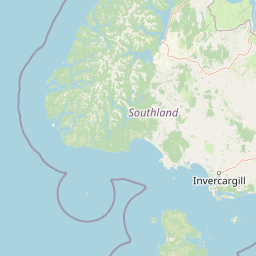
Map view of Rakiura National Park

Use this park location map to pinpoint Rakiura National Park in New Zealand, understand its exact geographic position, and read its mapped placement within the surrounding landscape more clearly.

Pigeon | © OpenStreetMap contributors
Park atlas

Trace the diverse protected landscapes and regional park geography across New Zealand's unique island environments.

Beyond Rakiura National Park: Discover Other National Parks and Protected Areas in New Zealand
Expand your atlas exploration from Rakiura National Park to browse other national parks and protected areas, focusing on New Zealand's distinct island, coastal, and wilderness landscapes. This broader view allows for detailed geographic comparison, tracing conservation efforts and natural terrain across similar subantarctic and South Island protected regions.
National parkSouthland Region

Fiordland National Park: A Protected Landscape of Glacier-Carved Fiords and Alpine Wilderness

Explore its vast boundaries and unique temperate rainforest.

Fiordland National Park, located in the Southland Region of New Zealand, is a testament to dramatic geological forces, featuring fifteen major fiords like Milford Sound, whose Mitre Peak rises majestically from the water. This protected national park encompasses an immense wilderness of alpine terrain, ancient beech forests, and numerous waterfalls, fueled by exceptional rainfall. Its inclusion in the Te Wāhipounamu World Heritage Area underscores its global significance for biodiversity and natural landscape preservation.

Area
12,607 km²
Established
1952
IUCN
II
National parkCanterbury Region

Aoraki / Mount Cook National Park: New Zealand's Iconic Alpine Protected Landscape Exploration

Mapped glacial terrain and mountain peaks in the Canterbury Region.

Delve into the heart of New Zealand's alpine grandeur with Aoraki / Mount Cook National Park. This page offers an atlas-style exploration of its protected boundaries, dramatic glacial formations like the Tasman Glacier, and the towering peaks of the Southern Alps. Understand the park's significant geographic context within the Canterbury Region and discover the mapped landscape that defines this premier national park.

Area
707 km²
Established
1953
IUCN
II
National parkWest Coast

Westland Tai Poutini National Park: A Protected Landscape of Glaciers and Temperate Rainforests

Explore its mapped terrain and unique glacial features in West Coast, NZ.

Westland Tai Poutini National Park represents a remarkable intersection of glacial power and lush temperate rainforests along New Zealand's West Coast. As a protected national park, it showcases dramatic alpine scenery and the unique characteristic of glaciers descending to low elevations. Users can explore the mapped boundaries and the distinct natural landscapes that define this significant protected area, offering a clear view of its place within the region's geography.

Area
1,319.8 km²
Established
1960
IUCN
II
National parkCanterbury

Arthur's Pass National Park: Canterbury's Southern Alps Protected Area Atlas

Dramatic alpine terrain and distinct forest ecosystems within New Zealand.

Arthur's Pass National Park is a nationally significant protected area within the Canterbury region of New Zealand's South Island. This park is defined by its dramatic glacial valleys, towering peaks, and the striking ecological transition between the drier mountain beech forests of the east and the lush rainforests of the west. Its mapped boundaries encompass a critical landscape for understanding alpine environments and conservation in the Southern Alps, offering unique geographical context for this protected territory.

Area
1,184.7 km²
Established
1929
IUCN
II
National parkWest Coast Region

Paparoa National Park: Detailed Geographic Atlas of Karst Formations and Coastal Terrain

Discover protected landscape boundaries and unique New Zealand geology.

Paparoa National Park, located in the West Coast Region of New Zealand, offers a unique window into complex karst geology and dynamic coastal landscapes. This national park is characterized by extensive limestone cave systems, underground rivers, and the famous Pancake Rocks and Blowholes. The park's geography includes dramatic mountain terrain within the Paparoa Range and a striking coastline, providing a rich dataset for mapping protected area context and understanding regional natural features. It stands apart for its subterranean wonders and eroded limestone formations.

Area
429.7 km²
Established
1987
IUCN
II
National parkNew Zealand

Nelson Lakes National Park: Alpine Geography and Glacial Lakes Atlas

Explore New Zealand's protected mountain terrain and natural landscapes.

Nelson Lakes National Park provides a deep dive into a dramatic alpine environment situated at the northern edge of New Zealand's Southern Alps. This national park is characterized by its striking glacial lakes, Rotoiti and Rotoroa, and the extensive mountain ranges that surround them, offering a rich context for understanding protected land distribution. Explore the park's mapped geography, its distinct beech forest ecosystems, and the rugged natural terrain that makes it a significant feature within the broader South Island landscape.

Area
1,018.8 km²
Established
1956
IUCN
II
National parkWest Coast Region

Kahurangi National Park: A National Park of Ancient Geology and Diverse Protected Landscapes in New Zealand

Explore the mapped natural terrain and regional geographic context.

Kahurangi National Park is distinguished by its extraordinary geological diversity, representing New Zealand's finest Paleozoic rock sequence and expansive karst features. Covering a vast area in the West Coast Region, it protects a remarkable array of natural landscapes, from coastal cliffs and nikau palm forests to alpine tussock basins and deep gorges. This national park is crucial for understanding New Zealand's natural heritage, offering a rich tapestry of mapped terrain and protected biodiversity for dedicated geographic exploration.

Area
5,193 km²
Established
1996
IUCN
II
National parkTasman District

Abel Tasman National Park: Coastal Protected Landscape and Mapped Geography in Tasman District

New Zealand's smallest national park offering iconic coastal hiking and wildlife.

Delve into the mapped boundaries and unique geography of Abel Tasman National Park, New Zealand's smallest national park located in the Tasman District. This protected landscape features renowned golden beaches, forested hills, and vital island ecosystems. Explore its coastal trails, understand its ecological restoration context, and appreciate its historical significance as a site of early European and Māori interaction, making it a key destination for atlas-driven geographic discovery.

Area
237.1 km²
Established
1942
IUCN
II

Common questions about visiting, size, designation, and location context for Rakiura National Park

Rakiura National Park FAQs for park facts, access, geography, and protected area context
Find quick answers about Rakiura National Park, including protected-area facts, park geography, trail and visitor context, and how the park fits into its surrounding country and regional landscape.
MoriAtlas Explorer

Continue Your Protected Areas Search Across the Global Atlas

Deepen your exploration by continuing the structured search for national parks and protected areas worldwide. Utilize the comprehensive filtering capabilities to compare different conservation landscapes and refine your understanding of global park geography. Discover more about the distribution and characteristics of protected natural areas.

Global natural geography