Mori Atlas logo
National parkNelson Lakes National Park

Discover the mapped geography and protected wilderness of this Southern Alps national park.

Nelson Lakes National Park: Alpine Landscapes and Glacial Terrain in New Zealand

Nelson Lakes National Park represents a significant protected landscape at the northern end of New Zealand's Southern Alps. This national park offers a unique atlas-driven exploration of dramatic alpine scenery, encompassing two major glacial lakes, Rotoiti and Rotoroa, set amidst rugged mountain ranges like the Saint Arnaud and Travers. Users can investigate the park's precise geographic boundaries, its pristine beech forest ecosystems, and the diverse natural terrain that defines this vital conservation corridor in the South Island.

Alpine EnvironmentBeech ForestsGlacial LakesMountain RangesNational ParkNew Zealand

Nelson Lakes National Park

National park

Park overview

Structured park overview, official facts, and landscape profile for Nelson Lakes National Park

Nelson Lakes National Park park facts, protected area profile, and essential visitor context
Review the core facts for Nelson Lakes National Park, including designation, size, terrain, visitor scale, habitats, and operating context in one park-focused overview.

About Nelson Lakes National Park

Nelson Lakes National Park represents one of New Zealand's original national parks, created in 1956 as part of a wave of protected area establishment in the decades following the National Parks Act of 1952. The park occupies a strategically important position at the northern end of the Southern Alps, where the mountainous terrain gives way to the valleys and lakes that characterize this portion of the South Island. The landscape tells a story of glacial evolution, with the lakes Rotoiti and Rotoroa formed by ice Age glaciers that scoured deep valleys through the surrounding mountain ranges. The park's western boundary follows the Alpine Fault, a major tectonic feature that shapes the geology and geography of the entire South Island. Beyond the two main lakes, the park encompasses numerous tributary valleys including the Travers, Sabine, D'Urville, and upper Mātakitaki rivers, creating an extensive network of wilderness that connects to adjacent protected lands including Victoria Forest Park to the west and Mount Richmond Forest Park to the northeast. The visitor centre at Saint Arnaud provides the main gateway for visitors entering the park, offering information and access to the extensive network of tracks and huts that penetrate this rugged landscape.

Quick facts and research context for Nelson Lakes National Park

Nelson Lakes National Park spans 1,018.8 square kilometres in the Tasman District of New Zealand's South Island, at the northern terminus of the Southern Alps. The park was established in 1956 under New Zealand's National Parks Act and is administered by the Department of Conservation. It features two primary lakes, Rotoiti and Rotoroa, surrounded by mountain ranges including the Saint Arnaud Range, Travers Range, and Ella Range. The landscape contains beech forests, glacial valleys, alpine zones, and the northernmost permanent snowfields on the South Island. The park is significant for conservation, hosting the Rotoiti Mainland Island project focused on predator control and native species recovery.

Park context

Deeper park guide and search-rich context for Nelson Lakes National Park

Nelson Lakes National Park history, landscape, wildlife, and travel context
Explore Nelson Lakes National Park through its history, landscape character, ecosystems, wildlife, conservation priorities, cultural context, and seasonal travel timing in a structured park guide built for atlas discovery and search intent.

Why Nelson Lakes National Park stands out

Nelson Lakes National Park is best known for its dramatic alpine landscape centred on the twin lakes of Rotoiti and Rotoroa, surrounded by rugged mountain ranges and pristine beech forests. The park protects significant populations of native birds including kākā, South Island robin, and the endangered blue duck (whio). The Rotoiti Mainland Island conservation project has achieved notable success in reducing predator numbers and restoring native wildlife populations. The Travers-Sabine Circuit and the route to Lake Angelus are among New Zealand's most celebrated backcountry tramping routes, offering access to remote alpine scenery.

Nelson Lakes National Park history and protected-area timeline

The lands of Nelson Lakes National Park hold deep significance for multiple Māori nations, or iwi, including Ngāti Apa ki te Rā Tō, Ngāti Kuia, Rangitāne o Wairau, Ngāti Rārua, Ngāti Tama ki Te Tau Ihu, Ngāti Toa Rangatira, Te Atiawa o Te Waka-a-Māui, and earlier Ngāti Tūmatakōkiri. The waters of the lakes are particularly important as sources for rivers flowing through various regions, establishing long-standing connections between iwi and these landscapes. The colonial New Zealand Company claimed to have purchased large areas including the Nelson Lakes region in 1839, though these claims were disputed and discredited in 1844. While disputed settlements were reached in 1856, the agreements were largely not honoured by the Crown, and not all iwi with interests were included. The national park movement in New Zealand gained momentum through pressure from Māori groups and Pākehā supporters seeking to preserve land. After the passage of the National Parks Act in 1952, Nelson Lakes became one of four national parks created in the 1950s, alongside Fiordland (1952), Mount Cook (1953), and Urewera (1954). The first park ranger, George Lyon, was appointed in 1959 and spent much of the 1960s building huts and improving tracks throughout the park.

Nelson Lakes National Park landscape and geographic character

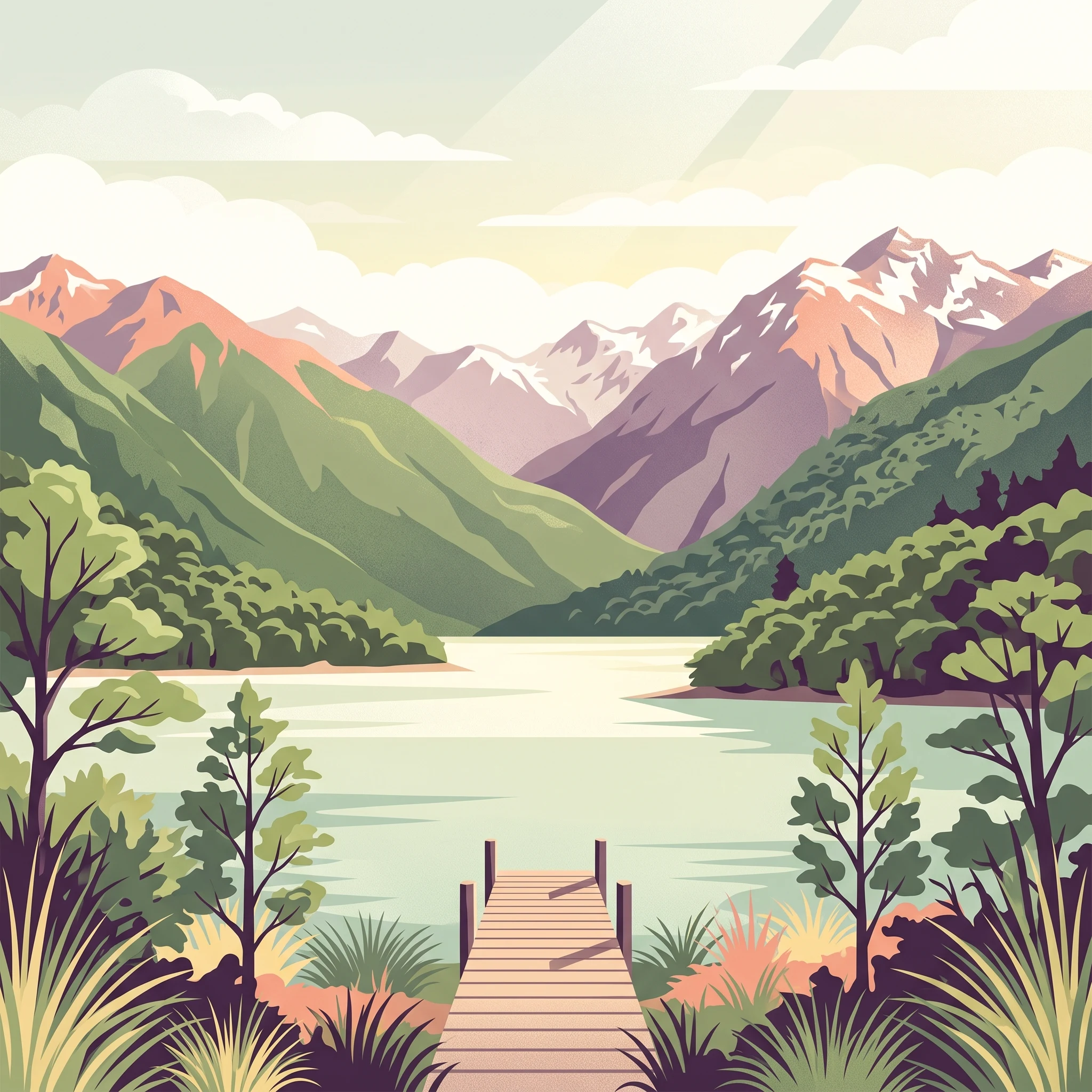
The landscape of Nelson Lakes National Park is defined by its position at the northern end of the Southern Alps, where mountain ranges rise dramatically above glacier-carved lakes and forested valleys. The park is centred on two large lakes, Rotoiti and Rotoroa, which sit within broad valleys carved by glacial ice during the Pleistocene epoch. Surrounding the lakes are several distinct mountain ranges: the Ella Range features peaks including Mount Magadalene at 2,187 metres and Mount Ella at 2,253 metres; the Travers Range includes Mount Hopeless at 2,278 metres, Angelus Peak at 2,075 metres, and Mount Robert at 1,411 metres; the Saint Arnaud Range contains Mount McKay at 2,300 metres and the Camel at 1,889 metres. Two permanent snowfields on Mt. Ella and Mt. Hopeless represent the northernmost occurrences of this feature on the South Island. The terrain ranges from alpine scree and rock to forested valley floors, with elevation differences of over 1,500 metres between valley bottoms and alpine summits creating diverse microclimates and habitats.

Nelson Lakes National Park ecosystems, habitats, and plant life

The ecological diversity of Nelson Lakes National Park encompasses a remarkable range of habitats from alpine scree and tussocklands through to wetlands and upland mountain beech forests. Three species of beech dominate the forest ecosystems: mountain beech, red beech, and silver beech, each occupying different elevations and moisture regimes within the park. These beech forests produce honeydew, a sugary secretion that supports complex invertebrate communities, though this resource has been severely impacted by invasive wasps. The park supports notable diversity of alpine flora, including several rare species. Four plant taxa are currently listed as either threatened (three species of beech mistletoe) or endangered, including Pittosporum patulum. The variety of ecosystems within the relatively compact area supports numerous bird, amphibian, and insect communities, making the park a significant area for New Zealand biodiversity.

Nelson Lakes National Park wildlife and species highlights

Nelson Lakes National Park supports populations of several notable New Zealand bird species, though many have experienced significant declines over the past century. The kākā, a large parrot species, was historically abundant with hundreds recorded around Lake Rotoroa around 1900, but populations declined throughout the 20th century. The species has benefited from the extensive stoat trapping carried out by the Rotoiti Nature Recovery Project, and concentrated populations persist around Lakes Rotoiti and Rotoroa. The yellow-crowned parakeet, once described as very common with hundreds near Lake Rotoroa around 1900, has declined but remains present throughout the park's valleys. The South Island robin is commonly seen throughout the park, often approaching visitors curiously. The endangered blue duck or whio, once widespread throughout the region's rivers, is now extremely rare within the park with insufficient numbers, especially females, to ensure population survival without human intervention. The extremely rare Cupola gecko was discovered in the Sabine Valley in 2021, confirming its presence in alpine regions. Western weka and long-tailed bats have both declined from common to rare over the past century.

Nelson Lakes National Park conservation status and protection priorities

The Rotoiti Mainland Island project represents the primary conservation initiative within Nelson Lakes National Park, encompassing 5,000 hectares of beech forest around Lake Rotoiti. This project aims to eliminate introduced mammalian predators including stoats, possums, and rodents, as well as invasive wasps, to allow recovery of forest ecosystems and native wildlife populations. The Rotoiti Nature Recovery Project has achieved measurable success in reducing predator numbers on the eastern side of Lake Rotoiti, with visitors now able to observe great spotted kiwi, robins, bellbirds, fantails, rock wrens, kea, and paradise ducks as a result of these efforts. The park's conservation significance is further enhanced by its connectivity to adjacent protected areas including Victoria Forest Park, Mount Richmond Forest Park, Lewis Pass Scenic Reserve, and the St James Conservation Area, creating a larger conservation landscape in the northern South Island.

Nelson Lakes National Park cultural meaning and human context

The lands and waters of Nelson Lakes National Park are of deep cultural significance to multiple Māori iwi, reflecting the long history of human occupation and connection to this landscape. The lakes hold particular importance as sources for rivers that flow through various regions, establishing ecological and cultural connections that extend beyond the park's boundaries. Seven iwi maintain ongoing connections to the area: Ngāti Apa ki te Rā Tō, Ngāti Kuia, Rangitāne o Wairau, Ngāti Rārua, Ngāti Tama ki Te Tau Ihu, Ngāti Toa Rangatira, and Te Atiawa o Te Waka-a-Māui, along with the earlier Ngāti Tūmatakōkiri. Historical accounts from European explorers and settlers document the rich birdlife of the region in the mid-1800s, providing baseline data against which contemporary declines can be measured. The establishment of the national park in 1956 followed decades of advocacy for land preservation from both Māori groups and the broader conservation movement.

Top sights and standout views in Nelson Lakes National Park

The Travers-Sabine Circuit stands as one of New Zealand's premier multi-day tramping routes, winding through glacial valleys past Lake Angelus and connecting multiple backcountry huts. The route to Angelus Hut via Robert Ridge offers access to one of the most popular alpine huts in the national park, though the route is considered dangerous in bad weather and has been the site of multiple search and rescue operations. Lake Rotoiti and Lake Rotoroa provide the main access points for visitors, with campgrounds on their shores offering direct contact with the park's lakes and forests. The diversity of landscape within the park, ranging from beech-forested valleys to alpine peaks with permanent snowfields, creates opportunities for varied experiences from easy nature walks to challenging backcountry expeditions. The success of predator control in the Rotoiti Mainland Island area has made wildlife viewing increasingly rewarding, with visitors now able to encounter species that have become rare in other parts of New Zealand.

Best time to visit Nelson Lakes National Park

The best time to visit Nelson Lakes National Park depends on the activities pursued and tolerance for varying conditions. Summer months from December to February offer the most stable weather and longest daylight hours, making them ideal for tramping and camping, though this is also the busiest period. Autumn often brings clear skies and colourful foliage in the beech forests. Winter access to alpine areas becomes dangerous due to snow, ice, and rapidly changing weather conditions, though the park remains accessible at lower elevations. The mountain environment can experience severe weather at any time of year, and visitors to alpine areas should be prepared for conditions that can change quickly. Regardless of season, visitors planning to use the more remote tracks or access high-altitude huts should check weather forecasts and carry appropriate safety equipment, as hypothermia risk exists even in summer.
Park location guide

Geography guide, regional context, and park location map for Nelson Lakes National Park

Nelson Lakes National Park park geography, regions, and map view in New Zealand
Understand where Nelson Lakes National Park sits in New Zealand through a broader geographic reading of the surrounding landscape, nearby location context, and its mapped position within the national park landscape.

How Nelson Lakes National Park fits into New Zealand

New Zealand is an island nation in the southwestern Pacific Ocean comprising two main islands and numerous smaller islands. Located east of Australia across the Tasman Sea, it features varied topography with the Southern Alps running along the South Island and volcanic terrain on the North Island. The country was settled by Maori people between 1280 and 1350, followed by European exploration beginning in 1642, and became a Dominion in 1907 before gaining full independence in 1947.

Wider geography shaping Nelson Lakes National Park in New Zealand

New Zealand lies in the southwestern Pacific Ocean, east of Australia across the Tasman Sea. The country consists of two main islands, the North Island and South Island, plus over 600 smaller islands. The North Island features volcanic plateaus and hills while the South Island is dominated by the Southern Alps mountain range. The country has a long coastline and is surrounded by the Pacific Ocean.

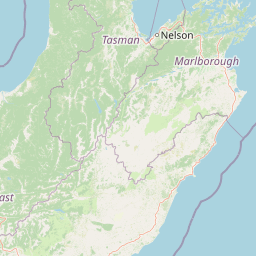
Map view of Nelson Lakes National Park

Use this park location map to pinpoint Nelson Lakes National Park in New Zealand, understand its exact geographic position, and read its mapped placement within the surrounding landscape more clearly.

Pigeon | © OpenStreetMap contributors

Location context for Nelson Lakes National Park

South IslandTasman District
Park atlas

Browse connected landscapes and compare protected area geography across New Zealand's northern South Island.

Explore Other National Parks and Protected Areas Near Nelson Lakes National Park
After exploring Nelson Lakes National Park, continue your discovery by browsing nearby national parks and other protected areas across New Zealand's Tasman District and the broader Southern Alps region. Compare varied landscapes, from alpine environments and glacial lakes to extensive beech forests, gaining deeper geographic context and understanding regional conservation efforts.
National parkWest Coast Region

Kahurangi National Park: A National Park of Ancient Geology and Diverse Protected Landscapes in New Zealand

Explore the mapped natural terrain and regional geographic context.

Kahurangi National Park is distinguished by its extraordinary geological diversity, representing New Zealand's finest Paleozoic rock sequence and expansive karst features. Covering a vast area in the West Coast Region, it protects a remarkable array of natural landscapes, from coastal cliffs and nikau palm forests to alpine tussock basins and deep gorges. This national park is crucial for understanding New Zealand's natural heritage, offering a rich tapestry of mapped terrain and protected biodiversity for dedicated geographic exploration.

Area
5,193 km²
Established
1996
IUCN
II
National parkTasman District

Abel Tasman National Park: Coastal Protected Landscape and Mapped Geography in Tasman District

New Zealand's smallest national park offering iconic coastal hiking and wildlife.

Delve into the mapped boundaries and unique geography of Abel Tasman National Park, New Zealand's smallest national park located in the Tasman District. This protected landscape features renowned golden beaches, forested hills, and vital island ecosystems. Explore its coastal trails, understand its ecological restoration context, and appreciate its historical significance as a site of early European and Māori interaction, making it a key destination for atlas-driven geographic discovery.

Area
237.1 km²
Established
1942
IUCN
II
National parkWest Coast Region

Paparoa National Park: Detailed Geographic Atlas of Karst Formations and Coastal Terrain

Discover protected landscape boundaries and unique New Zealand geology.

Paparoa National Park, located in the West Coast Region of New Zealand, offers a unique window into complex karst geology and dynamic coastal landscapes. This national park is characterized by extensive limestone cave systems, underground rivers, and the famous Pancake Rocks and Blowholes. The park's geography includes dramatic mountain terrain within the Paparoa Range and a striking coastline, providing a rich dataset for mapping protected area context and understanding regional natural features. It stands apart for its subterranean wonders and eroded limestone formations.

Area
429.7 km²
Established
1987
IUCN
II
National parkCanterbury

Arthur's Pass National Park: Canterbury's Southern Alps Protected Area Atlas

Dramatic alpine terrain and distinct forest ecosystems within New Zealand.

Arthur's Pass National Park is a nationally significant protected area within the Canterbury region of New Zealand's South Island. This park is defined by its dramatic glacial valleys, towering peaks, and the striking ecological transition between the drier mountain beech forests of the east and the lush rainforests of the west. Its mapped boundaries encompass a critical landscape for understanding alpine environments and conservation in the Southern Alps, offering unique geographical context for this protected territory.

Area
1,184.7 km²
Established
1929
IUCN
II
National parkWest Coast

Westland Tai Poutini National Park: A Protected Landscape of Glaciers and Temperate Rainforests

Explore its mapped terrain and unique glacial features in West Coast, NZ.

Westland Tai Poutini National Park represents a remarkable intersection of glacial power and lush temperate rainforests along New Zealand's West Coast. As a protected national park, it showcases dramatic alpine scenery and the unique characteristic of glaciers descending to low elevations. Users can explore the mapped boundaries and the distinct natural landscapes that define this significant protected area, offering a clear view of its place within the region's geography.

Area
1,319.8 km²
Established
1960
IUCN
II
National parkNew Zealand

Egmont National Park: New Zealand's Distinctive Volcanic National Park

Explore the mapped volcanic terrain and protected landscape of Mount Taranaki.

Egmont National Park represents a significant protected area within New Zealand's North Island, dominated by the iconic stratovolcano, Mount Taranaki. This national park is celebrated for its distinct circular protected boundary, a unique feature against the surrounding pastoral farmlands, and its dramatic volcanic landscape. Visitors can explore a range of natural habitats from dense temperate rainforests to alpine environments, all mapped within this significant conservation landmark.

Area
341.7 km²
Established
1900
IUCN
II
National parkCanterbury Region

Aoraki / Mount Cook National Park: New Zealand's Iconic Alpine Protected Landscape Exploration

Mapped glacial terrain and mountain peaks in the Canterbury Region.

Delve into the heart of New Zealand's alpine grandeur with Aoraki / Mount Cook National Park. This page offers an atlas-style exploration of its protected boundaries, dramatic glacial formations like the Tasman Glacier, and the towering peaks of the Southern Alps. Understand the park's significant geographic context within the Canterbury Region and discover the mapped landscape that defines this premier national park.

Area
707 km²
Established
1953
IUCN
II
National parkNorth Island

Whanganui National Park: A Protected Landscape of River Valleys and Lowland Forests

Explore mapped boundaries and regional geography on North Island.

Delve into Whanganui National Park, a key protected area on New Zealand's North Island. This national park is defined by its extensive lowland podocarp-hardwood forests and the iconic Whanganui River valley, presenting a unique wilderness character. Understand its geographic context and mapped landscape features, offering a distinct point of exploration within the broader atlas of New Zealand's protected lands.

Area
742 km²
Established
1986
IUCN
II

Common questions about visiting, size, designation, and location context for Nelson Lakes National Park

Nelson Lakes National Park FAQs for park facts, access, geography, and protected area context
Find quick answers about Nelson Lakes National Park, including protected-area facts, park geography, trail and visitor context, and how the park fits into its surrounding country and regional landscape.
MoriAtlas Explorer

Continue Your Protected Areas Search Across the Global Atlas

Deepen your exploration by continuing the structured search for national parks and protected areas worldwide. Utilize the comprehensive filtering capabilities to compare different conservation landscapes and refine your understanding of global park geography. Discover more about the distribution and characteristics of protected natural areas.

Global natural geography