Mori Atlas logo
National parkRedwood National and State Parks

Discover the unique protected area identity within California's regional geography.

Redwood National and State Parks: Protected Landscape Geography and Mapped Boundaries

Delve into the protected landscape of Redwood National and State Parks, a significant national park located in California. This page offers a detailed look at its mapped boundaries, geographic context within the state, and its role as a protected natural area. Understand the unique landscape characteristics that define this protected region and its place in the broader atlas of natural lands.

Temperate RainforestOld-Growth ForestCoast RedwoodWorld Heritage SiteCalifornia CoastNational Park

Redwood National and State Parks

National park

Park overview

Structured park overview, official facts, and landscape profile for Redwood National and State Parks

Redwood National and State Parks park facts, protected area profile, and essential visitor context
Review the core facts for Redwood National and State Parks, including designation, size, terrain, visitor scale, habitats, and operating context in one park-focused overview.

About Redwood National and State Parks

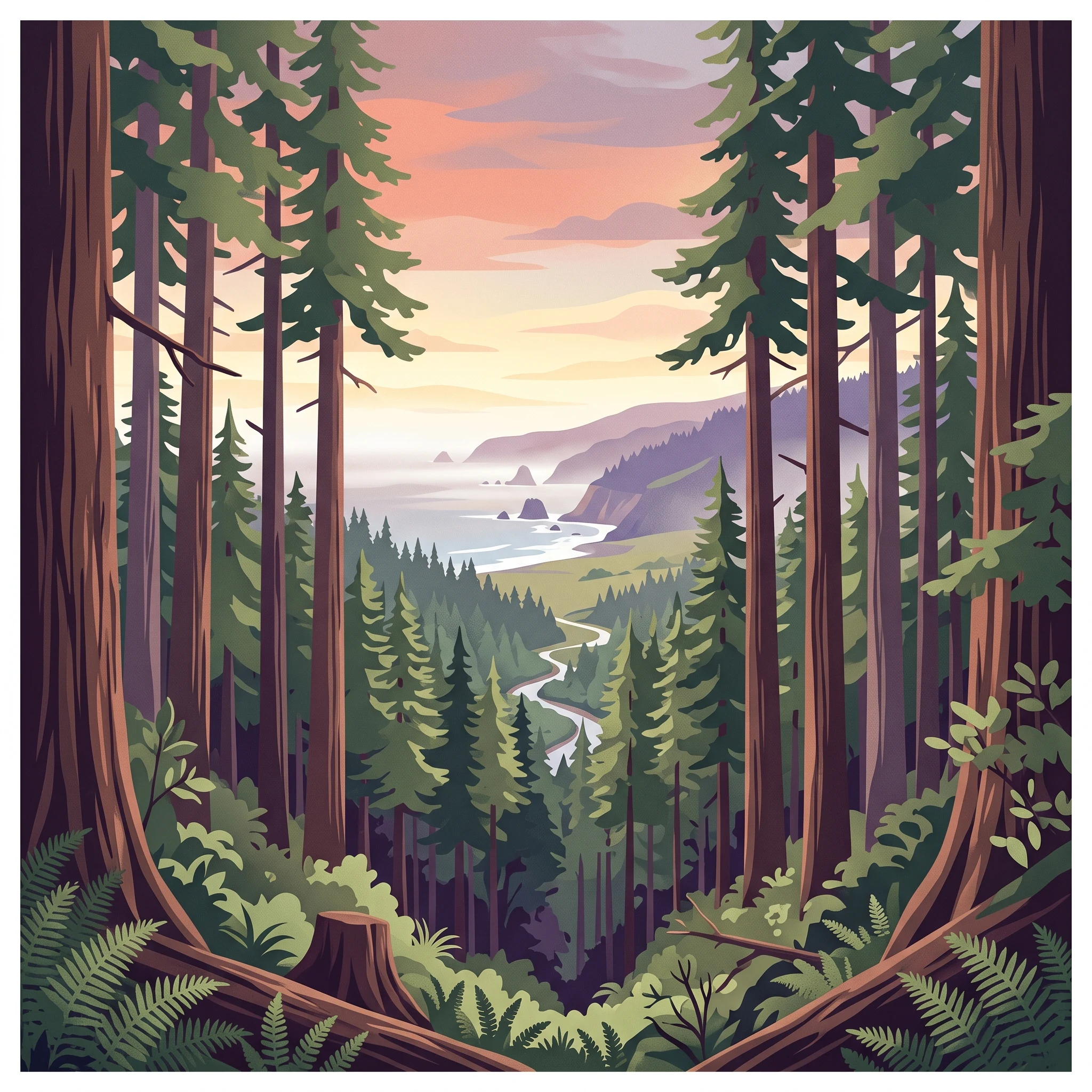
The Redwood National and State Parks represent one of the most significant conservation achievements in American history, protecting what remains of the ancient coast redwood forests that once blanketed the northern California coastline. The combined park system encompasses four distinct protected areas that work together as a unified management unit, preserving not only the iconic redwood trees but also the broader ecological community that depends on this temperate rainforest environment. The parks stretch from the Oregon border southward along a dramatic coastline characterized by sea stacks, rocky cliffs, and remote beach access points, inland to the foothills of the California Coast Ranges. The significance of this protected area extends beyond its ecological value; it represents a reconciliation between decades of intensive logging and the recognition that these ancient forests constitute a irreplaceable natural heritage. The parks receive approximately 458,000 visitors annually who come to experience the profound scale and otherworldly beauty of the redwood forests, where trees towering hundreds of feet create cathedral-like forest interiors that have inspired awe for millennia.

Quick facts and research context for Redwood National and State Parks

The parks stretch along the northern California coast in Del Norte and Humboldt counties, with the nearest city being Crescent City. The combined area covers 139,091 acres established primarily in 1968 for the national park component, with significant expansion in 1978. The parks are managed cooperatively by the National Park Service and California Department of Parks and Recreation under a memorandum of understanding signed in 1994. The area holds IUCN Category V status as a protected landscape and seascape. The parks were designated a World Heritage Site by the United Nations in 1980 and were recognized as an International Biosphere Reserve in 1983, though the United States withdrew from the biosphere reserve network in 2017.

Park context

Deeper park guide and search-rich context for Redwood National and State Parks

Redwood National and State Parks history, landscape, wildlife, and travel context
Explore Redwood National and State Parks through its history, landscape character, ecosystems, wildlife, conservation priorities, cultural context, and seasonal travel timing in a structured park guide built for atlas discovery and search intent.

Why Redwood National and State Parks stands out

The parks are world-renowned for protecting the coast redwood (Sequoia sempervirens), the tallest, most massive, and among the oldest tree species on Earth. The parks contain the tallest known living tree, Hyperion, which reaches 380 feet in height. The temperate rainforest ecosystem, sustained by heavy winter rains and persistent summer fog, supports one of the most ecologically significant forest types in North America. The parks preserve roughly 45 percent of all remaining old-growth coast redwood forests, representing the last remnants of a forest type that once covered over two million acres of the California coast.

Redwood National and State Parks history and protected-area timeline

The land now protected by the Redwood National and State Parks has been home to indigenous peoples for at least 8,500 years, with the Yurok, Tolowa, Karuk, Chilula, and Wiyot nations maintaining deep connections to the region. These Native American communities utilized redwood trees for construction materials and featured them in their mythology, building plankhouses from redwood boards and crafting canoes from the rot-resistant wood. European contact began in 1543 when the Cabrillo expedition reached Cape Mendocino, though extensive European exploration did not occur until the late 18th century. The California Gold Rush of 1848 brought dramatic transformation, with the discovery of gold along the Trinity River in 1850 bringing thousands of settlers who displaced indigenous peoples through violence and displacement. Redwood logging followed quickly, with the straight-grained wood proving invaluable for construction. By the early 20th century, much of the original redwood forest had been cleared. Conservation efforts emerged in the 1920s when the Save the Redwoods League helped establish Prairie Creek, Del Norte Coast, and Jedediah Smith Redwoods State Parks. After decades of advocacy by the Sierra Club and Save the Redwoods League, Congress created Redwood National Park in 1968 and expanded it significantly in 1978 with the purchase of 48,000 acres of previously logged land. In 1994, the National Park Service and California Department of Parks and Recreation combined management of the federal and state parks into a single administrative unit.

Redwood National and State Parks landscape and geographic character

The parks occupy a dramatic setting along the Pacific coast of northern California, where the California Coast Ranges meet the sea. The terrain ranges from sea level along the coastline to 837 meters at Rodgers Peak in the inland mountains. The coastline features sea stacks, rocky cliffs, and remote sandy beaches carved by the constant action of Pacific waves. The interior landscape is dominated by deep valleys carved by rivers and streams, with the redwood forests occupying the sheltered slopes and moist flat ground below 1,000 feet in elevation. The geology beneath the parks consists primarily of the Franciscan assemblage, a complex of metamorphic and sedimentary rocks from the Jurassic and Cretaceous periods, with younger marine and alluvial deposits in the river valleys. The parks are highly seismically active, located at the Mendocino triple junction where the North American, Pacific, and Gorda tectonic plates meet. This tectonic setting results in frequent earthquakes and makes the area the most tsunami-prone region in the continental United States.

Redwood National and State Parks ecosystems, habitats, and plant life

The Redwood National and State Parks protect one of the world's most distinctive temperate rainforests, an ecosystem dependent on the combination of heavy winter rainfall and persistent summer fog that characterizes the northern California coast. The coast redwood dominates much of the forest, thriving in the humid conditions and reaching heights and masses unmatched by any other tree species on Earth. The parks preserve approximately 38,982 acres of old-growth forest, nearly half of all remaining old-growth coast redwood forests in the world. Beyond the redwoods, the forest includes coast Douglas-fir, red alder, Sitka spruce, tanoak, Pacific madrone, bigleaf maple, and California laurel. The understory features huckleberry, snowberry, sword fern, redwood sorrel, and prolific stands of California rhododendron. Prairie Creek Redwoods State Park contains Fern Canyon, a 50-foot-deep ravine whose walls are completely covered in fern species whose ancestors date back 325 million years. The grassland prairies of the Bald Hills support a distinctly different ecosystem, while the coastline provides marine and tidal habitats.

Redwood National and State Parks wildlife and species highlights

The diverse ecosystems within the parks support a remarkable array of wildlife. Approximately 66 species of land mammals have been documented, including black bear, coyote, cougar, bobcat, beaver, river otter, and black-tailed deer. Roosevelt elk, brought back from the brink of extinction in the region, are now commonly observed throughout the parks. About 280 bird species have been recorded within the parks, representing roughly one-third of all bird species found in the United States. The parks provide critical habitat for 28 federally recognized endangered, threatened, or candidate species. The northern spotted owl, a threatened species, relies on the old-growth forest canopy. The bald eagle nests near water sources and is listed as endangered in California. Chinook salmon, historically essential to indigenous residents, continue to spawn in the parks' rivers, along with rainbow trout. The coastline supports California sea lions, Steller sea lions, harbor seals, and occasional dolphins and Pacific gray whales offshore. The marbled murrelet, an endangered seabird, nests high in redwood branches. The parks also contain diverse amphibians, reptiles, and invertebrates including the iconic banana slug.

Redwood National and State Parks conservation status and protection priorities

The Redwood National and State Parks represent one of the most important conservation designations in North America. The protection of approximately 45 percent of all remaining old-growth coast redwood forests makes the parks critical for the survival of this irreplaceable ecosystem. The International Union for Conservation of Nature designated the coast redwood as an endangered species in 2011, highlighting the ongoing need for protection. The parks' World Heritage Site designation in 1980 recognized the outstanding universal value of both the natural ecosystem and the cultural history preserved within its boundaries. Management efforts focus on restoring previously logged lands to their pre-1850 condition, including controlled burning to reduce fuel loads and promote ecological health. The 2023 establishment of the Yurok-Tolowa-Dee-ni' Indigenous Marine Stewardship Area marked a groundbreaking achievement in intertribal cooperation, protecting 700 square miles of territorial ocean waters and contributing to California's 30x30 conservation goals. The parks serve as a living laboratory for understanding forest ecology, with ongoing research partnerships documenting the impacts of climate change on this sensitive ecosystem.

Redwood National and State Parks cultural meaning and human context

The parks encompass lands of profound significance to multiple indigenous nations. The Yurok, Chilula, and Tolowa peoples maintained continuous presence in what are now the park boundaries for millennia, with archaeological evidence at Tolowa sites demonstrating habitation for at least 8,500 years. These communities developed sophisticated relationships with the redwood forest, using the trees for housing, canoes, and ceremonial purposes while managing the landscape through controlled burning to promote tanoak production and maintain hunting grounds. The arrival of European Americans in the mid-19th century brought catastrophic change, with indigenous populations decimated by violence, disease, and displacement. By 1919, the Chilula tribe had virtually disappeared. The parks today work collaboratively with tribal governments, including the Yurok Tribe, Tolowa Dee-ni' Nation, and Resighini Rancheria, recognizing tribal land and village sites within the boundaries and supporting the Indigenous Marine Stewardship Area initiative.

Top sights and standout views in Redwood National and State Parks

The Redwood National and State Parks protect the world's tallest trees in one of the planet's most distinctive temperate rainforests. The ancient coast redwoods, some exceeding 2,000 years in age, create forest canopies that rank among the oldest continuous biological communities on Earth. The parks preserve nearly half of all remaining old-growth redwood forest, making them the single most important conservation area for this species. The combination of deep forest, dramatic coastline, and grassland prairies creates remarkable ecological diversity within a single protected area. The 37 miles of undeveloped coastline remain among the most pristine in California. The 2023 Indigenous Marine Stewardship Area demonstrates ongoing commitment to collaborative conservation with tribal partners. The parks offer nearly 200 miles of hiking trails through environments ranging from fern-carpeted canyons to ocean overlooks, with opportunities for kayaking, horseback riding, and wildlife viewing.

Best time to visit Redwood National and State Parks

The Redwood National and State Parks can be visited year-round, though each season offers distinct experiences. The temperate rainforest climate means rain is likely during most of the year, with the wettest period occurring from October through April. Summer months of July and August are the driest, though persistent coastal fog is common, particularly in the morning hours. The fog is actually essential to the redwood ecosystem, providing about 40 percent of the trees' annual water intake and creating an ethereal atmosphere throughout the forest. Winter visits offer the advantage of smaller crowds and dramatic storm watching along the coastline, though trail conditions can be muddy and some facilities may have limited hours. Fall often brings clearer weather and the opportunity to see spawning salmon in the rivers. Summer provides the most reliable hiking conditions but also the highest visitor numbers. The parks remain open year-round, and the absence of an entrance fee makes them accessible for visits in any season.
Park location guide

Geography guide, regional context, and park location map for Redwood National and State Parks

Redwood National and State Parks park geography, regions, and map view in United States of America
Understand where Redwood National and State Parks sits in United States of America through a broader geographic reading of the surrounding landscape, nearby location context, and its mapped position within the national park landscape.

How Redwood National and State Parks fits into United States of America

The United States of America is a federal presidential republic and one of the world's largest countries by area and population. It consists of 50 states across a vast territory spanning multiple time zones, with its capital in Washington, D.C. and largest city in New York City. The nation has a diverse economy, influential political system, and significant cultural and military presence globally.

Wider geography shaping Redwood National and State Parks in United States of America

The United States occupies a vast territory in North America, bordered by Canada to the north and Mexico to the south. The 48 contiguous states stretch from the Atlantic to the Pacific Ocean, while Alaska occupies the northwestern region and Hawaii is an archipelago in the Pacific. The country encompasses diverse terrain including the Rocky Mountains, Appalachian Mountains, Great Plains, and extensive river systems.

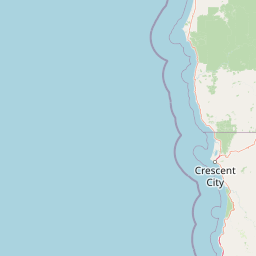
Map view of Redwood National and State Parks

Use this park location map to pinpoint Redwood National and State Parks in United States of America, understand its exact geographic position, and read its mapped placement within the surrounding landscape more clearly.

Pigeon | © OpenStreetMap contributors

Location context for Redwood National and State Parks

CaliforniaDel Norte CountyHumboldt County
Park atlas

Browse nearby national parks, state parks, and conservation landscapes across northern California's coast.

Discover Other Protected Areas Near Redwood National and State Parks, California
Continue your exploration from Redwood National and State Parks to find other protected areas and national parks in its surrounding northern California region. Compare diverse park geographies, from ancient redwood forests to rugged coastal ecosystems, tracing the spread of significant conservation landscapes.
National parkCalifornia

Lassen Volcanic National Park: Protected Landscape Identity and Geographic Context

Discover the mapped boundaries and natural terrain of this California national park.

Gain a structured understanding of Lassen Volcanic National Park as a protected landscape. This detail page provides essential geographic context, focusing on the park's mapped boundaries and its specific terrain characteristics within California. It is designed for users seeking detailed information about the park's protected status and its placement within the broader atlas of natural areas, emphasizing its unique geographic identity and conservation significance.

Area
430.8 km²
Established
1916
IUCN
II
Visitors
504.8K annual
National parkOregon

Crater Lake National Park: Oregon National Park Atlas of Volcanic Landscapes

Explore mapped boundaries and unique caldera geography.

Crater Lake National Park represents a significant protected area within Oregon, defined by the dramatic volcanic caldera it contains. This national park is celebrated for its exceptionally deep, clear blue lake, formed by the collapse of Mount Mazama, offering a unique subject for geographic and landscape study. Users can explore its mapped boundaries and understand its position within the broader atlas of protected lands and mountainous terrain of the Cascade Range.

Area
741.48 km²
Established
1902
IUCN
II
Visitors
527K annual
Watercolor painting showing mountains, a winding river, and green forests in the foreground and background
National parkCalifornia

Yosemite National Park: Protected Landscape Identity and Geographic Atlas Context

Mapped boundaries and regional setting for a key California national park.

Delve into the protected landscape identity of Yosemite National Park, examining its specific geographic features and its place within the broader atlas of California's natural areas. This entry provides detailed context on its mapped boundaries, regional positioning, and significance as a protected natural site, essential for understanding its landscape and conservation geography.

Area
3,070 km²
Established
1890
IUCN
II
Visitors
3.9M annual
National parkCalifornia

Pinnacles National Park: California National Park Geographic Discovery and Map Context

Explore unique protected landscape and regional terrain.

Delve into the protected landscape of Pinnacles National Park, a significant natural area within California. This page offers an atlas-centered view of its unique geological formations and mapped terrain, providing essential context for understanding its geographic identity. Explore the park's specific landscape characteristics and its relation to the broader regional geography and protected areas.

Area
107.67 km²
Established
2013
IUCN
II
Visitors
275K annual
National parkWashington

Mount Rainier National Park: A National Park in Washington with Distinct Mapped Boundaries

Explore its protected landscape and regional geography.

Mount Rainier National Park represents a core protected area within Washington State, offering rich opportunities for geographic discovery through its mapped boundaries and natural terrain. As a designated national park, it contributes significantly to the atlas of United States protected lands. This destination allows for detailed exploration of its landscape context, making it an essential point of reference for understanding regional geography and conservation areas.

Area
956.6 km²
Established
1899
IUCN
II
Visitors
1.6M annual
National parkCalifornia

Kings Canyon National Park National Park: California Protected Landscape & Geography Atlas

Mapped park boundaries and regional natural context.

Kings Canyon National Park stands as a key protected national park within California, offering a specific focus for geographic understanding and atlas-based exploration. This page details the park's mapped boundaries and its integration into the broader regional geography of California. For users interested in the distribution of protected lands and the mapping of natural landscapes, Kings Canyon National Park provides a crucial point of study within the comprehensive park atlas.

Area
1,869.25 km²
Established
1890
IUCN
II
Visitors
641K annual
National parkCalifornia

Sequoia National Park National Park: Geographic Identity and Protected Landscape Atlas

Explore mapped boundaries and the terrain of this California protected area.

Gain a structured understanding of Sequoia National Park as a protected landscape, focusing on its mapped geographic boundaries and its context within California. This entry provides foundational data for exploring the park's natural terrain and its role in a broader atlas of conservation lands, ideal for users seeking detailed geographic information.

Area
1,635.19 km²
Established
1890
IUCN
II
Visitors
1.2M annual
National parkWashington

Olympic National Park National Park: Geographic Atlas and Protected Landscape Discovery

Explore its unique Washington landscape and mapped protected areas.

Olympic National Park serves as a key protected area within Washington, offering rich opportunities for geographic exploration. This detail page provides essential context on its designation as a national park, its mapped boundaries, and its contribution to the regional geography. Understand the park's specific landscape character and its role within the atlas of protected lands, facilitating a structured approach to discovering its natural terrain and geographic significance.

Area
3,733.8 km²
Established
1938
IUCN
II
Visitors
3.7M annual

Common questions about visiting, size, designation, and location context for Redwood National and State Parks

Redwood National and State Parks FAQs for park facts, access, geography, and protected area context
Find quick answers about Redwood National and State Parks, including protected-area facts, park geography, trail and visitor context, and how the park fits into its surrounding country and regional landscape.
MoriAtlas Explorer

Continue Your Protected Areas Search Across the Global Atlas

Deepen your exploration by continuing the structured search for national parks and protected areas worldwide. Utilize the comprehensive filtering capabilities to compare different conservation landscapes and refine your understanding of global park geography. Discover more about the distribution and characteristics of protected natural areas.

Global natural geography