Mori Atlas logo
National parkLassen Volcanic National Park

Discover the geographic scope and mapped boundaries of this key protected area in California.

Lassen Volcanic National Park: Protected Landscape, Terrain & Map Atlas

Lassen Volcanic National Park serves as a distinct unit within the protected natural areas of California, offering a unique landscape for geographic exploration. This page details the park's mapped boundaries and its place within the regional geography, providing essential context for understanding its protected terrain. Users can delve into the park's identity as a national park and explore its environmental setting through a map-centric lens, aiding in structured discovery of its natural features and conservation landscapes.

Volcanic LandscapeNational ParkCascade RangeGeothermal FeaturesPlug Dome VolcanoCalifornia

Lassen Volcanic National Park

National park

Park overview

Structured park overview, official facts, and landscape profile for Lassen Volcanic National Park

Lassen Volcanic National Park park facts, protected area profile, and essential visitor context
Review the core facts for Lassen Volcanic National Park, including designation, size, terrain, visitor scale, habitats, and operating context in one park-focused overview.

About Lassen Volcanic National Park

Lassen Volcanic National Park preserves one of the most geologically significant landscapes in the United States, offering visitors access to active volcanic features at the southern terminus of the Cascade Range. The park encompasses a remarkable variety of terrain, from the dramatic lava pinnacles and jagged craters of its western section to the expansive lava plateau of its eastern reaches. At the heart of the park stands Lassen Peak, a massive dacite dome that represents the world's largest example of plug dome volcanism. The peak rises to 10,457 feet and forms a striking visual landmark visible across the surrounding landscape. Beyond Lassen Peak, the park contains the remains of Mount Tehama, a former stratovolcano that collapsed to form a two-mile-wide caldera in the late Pleistocene epoch. This complex geological history is complemented by ongoing thermal activity, with hydrothermal features throughout the park demonstrating that volcanic processes continue beneath the surface. The park's establishment in 1916 followed several years of significant eruptive activity between 1914 and 1917, events that brought national attention to this volcanic landscape and prompted its protection as a national park.

Quick facts and research context for Lassen Volcanic National Park

Lassen Volcanic National Park spans approximately 106,452 acres across Shasta, Lassen, Plumas, and Tehama counties in northeastern California. The park was established on August 9, 1916, evolving from two national monuments designated by President Theodore Roosevelt in 1907. Lassen Peak stands at 10,457 feet as the world's largest plug dome volcano and the southernmost non-extinct volcano in the Cascade Range. The Main Park Road reaches 8,512 feet near Lassen Peak, making it the highest road in the Cascades. The park receives extraordinary snowfall, with some areas recording over 600 inches annually, making it among the snowiest locations in California. The park contains 27,130 acres of old-growth forest representing all major forest types found within its boundaries.

Park context

Deeper park guide and search-rich context for Lassen Volcanic National Park

Lassen Volcanic National Park history, landscape, wildlife, and travel context
Explore Lassen Volcanic National Park through its history, landscape character, ecosystems, wildlife, conservation priorities, cultural context, and seasonal travel timing in a structured park guide built for atlas discovery and search intent.

Why Lassen Volcanic National Park stands out

Lassen Volcanic National Park is best known for its exceptional volcanic diversity, offering the rare opportunity to see all four major volcano types in a single protected area. The park's geothermal areas, particularly Bumpass Hell, showcase active hydrothermal systems with boiling springs, mud pots, and fumaroles. Lassen Peak itself represents the world's largest plug dome volcano, a massive dacite dome that rises dramatically from the landscape. The Cinder Cone and Fantastic Lava Beds provide a striking example of cinder cone volcanism, with the eruption dated to approximately 1666. The park's ongoing volcanic activity makes it a living laboratory for understanding volcanic processes and a rare example of active volcanism in the contiguous United States outside of Alaska.

Lassen Volcanic National Park history and protected-area timeline

The land that now comprises Lassen Volcanic National Park has a rich human history extending long before European-American settlement. The Atsugewi people inhabited this volcanic landscape for generations, understanding the mountain's dangerous nature and believing it would one day destroy itself. European immigrants in the mid-19th century used Lassen Peak as a landmark on their journey to the Sacramento Valley, guided in part by Peter Lassen, a Danish blacksmith who settled in Northern California in the 1830s. The mountain was ultimately named for this guide. The Nobles Emigrant Trail was cut through what is now the park area, passing Cinder Cone and the Fantastic Lava Beds. Historical accounts from the 1850s describe witnessing eruptions at Cinder Cone, with scientific investigation later determining the last eruption occurred between 1630 and 1670, most likely in 1666. The area first received federal protection as the Lassen Peak Forest Preserve, followed by the establishment of Cinder Cone and Lassen Peak National Monuments in 1907 by President Theodore Roosevelt. Beginning in May 1914 and lasting through 1917, a dramatic series of eruptions occurred on Lassen Peak, creating new craters and releasing lava and ash. Because of this eruptive activity and the area's stark volcanic beauty, the region was designated a National Park on August 9, 1916. The 29-mile Main Park Road was constructed between 1925 and 1931, reaching elevations where snow can persist into July. In 1972, a portion of the park was designated as Lassen Volcanic Wilderness. The 2021 Dixie Fire became the largest wildfire in park history, burning approximately 73,240 acres or about 69 percent of the park.

Lassen Volcanic National Park landscape and geographic character

The landscape of Lassen Volcanic National Park presents a dramatic contrast between its western and eastern regions. The western portion features imposing lava pinnacles formed by ancient lava flows, jagged craters, and steaming sulfur vents, all cut by glaciated canyons and dotted with clear mountain lakes and rushing streams. The eastern section reveals a vast lava plateau standing more than a mile above sea level, studded with small cinder cones including Fairfield Peak, Hat Mountain, and Crater Butte. This plateau area is forested with pine and fir but contains few streams, though Warner Valley at the southern edge features notable hot spring areas including Boiling Springs Lake, Devils Kitchen, and Terminal Geyser. Lassen Peak itself, composed of dacite igneous rock, sits on the northeastern flank of the ancient Mount Tehama, whose collapsed caldera now forms a significant portion of the park's terrain. The landscape also includes four shield volcanoes ranging from 7,000 to 8,400 feet in elevation: Mount Harkness in the southwest, Red Mountain at the south-central boundary, Prospect Peak in the northeast corner, and Raker Peak north of Lassen Peak. Despite the lack of modern glaciers, the park contains 14 permanent snowfields, and the higher elevations display the scars of past glacial periods.

Lassen Volcanic National Park ecosystems, habitats, and plant life

Lassen Volcanic National Park lies at the northern end of the Sierra Nevada forests ecoregion and preserves a landscape that closely resembles its pre-European settlement condition. The park contains approximately 27,130 acres of old-growth forest representing all major forest types found within its boundaries. Below elevations of 6,500 feet, a rich mixed conifer forest dominates, with ponderosa pine, Jeffrey pine, sugar pine, and white fir forming the canopy. This diverse community also includes manzanita, gooseberry, and Ceanothus, while common wildflowers such as iris, spotted coralroot, pyrola, violets, and lupin add seasonal color. Between 6,500 and 8,000 feet, the red fir forest becomes the dominant community, featuring red fir, western white pine, mountain hemlock, and lodgepole pine in a somewhat less diverse association. Subalpine areas from 8,000 feet to treeline represent the upper limit for tree growth, with whitebark pine and mountain hemlock among the species that survive in this harsh environment. The park's geothermal areas support specialized organisms capable of surviving in extremely hot conditions, representing extremophile micro-organisms of scientific interest.

Lassen Volcanic National Park wildlife and species highlights

Lassen Volcanic National Park supports a diverse community of wildlife species adapted to its forest, meadow, and alpine habitats. The park is home to the Sierra Nevada red fox, one of the rarest mammals in California, with approximately 20 individuals identified in the park representing the largest known population of this elusive creature. Mammals commonly found in the forested areas include black bear, red fox, mule deer, marten, cougar, coyote, bobcat, and various species of chipmunks, squirrels, and mice. The park also supports mountain chickadee, brown creeper, white-headed woodpecker, and a wide variety of bat species. In 2024, a wolf pack was reported within the park for the first time in modern times, likely formed from dispersing members of the Lassen Pack that inhabits the surrounding forest. Wetland and lake areas such as Reflection Lake attract waterfowl including Canada geese, great blue heron, snowy egret, and kingfisher. The American pika inhabits rocky alpine areas, while the long-toed salamander and various skunk species round out the park's vertebrate diversity.

Lassen Volcanic National Park conservation status and protection priorities

Lassen Volcanic National Park represents a significant conservation achievement in preserving both volcanic geological features and diverse ecological communities. The park's designation as Lassen Volcanic Wilderness in 1972, following the Wilderness Act of 1964, ensures that a portion of this unique landscape will remain in a relatively undeveloped state with minimal facilities and trails. The park preserves 27,130 acres of old-growth forest, representing all major forest types within its boundaries and providing critical habitat for species like the Sierra Nevada red fox. Following the 1980 eruption of Mount St. Helens, the United States Geological Survey intensified monitoring of active and potentially active volcanoes in the Cascade Range, including the Lassen area. The USGS maintains a network of nine seismometers in the park, continuously transmitting data to offices in Menlo Park, California, while also conducting periodic measurements of ground deformation and volcanic-gas emissions. This monitoring capability allows scientists to rapidly deploy additional equipment should signs of significant volcanic activity be detected. The National Park Service has also developed an emergency response plan to protect visitors in the event of an impending eruption. The 2021 Dixie Fire, while devastating, provided valuable information about fire ecology in this volcanic landscape.

Lassen Volcanic National Park cultural meaning and human context

The cultural history of Lassen Volcanic National Park extends far beyond its designation as a protected area. The Atsugewi people have inhabited this volcanic region since long before European-American settlers arrived, developing a deep understanding of the landscape's dangerous nature. Their traditional knowledge included the understanding that Lassen Peak was full of fire and water and would one day blow itself apart, a belief that proved prescient given the eruptions that occurred in the early 20th century. The park was named after Peter Lassen, a Danish blacksmith who became one of the guides leading immigrant parties to the Sacramento Valley in the 1830s. The Nobles Emigrant Trail, an important overland route, passed through the park area, crossing near Cinder Cone and the Fantastic Lava Beds. The modern Kohm Yah-mah-nee Visitor Center, opened in 2008, was named after the Mountain Maidu name for Lassen Peak, acknowledging the indigenous heritage of this landscape. The park also contains the Loomis Museum, dedicated to Benjamin F. Loomis, who played a significant role in documenting the early 20th-century eruptions and supporting the park's establishment.

Top sights and standout views in Lassen Volcanic National Park

The geothermal area of Bumpass Hell represents one of the park's most dramatic highlights, featuring boiling springs, mud pots, and fumaroles that demonstrate the ongoing volcanic activity beneath the surface. Lassen Peak itself offers hikers access to the summit of the world's largest plug dome volcano, with the trail passing through areas affected by the early 20th-century eruptions. The Cinder Cone and Fantastic Lava Beds provide a striking example of cinder cone volcanism, with the red and black lava formations creating a visually dramatic landscape. The Main Park Road, reaching 8,512 feet in elevation, is the highest road in the Cascade Mountains and offers spectacular views of the volcanic terrain. Kings Creek and the park's numerous lakes, including Lake Helen with its vivid blue color, provide scenic destinations. The Painted Dunes and Fantastic Lava Beds, viewed from the edge of Cinder Cone's crater, offer one of the park's most photographed vistas. The diverse forest communities, ranging from mixed conifer at lower elevations to subalpine forests near treeline, provide seasonal interest throughout the year.

Best time to visit Lassen Volcanic National Park

The best time to visit Lassen Volcanic National Park depends on the experience sought, with each season offering distinct advantages. Summer and early fall typically offer the most accessible conditions, with the Main Park Road typically open from late spring through October, though heavy snowfall can close the road as early as November. The summer months allow access to all major trailheads and geothermal areas like Bumpass Hell, though afternoon thunderstorms are common. The park receives extraordinary snowfall during winter months, with some areas recording over 600 inches annually, and snow can persist at higher elevations well into July. Fall offers a particularly beautiful time to visit as the forests display autumn color and visitor numbers decrease from summer peaks. Those interested in winter recreation should note that the downhill skiing operation that once operated in the park was closed in 1992. Spring visitors should be prepared for variable conditions as snow melts and streams rise. Regardless of season, visitors should be aware that the park remains geologically active and should follow all posted warnings regarding thermal areas.
Park location guide

Geography guide, regional context, and park location map for Lassen Volcanic National Park

Lassen Volcanic National Park park geography, regions, and map view in United States of America
Understand where Lassen Volcanic National Park sits in United States of America through a broader geographic reading of the surrounding landscape, nearby location context, and its mapped position within the national park landscape.

How Lassen Volcanic National Park fits into United States of America

The United States of America is a federal presidential republic and one of the world's largest countries by area and population. It consists of 50 states across a vast territory spanning multiple time zones, with its capital in Washington, D.C. and largest city in New York City. The nation has a diverse economy, influential political system, and significant cultural and military presence globally.

Wider geography shaping Lassen Volcanic National Park in United States of America

The United States occupies a vast territory in North America, bordered by Canada to the north and Mexico to the south. The 48 contiguous states stretch from the Atlantic to the Pacific Ocean, while Alaska occupies the northwestern region and Hawaii is an archipelago in the Pacific. The country encompasses diverse terrain including the Rocky Mountains, Appalachian Mountains, Great Plains, and extensive river systems.

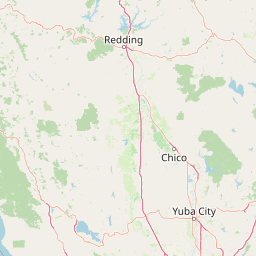
Map view of Lassen Volcanic National Park

Use this park location map to pinpoint Lassen Volcanic National Park in United States of America, understand its exact geographic position, and read its mapped placement within the surrounding landscape more clearly.

Pigeon | © OpenStreetMap contributors

Location context for Lassen Volcanic National Park

CaliforniaLassen CountyPlumas CountyShasta CountyTehama County
Park atlas

Trace the Volcanic Landscape and Connected Protected Areas Across California's Cascade Range

Discover Other National Parks and Protected Areas Near Lassen Volcanic National Park
Continue your exploration from Lassen Volcanic National Park by browsing other national parks and protected areas located across the diverse Cascade Range region of California. Compare varied conservation landscapes, trace broader geographic features, and deepen your understanding of the interconnected volcanic and alpine environments.
National parkCalifornia

Redwood National and State Parks: Protected Landscape Geography and Mapped Boundaries

Explore California's protected area atlas.

Gain a structured understanding of Redwood National and State Parks as a protected national park within the geographic context of California. This dedicated page focuses on its mapped boundaries and protected landscape identity, offering critical atlas-level insights for regional geography exploration and conservation land context. Discover how this protected area fits into the larger mapped terrain.

Area
562.88 km²
Established
1968
IUCN
V
Visitors
458.4K annual
National parkOregon

Crater Lake National Park: Oregon National Park Atlas of Volcanic Landscapes

Explore mapped boundaries and unique caldera geography.

Crater Lake National Park represents a significant protected area within Oregon, defined by the dramatic volcanic caldera it contains. This national park is celebrated for its exceptionally deep, clear blue lake, formed by the collapse of Mount Mazama, offering a unique subject for geographic and landscape study. Users can explore its mapped boundaries and understand its position within the broader atlas of protected lands and mountainous terrain of the Cascade Range.

Area
741.48 km²
Established
1902
IUCN
II
Visitors
527K annual
Watercolor painting showing mountains, a winding river, and green forests in the foreground and background
National parkCalifornia

Yosemite National Park: Protected Landscape Identity and Geographic Atlas Context

Mapped boundaries and regional setting for a key California national park.

Delve into the protected landscape identity of Yosemite National Park, examining its specific geographic features and its place within the broader atlas of California's natural areas. This entry provides detailed context on its mapped boundaries, regional positioning, and significance as a protected natural site, essential for understanding its landscape and conservation geography.

Area
3,070 km²
Established
1890
IUCN
II
Visitors
3.9M annual
National parkCalifornia

Pinnacles National Park: California National Park Geographic Discovery and Map Context

Explore unique protected landscape and regional terrain.

Delve into the protected landscape of Pinnacles National Park, a significant natural area within California. This page offers an atlas-centered view of its unique geological formations and mapped terrain, providing essential context for understanding its geographic identity. Explore the park's specific landscape characteristics and its relation to the broader regional geography and protected areas.

Area
107.67 km²
Established
2013
IUCN
II
Visitors
275K annual
National parkCalifornia

Kings Canyon National Park National Park: California Protected Landscape & Geography Atlas

Mapped park boundaries and regional natural context.

Kings Canyon National Park stands as a key protected national park within California, offering a specific focus for geographic understanding and atlas-based exploration. This page details the park's mapped boundaries and its integration into the broader regional geography of California. For users interested in the distribution of protected lands and the mapping of natural landscapes, Kings Canyon National Park provides a crucial point of study within the comprehensive park atlas.

Area
1,869.25 km²
Established
1890
IUCN
II
Visitors
641K annual
National parkCalifornia

Sequoia National Park National Park: Geographic Identity and Protected Landscape Atlas

Explore mapped boundaries and the terrain of this California protected area.

Gain a structured understanding of Sequoia National Park as a protected landscape, focusing on its mapped geographic boundaries and its context within California. This entry provides foundational data for exploring the park's natural terrain and its role in a broader atlas of conservation lands, ideal for users seeking detailed geographic information.

Area
1,635.19 km²
Established
1890
IUCN
II
Visitors
1.2M annual
National parkCalifornia

Death Valley National Park: Exploring California's Mapped Protected Landscape

View the geographic boundaries and desert terrain.

Access a detailed atlas perspective of Death Valley National Park, a protected national park situated in California. Understand the park's distinct mapped boundaries and its role within the regional geography. This resource highlights the unique desert landscape, offering focused insights into its protected-area identity and natural terrain for geographic discovery.

Area
13,848.4 km²
Established
1994
IUCN
II
Visitors
1.1M annual
National parkNevada

Great Basin National Park: Nevada's Protected National Park Geography and Map Details

Understanding its mapped boundaries and regional context.

Delve into the protected landscape of Great Basin National Park, a significant national park located in Nevada. This entry focuses on the park's geographic attributes, providing users with essential map context, details on its protected area boundaries, and an understanding of its place within the broader regional geography. It serves as a focused resource for exploring the park's unique natural terrain and landscape characteristics through an atlas-driven lens.

Area
312.3 km²
Established
1986
IUCN
II
Visitors
144.9K annual

Common questions about visiting, size, designation, and location context for Lassen Volcanic National Park

Lassen Volcanic National Park FAQs for park facts, access, geography, and protected area context
Find quick answers about Lassen Volcanic National Park, including protected-area facts, park geography, trail and visitor context, and how the park fits into its surrounding country and regional landscape.
MoriAtlas Explorer

Continue Your Protected Areas Search Across the Global Atlas

Deepen your exploration by continuing the structured search for national parks and protected areas worldwide. Utilize the comprehensive filtering capabilities to compare different conservation landscapes and refine your understanding of global park geography. Discover more about the distribution and characteristics of protected natural areas.

Global natural geography