Mori Atlas logo
Continents

Discover mapped protected landscapes and browse countries across South America's diverse geography.

South America National Parks and Protected Areas: A Continent-Wide Atlas Explorer

Navigate the vast protected lands of South America through MoriAtlas's continent-level geographic explorer. This atlas interface provides a comprehensive view of national parks and protected areas distributed across the continent's twelve countries, offering insights into regional landscape patterns and mapped natural terrain. Understand the geographic context and explore the distribution of conservation landscapes from the Andes to the Amazon.

Related tags

continentsouth americalatin americaandesian regionamazon basin
About

Trace the mapped distribution of South America's national parks, spanning the Andes mountains, Amazon rainforest, and Patagonian plains.

South America National Parks and Protected Areas: Continental Geographic Atlas
Explore the national parks and protected areas of South America, a continent rich with diverse conservation landscapes across twelve independent nations. This continental view provides essential geographic context, allowing you to compare park distribution and plan your regional exploration from a high-level atlas perspective.

South America is a continent in the Western Hemisphere, bordered by the Pacific Ocean to the west, the Atlantic Ocean to the north and east, and the Drake Passage to the south. It encompasses twelve independent nations including Brazil, Argentina, Colombia, Peru, and Venezuela, along with several dependent territories. The continent features diverse geography ranging from the Andes mountain range to the Amazon rainforest and Patagonian plains.

South America is one of Earth's seven continents, situated entirely in the Western Hemisphere with the majority of its landmass in the Southern Hemisphere. The continent contains twelve sovereign states and several dependent territories. It is characterized by significant geographic diversity including the Andes Mountains, the Amazon River basin, coastal plains, and arid regions. The continent plays a major role in global agriculture, mining, and energy production, with economies ranging from emerging markets to developed nations.

Official name:South America
Native name:América del Sur
Continent code:019
Countries
12
Parks count
99
Area
17,840,000 km²
Population
434,254,119 (2,021)
Park atlas99 parks

Trace the mapped geography and protected landscapes across the diverse South American continent.

Explore South America's National Parks and Protected Areas Atlas
Browse an extensive list of national parks and other protected areas found throughout South America, spanning from the Andes mountains to the Amazon rainforest. This continent-level park atlas provides essential geographic context for exploring South America's rich conservation landscapes and diverse ecosystems.
National parkGalápagos Islands
Galápagos National Park: A Protected Volcanic Archipelago for Evolutionary Discovery

Explore unique endemic species and mapped landscapes of the Galápagos Islands.

Galápagos National Park stands as a beacon of conservation, protecting the majority of the remote Galápagos Islands archipelago. This UNESCO World Heritage Site is a pivotal location for understanding evolution, featuring dramatic volcanic terrain and an extraordinary array of endemic wildlife, including giant tortoises and marine iguanas. Users can explore the park's protected boundaries, distinct ecosystems, and its significance as a global natural laboratory, offering rich context for landscape and geographic discovery.

Area
7,995.4 km²
Established
1959
IUCN
II
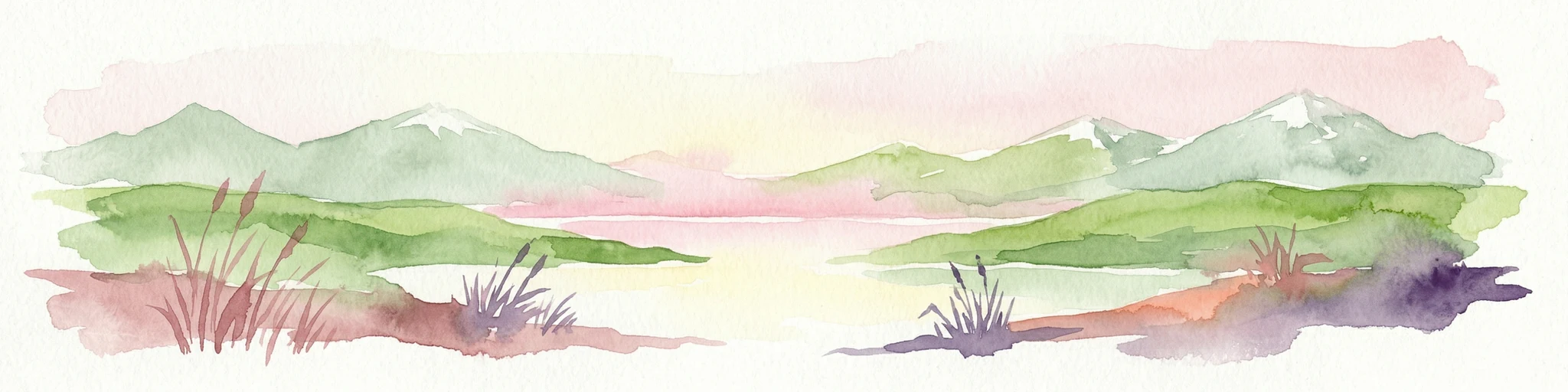
Watercolor illustration of a mountainous landscape with green and purple hues, featuring rolling hills, distant mountains, and a light sky.
National parkTenerife

Teide National Park: Spain's Highest Peak and Distinctive Volcanic Landscape

Explore protected volcanic terrain and mapped geography on Tenerife.

Teide National Park protects the highest point in Spain, Mount Teide, within a spectacular caldera and surrounding volcanic terrain on Tenerife. This national park offers a unique landscape for geographic discovery, showcasing dramatic lava flows, volcanic cones, and endemic flora. Its protected boundaries define a significant area of natural interest, making it a key landmark for atlas exploration of island geography and protected lands.

Area
189.9 km²
Established
1954
IUCN
II
Visitors
4.5M annual
National parkMagallanes y la Antártica Chilena Region

Diego Ramírez Islands and Drake Passage National Park: A Southern Ocean Protected Landscape

Explore its remote island geography and vital Drake Passage marine ecosystems.

This national park protects one of the world's most remote and ecologically significant subantarctic environments, safeguarding the Diego Ramírez Islands and the legendary Drake Passage. It covers over 14 million hectares, representing Chile's southernmost contribution to global marine conservation and protecting unique pelagic bird habitats, marine mammal feeding grounds, and distinctive submarine geomorphology including Sars Seamount. The park's landscape is characterized by harsh subantarctic conditions, with vegetation adapted to cold, windy environments, and unique seafloor terrain beneath the powerful Antarctic Circumpolar Current.

Area
144,391 km²
Established
2025
IUCN
II
Climate
Subpolar
National parkAysén del General Carlos Ibáñez del Campo Region

Bernardo O'Higgins National Park: Southern Patagonian Ice Field & Glacial Terrain

Chile's largest protected area: a map of vast ice caps and fjords.

Bernardo O'Higgins National Park is a colossal protected landscape in Chile, safeguarding much of the Southern Patagonian Ice Field and its colossal glacial features like the Pío XI Glacier. Explore the dramatic terrain of towering granite peaks and intricate fjord systems that define this remote national park. This page provides essential context for understanding its geography, mapped boundaries, and significance as a vast wilderness preservation.

Area
35,259 km²
Established
1969
IUCN
II
National parkTierra del Fuego Province

Tierra del Fuego National Park: Argentina's Southernmost Protected Landscape and Geography

Subantarctic terrain, glacial valleys, and coastal Patagonian forest.

Tierra del Fuego National Park is a significant protected area at the southern tip of South America, celebrated for its unique subantarctic landscapes. This national park showcases the dramatic intersection of Patagonian forests and Andean terrain, with its mapped boundaries extending along the rugged coastline of the Beagle Channel. Users can explore the park's geographic features, understanding its role within the broader atlas of protected lands and its distinct natural heritage in Tierra del Fuego Province. Discover the park's terrain, from ancient beech forests to glacial valleys, and its ecological significance.

Area
630 km²
Established
1960
IUCN
II
Relief
Mountain
National parkSanta Cruz Province

Perito Moreno National Park: Mapped Protected Landscape and Geographic Context in Santa Cruz Province

Explore Argentinian Patagonian mountain terrain and its ecological transition.

Perito Moreno National Park is a vast protected area in Argentina's Santa Cruz Province, known for its dramatic Patagonian mountain landscapes and unique ecological transition zone between wet Magellanic forests and dry Andean steppe. Spanning over 126,830 hectares, the park's geography features an amphitheater-like structure with valleys radiating from central highlands, and peaks reaching nearly 2,800 meters. This national park provides critical insight into the regional natural landscapes and mapped protected areas of Patagonia, offering a detailed view of its terrain and hydrographic features.

Area
1,268.3 km²
Established
1937
IUCN
II
National parkLa Rioja Province

Talampaya National Park: Argentinian National Park with Dramatic Desert Canyons

Explore protected landscape and mapped geography in La Rioja Province.

Talampaya National Park, a significant national park in Argentina's La Rioja Province, offers a profound exploration of a dramatic desert canyon environment. This protected area is renowned for its rich paleontological sites, yielding crucial dinosaur fossils, and for its well-preserved indigenous petroglyphs carved into ancient rock formations. Understanding Talampaya National Park provides vital context for the region's geography and its place within Argentinian protected lands and mapped natural landscapes.

Area
2,150 km²
Established
1997
IUCN
II
National parkPotaro-Siparuni

Kaieteur National Park: Iconic South American Waterfall and Protected Forest Landscape

Discover the unique geography and mapped boundaries of this Guiana Shield natural wonder.

Kaieteur National Park is a significant protected area in Guyana, celebrated globally for Kaieteur Falls, the world's largest single-drop waterfall by volume. This national park preserves over 242 square miles of untouched tropical rainforest, offering critical habitat for endemic species and a profound example of the Guiana Shield's ancient geological formations and diverse ecosystems. Its location deep within the Potaro-Siparuni Region underscores its role as a vital bastion of wilderness and a landmark in South American protected landscapes.

Area
630 km²
Established
1929
IUCN
II
National parkColombia

Sierra Nevada de Santa Marta National Park: Colombia's Iconic Coastal Mountain Geography

Witness dramatic elevation changes and unique protected ecosystems.

Sierra Nevada de Santa Marta National Park is a distinctive protected landscape located in northern Colombia. This isolated mountain range, a UNESCO Biosphere Reserve, features an unparalleled elevational gradient from sea level to nearly 5,700 meters. The park's geography encompasses a stunning diversity of ecosystems, including tropical dry forests, Andean cloud forests, unique páramo habitats, and glacial peaks, making it a vital area for atlas-based geographic discovery and conservation.

Area
3,830 km²
Established
1964
IUCN
II
Relief
Mountain
National parkNeuquén Province

Lanín National Park: Volcanic Landscapes and Ancient Forests in Neuquén Province

Explore the protected area's mapped terrain and glacial lakes.

Lanín National Park offers a deep dive into the dramatic geography of Argentine Patagonia, centered around the prominent Lanín volcano. This national park preserves ancient araucaria forests, diverse ecosystems, and breathtaking glacial lakes like Huechulafquen and Lácar. Its extensive protected landscape provides critical habitat and opportunities to explore unique Andean terrain through map-driven discovery.

Area
3,790 km²
Established
1937
IUCN
II
Relief
Mountain
National parkDemocratic Republic of the Congo

Salonga National Park: Africa's Largest Tropical Rainforest Protected Landscape

Discover its vast mapped boundaries and riverine geography.

Salonga National Park is recognized as Africa's largest tropical rainforest, a UNESCO World Heritage Site vital for the conservation of bonobos and other endemic species. Its protected landscape is defined by extensive lowland forests and intricate river networks, with access primarily through waterways. This park offers profound insights into the geography of the Congo Basin and the conservation of endangered primates within a vast, remote wilderness.

Area
36,000 km²
Established
1970
IUCN
II
National parkVenezuela

Morrocoy National Park: Venezuela's Coastal National Park with Distinct Protected Geography

Explore the mapped protected landscape and regional context.

Morrocoy National Park stands as a key protected area within Venezuela, offering a distinct focus for geographic exploration. As a national park, its mapped boundaries delineate a significant natural landscape critical for understanding regional conservation and the country's broader atlas of protected lands. Discover the unique geographic characteristics and the atlas-driven context of this important Venezuelan protected area.

Area
320.9 km²
Established
1974
IUCN
II
Landscape and environment

Understand how South America is shaped by terrain, ecosystems, and seasonal conditions

South America geography, nature, climate, and landscape context for park-focused travel research
Explore the physical geography, natural setting, and climate patterns of South America through a location-first overview built for travel research, national park discovery, and broader regional context. This section helps explain how landscapes, habitats, and environmental conditions shape what people search for, where they travel, and how they experience protected areas in South America.

South America geography and landscape

South America occupies the southern portion of the Americas, bordered by the Pacific Ocean on the west, the Atlantic Ocean on the north and east, and the Drake Passage to the south. The continent spans from the Caribbean region in the north to the southern tip near Antarctica. Major geographic features include the Andes mountain range along the western coast, the Amazon River basin in the north, the Gran Chaco region in the center, and the Patagonian plains in the south.

South America nature and environment

South America contains remarkable ecological diversity with the Amazon rainforest being the world's largest tropical rainforest, representing about half of the planet's remaining rainforests. The continent spans multiple biomes including tropical rainforests, savannas, deserts, alpine tundra, and temperate forests. Major ecosystems include the Pantanal wetlands, the Atacama Desert, and the Magellanic forests of the southern tip.

South America climate and seasonal conditions

South America exhibits diverse climate patterns due to its vast size and varied topography. The equatorial region experiences tropical rainforest climate, while the southern regions feature temperate conditions. The Andes create stark climate differences between the Pacific coast and interior regions. The continent experiences monsoonal patterns in the Amazon basin and arid conditions in the Leeward side of the Andes.

Explore this place

Related topics and popular queries

Ways to explore South America
Useful phrases, related topics, and discovery prompts connected to South America.
where is south america locatedwhat countries are in south americasouth america population and areasouth america languages spokenlargest countries in south americasouth america geography featuresamazon river basin locationsouth america time zonessouth america continentsouth american countriessouth america geographysouth america populationsouth america languagesamazon rainforestandes mountainslatin americasouth america gdpsouth america capitals
Countries

Trace protected landscapes and significant natural areas across South America's diverse nations, mapped by country.

Countries with National Parks in South America: An Atlas of Protected Geography
Explore national parks and protected areas, organized by country, across the entire South American continent, from its Atlantic coastlines to the high Andean ranges. This continent-level country atlas provides a structured geographic overview for discovering diverse regional protected area networks and their unique conservation landscapes.
Peru

Peru

25 parks
Argentina

Argentina

22 parks
Venezuela

Venezuela

19 parks
Chile

Chile

17 parks
Colombia

Colombia

13 parks
Brazil

Brazil

5 parks
Bolivia

Bolivia

3 parks

Explore key insights into the geographic distribution and cross-country context of South America's diverse conservation landscapes.

Frequently Asked Questions About National Parks and Protected Areas in South America
Browse common questions regarding the national parks and extensive protected areas spanning South America, from the Andes mountains to the vast Amazon rainforest. These atlas-style answers provide essential geographic understanding of how natural landscapes and conservation efforts are distributed across its twelve diverse nations.
MoriAtlas Explorer

Continue Your Global Geographic Exploration with MoriAtlas Park Discovery

Dive deeper into the world's protected landscapes and national parks through MoriAtlas's structured atlas interface. Discover how continents and countries are organized, and how individual park geography fits into the broader map. Our platform is built for understanding the distribution and context of protected areas worldwide, facilitating your journey through global natural geography.

Global natural geography