
Why Diego Ramírez Islands and Drake Passage National Park stands out
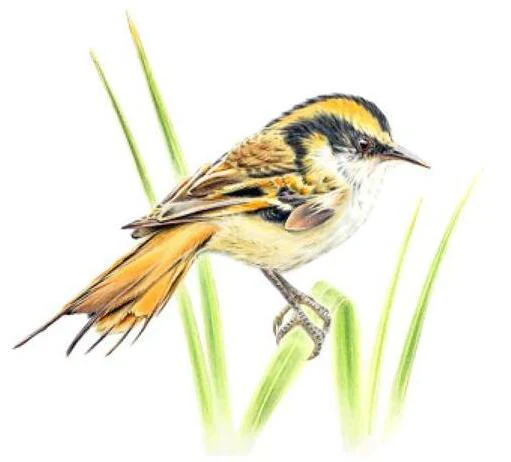
The park is best known for its extraordinary significance as a subantarctic oceanic protected area in one of the world's most dynamic marine corridors. The Drake Passage serves as a critical choke point between South America and the Antarctic Peninsula, where the Antarctic Circumpolar Current flows with exceptional force. The islands host the largest flying bird on Earth, the wandering albatross, with wingspans reaching 3.5 meters. Perhaps most remarkably, the Diego Ramírez Islands are the only known home of the subantarctic rayadito, a bird species discovered as recently as 2022. The park also protects Sars Seamount, a shallow submarine mountain rising approximately 4,000 meters from the abyssal floor, which supports rich benthic communities including large sponges and fossil corals. This remains one of the few island groups globally that has never recorded invasive terrestrial species.
Diego Ramírez Islands and Drake Passage National Park history and protected-area timeline
The creation of Diego Ramírez Islands and Drake Passage National Park stems from long-term research initiatives based in Puerto Williams, the small settlement at the southern tip of Chile. The Subantarctic Biocultural Conservation Program, operated jointly by the University of Magallanes and the Omora Foundation, worked with national and international collaborators over many years to document the exceptional scientific and conservation value of the Drake Passage region. These studies highlighted the significance of the passage and its adjacent seamount chain for understanding subantarctic ecology and protecting biodiversity hotspots. Following this research, the Chilean government designated the area as a marine protected area in 2018, creating it alongside other southern marine protected areas. In 2025, the protected area was redesignated as a national park, strengthening its conservation status and management framework. The park is administered by the Government of Chile through the Corporación Nacional Forestal, with coordination among the Ministry of Environment, maritime authorities, and the regional government.
Diego Ramírez Islands and Drake Passage National Park landscape and geographic character
The landscape of Diego Ramírez Islands and Drake Passage National Park encompasses both the terrestrial islands and the extraordinary submarine terrain of the Drake Passage. The Diego Ramírez Islands themselves are small, windswept islands characterized by harsh subantarctic conditions with no native forests. The vegetation is dominated by graminoids, peat-forming plants, and diminutive lichens and mosses adapted to cold, windy environments. The most significant landscape feature lies beneath the waves: the Drake Passage seafloor is far from uniform, comprising ridges, trenches, and numerous seamounts. The most notable is Sars Seamount, located approximately 200 nautical miles south of the main archipelago, with its summit lying roughly 100 meters below sea level while rising about 4,000 meters from the surrounding abyssal plain. The shallow summits of these seamounts provide hard substrate habitats for long-lived benthic assemblages. Above the ocean surface, the passage itself creates dramatic conditions with strong westerly winds, substantial swell, and intense air-sea exchanges driven by the Antarctic Circumpolar Current.
Diego Ramírez Islands and Drake Passage National Park ecosystems, habitats, and plant life
The nature of this protected area is defined by its position in the Southern Ocean and the dynamic oceanographic processes of the Drake Passage. The park sits within the Antarctic Circumpolar Current corridor, where the Subantarctic Front structures biogeochemistry and productivity across the region. The passage acts as a bottleneck between South America and the Antarctic Peninsula, concentrating ocean currents, meanders, and eddies in a globally significant marine ecosystem. Vegetation on the islands exhibits high endemism due to the harsh climatic conditions, composed primarily of graminoids, peat-forming plants, and small lichens and mosses with high resistance to cold temperatures. There are no native forests on the islands themselves; the southernmost forests occur on Hornos Island within the adjacent Cape Horn National Park. The marine environment supports exceptional biodiversity, with seamounts serving as biodiversity and biomass hotspots that intensify currents, retain plankton, and provide habitat for benthic communities including habitat-forming corals and sponges, fish aggregations, and marine megafauna.
Diego Ramírez Islands and Drake Passage National Park wildlife and species highlights
The wildlife of Diego Ramírez Islands and Drake Passage National Park is dominated by seabirds and marine mammals in this remote subantarctic environment. Birds are the most prominent fauna, with the wandering albatross (Diomedea exulans) being the iconic species of the region—the largest flying bird in the world with wingspans reaching 3.5 meters. Large populations of penguins also inhabit the islands. Most remarkably, the archipelago is the sole home of the subantarctic rayadito (Aphrastura subantarctica), a bird species that was only described scientifically in 2022 and is endemic to these islands. The park is one of the few island groups worldwide without any recorded invasive terrestrial species, and notably lacks native resident land mammals. Marine mammals are present in the surrounding waters, including elephant seals and other pinnipeds. The combination of pelagic bird habitat, marine mammal presence, and the endemic bird species makes this area extraordinarily significant for wildlife conservation.
Diego Ramírez Islands and Drake Passage National Park conservation status and protection priorities
Diego Ramírez Islands and Drake Passage National Park holds exceptional conservation significance on multiple levels. The park protects representative samples of subantarctic oceanic ecosystems within Chile's national protected areas system, adding representation of a biome that was previously underrepresented in the country's conservation framework. The protection of shallow seamounts and pelagic habitats contributes to environmental integrity in an internationally significant maritime corridor. The seamounts within the park are considered vulnerable marine habitats by international organizations, requiring protection from physical disturbance such as trawling and maintenance of water quality in this naturally turbulent environment. The park contributes to safeguarding ecological functions near the boundary of Chile's exclusive economic zone. Its designation also supports long-term research and monitoring capabilities in the Southern Ocean. The area is part of the distribution range of the patagonian toothfish (Dissostichus eleginoides), a long-lived species that has faced significant fishing pressure in the region. The park's complement to the Cape Horn Biosphere Reserve creates a network of protected areas addressing the unique subantarctic ecosystems of southern Chile.
Diego Ramírez Islands and Drake Passage National Park cultural meaning and human context
The cultural context of Diego Ramírez Islands and Drake Passage National Park is deeply intertwined with the maritime history of the southernmost tip of the Americas. The Drake Passage itself is named after the English explorer Francis Drake, who reportedly sighted a phantom island named Elizabeth during his circumnavigation in 1578 while navigating heavy seas after leaving the Strait of Magellan. This historical episode, and the subsequent debate about whether the island ever existed or was a cartographic error, adds a layer of historical mystery to the region. Modern bathymetric research has identified features such as Sars Seamount and the Pactolus/Burnham bank, which have been noted as possible geological explanations for historical sightings, though no definitive identification has been established. The park's proximity to Puerto Williams, a small settlement that serves as a base for subantarctic research, connects the protected area to contemporary scientific endeavor in the region.
Top sights and standout views in Diego Ramírez Islands and Drake Passage National Park
This national park protects one of the world's most remote and ecologically significant subantarctic environments. The Diego Ramírez Islands represent Chile's southernmost land, guarding the legendary Drake Passage where the Antarctic Circumpolar Current flows between continents. The wandering albatross, the largest flying bird on Earth, breeds in this area alongside substantial penguin populations. The islands hold the sole population of the recently discovered subantarctic rayadito, an endemic bird species described in 2022. Below the surface, Sars Seamount rises approximately 4,000 meters from the abyssal plain, supporting rich benthic communities. The park remains one of the few places on Earth without any invasive terrestrial species. This vast protected area, covering over 14 million hectares, represents Chile's southernmost contribution to global marine conservation and provides a platform for Southern Ocean scientific cooperation.
Best time to visit Diego Ramírez Islands and Drake Passage National Park
The Diego Ramírez Islands and Drake Passage National Park is not open to regular visitors due to its extreme remoteness and ecological sensitivity. The area can only be approached by cruise ships en route to Antarctica, and even these visits do not include landings on the islands. The subantarctic climate means conditions are harsh year-round, with strong winds, cold temperatures, and rough seas typical of the Drake Passage. Any visit would necessarily be part of an Antarctic expedition cruise, with the timing typically aligned with the Antarctic summer months of November through March when sea conditions are相对 less severe and wildlife activity is highest. For those undertaking Antarctic voyages, the passage through the Drake Passage itself offers the opportunity to experience one of the world's most famous and dramatic ocean corridors, even if landing on the islands is not permitted.