Why Perito Moreno National Park stands out
Perito Moreno National Park is best known for its dramatic Patagonian mountain landscapes, with the iconic Cerro San Lorenzo (Monte San Lorenzo) visible from the park though located just outside its boundaries, representing Patagonia's second-highest peak at 3,707 meters. The park protects a transition zone between the wet Magellanic forests of the western Andes and the drier Patagonian steppe of the eastern plains. Its eight lakes and extensive river systems drain to both ocean basins, creating a unique hydrographic division. The protected area is notable for its population of endangered small wildcats including the gato pajero (Patagonian pampas cat) and the gato huiña (Kodkod), alongside guanaco, puma, and the Patagonian fox. The park's significance is enhanced by its role as a corridor for migratory species and its representation of the broader Patagonian ecological region.
Perito Moreno National Park history and protected-area timeline
Perito Moreno National Park was established in 1937, placing it among the pioneering protected areas of Argentina's national park system. The park was named in honor of Francisco Moreno, a prominent Argentine explorer and naturalist who played a crucial role in exploring Patagonia during the late 19th and early 20th centuries. Moreno was instrumental in mapping the southern regions of Argentina and contributed significantly to scientific understanding of the Patagonian landscape. For many decades, the park maintained its original boundaries, protecting a core area of Patagonian mountain wilderness. A transformative development occurred in 2013 when Tompkins Conservation, the organization founded by Doug Tompkins (co-founder of The North Face and Patagonia), donated approximately 15,000 hectares of private land to the national park administration. This donation represented the culmination of a longer conservation effort that began when Tompkins first visited the area in 1968 during a climbing expedition. During that journey, he caught his first glimpse of Cerro San Lorenzo, Patagonia's second-highest peak, which would eventually become a central reference point for his conservation vision. Tompkins returned to the park in 1991 with Yvon Chouinard and Rick Ridgeway, and the following year negotiated the purchase of private land within what was then the park boundary. These lands were managed by the organization as wildlife habitat and allowed to undergo natural rewilding before being formally incorporated into the protected area in 2013.
Perito Moreno National Park landscape and geographic character
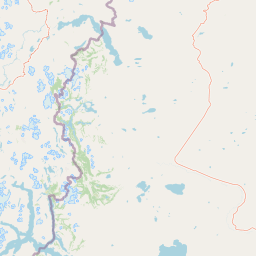
The landscape of Perito Moreno National Park is defined by a spectacular arrangement of mountain ranges that traverse the protected area in roughly perpendicular orientations, creating a distinctive amphitheater-like structure with valleys radiating outward from central highlands. The highest point within the park boundaries is Cerro Heros, reaching 2,770 meters above sea level. Immediately adjacent to the park, but outside its boundaries, rises the imposing Cerro San Lorenzo (Monte San Lorenzo) at 3,707 meters, typically shrouded in clouds and representing the second-highest peak in all of Patagonia. The terrain includes several notable features: Cerro Leon to the north of Lake Belgrano rises to 1,380 meters, while Gorra de Vasco reaches 1,140 meters on the eastern side of the same lake. The Sierra Colorada, or Red Range, attains approximately 1,200 meters and is distinguished by its western slope's dramatic abruptness and the reddish coloration that gives the formation its name. The park sits at approximately 900 meters elevation, which represents the typical altitude of the inhabited valley floors in this portion of Patagonia. Hydrographically, the park is divided between two major basins: the Pacific basin, feeding into lakes Mogote and Volcán that ultimately drain westward, and the Atlantic basin, featuring Lake Burmeister at 932 meters and numerous rivers flowing eastward to the Atlantic Ocean. This dual watershed position is relatively unusual and adds to the park's ecological significance.
Perito Moreno National Park ecosystems, habitats, and plant life
Perito Moreno National Park protects a transition zone between two major Patagonian ecological regions: the humid Magellanic forests of the western Andes and the drier Patagonian steppe that extends across the eastern plains. This positioning creates a mosaic of habitats within the protected area, including Andean forests dominated by lenga (Nothofagus pumilio), subalpine meadows, and expansive areas of Patagonian steppe vegetation. The park's climate gradient from west to east strongly influences vegetation patterns, with precipitation supporting denser forest cover in the western sector while the eastern areas support more open, grass-dominated plant communities. The park lies at an elevation of approximately 900 meters, placing it within a zone that experiences extreme temperature variations. Winter temperatures can plummet below -25 degrees Celsius, while summer averages around 15 degrees Celsius. Persistent strong westerly winds characterize the climate throughout the year, and snowfall can occur in any month. The eight lakes within the park, including the prominent Lake Belgrano, provide important wetland habitats that support additional biodiversity beyond the terrestrial environments.
Perito Moreno National Park wildlife and species highlights
The mammalian fauna of Perito Moreno National Park includes 24 documented species, representing a mix of Patagonian and Andean wildlife. Two species of small wildcats inhabit the park and represent particular conservation concerns: the gato pajero (Lynchailurus pagerso, also known as the Patagonian pampas cat) and the gato huiña (Oncifelis guigna, the Kodkod), both classified as endangered. Larger predators present include the puma (cougar), which ranges across the Patagonian landscape, and the Patagonian fox (culpeo). Herbivores include the guanaco, which remains a characteristic species of the Patagonian steppe, and the south Andean deer (huemul). The park also supports smaller mammals such as the dwarf armadillo (pichi), ferret, skunk, and the subterranean rodent known as tuco-tuco. Avian diversity is particularly notable, with 115 bird species recorded within the park. Raptors are well represented, including the peregrine falcon, various falcon species, and eagles. Waterfowl and wetland species include several duck species, while the distinctive hooded grebe inhabits the park's lakes. The iconic flamingo and the Andean goose also occur in the area, representing the blend of Patagonian and high-Andean bird communities.
Perito Moreno National Park conservation status and protection priorities
Perito Moreno National Park holds significant conservation value as one of Argentina's oldest protected areas and as a representative sample of Patagonian mountain ecosystems. The park's designation as an IUCN Category II protected area reflects its primary purpose of preserving natural ecosystems while allowing for sustainable visitor use. The 2013 expansion through the Tompkins Conservation land donation substantially enhanced the park's ecological integrity by incorporating previously private lands into the protected area, allowing for the continuation of rewilding processes that had been underway since the early 1990s. The protection of the two endangered small wildcat species, the gato pajero and gato huiña, represents a particular conservation priority within the park. The dual hydrographic division of the park, with waters draining to both the Pacific and Atlantic oceans, adds a unique dimension to its conservation significance. The park also functions as a buffer zone for the nearby Monte San Lorenzo, a peak of outstanding conservation importance though outside the protected area boundaries. The transition zone between wet and dry Patagonian ecosystems that the park protects is increasingly vulnerable to climate change impacts, making its long-term protection increasingly important.
Perito Moreno National Park cultural meaning and human context
Perito Moreno National Park is named for Francisco Moreno (1854-1921), a seminal figure in Argentine exploration and scientific investigation of Patagonia. Moreno was a geographer, naturalist, and explorer who led numerous expeditions throughout the southern regions of Argentina and contributed substantially to the mapping and understanding of the Patagonian territory. His explorations often brought him into contact with indigenous communities of the region, and he documented extensively the natural history of areas that would eventually become protected. The park lies within the traditional territory of various indigenous groups who inhabited Patagonia before European settlement, though the source material provides limited detail on these historical connections. The park's location in Santa Cruz Province places it within a region that remains one of the least densely populated areas of Argentina, preserving a sense of remote wilderness character that aligns with the Patagonian identity.
Top sights and standout views in Perito Moreno National Park
The dramatic mountain amphitheater formed by the park's intersecting mountain ranges creates one of Patagonia's most visually striking natural settings, with peaks rising over 2,700 meters within the protected area and the cloud-shrouded Cerro San Lorenzo visible on the horizon. The park's position at the ecological transition between wet Magellanic forests and dry Patagonian steppe provides remarkable habitat diversity within a single protected area. The presence of two endangered small wildcat species, the gato pajero and gato huiña, makes the park particularly significant for feline conservation in South America. The eight lakes and dual watersheds draining to both oceans create a unique hydrographic feature uncommon among protected areas globally. The park's history as one of Argentina's oldest national parks, combined with the successful 2013 expansion through private conservation partnership, demonstrates a model of protected area enhancement.
Best time to visit Perito Moreno National Park
The optimal visiting season for Perito Moreno National Park runs from late spring through early autumn, roughly November through March in the Southern Hemisphere, when average temperatures are more moderate and the likelihood of severe winter conditions is reduced. Summer months offer the most comfortable climate for exploration, with mean temperatures around 15 degrees Celsius, though the famous Patagonian winds persist year-round and can create challenging conditions even during the warmer season. Winter visits are possible but require preparation for extreme cold, as temperatures can fall below -25 degrees Celsius, and snowfall may occur in any month including the summer period. The park's western sector tends to receive significantly more precipitation than the eastern areas, so visitors seeking drier conditions should plan accordingly. The strong and persistent westerly winds that characterize the region throughout the year are an important consideration for any visit, regardless of season.