
Mori Atlas logo
National parkLos Arrayanes National Park

Discover the mapped boundaries and ancient botanical treasures of this Patagonian national park.

Los Arrayanes National Park: Protected Landscape & Unique Arrayán Forest in Neuquén Province

(Parque Nacional Los Arrayanes)

Los Arrayanes National Park, situated on the Quetrihué Peninsula within Neuquén Province, Argentina, safeguards a globally significant and remarkably dense forest of arrayán trees. This protected landscape offers an unparalleled glimpse into a unique botanical environment, featuring ancient trees with distinctive cinnamon-colored bark. The park's protected area identity is intrinsically tied to its geography, where its forested slopes meet the vast expanse of Nahuel Huapi Lake, presenting a visually striking intersection of nature and geography.

National ParkArgentinaPatagoniaAncient ForestArrayán TreesLake District

Los Arrayanes National Park

National park

Park overview

Structured park overview, official facts, and landscape profile for Los Arrayanes National Park

Los Arrayanes National Park park facts, protected area profile, and essential visitor context
Review the core facts for Los Arrayanes National Park, including designation, size, terrain, visitor scale, habitats, and operating context in one park-focused overview.

About Los Arrayanes National Park

Los Arrayanes National Park occupies a distinctive peninsula setting on the eastern shore of Nahuel Huapi Lake, one of the largest and most scenic lakes in Patagonia. The park\'s landscape rises gently from the lakeshore toward the southern tip where the ancient arrayán forest is concentrated, with the surrounding terrain supporting mixed forest and scrubland typical of the Andean Pre-Patagonia transition zone. The park was created specifically to protect the arrayán trees, which had already been included within the boundaries of the larger Nahuel Huapi National Park but warranted dedicated protection as a distinct conservation priority. The creation of a separate park status in 1971 reflected the unique ecological value of this concentrated forest formation. Visitors to the park today travel primarily by boat from Villa La Angostura or other lake access points, with a network of wooden boardwalks designed to allow tourist access while protecting the fragile shallow root systems of the arrayán trees that make the forest possible. The 12-kilometer overland trail from the park\'s entrance at the Villa La Angostura port offers a more strenuous alternative, winding through varied terrain with significant elevation changes that attract mountain bikers as well as hikers.

Quick facts and research context for Los Arrayanes National Park

Los Arrayanes National Park is located on the Quetrihué Peninsula in Nahuel Huapi Lake, approximately 3 kilometers from Villa La Angostura in Neuquén Province, Argentina. The park covers 17.53 square kilometers and was established in 1971 as a dedicated protection zone for the arrayán forest, though the area had previously been part of Nahuel Huapi National Park. The standout feature is the ancient arrayán forest at the southern tip of the peninsula, where trees reach ages of 300 to over 600 years. The park experiences a cold, humid climate with average temperatures ranging from 3°C in winter to 14°C in summer, receiving approximately 1,300 millimeters of annual precipitation, primarily during winter months. Snow typically falls between July and September.

Park context

Deeper park guide and search-rich context for Los Arrayanes National Park

Los Arrayanes National Park history, landscape, wildlife, and travel context
Explore Los Arrayanes National Park through its history, landscape character, ecosystems, wildlife, conservation priorities, cultural context, and seasonal travel timing in a structured park guide built for atlas discovery and search intent.

Why Los Arrayanes National Park stands out

Los Arrayanes National Park is renowned for its extraordinary arrayán forest, one of the few remaining dense stands of Luma apiculata in the world. The park protects trees that have grown for centuries in a unique microenvironment on the Quetrihué Peninsula, their distinctive cinnamon-colored bark and gnarled forms creating an almost enchanted atmosphere. The forest represents a living remnant of vegetation types that once covered more of the lake margins in this region, now preserved as a botanical sanctuary. Beyond the trees themselves, the park provides habitat for endangered southern Andean species including the huemul deer and pudú, two of South America\'s most elusive native deer species.

Los Arrayanes National Park history and protected-area timeline

The land that became Los Arrayanes National Park was originally part of the vast Nahuel Huapi National Park, established in 1934 to protect the lakes and forests of the Argentine Patagonia region. As understanding of the unique arrayán forest\'s ecological significance grew, park managers and conservationists recognized that the area warranted specialized protection beyond what the general national park designation provided. The forest had long been known to local communities and had attracted scientific attention for its unusual concentration of ancient Luma apiculata specimens. In 1971, the Argentine national park administration formally separated the Quetrihué Peninsula as its own protected area, creating Los Arrayanes National Park specifically to safeguard the arrayán trees and their ecosystem. This designation reflected both the scientific importance of the forest and the recognition that general visitation patterns within larger parks might not adequately protect the sensitive root systems of these ancient trees. Since establishment, the park has maintained its focus on preserving the arrayán forest while providing controlled access for visitors to experience this unique environment.

Los Arrayanes National Park landscape and geographic character

The Quetrihué Peninsula that hosts Los Arrayanes National Park presents a landscape ofpeninsular drama where forested slopes descend into the deep blue waters of Nahuel Huapi Lake, one of Patagonia\'s most expansive glacial lakes. The terrain is characterized by gentle slopes rising from the lakeshore, with the southern tip of the peninsula where the arrayán forest is concentrated offering a relatively sheltered microclimate. The surrounding landscape supports a mosaic of forest types typical of the Andean-Patagonian transition, with deciduous and evergreen species mixing across the slopes. The arrayán trees themselves create a distinctive visual environment, their reddish-brown bark peeling in characteristic thin sheets while their twisted trunks and dense canopies form a canopy unlike typical northern hemisphere forests. Rocky shorelines alternate with small beaches along the peninsula\'s edges, while views across the lake reveal the snow-capped peaks of the Andes in the distance, establishing the park\'s place within a much larger mountain landscape.

Los Arrayanes National Park ecosystems, habitats, and plant life

The arrayán forest at Los Arrayanes represents a botanical phenomenon of considerable scientific interest. Luma apiculata, known in English as the Chilean myrtle or arrayán, is a species native to the temperate forests of southern South America, but it rarely forms pure stands or reaches the great ages seen at this site. The forest at the southern tip of the Quetrihué Peninsula contains specimens estimated at over 600 years old, with the concentration of ancient trees creating a unique ecosystem unlike any other arrayán forest remaining in the world. The park\'s location within the Andean-Patagonian forest biome places it at the intersection of multiple vegetation zones, with the humid conditions supporting diverse plant life including various native shrubs, ferns, and understory species. The climate data from the park shows annual precipitation exceeding 1,300 millimeters, with most rainfall occurring during the winter months when snow also blankets the higher elevations surrounding the lake. This moisture regime supports the lush forest conditions that make the arrayán forest possible.

Los Arrayanes National Park wildlife and species highlights

Los Arrayanes National Park supports a modest but significant population of native Patagonian wildlife, with several species of conservation concern finding refuge in the protected forest and surrounding terrain. The park provides habitat for the huemul, a species of South Andean deer that is endangered throughout its range and serves as a symbolic animal of Patagonia. The smaller pudú, one of the world\'s smallest deer species, also inhabits the park\'s forested areas where its secretive behavior makes it difficult to observe. Guanacos, the wild ancestor of the llama family, graze in more open areas, while the monito del monte, a small marsupial related to possums, occupies the forest understory. The avian population includes Andean condors soaring on thermal currents, various eagle and hawk species hunting along the shorelines, and woodpeckers that exploit the many dead trees in the forest. These species collectively represent the park\'s ecological value beyond its primary botanical function.

Los Arrayanes National Park conservation status and protection priorities

The creation of Los Arrayanes National Park in 1971 represented a recognition that the arrayán forest required specific protective measures beyond what general national park status could provide. The forest ecosystem is fragile in the sense that the arrayán trees have shallow root systems that are easily damaged by foot traffic, a vulnerability that necessitated the installation of elevated wooden boardwalks throughout the core forest area. This approach allows visitors to experience the forest while minimizing impact on the root systems that sustain the trees. The park\'s conservation significance extends beyond the arrayán forest itself to include protection of riparian habitat along the lake shoreline and the Andean Pre-Patagonia transitional forest that surrounds the core area. The presence of endangered species including the huemul and pudú adds to the park\'s conservation value, as these species depend on the protected habitat the park provides. The park functions as a component of the larger Nahuel Huapi basin conservation matrix, maintaining connectivity with surrounding protected areas.

Los Arrayanes National Park cultural meaning and human context

The Quetrihué Peninsula and its arrayán forest have long held significance for the local communities of Villa La Angostura and the broader Neuquén Province. The arrayán tree features in local traditions and has been valued for its distinctive appearance and the unique character it lends to the landscape. The area\'s proximity to Villa la Angostura, a town that has grown into a significant tourism destination for the Argentine Lake District, establishes the park as an important component of the regional tourism economy. The park\'s creation as a dedicated protected area reflected both scientific recognition of its value and community interest in preserving this distinctive landscape feature. The wooden path system that allows visitor access while protecting the forest represents a practical compromise between conservation objectives and public enjoyment, an approach that has become a model for similar situations where fragile forest ecosystems require protection from visitor impact.

Top sights and standout views in Los Arrayanes National Park

The ancient arrayán forest with trees exceeding 600 years in age represents the park\'s primary highlight, offering visitors an otherworldly forest environment found nowhere else in such concentration. The peninsula setting provides scenic beauty as the forested land juts into the crystalline waters of Nahuel Huapi Lake, with mountain views completing the landscape. Wildlife viewing opportunities, particularly for the endangered huemul and the elusive pudú, add another dimension to the visitor experience. The wooden boardwalk system through the forest allows intimate access to the arrayán trees while protecting their fragile roots. The park can be explored by boat from Villa La Angostura or by the challenging 12-kilometer trail that attracts both hikers and mountain bikers.

Best time to visit Los Arrayanes National Park

Los Arrayanes National Park can be visited year-round, though the experience varies considerably with the seasons. The summer months of December through February offer the warmest conditions, with temperatures reaching around 14°C on average, making the hiking trails and forest walks most comfortable. This is also the peak visitor season in the Argentine Lake District, so the park sees its highest visitation during these months. Winter brings cold temperatures averaging around 3°C, with significant snowfall between July and September transforming the landscape into a winter wonderland. The heavy winter precipitation contributes to the lush forest conditions but also means some trails may be snow-covered or inaccessible. The shoulder seasons of spring and fall offer fewer visitors and equally beautiful forest conditions, though weather can be unpredictable. The arrayán forest maintains its distinctive character in all seasons, with the cinnamon-colored bark particularly striking against snow or under overcast skies.

Park location guide

Geography guide, regional context, and park location map for Los Arrayanes National Park

Los Arrayanes National Park park geography, regions, and map view in Argentina
Understand where Los Arrayanes National Park sits in Argentina through a broader geographic reading of the surrounding landscape, nearby location context, and its mapped position within the national park landscape.

How Los Arrayanes National Park fits into Argentina

Argentina is a federal republic located in the southern cone of South America, bordering Chile, Bolivia, Paraguay, Brazil, Uruguay, and the Atlantic Ocean. With an area of 2,780,085 km², it is the second-largest country in South America and the eighth-largest globally. The capital and largest city is Buenos Aires, and the official language is Spanish. The country claims sovereignty over the Falkland Islands, South Georgia and the South Sandwich Islands, and a portion of Antarctica.

Wider geography shaping Los Arrayanes National Park in Argentina

Argentina occupies the southern portion of South America, sharing the Southern Cone region with Chile to the west. The country borders Bolivia and Paraguay to the north, Brazil to the northeast, Uruguay and the South Atlantic Ocean to the east, and the Drake Passage to the south. The Andes mountain range runs along the western border, while the Pampas plains dominate the central region. Argentina also claims territories in Antarctica.

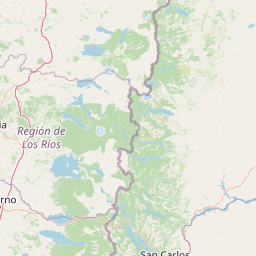
Map view of Los Arrayanes National Park

Use this park location map to pinpoint Los Arrayanes National Park in Argentina, understand its exact geographic position, and read its mapped placement within the surrounding landscape more clearly.

Pigeon | © OpenStreetMap contributors

Location context for Los Arrayanes National Park

Neuquén Province
Park atlas

Trace the regional geography of Patagonia, comparing protected landscapes, lake districts, and Andean forest environments.

Explore Nearby National Parks and Protected Areas Surrounding Los Arrayanes National Park
Explore national parks and protected areas across Patagonia, revealing diverse landscapes and conservation efforts beyond Los Arrayanes National Park. This curated selection allows for geographic comparison, contrasting unique forest environments with broader Patagonian terrain and the Andean transition zone.
National parkLos Lagos Region

Puyehue National Park: Mapped Boundaries and Volcanic Landscape in Los Lagos Region

Explore Chile's dramatic Andean protected area.

Puyehue National Park is a key protected area in the Los Lagos Region of Chile, recognized for its distinctive volcanic landscapes and geothermal features. This detail page offers an atlas-centric view, highlighting the park's mapped boundaries, the terrain shaped by volcanoes like Puyehue, and its ancient temperate rainforest ecosystems. Understand its geographic context within the Andes and its significance as a protected national park.

Area
1,070 km²
Established
1941
IUCN
II
Visitors
133K annual
National parkNeuquén Province

Lanín National Park: Volcanic Landscapes and Ancient Forests in Neuquén Province

Explore the protected area's mapped terrain and glacial lakes.

Lanín National Park offers a deep dive into the dramatic geography of Argentine Patagonia, centered around the prominent Lanín volcano. This national park preserves ancient araucaria forests, diverse ecosystems, and breathtaking glacial lakes like Huechulafquen and Lácar. Its extensive protected landscape provides critical habitat and opportunities to explore unique Andean terrain through map-driven discovery.

Area
3,790 km²
Established
1937
IUCN
II
National parkLos Ríos Region

Alerce Costero National Park: Explore Protected Landscapes and Ancient Forests in Los Ríos Region

Discover mapped terrain and unique Valdivian ecosystem geography.

Alerce Costero National Park stands as a significant protected landscape in Chile's Los Ríos Region, celebrated for its ancient Fitzroya trees and as a sanctuary for the Valdivian temperate rainforest. The park's protected boundaries encompass rugged terrain within the Cordillera Pelada, offering insights into unique watershed geography and the resilience of an ancient forest ecosystem. Its diverse landscape, a mosaic of old-growth woods and natural clearings, provides essential habitat and a remarkable geographic context for atlas exploration.

Area
139.75 km²
Established
2010
IUCN
III
National parkLa Araucanía Region

Huerquehue National Park: Ancient Araucaria Forests and Glacial Lakes in La Araucanía

Mapped protected area in the Andean foothills of Southern Chile.

Delve into the protected landscape of Huerquehue National Park, a key component of Chile's southern conservation efforts within the La Araucanía Region. This national park is defined by its ancient araucaria forests, home to the iconic monkey puzzle tree, and a network of clear glacial lakes including Tinquilco Lake. Its mountainous terrain, rising from 720 to 2,000 meters, showcases a vital representative of the Andean-Patagonian forest ecosystem, offering rich context for map exploration and understanding protected-area geography.

Area
125 km²
Established
1967
IUCN
II
National parkArgentina

Los Alerces National Park: Ancient Alerce Forests and Glacial Terrain in Argentina

Discover the park's protected landscape and regional geography.

Los Alerces National Park in Argentina is a globally significant protected area, celebrated for its ancient alerce forests, some of the longest-living trees on Earth. This national park showcases a dramatic landscape shaped by glaciers, featuring a series of interconnected lakes and rugged Andean terrain. Explore the unique ecosystem and mapped geography of this UNESCO World Heritage site to understand its profound natural and conservation value.

Area
2,599 km²
Established
1937
IUCN
II
National parkLa Araucanía Region

Nahuelbuta National Park: Ancient Araucaria Forests and Protected Highland Geography

Discover its mapped boundaries atop the Cordillera de Nahuelbuta.

Nahuelbuta National Park is a significant national park in Chile's La Araucanía Region, celebrated for its ancient monkey puzzle tree forests atop the Cordillera de Nahuelbuta. This protected area showcases a unique highland landscape with rugged terrain and exposed rocky outcrops, preserving species more typical of Andean and Patagonian environments. Understanding its mapped geography and protected landscape identity is key to appreciating its ecological importance and distinct position within South America's natural atlas.

Area
68 km²
Established
1939
IUCN
II
National parkAysén del General Carlos Ibáñez del Campo Region

Queulat National Park: Patagonian Andes Glacier and Rainforest Discovery

Mapped protected area in Aysén del General Carlos Ibáñez del Campo Region.

Queulat National Park is a vast protected wilderness in southern Chile, renowned for its dramatic glacial alpine terrain and lush temperate rainforests. The park's geography is defined by steep glacial valleys, ice fields, and the iconic Queulat Hanging Glacier cascading from sheer cliffs. Discover the mapped boundaries of this significant Patagonian national park, offering unparalleled insight into its unique ecosystems and dramatic landscapes shaped by ice and forest.

Area
1,541 km²
Established
1983
IUCN
II
Relief
Mountain
National parkRío Negro Province

Islote Lobos National Park: Coastal Archipelago National Park in Río Negro Province

Mapping the dynamic intertidal zones and unique Patagonian marine geography.

Islote Lobos National Park is a notable national park on the Atlantic coast of Río Negro Province, Argentina. This protected area preserves a distinctive landscape of six rocky promontories emerging from San Matías Gulf, creating unique island ecosystems. The park's coastal and marine environments, characterized by significant tidal fluctuations and important habitats for marine fauna, are vital to the Patagonian natural heritage. Its mapped geography offers critical insights into regional conservation efforts.

Area
19.079 km²
Established
2020
IUCN
II

Common questions about visiting, size, designation, and location context for Los Arrayanes National Park

Los Arrayanes National Park FAQs for park facts, access, geography, and protected area context
Find quick answers about Los Arrayanes National Park, including protected-area facts, park geography, trail and visitor context, and how the park fits into its surrounding country and regional landscape.
MoriAtlas Explorer

Continue Your Protected Areas Search Across the Global Atlas

Deepen your exploration by continuing the structured search for national parks and protected areas worldwide. Utilize the comprehensive filtering capabilities to compare different conservation landscapes and refine your understanding of global park geography. Discover more about the distribution and characteristics of protected natural areas.

Global natural geography