

Mori Atlas logo
National parkNahuelbuta National Park

Discover the mapped protected landscape atop the Cordillera de Nahuelbuta in La Araucanía Region.

Nahuelbuta National Park National Park: Ancient Araucaria Forests and Highland Geography

Nahuelbuta National Park, a national park located in Chile's La Araucanía Region, protects a significant portion of the Cordillera de Nahuelbuta. Established to preserve its ancient Araucaria forests, the park offers a unique glimpse into a highland landscape characterized by rugged terrain and distinctive geological formations. Explore the mapped boundaries of this protected area, understanding its role as a sanctuary for ancient conifer species and a vital component of Chile's natural heritage.

Araucaria ForestsMountain ParksAncient TreesSouthern South AmericaNational ParksChilean Patagonia

Nahuelbuta National Park

National park

Park overview

Structured park overview, official facts, and landscape profile for Nahuelbuta National Park

Nahuelbuta National Park park facts, protected area profile, and essential visitor context
Review the core facts for Nahuelbuta National Park, including designation, size, terrain, visitor scale, habitats, and operating context in one park-focused overview.

About Nahuelbuta National Park

Nahuelbuta National Park represents one of the few protected areas in La Araucanía Region preserving the distinctive highland environment of the Chilean Coastal Mountain Range. The park's location atop the Cordillera de Nahuelbuta places it in a transitional zone where Andean-Patagonian forest elements persist in isolation from their main distributions to the east. This geographic isolation has allowed the survival of species assemblages that would otherwise be displaced by the warmer, drier conditions of central Chile's Mediterranean climate zone. The park's creation in 1939 reflected early recognition of the scientific and conservation importance of these araucaria forests, which were being depleted by logging and agricultural expansion during the early twentieth century. Today the park serves as both a biodiversity reserve and a living museum of ancient forest ecosystems that once covered much broader areas of the Chilean coast. The visitor infrastructure, centered at Pehuenco, provides access to the park's trail network while maintaining protection for the core conservation areas.

Quick facts and research context for Nahuelbuta National Park

Nahuelbuta National Park occupies the highest elevations of the Cordillera de Nahuelbuta in Chile's La Araucanía Region, approximately 162 kilometers northeast of Temuco. The 6,832-hectare protected area was established in 1939 and is managed by Chile's National Forest Corporation. The park features dramatic peaks including Cerro Piedra del Águila at 1,379 meters, Cerro Anay, and Alto Nahuelbuta. Visitors can explore 30 roads and 15 trails, with the most popular route ascending to the Piedra del Águila viewpoint. The park maintains 10 camping sites and is open year-round from its administrative base at Pehuenco, roughly 42 kilometers from Angol.

Park context

Deeper park guide and search-rich context for Nahuelbuta National Park

Nahuelbuta National Park history, landscape, wildlife, and travel context
Explore Nahuelbuta National Park through its history, landscape character, ecosystems, wildlife, conservation priorities, cultural context, and seasonal travel timing in a structured park guide built for atlas discovery and search intent.

Why Nahuelbuta National Park stands out

Nahuelbuta National Park is best known as a living sanctuary for the monkey puzzle tree, one of the world's oldest and most distinctive conifers. The park protects ancient specimens of Araucaria araucana that have survived for up to 2,000 years, making it a globally significant site for this species' conservation. The iconic stone outcrop of Piedra del Águila, reaching 1,379 meters, provides sweeping views across the araucaria forest and serves as the park's symbolic centerpiece. The park's isolation atop the coastal mountain range has created unique conditions preserving relict populations of cold-adapted species more typical of the Andes and Patagonia, creating an ecological island within Chile's central valleys.

Nahuelbuta National Park history and protected-area timeline

Nahuelbuta National Park was established in 1939 during a period of increasing environmental awareness in Chile that led to the creation of the country's first national parks. The protected area was created primarily to preserve the remaining stands of monkey puzzle trees in the coastal mountains, as these ancient conifers had been significantly reduced by logging for timber and clearance for agriculture and grazing. The park was among the earliest protected areas in the La Araucanía Region, a region that would later become the focus of significant national park development. Management responsibility was assigned to Chile's National Forest Corporation (Corporación Nacional Forestal), which continues to administer the park today. The establishment of Nahuelbuta coincided with broader efforts in Chile to protect representative samples of the country's diverse ecosystems, though early park management focused primarily on preventing further forest clearing within the reserve boundaries. Over the decades, the park's role has expanded to include scientific research, environmental education, and sustainable recreation.

Nahuelbuta National Park landscape and geographic character

The landscape of Nahuelbuta National Park is dominated by rugged mountain terrain formed from the ancient crystalline rocks of the Chilean Coastal Range. The park occupies the highest elevations of the Cordillera de Nahuelbuta, with several prominent peaks rising above the general plateau. Cerro Piedra del Águila, reaching 1,379 meters, is the most accessible and visited peak, featuring distinctive rock formations and panoramic viewpoints. The terrain is characterized by steep ridges, narrow valleys, and exposed rocky outcrops interspersed with forest-covered slopes. The combination of high elevation and proximity to the Pacific Ocean creates a landscape where dense forest gives way to windswept rock fields at the summits. The park's position as an isolated highland area within the surrounding lower-elevation terrain has resulted in a distinctive landscape character that contrasts sharply with the agricultural and forested valleys below.

Nahuelbuta National Park ecosystems, habitats, and plant life

The vegetation of Nahuelbuta National Park reflects its unique position as an island of cold-climate flora within central Chile. The dominant tree species is the monkey puzzle tree, which forms extensive forests on the park's slopes and ridgelines. These araucaria forests represent some of the mostnorthern populations of this species in Chile and contain individuals that have attained extraordinary ages. Associated with the araucarias is a diverse understory of southern beech species including coigüe, ñirre, roble, and lenga. The park also supports specialized habitats for orchids and carnivorous plants, indicating the presence of nutrient-poor soils and moist microenvironments. The combination of high elevation, oceanic influence, and protection from development has allowed this ancient forest ecosystem to persist in relatively intact condition, preserving ecological processes and species interactions that characterize one of Chile's most distinctive biomes.

Nahuelbuta National Park wildlife and species highlights

Nahuelbuta National Park provides habitat for several notable mammal species characteristic of Chile's southern forests. The park supports populations of the mountain lion, also known as the puma, which ranges through the forest and rocky terrain in search of prey. The pudú, one of the smallest deer species in the world, inhabits the dense forest understory where it feeds on vegetation and avoids predators. Darwin's fox, a small and secretive carnivore endemic to southern Chile, occurs in the park's forest habitats. The bird community includes the striking Magellanic woodpecker, whose crimson plumage makes it visible against the dark araucaria trunks, as well as ground-dwelling tapaculos such as the Andean tapaculo and chucao tapaculo. These bird species are characteristic of the Nothofagus and araucaria forests of southern South America and contribute to the park's ecological significance.

Nahuelbuta National Park conservation status and protection priorities

Nahuelbuta National Park plays a crucial conservation role as one of the northernmost strongholds for araucaria forest ecosystems. The monkey puzzle tree is now restricted to fragmented populations across the Andes and coastal ranges of south-central Chile and Argentina, making protected areas like Nahuelbuta essential for the species' long-term survival. The park protects not only the iconic araucarias but also the entire associated ecosystem including the southern beech species, the understory plants, and the wildlife communities that depend on these forests. The establishment of the park in 1939 represented early recognition of the need to protect these ancient forests, though ongoing threats include climate change, which may shift the climatic suitability of the highland habitats, and the risk of fire in the drier summer months. The park's management focuses on maintaining forest health, protecting water resources, and providing sustainable recreation opportunities that do not compromise the park's ecological values.

Nahuelbuta National Park cultural meaning and human context

The name Nahuelbuta originates from the Mapuche language, reflecting the presence of indigenous communities in this region long before the establishment of the protected area. The Mapuche people inhabited much of south-central Chile, including the coastal mountain ranges, and their traditional territories overlapped with the current park boundaries. The region's cultural landscape bears the imprint of centuries of Mapuche habitation, though the establishment of the national park altered the relationship between local communities and the land. The park's visitor information centers and facilities at Pehuenco provide educational context about both the natural and cultural values of the area. Understanding the park's cultural context involves recognizing both the historical Mapuche presence and the more recent history of Chilean settlement and conservation establishment.

Top sights and standout views in Nahuelbuta National Park

Nahuelbuta National Park offers visitors the opportunity to walk among some of the oldest living trees in South America within the ancient araucaria forests of its highland environment. The Piedra del Águila viewpoint provides accessible access to panoramic views across the forest-covered mountains, with interpretive signage explaining the park's ecology and history. The trail network spanning 15 routes and 30 roads allows visitors to explore varying habitats from valley forests to exposed ridgelines. The 10 developed camping sites provide opportunities for overnight stays, enabling visitors to experience the park's nocturnal soundscape and early morning atmosphere. Year-round access makes the park a destination for all seasons, with each season offering different experiences of the forest environment.

Best time to visit Nahuelbuta National Park

Nahuelbuta National Park is open year-round, with each season offering distinct experiences of the park's environments. The summer months of December through February bring warmer temperatures and longer daylight hours, making this the most popular time for hiking and camping. The araucaria forests are at their most accessible during summer, though visitors should be aware that the park can experience dry conditions and the risk of forest fire increases toward late summer. Autumn brings cooler temperatures and the possibility of observing the changing colors of the deciduous southern beeches that intermix with the evergreen araucarias. Winter transforms the park with snow on the higher peaks and reduced visitor numbers, creating a more solitary experience for those prepared for colder conditions. Springtime sees the return of warmer weather and new growth in the understory, making this season particularly appealing for those interested in the park's plant life.

Park location guide

Geography guide, regional context, and park location map for Nahuelbuta National Park

Nahuelbuta National Park park geography, regions, and map view in Chile
Understand where Nahuelbuta National Park sits in Chile through a broader geographic reading of the surrounding landscape, nearby location context, and its mapped position within the national park landscape.

How Nahuelbuta National Park fits into Chile

Chile is a presidential republic in western South America, extending as a narrow strip along the western edge of the continent between the Andes Mountains and the Pacific Ocean. It is the southernmost country in the world and the closest to Antarctica. The country is bordered by Peru, Bolivia, and Argentina, and administers several Pacific islands including Easter Island. Chile is a major copper producer and has a population of approximately 19.6 million.

Wider geography shaping Nahuelbuta National Park in Chile

Chile occupies a narrow strip of land along the western edge of South America, extending approximately 4,300 km north to south but only about 350 km east to west at its widest point. The country is sandwiched between the Andes Mountains to the east and the Pacific Ocean to the west. It shares borders with Peru to the north, Bolivia to the northeast, and Argentina to the east. Southern Chile borders the Drake Passage. Chile also administers several Pacific islands including Juan Fernández Islands, Isla Salas y Gómez, Desventuradas Islands, and Easter Island, plus the Chilean Antarctic Territory.

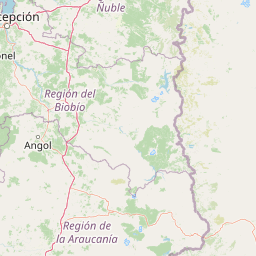
Map view of Nahuelbuta National Park

Use this park location map to pinpoint Nahuelbuta National Park in Chile, understand its exact geographic position, and read its mapped placement within the surrounding landscape more clearly.

Pigeon | © OpenStreetMap contributors

Location context for Nahuelbuta National Park

La Araucanía Region
Park atlas

Explore the geographic spread of protected areas surrounding Nahuelbuta National Park, comparing diverse landscapes in Chile's Coastal Mountain Range.

Explore National Parks and Protected Areas Adjacent to Nahuelbuta National Park
Browse other national parks and protected areas in Chile's Cordillera de Nahuelbuta, tracing the regional geography of ancient Araucaria forests and rugged mountain landscapes. Compare the varied terrain and unique highland environments to understand broader protected-area contexts and conservation patterns near Nahuelbuta National Park.
National parkLa Araucanía Region

Huerquehue National Park: Ancient Araucaria Forests and Glacial Lakes in La Araucanía

Mapped protected area in the Andean foothills of Southern Chile.

Delve into the protected landscape of Huerquehue National Park, a key component of Chile's southern conservation efforts within the La Araucanía Region. This national park is defined by its ancient araucaria forests, home to the iconic monkey puzzle tree, and a network of clear glacial lakes including Tinquilco Lake. Its mountainous terrain, rising from 720 to 2,000 meters, showcases a vital representative of the Andean-Patagonian forest ecosystem, offering rich context for map exploration and understanding protected-area geography.

Area
125 km²
Established
1967
IUCN
II
National parkLos Ríos Region

Alerce Costero National Park: Explore Protected Landscapes and Ancient Forests in Los Ríos Region

Discover mapped terrain and unique Valdivian ecosystem geography.

Alerce Costero National Park stands as a significant protected landscape in Chile's Los Ríos Region, celebrated for its ancient Fitzroya trees and as a sanctuary for the Valdivian temperate rainforest. The park's protected boundaries encompass rugged terrain within the Cordillera Pelada, offering insights into unique watershed geography and the resilience of an ancient forest ecosystem. Its diverse landscape, a mosaic of old-growth woods and natural clearings, provides essential habitat and a remarkable geographic context for atlas exploration.

Area
139.75 km²
Established
2010
IUCN
III
National parkNeuquén Province

Lanín National Park: Volcanic Landscapes and Ancient Forests in Neuquén Province

Explore the protected area's mapped terrain and glacial lakes.

Lanín National Park offers a deep dive into the dramatic geography of Argentine Patagonia, centered around the prominent Lanín volcano. This national park preserves ancient araucaria forests, diverse ecosystems, and breathtaking glacial lakes like Huechulafquen and Lácar. Its extensive protected landscape provides critical habitat and opportunities to explore unique Andean terrain through map-driven discovery.

Area
3,790 km²
Established
1937
IUCN
II
National parkLos Lagos Region

Puyehue National Park: Mapped Boundaries and Volcanic Landscape in Los Lagos Region

Explore Chile's dramatic Andean protected area.

Puyehue National Park is a key protected area in the Los Lagos Region of Chile, recognized for its distinctive volcanic landscapes and geothermal features. This detail page offers an atlas-centric view, highlighting the park's mapped boundaries, the terrain shaped by volcanoes like Puyehue, and its ancient temperate rainforest ecosystems. Understand its geographic context within the Andes and its significance as a protected national park.

Area
1,070 km²
Established
1941
IUCN
II
Visitors
133K annual
National parkNeuquén Province

Los Arrayanes National Park: Neuquén Province's Protected Arrayán Forest Atlas

Explore the ancient arrayán forest and mapped terrain.

Los Arrayanes National Park, nestled in Neuquén Province, is celebrated for its exceptional arrayán forest, one of the world's most concentrated stands of Luma apiculata. This protected area showcases a unique landscape where ancient, gnarled trees with striking cinnamon bark thrive on the Quetrihué Peninsula, overlooking Nahuel Huapi Lake. Its protected status ensures the preservation of this botanical marvel, offering a distinct geographical and ecological profile within the Patagonian region.

Area
17.53 km²
Established
1971
IUCN
II
National parkValparaíso Region

La Campana National Park: Protected Landscape of Chilean Wine Palms

Explore its mapped terrain and regional geographic context.

La Campana National Park represents a significant protected landscape within Chile, celebrated for its exceptional concentration of Chilean Wine Palms (Jubaea chilensis). As a national park situated in the Valparaíso Region, it showcases a diverse range of Mediterranean ecosystems and dramatic coastal mountain terrain. This page provides detailed atlas-style context, highlighting the park's unique botanical heritage, its distinct geographic setting, and its importance as a mapped natural area for regional landscape studies.

Area
80 km²
Established
1967
IUCN
II
National parkArgentina

Los Alerces National Park: Ancient Alerce Forests and Glacial Terrain in Argentina

Discover the park's protected landscape and regional geography.

Los Alerces National Park in Argentina is a globally significant protected area, celebrated for its ancient alerce forests, some of the longest-living trees on Earth. This national park showcases a dramatic landscape shaped by glaciers, featuring a series of interconnected lakes and rugged Andean terrain. Explore the unique ecosystem and mapped geography of this UNESCO World Heritage site to understand its profound natural and conservation value.

Area
2,599 km²
Established
1937
IUCN
II
National parkAysén del General Carlos Ibáñez del Campo Region

Queulat National Park: Patagonian Andes Glacier and Rainforest Discovery

Mapped protected area in Aysén del General Carlos Ibáñez del Campo Region.

Queulat National Park is a vast protected wilderness in southern Chile, renowned for its dramatic glacial alpine terrain and lush temperate rainforests. The park's geography is defined by steep glacial valleys, ice fields, and the iconic Queulat Hanging Glacier cascading from sheer cliffs. Discover the mapped boundaries of this significant Patagonian national park, offering unparalleled insight into its unique ecosystems and dramatic landscapes shaped by ice and forest.

Area
1,541 km²
Established
1983
IUCN
II
Relief
Mountain

Common questions about visiting, size, designation, and location context for Nahuelbuta National Park

Nahuelbuta National Park FAQs for park facts, access, geography, and protected area context
Find quick answers about Nahuelbuta National Park, including protected-area facts, park geography, trail and visitor context, and how the park fits into its surrounding country and regional landscape.
MoriAtlas Explorer

Continue Your Protected Areas Search Across the Global Atlas

Deepen your exploration by continuing the structured search for national parks and protected areas worldwide. Utilize the comprehensive filtering capabilities to compare different conservation landscapes and refine your understanding of global park geography. Discover more about the distribution and characteristics of protected natural areas.

Global natural geography