Why Alerce Costero National Park stands out
Alerce Costero National Park is best known for its ancient Fitzroya forests, which represent some of the oldest living trees on Earth. The southern portion of the park contains particularly impressive specimens, including trees that are thousands of years old. The park also protects the rare Valudivian temperate rain forest ecosystem, characterized by high levels of endemism and unique ecological adaptations. The landscape features a mix of old-growth forest and burnt patches from historical fires, creating a distinctive mosaic that has earned the area the alternative name Cordillera Pelada or Bald Mountains. The park serves as a refuge for numerous endemic bird and mammal species with very specific habitat requirements.
Alerce Costero National Park history and protected-area timeline
Alerce Costero National Park traces its origins to January 3, 1987, when the Chilean government created the Alerce Costero National Monument to protect the ancient Fitzroya forests of the Cordillera Pelada. The original designation reflected recognition of the area's exceptional ecological and scenic value. In 2010, the area was elevated to national park status through a significant public-private collaboration that unified several land holdings: the state-owned Alerce Costero National Monument, the former Valdivia National Reserve, the Quitaluto estate, and land donated by The Nature Conservancy. This expansion also connected the park with the adjacent Valudivian Coastal Reserve, owned by The Nature Conservancy, creating a larger protected landscape. Historical records indicate that the Fitzroya forests of Cordillera Pelada experienced numerous fires between 1397 and 1750, caused by both lightning strikes and indigenous inhabitants. Following Spanish and Chilean colonization from 1750 to 1943, additional fires were initiated by settlers, significantly altering portions of the old-growth forest.
Alerce Costero National Park landscape and geographic character
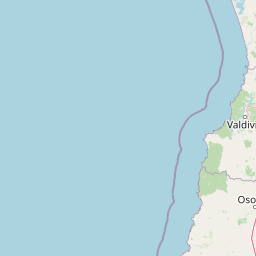
The park is situated within the Cordillera Pelada, a mountain range forming part of the Chilean Coast Range. The terrain is characterized by steep mountainous slopes rising to elevations of 1,048 meters, with valleys carved by rivers and streams that feed into the Chaihuín river basin. The landscape presents a striking mosaic created by the interaction of old-growth forest and areas affected by historical fires, giving the area its descriptive name meaning Bald Mountains. The park lies within the Valudivian temperate rain forest region, where the combination of high rainfall and mild temperatures supports dense forest cover. Ridgelines and viewpoints offer sweeping vistas of the surrounding coastal range and river valleys. The geology and topography of the area provided refuge during past glacial periods, contributing to the high levels of biodiversity found in the park today.
Alerce Costero National Park ecosystems, habitats, and plant life
Alerce Costero National Park protects a representative sample of the Valudivian temperate rain forest, one of the world's most threatened forest ecosystems. This temperate rainforest is characterized by high humidity, year-round rainfall, and a dense canopy dominated by evergreen species. The forest contains several important tree species including the eponymous Alerce (Fitzroya), Canelo (Drimys winteri), Ciprés de las Guaitecas (Pilgerodendron), Tineo (Weinmannia trichosperma), and Coigüe de Chiloé (Nothofagus nitida). The park also supports unique botanical features including carnivorous plants such as rocio del sol (Drosera uniflora) and violeta del pantano (Pinguicula chilensis). The mountainous terrain created diverse microhabitats that allowed species to survive climatic fluctuations, making this a priority site for global biodiversity conservation.
Alerce Costero National Park wildlife and species highlights
The park provides critical habitat for numerous endemic bird and mammal species with specific ecological requirements. Notable mammal species include the kodkod (guiña), a small wild cat and one of the least known felids in the Americas, the puma (cougar), the lesser grison (quique), and the pudú, one of the smallest deer species in the world. The avifauna includes the Magellanic woodpecker (carpintero negro), a striking black woodpecker endemic to southern South America. The diverse habitats from lowland forest to higher elevations support these species and many others, though the park's geography with very specific habitat requirements means that many species are restricted to particular zones within the protected area.
Alerce Costero National Park conservation status and protection priorities
Alerce Costero National Park represents a critical conservation priority as it protects remnants of the Valudivian temperate rain forest, an ecosystem with restricted global distribution and high levels of endemism. The park's establishment and subsequent expansion in 2010 reflected growing recognition of the need to preserve both the ancient Fitzroya trees and the broader forest ecosystem. The area serves important watershed functions, protecting the Chaihuín river basin which supports local communities and wildlife. Despite its protected status, the park is classified as a threatened area due to ongoing pressures from human activity including historical and ongoing fire impacts. The connection to the adjacent Valudivian Coastal Reserve creates a larger conservation landscape managed collaboratively between CONAF and The Nature Conservancy.
Alerce Costero National Park cultural meaning and human context
The park lies within territory traditionally associated with indigenous communities of southern Chile. The name Cordillera Pelada (Bald Mountains) reflects the historical fire history of the area, where repeated burning over centuries shaped the landscape. The Chaihuín community located within the park's influence depends on the Chaihuín river basin for their livelihoods. The park also contains the Piedra del Indio (Indian Stone) area, a site of cultural significance offering views of the mountain range and river.
Top sights and standout views in Alerce Costero National Park
The ancient Fitzroya trees of Alerce Costero represent one of the park's most extraordinary features, with specimens reaching ages of over 3,000 years. The Alerce Milenario trail leads to a massive 4.5-meter-wide Fitzroya tree estimated at 3,000 years old. The park's location within the rare Valudivian temperate rain forest makes it a biodiversity hotspot supporting species found nowhere else on Earth. The diverse landscape combining old-growth forest with fire-shaped openings creates a visually distinctive environment. The network of viewpoints and trails, including opportunities for hiking, horseback riding, and mountain biking, provides varied ways to experience this coastal mountain landscape. The free entry and daily access make the park accessible for visitors seeking to explore one of Chile's natural treasures.
Best time to visit Alerce Costero National Park
The park can be visited year-round given its temperate rainy climate, though the experience varies significantly by season. The summer months of December through February offer warmer temperatures averaging around 17°C and typically lower rainfall, making this the most popular time for hiking and outdoor activities. Winter brings cooler temperatures around 7-8°C and higher rainfall, creating a moodier atmosphere in the rainforest with fewer visitors but potentially challenging trail conditions. The shoulder seasons of spring and autumn offer intermediate conditions and may provide good opportunities to experience the forest in different states. Given the year-round precipitation typical of the Valudivian region, visitors should be prepared for rain regardless of when they visit.