Why Bernardo O'Higgins National Park stands out
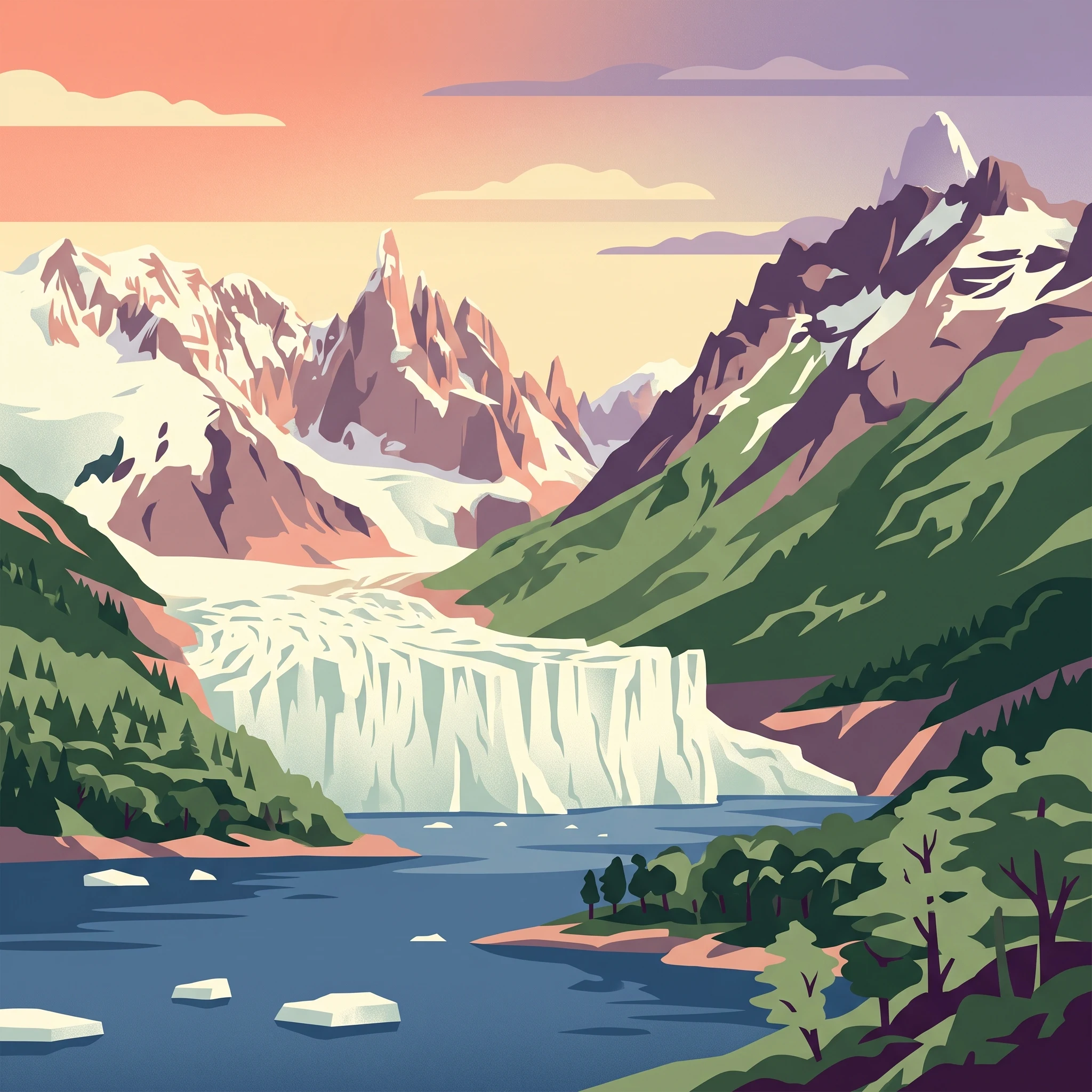
Bernardo O'Higgins National Park is best known for its extraordinary glacial and mountain landscapes. The park protects the greater part of the Southern Patagonian Ice Field, and the Pío XI Glacier stands as the largest glacier in the southern hemisphere outside Antarctica, a massive wall of ice that periodically calves enormous blocks into the waters below. The iconic peaks of Mount Fitz Roy and Cerro Torre, with their striking granite spires, rank among the most recognized mountains in the world among climbing and photography enthusiasts. The park also holds significance as one of the last refuges for the Chilean huemul, a threatened deer species that is national heritage.
Bernardo O'Higgins National Park history and protected-area timeline
The earliest known occupants of the Bernardo O'Higgins region were the Alacaluf people, an indigenous group who inhabited the coastal areas and islands of southern Patagonia for centuries before European contact. In 1830, Captain Phillip Parker King aboard HMS Beagle visited the Eyre Fjord, becoming one of the first European explorers to document this remote coastline. The park was officially established on July 22, 1969, recognizing the exceptional natural value of the Patagonian landscape it encompasses. In June 2007, scientists documented a remarkable event when a glacial lake within the park disappeared entirely between March and May of that year, leaving behind a 100-foot-deep crater with only remnant ice blocks on the crater floor. This event was attributed to climate change, illustrating the ongoing transformation of Patagonian glacial systems. In 2014, Chile's National Forestry Corporation created two significant subdivisional natural sites within the park: the Chaltén Mountain Range Natural Site covering the Chilean side of Mount Fitz Roy, and the Pío XI Glacier Natural Site, recognizing their exceptional natural significance.
Bernardo O'Higgins National Park landscape and geographic character
The landscape of Bernardo O'Higgins National Park is defined by the Southern Patagonian Ice Field, one of the world's major ice caps, which dominates the park's high-country with vast fields of white and blue ice. The highest summit is Lautaro volcano at 3,607 meters, a prominent peak that rises above the ice field. The northern section of the park features the world-renowned peaks of Mount Fitz Roy and Cerro Torre, whose jagged granite spires create one of the most iconic mountain silhouettes on Earth. The Circo de los Altares and Cerro Riso Patrón add to the dramatic high terrain. In the southern portion of the park, elevations are lower but the scenery remains spectacular, with Mount Balmaceda rising to 2,035 meters and being beautified by the glaciers that descend from its slopes. The narrow fjords penetrate deeply into the mountains, bringing away the drainage from these ice-capped, storm-swept elevations. The coast lacks large rivers, but the intricate fjord system creates a complex waterfront of immense natural beauty.
Bernardo O'Higgins National Park ecosystems, habitats, and plant life
The park falls within the Magellanic subpolar forests ecoregion, one of the world's most distinctive forest ecosystems. The forests are composed of several characteristic tree species including Nothofagus betuloides, commonly known as Antarctic beech or coigue, Nothofagus pumilio known as lenga, Nothofagus antarctica called ñire, and Drimys winteri, the Winter's bark or canelo. These southern beech forests create a remarkable ecological environment adapted to the cool, wet conditions of the Patagonian Andes. The transition between forest and ice creates a dramatic ecological boundary, where vegetation gives way to the stark grandeur of glacial environments. The park's position at the southern limit of the continent creates unique ecological conditions that support species found nowhere else on Earth.
Bernardo O'Higgins National Park wildlife and species highlights
Bernardo O'Higgins National Park provides crucial habitat for several species of conservation significance. The park is one of the last remaining refuges for the Chilean huemul, a species of deer that has been classified as endangered and represents a symbol of Chilean natural heritage. The Andean condor, one of the largest flying birds in the world, can be found soaring on the thermal currents above the mountain peaks. The marine otter, also known as the sea cat, inhabits the coastal waters and fjord systems, while various cormorant species nest along the rocky shores. This assembly of species reflects the park's role as a sanctuary for Patagonian wildlife in one of the most ecologically significant regions of South America.
Bernardo O'Higgins National Park conservation status and protection priorities
As Chile's largest protected area, Bernardo O'Higgins National Park plays a fundamental role in conserving one of the planet's last great wilderness areas. The protection of the Southern Patagonian Ice Field ensures the preservation of critical freshwater resources and maintains natural processes that have shaped Patagonian landscapes for millennia. The park's designation as an IUCN Category II protected area reflects its primary conservation mandate. The creation of the Chaltén Mountain Range Natural Site and Pío XI Glacier Natural Site in 2014 demonstrates ongoing recognition of the park's exceptional natural values. Conservation efforts focus on protecting the Chilean huemul population and maintaining the ecological integrity of the Magellanic subpolar forests. The park also serves as a buffer against logging and development pressures that have affected much of Chile's forestland.
Bernardo O'Higgins National Park cultural meaning and human context
The Alacaluf people, also known as the Alacalufe, were the earliest human inhabitants of the Bernardo O'Higgins region. This indigenous group traditionally lived in the coastal areas and islands of southern Patagonia, maintaining a maritime-based culture that depended on the rich marine resources of the fjords and channels. European exploration began in the early nineteenth century with Captain Phillip Parker King's voyage aboard HMS Beagle in 1830, documenting the region's geography and beginning the process of mapping this remote frontier. The park's naming after Bernardo O'Higgins connects the landscape to Chile's founding history, recognizing the first head of state's role in establishing the independent Republic of Chile.
Top sights and standout views in Bernardo O'Higgins National Park
The Pío XI Glacier stands as the park's most spectacular feature, the largest glacier in the southern hemisphere outside Antarctica, with an ice face approximately 75 meters in height that regularly calves massive ice blocks into the waters below. Mount Fitz Roy and Cerro Torre represent the crown jewels of Patagonian mountaineering, their granite spires attracting climbers and photographers from around the world. The Southern Patagonian Ice Field, extending across much of the park's high country, ranks among Earth's great ice caps and provides a dramatic backdrop to all other features. The park's extreme remoteness ensures a wilderness experience unmatched in South America, accessible only by boat or helicopter.
Best time to visit Bernardo O'Higgins National Park
The optimal time to visit Bernardo O'Higgins National Park corresponds to the Patagonian summer months from November through March, when temperatures are milder and daylight hours are longest. During this period, visitor access is most feasible as conditions allow for travel by boat through the fjord systems. The winter months bring harsh conditions with heavy precipitation, limited daylight, and reduced access options that make visits extremely challenging. Weather in Patagonia is notoriously unpredictable, with rapid changes between sunshine, wind, rain, and even snow possible within a single day regardless of season. The summer season offers the best opportunity to experience the glaciers, mountains, and forest environments that define this remarkable protected landscape.