Mori Atlas logo
Countries

Browse protected lands and natural terrain across Austria's diverse geographic regions.

National Parks and Protected Areas Atlas of Austria: Geographic Discovery and Mapped Landscapes

MoriAtlas offers a structured view of Austria's protected natural areas, providing a geographic entry point for exploring national parks and conserved landscapes. Users can navigate the country's protected terrain, understand the distribution of significant natural sites, and access detailed map context for regional geography. This platform facilitates a deeper atlas-based understanding of Austria's natural heritage through its mapped park boundaries and diverse landscapes.

National Parks and Protected Areas Atlas of Austria: Geographic Discovery and Mapped Landscapes
Park system

Analyzing the Austria Park System and Alpine Protected Landscapes

Comparing conservation scales, historical establishment, and diverse alpine habitats

Country records provide a structured overview of regional geography, mapping park size distribution and diverse alpine habitats across the Austrian Alps. Classifying parks by designation type and climate patterns helps users compare conservation scales and trace history where spatial evidence is available.

Known protected area

5,539 km²

Area data available for 18 of 23 parks.

Median park size

106 km²

Median across 18 parks with known area.

Oldest known park

Established in 1905.

Largest known park

Recorded area: 1,806 km².

Designation distribution

Nature reserve9
National park8
Protected area3
Protected landscape2
Biosphere reserve1

Habitat distribution

Temperate broadleaf forest9
Wetland9
Montane forest7
Alpine meadow6
Grassland6

7 more categories represented

Climate distribution

Temperate11
Alpine7
About

Discover the Mapped Geography and Protected Landscapes of Austria

National Parks and Protected Areas in Austria: An Atlas Explorer

Explore Austria's rich tapestry of national parks and protected areas, presented as a comprehensive atlas entry point. This geographic discovery platform highlights the distribution and significance of conservation landscapes across the country. Navigate through Austria's protected areas to understand their regional context and ecological importance, offering a structured view of its natural heritage.

Austria is a landlocked country in Central Europe, bordered by Germany, Czech Republic, Slovakia, Hungary, Slovenia, Italy, Switzerland, and Liechtenstein. The country is a federal semi-presessional republic composed of nine states, with Vienna as its capital and largest city. It has a population of approximately 9.1 million people.

Austria, officially the Republic of Austria, is a landlocked country in Central Europe occupying the Eastern Alps. It emerged as a unified state from the remnants of the Eastern and Hungarian March at the end of the first millennium, developing into a Duchy in 1156 and an Archduchy in 1453. As the heartland of the Habsburg monarchy from the late 13th century, Austria was a major imperial power in Central Europe for centuries.

Largest city:Vienna
Currency code:EUR
ISO code:AT
Parks count
23
Capital
Vienna
Area
83,879 km²
Population
9,110,079 (2,024)

Coastal
Island
Mountainous
Landlocked
Park atlas23 parks

Explore Austria's diverse protected landscapes and national parks with a geography-first atlas perspective.

National Parks and Protected Areas in Austria: A Mapped Atlas of Conservation Landscapes

Discover the network of national parks and protected areas across Austria, presented through a structured atlas lens. This view provides context for Austria's conservation efforts, allowing for detailed exploration of each protected landscape and its unique geographic features. Navigate through the mapped terrain to understand the spread of Austria's natural heritage and conservation priorities.
Watercolor painting showing mountain ranges with green, yellow, and pink hues, depicting layered peaks and cloud formations
National parkAustria

Hohe Tauern National Park: Map of Austria's Largest Alpine Protected Landscape

Discover glacial terrain and mountain park geography in the Austrian Alps.

Hohe Tauern National Park, Austria's largest protected area, offers a profound exploration of high alpine landscapes. This national park is defined by its towering peaks, expansive glacier systems, and deeply carved glacial valleys. Examining its mapped boundaries reveals the sheer scale of this protected alpine terrain, providing crucial context for understanding regional geography and the unique natural systems it preserves across the Central Eastern Alps.

Area
1,806 km²
Established
1981
IUCN
II
Relief
Mountain
Watercolor painting depicting layered mountain ranges, forests, and water bodies in green and pink tones
National parkUpper Austria

Kalkalpen National Park: Ancient Beech Forests and Karst Protected Landscape

Explore mapped boundaries and unique alpine terrain.

Kalkalpen National Park is a premier protected area in Upper Austria, celebrated for harboring Central Europe's largest remaining ancient beech forests and an extensive karst landscape. This designation underscores its critical role in preserving old-growth forest ecosystems and unique geological formations within the Northern Limestone Alps. Discover the mapped terrain and regional geography that define this significant natural reserve, offering a profound look into the continent's ecological history and protected natural heritage.

Area
208.25 km²
Established
1997
IUCN
II
Relief
Mountain
Watercolor painting showing a landscape with rolling terrain, water features, and distant mountains
National parkBurgenland

Neusiedler See-Seewinkel National Park: Protected Steppe Lake Landscape in Burgenland

Explore mapped wetland geography and birdwatching significance.

Neusiedler See-Seewinkel National Park showcases a rare steppe lake environment and extensive wetland habitats at the eastern edge of Austria, within the Burgenland region. This protected area is globally recognized for its exceptional avian diversity and the unique ecological mosaic formed by reed beds, salt marshes, and seasonal pools. Explore its mapped boundaries and distinctive Pannonian geography for a deep understanding of this vital European protected landscape.

Area
97 km²
Established
1993
IUCN
II
Relief
Lowland
National parkLower Austria

Danube-Auen National Park: Protected Floodplain Ecosystem and Regional Geography

Mapped boundaries and vital riparian landscape in Lower Austria.

Delve into the unique protected landscape of Danube-Auen National Park, a cornerstone of Central European riparian conservation. This page offers detailed insights into its mapped boundaries, the dynamic interplay of river channels, lowland forests, and wetlands, and its significant role within the geographic context of Lower Austria. Understand the atlas value of this protected area, ideal for discovering rich natural terrain and ecosystem context.

Area
93 km²
Established
1996
IUCN
II
Relief
Lowland
National parkStyria

Gesäuse National Park: Detailed Protected Landscape and Alpine Geography in Styria

Explore Austria's dramatic river gorge and rugged peaks.

Gesäuse National Park in Styria represents a significant alpine protected area, characterized by the striking Enns river gorge cutting through the Gesäuseberge. This national park offers a unique geographic context, showcasing steep limestone peaks, dramatic rock faces, and a rich hydrological network. Discover the mapped boundaries and protected landscape of one of Austria's most visually striking natural passages, ideal for detailed atlas exploration and understanding alpine conservation.

Area
110 km²
Established
2002
IUCN
II
Relief
Mountain
National parkAustria

Thayatal National Park: Austria's Smallest Protected Landscape and Dramatic River Valley

Explore the mapped geography of a breakthrough valley and its rich biodiversity.

Thayatal National Park, Austria's smallest national park, offers a concentrated study in protected landscape discovery. Its core feature is the spectacular Thaya River breakthrough valley, a deep gorge cutting through gneiss terrain with steep, forested slopes. This page provides context for its mapped protected area, highlighting its exceptional biodiversity and its role as a transboundary conservation zone with the adjacent Czech Podyjí National Park. Understand the geographic setting and unique landscape character of this significant natural region.

Area
13.3 km²
Established
2000
IUCN
II
Relief
Mountain
Protected areaAustria

Geopark Karawanken

Area
1,067 km²
Established
2013
Relief
Mountain
Climate
Alpine
Nature reserveLower Austria

Hundsheimer Berg

Area
1.66 km²
Established
1965
IUCN
IV
Relief
Mountain
National parkAustria

Limestone Alps National Park: A National Park in Austria's Mapped Protected Landscapes

Explore protected area boundaries and regional geography.

Limestone Alps National Park represents a vital component of Austria's protected lands, contributing to the nation's atlas of natural landscapes. This page details the park's identity as a national park, focusing on its geographic scope and mapped boundaries. Users can delve into the regional context and understand the protected-area significance of Limestone Alps National Park, enriching their exploration of Austria's diverse geography.

Nature reserveSalzkammergut

Loser Plateau

Area
12 km²
Relief
Mountain
Climate
Alpine
Access
Easy access
Nature reserveVorarlberg

Rhine Delta

Area
20.65 km²
Established
1982
Relief
Lowland
Climate
Temperate
Landscape and environment

Understand how Austria is shaped by terrain, ecosystems, and seasonal conditions

Austria geography, nature, climate, and landscape context for park-focused travel research

Explore the physical geography, natural setting, and climate patterns of Austria through a location-first overview built for travel research, national park discovery, and broader regional context. This section helps explain how landscapes, habitats, and environmental conditions shape what people search for, where they travel, and how they experience protected areas in Austria.

Austria geography and landscape

Austria is located in Central Europe, lying in the Eastern Alps. It is bordered by Germany and Czech Republic to the north, Slovakia to the northeast, Hungary to the east, Slovenia and Italy to the south, and Switzerland and Liechtenstein to the west.

Austria nature and environment

Austria features alpine terrain with the Eastern Alps running through the western and central regions. The country includes mountainous areas, forests, and valleys.

Austria climate and seasonal conditions

Austria has a temperate to alpine climate with cold winters and warm summers, varying by altitude and region.

Explore this place

Related topics and popular queries

Ways to explore Austria

Useful phrases, related topics, and discovery prompts connected to Austria.
where is austria locatedwhat is austria known foraustria capital cityaustria population and areaaustria neighboring countriesaustria language and currencyaustria countryaustria central europerepublic of austriaaustrian alpsaustria viennaaustria geographyaustria population
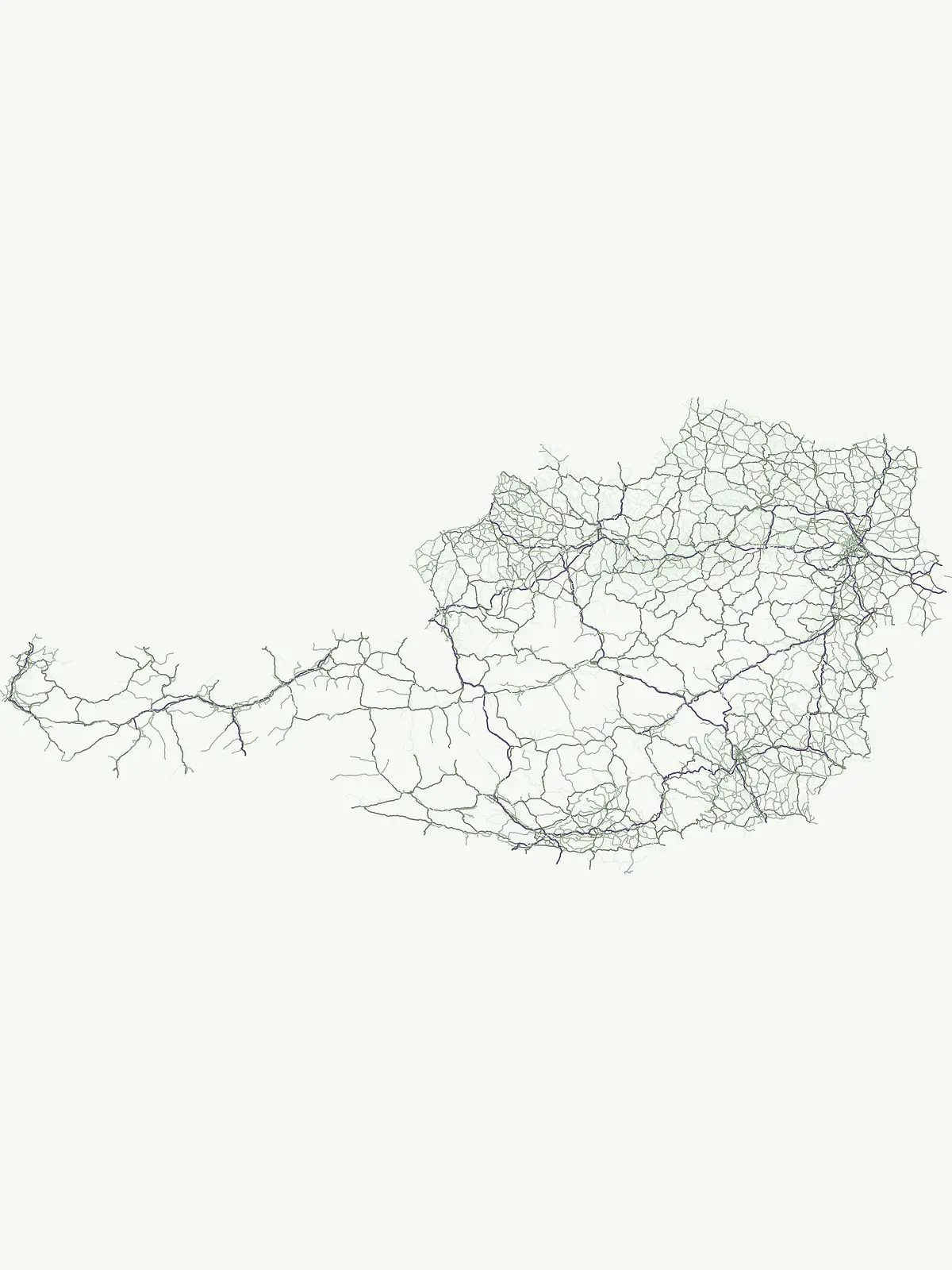
Park map

Visualize the geographic distribution of Austria's national parks and protected areas through a detailed atlas view.

Explore the National Parks Map of Austria, Discover Protected Area Locations

This map preview highlights key national parks and protected areas across Austria, offering a concise overview of their locations within the country's diverse geography. Engage with the comprehensive Austria parks map to explore detailed terrain, compare regional park clusters, and understand broader conservation landscapes across Central Europe.
Natural feature types

Explore the Diverse Natural Features and Mapped Landscapes of Austria

Navigate the geographic terrain of Austria through a curated atlas of natural features linked to protected areas. MoriAtlas provides a structured perspective on the environmental landscape and regional topography of the country, supporting detailed exploration of mapped features in diverse wilderness settings.

Explore mapped geography, the spread of protected landscapes, and country-level park context across Austria.

Frequently Asked Questions About National Parks in Austria and Protected Area Geography

Gain comprehensive insights into the national parks and diverse protected areas of Austria, mapping their locations and understanding their significant role within the Central European landscape. These frequently asked questions provide essential geographic context for exploring Austria's alpine regions, river ecosystems, and other key conservation efforts across the federal republic.
Other countries

Explore Geographic Context and Protected Landscapes from the Austrian Atlas View

Discover National Parks in Countries Bordering Austria and Across Central Europe

Continue your national park discovery from Austria by exploring the mapped geography and protected areas of nearby countries and the broader Central European region. This atlas view helps you compare diverse conservation landscapes and understand regional park distribution beyond Austria's borders.

Czechia National Parks and Protected Areas: Mapped Landscapes and Geographic Context

MoriAtlas presents a structured atlas view for discovering national parks and protected areas within Czechia. Examine the geographic spread and mapped boundaries of these significant natural landscapes. This resource aids in understanding the country's protected land distribution and regional geographic context, moving beyond simple listings to a deeper, map-aware exploration of Czechia's natural heritage.

250 parks

Switzerland National Parks and Protected Areas: A Geographic Atlas Exploration

Delve into the structured geography of Switzerland's protected natural areas. This atlas-style exploration highlights the distribution of national parks and other protected lands, offering insights into their mapped boundaries and regional context within the Swiss landscape. Understand the geographic scope of conservation efforts across the country's diverse terrain.

42 parks

Croatia National Parks and Protected Areas: Geographic Atlas Explorer

MoriAtlas provides a geographic atlas for exploring Croatia's national parks and protected areas. Navigate the mapped boundaries and understand the distribution of protected lands throughout the country. This resource focuses on the structured discovery of natural landscapes and regional geography, offering a clear overview for understanding conservation areas within Croatia's diverse terrain.

16 parks

Hungary's National Parks and Protected Areas: A Mapped Geographic Overview

Navigate Hungary's protected natural areas through a structured geographic lens. MoriAtlas visualizes national parks and conservation landscapes, enabling users to understand their distribution across the Carpathian Basin. Discover key protected territories and their regional context for a comprehensive atlas-based exploration of Hungary's natural heritage.

13 parks

Slovakia National Parks and Protected Areas: Mapped Geographic Exploration

Delve into the structured atlas of Slovakia's national parks and protected areas. This page offers a geographically organized perspective, highlighting the distribution of protected lands and natural landscapes across the country. Understand the regional context and mapped boundaries of Slovakia's significant natural territories, providing a foundation for detailed geographic discovery and comparative exploration.

9 parks

Explore Slovenia's National Parks and Protected Areas: A Geographic Overview

This entry point to Slovenia's protected natural areas allows for structured geographic exploration. Understand the placement and scope of national parks and other designated lands across the country, using MoriAtlas to visualize their mapped boundaries and regional context. It serves as a comprehensive atlas for discovering Slovenia's diverse natural terrain and conservation efforts.

5 parks

Bosnia and Herzegovina: National Parks and Protected Lands Map Overview

Delve into the protected natural areas of Bosnia and Herzegovina, a key Balkan country. This resource provides a structured view of national parks and other conservation landscapes, emphasizing their geographic distribution and regional context. Understand the mapped boundaries and terrain of these important natural territories, offering a comprehensive atlas-style exploration for geographic understanding.

4 parks

Liechtenstein Protected Areas: An Atlas of National Parks and Landscapes

Delve into the structured geography of Liechtenstein's protected natural areas. This atlas entry point allows for exploration of national parks and conservation landscapes, highlighting their mapped boundaries and regional context within the country. Understand the unique geographic distribution of protected lands in this Alpine microstate through detailed, factual data.

2 parks

Protected area types

Continue Exploring Austria's Classification-Based Protected Area Geography

Delve deeper into Austria's conservation landscape by navigating its represented park designations. Understand the nuances of each classification group, from national parks to nature reserves, and their role in defining protected areas across the country. This route provides a structured pathway to investigate Austria's geographic context through its official designation frameworks.

Austria's Park Designations and Protected Areas
MoriAtlas Explorer

Continue Your Global Geographic Exploration with MoriAtlas Park Discovery

Dive deeper into the world's protected landscapes and national parks through MoriAtlas's structured atlas interface. Discover how continents and countries are organized, and how individual park geography fits into the broader map. Our platform is built for understanding the distribution and context of protected areas worldwide, facilitating your journey through global natural geography.

Global natural geography