Mori Atlas logo
National parkKalkalpen National Park

Discover the mapped protected boundaries and unique geology of this Austrian National Park.

Kalkalpen National Park: Central Europe's Premier Ancient Beech Forests and Karst Landscape

(Nationalpark Kalkalpen)

Kalkalpen National Park represents a vast expanse of protected natural heritage in Upper Austria, showcasing Central Europe's largest contiguous ancient beech forests and a remarkable karst landscape. Established to preserve these vital ecosystems, the park's rugged terrain spans the Northern Limestone Alps, featuring dramatic peaks, pristine waterways, and geological formations shaped over millennia. As a key site for atlas exploration, Kalkalpen offers deep insights into old-growth forest ecology, complex karst systems, and the mapped geographic context of Austria's wilder regions.

national parklimestone alpsold-growth forestsbeech forestskarst landscapecaves

Kalkalpen National Park

National park

Park overview

Structured park overview, official facts, and landscape profile for Kalkalpen National Park

Kalkalpen National Park park facts, protected area profile, and essential visitor context
Review the core facts for Kalkalpen National Park, including designation, size, terrain, visitor scale, habitats, and operating context in one park-focused overview.

About Kalkalpen National Park

Kalkalpen National Park occupies a remarkable position in Austria's conservation landscape as the nation's largest forested protected area and the most significant karst region in the country. The park encompasses two principal mountain areas: the Sengsengebirge in the west and the Reichraminger Hintergebirge in the east, both forming part of the Northern Limestone Alps. This limestone-dominated terrain has produced an extraordinary underground landscape with more than 70 documented caves, including the Klarahöhle cave system and notable ice caves such as the Eiskapelle in the Sengsengebirge, where ice can persist until autumn in some years.

The park's ecological significance is rooted in its extensive old-growth forests. Beech forests in the Urlachtal, Bodinggraben, Wilder Graben, and Hintergebirge regions were inscribed on the UNESCO World Heritage List in 2017 as part of the transboundary Ancient and Primeval Beech Forests of the Carpathians and Other Regions of Europe. These forests represent unbroken ecological lineages tracing back to the post-glacial period, making them living laboratories for understanding European forest dynamics.

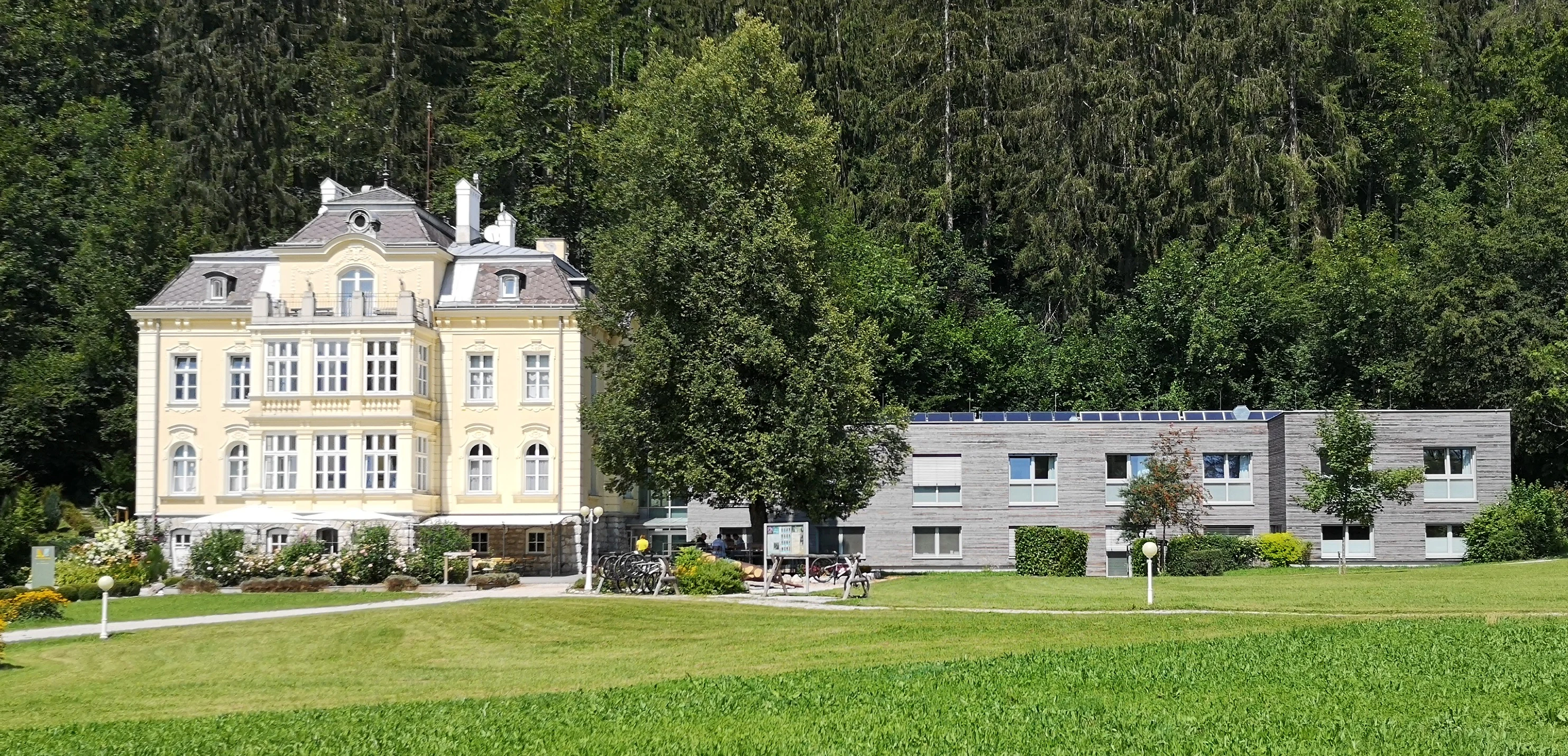
visitor centers in Molln, Reichraming, and Windischgarsten provide educational access to the park's natural and cultural heritage. The historic Villa Sonnwend in Roßleithen serves as the park's lodge and seminar center, a building dating to 1907. The park supports sustainable tourism through an extensive network of hiking trails, mountain biking routes, and the Hintergebirgsradweg cycling path that follows the former route of the Waldbahn Reichraming railway.

Quick facts and research context for Kalkalpen National Park

Kalkalpen National Park spans roughly 20,825 hectares in Upper Austria, making it Austria's largest forested national park. The highest peak within the park is Hohe Nock at 1,963 meters. The landscape is approximately 80% forested, dominated by mixed forests of spruce, fir, and beech. The park contains over 200 kilometers of unbuilt stream courses and more than 800 springs. Over 70 caves have been discovered within the park boundaries, including the Klarahöhle cave system discovered in 2004. The park is owned primarily by Österreichische Bundesforste (88%), with the remainder in private and municipal ownership.

Park context

Deeper park guide and search-rich context for Kalkalpen National Park

Kalkalpen National Park history, landscape, wildlife, and travel context
Explore Kalkalpen National Park through its history, landscape character, ecosystems, wildlife, conservation priorities, cultural context, and seasonal travel timing in a structured park guide built for atlas discovery and search intent.

Why Kalkalpen National Park stands out

Kalkalpen is best known for protecting Central Europe's largest remaining ancient beech forests, which represent some of the last old-growth forest ecosystems in the continent. The park's karst geology, with its extensive cave systems, sinkholes, and underground water networks, is equally distinctive. In 2019, the oldest dated beech tree in Europe, estimated to be over 500 years old with rings dating to 1474, was discovered within the park, providing extraordinary evidence of the forests' ecological continuity. The Reichraminger Hintergebirge region offers dramatic alpine scenery with peaks exceeding 2,000 meters visible from the Wurbauerkogel panorama tower.
Kalkalpen National Park history and protected-area timeline

The history of Kalkalpen National Park reflects decades of conservation advocacy in Upper Austria. Human presence in the region extends to the Stone Age, with stone artifacts from hunting communities dating to between 18,000 and 10,000 BCE discovered in the Nixloch cave near Ternberg. Bronze Age artifacts including axes and a spear point found near Windischgarsten indicate continued human activity through the first millennium BCE.

The modern conservation movement gained momentum in the 1970s and 1980s. The Sengsengebirge nature reserve was established in 1976, providing initial protection. Beginning in the 1980s, local conservation groups and the Austrian Nature Union (Naturschutzbund ÖNB) mounted successful campaigns against proposed industrial developments, including a military training area proposed by the steel company VÖEST and hydroelectric reservoir projects by Ennskraftwerke AG in the Hintergebirge.

Formal planning for a national park began in 1990, culminating in the Nationalpark Law passed by the Upper Austrian Parliament in 1996. The park was initially established by ordinance on July 21, 1997, covering 16,509 hectares and formally opened on July 25, 1997. International IUCN recognition as a Category II protected area followed in the same year. Subsequent expansions brought the park to its current size: 18,400 hectares in 2001 and 20,856 hectares in 2003, with a further adjustment in 2009. The park gained Ramsar designation in 2004 and Natura 2000 status the same year, fulfilling both European Union FFH and Birds Directive requirements.

Kalkalpen National Park landscape and geographic character

The landscape of Kalkalpen National Park is defined by its location within the Northern Limestone Alps, characterized by dramatic alpine terrain carved from limestone and dolomite bedrock. The primary rock types are Wettersteinkalk and Hauptdolomit, which have produced an extensive karst system of caves, sinkholes, and underground drainage networks. The terrain is approximately 80% forested, with the remaining areas comprising alpine meadows, rocky summits, and water features.

The Reichraminger Hintergebirge forms the eastern portion of the park, offering a remote wilderness character with steep-sided valleys descending from ridgelines exceeding 1,900 meters. The highest peak in the park, Hohe Nock at 1,963 meters, rises from this eastern section. From the Wurbauerkogel panorama tower near Windischgarsten, visitors can see 21 peaks exceeding 2,000 meters on clear days. The Sengsengebirge in the western portion contains the famous Eiskapelle, an ice cave with a 60-meter-long, 30-meter-wide chamber where ice can persist year-round in its deepest section. The park contains over 200 kilometers of unbuilt stream courses and more than 800 documented springs, feeding clean water systems that remain largely unmodified.
Kalkalpen National Park ecosystems, habitats, and plant life

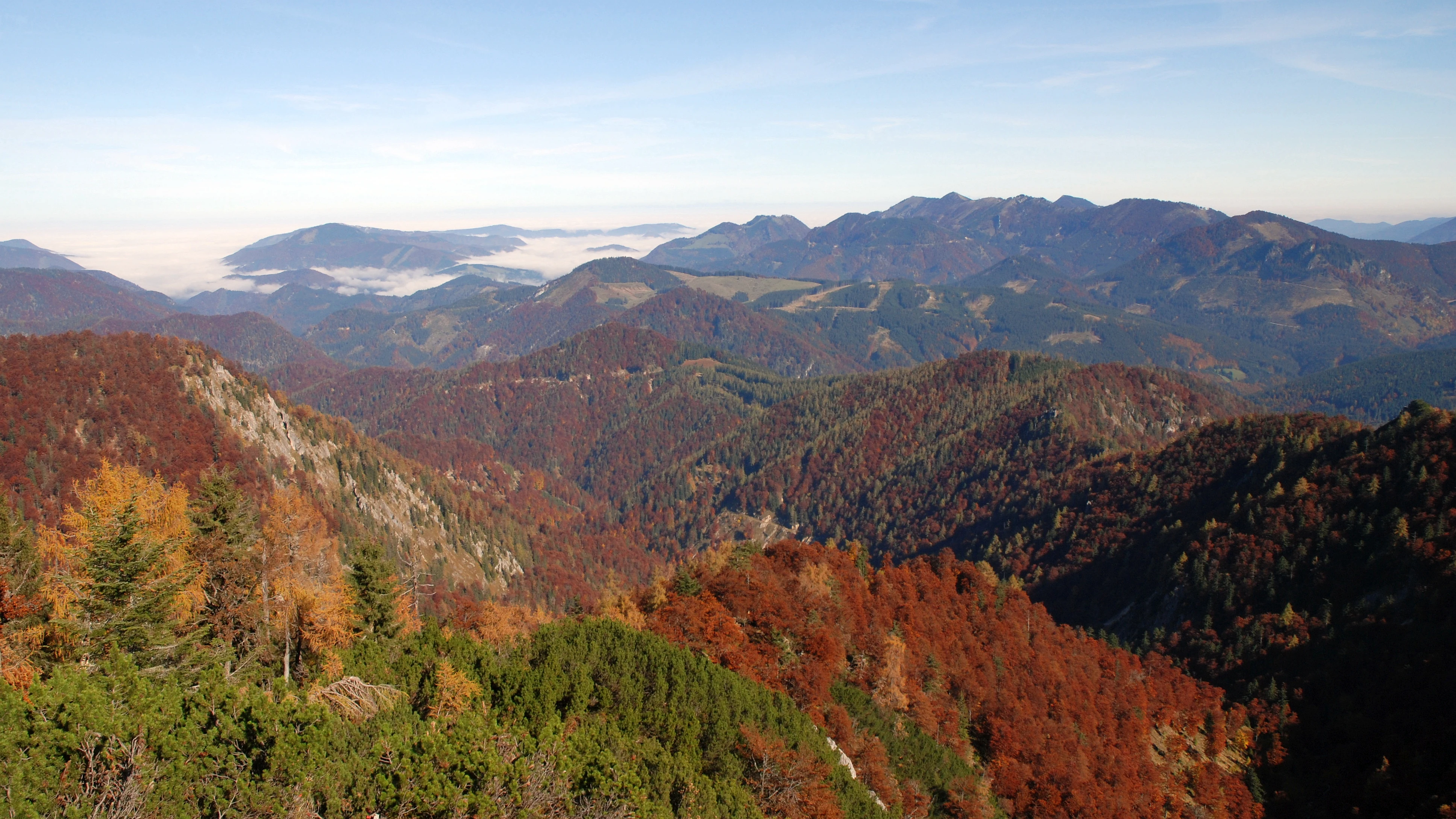
The nature of Kalkalpen reflects the ecological richness of Central Europe's most extensive forest protected area. The park's old-growth beech forests are its most internationally significant ecological feature, representing post-glacial forest continuity across Europe. These forests, particularly in the Urlachtal, Bodinggraben, and Reichraminger Hintergebirge areas, were selected for UNESCO World Heritage inscription because they preserve ecological processes unbroken for millennia.

The vegetation includes over 850 documented plant species, with more than 100 species of flowering plants, ferns, and mosses. The mixed forests combine Norway spruce, silver fir, and European beech in varying proportions across elevation zones. The aquatic environment is equally significant, with the park containing Ramsar-designated wetland areas recognizing the importance of its streams, springs, and groundwater systems. The more than 200 kilometers of unbuilt watercourses and 800 springs form an interconnected hydrological network that supports diverse riparian and groundwater-dependent ecosystems.
Kalkalpen National Park wildlife and species highlights

Kalkalpen supports a remarkable diversity of wildlife despite its relatively compact size, with approximately 30 mammal species, 80 breeding bird species, and 1,500 butterfly species documented within the park boundaries. The large mammal community includes species such as the Eurasian lynx, brown bear, and European beaver, all of which have been recorded in the park though at low population densities. The European otter, common dormouse, and numerous bat species represent the smaller mammals that thrive in the park's diverse habitats.

The bird community includes several species of conservation concern in Austria, among them the capercaillie, black grouse, golden eagle, and black stork. The diversity of forest types, from old-growth beech forests to mixed coniferous stands, provides habitat for both forest-dwelling species and open-country birds. The park also supports a rich invertebrate community, with the 1,500 butterfly species representing particularly notable diversity. Among the reptiles, the Aesculapian snake, smooth snake, and common adder occur in the karst and forest habitats.

Kalkalpen National Park conservation status and protection priorities

Kalkalpen National Park represents one of Austria's most significant conservation achievements, protecting the country's largest forested area and its most extensive karst landscape within a single protected area. The inclusion of the park's ancient beech forest components in the UNESCO World Heritage Site for Ancient and Primeval Beech Forests of the Carpathians and Other Regions of Europe in 2017 provides international recognition of these ecosystems as irreplaceable heritage requiring the highest level of protection.

The park's management approach divides the territory into distinct zones, with 89% designated as nature zone and 11% as preservation zone, ensuring that core ecological processes receive strict protection while allowing for sustainable visitor access. The Ramsar designation in 2004 recognizes the wetland values of the park's streams and groundwater systems, while Natura 2000 status under both the EU Habitats Directive and Birds Directive integrates the park into Europe's protected area network. The discovery of Europe's oldest known beech tree in 2019 underscores the park's role as a repository of ecological history and genetic continuity.

Kalkalpen National Park cultural meaning and human context

The cultural context of Kalkalpen extends beyond the modern protected area to encompass centuries of human interaction with the landscape. The region's position at the crossroads of Upper Austria, Lower Austria, and Styria made it a historic transit corridor, as evidenced by Bronze Age artifacts found near Windischgarsten. The traditional iron-processing industry of the Eisenwurzen region, centered on the Steyr valley, depended on the forests for charcoal production, and the Graf Lamberg noble family's hunting preserves maintained relatively undisturbed forest conditions into the early twentieth century.

The former Waldbahn Reichraming railway, which operated from the late nineteenth century until the early 1970s, carved a transportation corridor through the park that has been converted into the Hintergebirgsradweg recreational trail. This industrial heritage coexists with older traditions of alpine agriculture, as evidenced by the approximately 20 almen (alpine pastures) within the park's preservation zone. The surrounding communities of Molln, Reichraming, Windischgarsten, Roßleithen, and other villages maintain connections to the park through tourism and stewardship activities.

Top sights and standout views in Kalkalpen National Park

Kalkalpen's most exceptional highlights include the ancient beech forests recognized as UNESCO World Heritage, the dramatic karst landscape with over 70 caves including the Klarahöhle and the Eiskapelle ice cave, and the opportunity to experience one of Central Europe's largest wilderness areas within relatively easy reach of Austria's population centers. The Wurbauerkogel panorama tower provides sweeping views across 21 peaks exceeding 2,000 meters, while the network of hiking, cycling, and winter trails offers diverse ways to explore the terrain. The discovery of Europe's oldest dated beech tree in 2019 adds extraordinary historical depth to the forest experience, connecting visitors to ecological processes spanning more than five centuries.

Best time to visit Kalkalpen National Park

The best time to visit Kalkalpen depends on the experience sought. Summer months from June through September offer the most extensive trail accessibility and warm conditions suitable for hiking, cycling, and exploring the visitor centers. The autumn season brings vibrant forest coloration and the opportunity to observe wildlife as animals prepare for winter. Winter transforms the park into a snowshoeing and skiing destination, with the quiet of the snow-covered forest offering a different character entirely. Spring and early summer coincide with peak wildflower displays in the alpine meadows and provide excellent conditions for birdwatching as migratory species return to breed.
Park location guide

Geography guide, regional context, and park location map for Kalkalpen National Park

Kalkalpen National Park park geography, regions, and map view in Austria
Understand where Kalkalpen National Park sits in Austria through a broader geographic reading of the surrounding landscape, nearby location context, and its mapped position within the national park landscape.

How Kalkalpen National Park fits into Austria

Austria is a landlocked country in Central Europe, bordered by Germany, Czech Republic, Slovakia, Hungary, Slovenia, Italy, Switzerland, and Liechtenstein. The country is a federal semi-presessional republic composed of nine states, with Vienna as its capital and largest city. It has a population of approximately 9.1 million people.

Wider geography shaping Kalkalpen National Park in Austria

Austria is located in Central Europe, lying in the Eastern Alps. It is bordered by Germany and Czech Republic to the north, Slovakia to the northeast, Hungary to the east, Slovenia and Italy to the south, and Switzerland and Liechtenstein to the west.

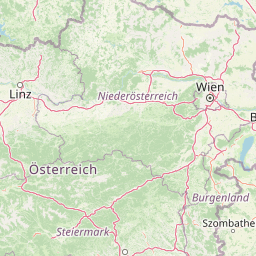
Map view of Kalkalpen National Park

Use this park location map to pinpoint Kalkalpen National Park in Austria, understand its exact geographic position, and read its mapped placement within the surrounding landscape more clearly.

Pigeon | © OpenStreetMap contributors

Location context for Kalkalpen National Park

Upper Austria
Park atlas

Explore additional protected areas and regional landscapes across Upper Austria and beyond after tracing Kalkalpen's unique karst features.

Discover Other National Parks Near Kalkalpen National Park, Upper Austria
Expand your exploration beyond Kalkalpen National Park to compare its ancient beech forests and extensive karst landscapes with other protected areas across the Northern Limestone Alps. Trace the regional spread of national parks and reserves, gaining a broader understanding of Central European mountain ecosystems and conservation efforts.
National parkStyria

Gesäuse National Park: Detailed Protected Landscape and Alpine Geography in Styria

Explore Austria's dramatic river gorge and rugged peaks.

Gesäuse National Park in Styria represents a significant alpine protected area, characterized by the striking Enns river gorge cutting through the Gesäuseberge. This national park offers a unique geographic context, showcasing steep limestone peaks, dramatic rock faces, and a rich hydrological network. Discover the mapped boundaries and protected landscape of one of Austria's most visually striking natural passages, ideal for detailed atlas exploration and understanding alpine conservation.

Area
110 km²
Established
2002
IUCN
II
Relief
Mountain
Watercolor illustration showing mountain ranges, forests, and a river under a light sky.
National parkBavaria

Berchtesgaden National Park: Protected Landscape and Regional Geographic Context in Bavaria

Mapped natural terrain and protected area exploration.

Berchtesgaden National Park represents a crucial protected landscape situated in Bavaria, Germany. This entry provides detailed information focused on its protected area status, unique geographic setting, and mapped natural terrain. It serves as a gateway to understanding the park's specific identity within the regional atlas of Germany, offering insights into its boundaries and its significance as a curated natural landscape for discovery.

Area
210 km²
Established
1978
IUCN
II
Relief
Mountain
National park

Hohe Tauern National Park: Map of Austria's Largest Alpine Protected Landscape

Discover glacial terrain and mountain park geography in the Austrian Alps.

Hohe Tauern National Park, Austria's largest protected area, offers a profound exploration of high alpine landscapes. This national park is defined by its towering peaks, expansive glacier systems, and deeply carved glacial valleys. Examining its mapped boundaries reveals the sheer scale of this protected alpine terrain, providing crucial context for understanding regional geography and the unique natural systems it preserves across the Central Eastern Alps.

Area
1,806 km²
Established
1981
IUCN
II
Relief
Mountain
Watercolor painting showing mountains, forests, and valleys in a landscape.
National park

Bavarian Forest National Park: Protected Landscape and Regional Geography Atlas

Explore mapped terrain and protected park boundaries in Germany.

Dive into the specifics of Bavarian Forest National Park, a key protected area noted for its distinct landscape and geographic importance. This MoriAtlas entry details the park's mapped boundaries and its setting within the surrounding regional geography, offering a clear atlas-style view of its natural terrain. Understand its identity as a national park and discover its place in Germany's protected lands.

Area
242.45 km²
Established
1970
IUCN
II
Visitors
1.3M annual
National park

Thayatal National Park: Austria's Smallest Protected Landscape and Dramatic River Valley

Explore the mapped geography of a breakthrough valley and its rich biodiversity.

Thayatal National Park, Austria's smallest national park, offers a concentrated study in protected landscape discovery. Its core feature is the spectacular Thaya River breakthrough valley, a deep gorge cutting through gneiss terrain with steep, forested slopes. This page provides context for its mapped protected area, highlighting its exceptional biodiversity and its role as a transboundary conservation zone with the adjacent Czech Podyjí National Park. Understand the geographic setting and unique landscape character of this significant natural region.

Area
13.3 km²
Established
2000
IUCN
II
Relief
Mountain
National parkSouth Moravian Region

Podyjí National Park: Explore Czech Republic's Intact River Canyon Ecosystem

Mapped Boundaries and Protected Landscape of South Moravia

Podyjí National Park, situated in the South Moravian Region, offers a profound look into one of Central Europe's most ecologically preserved river valleys. This national park is defined by its dramatic 220-meter deep Dyje River canyon, featuring rocky cliffs, stone seas, and a rich mosaic of forest and steppe habitats. MoriAtlas provides structured geographic information to analyze its unique landscape context, biodiversity, and role as a protected natural area within the Czech atlas.

Area
63 km²
Established
1991
Watercolor illustration of a river flowing through a forested valley with mountains in the background
National park

Triglav National Park: A Mapped Alpine Protected Landscape in Slovenia

Julian Alps geography, glacial lakes, and karst terrain.

Triglav National Park is Slovenia's premier protected area, covering 880 square kilometers of the Julian Alps. This page details its dramatic alpine geography, including Mount Triglav, glacial valleys, and significant karst features. Understand the mapped boundaries and landscape context of this national park, a key entry in the MoriAtlas geographic discovery resource for understanding protected lands.

Area
880 km²
Established
1981
IUCN
II
Visitors
1.6M annual
Watercolor illustration of a landscape with green hills, a body of water, and trees under a soft sky
National parkGyőr-Moson-Sopron

Fertő-Hanság National Park: Central European Wetland and Salt Lake Protected Area

Mapped Geographic Boundaries and Landscape Context

Fertő-Hanság National Park, situated in Győr-Moson-Sopron, Hungary, is a vital protected landscape renowned for its shallow salt lake and expansive marshlands. This page provides an atlas-focused discovery of its protected area, highlighting the unique interplay of reed beds and alkaline grasslands. Understand the park's geographic setting and its role as a significant wetland ecosystem for bird populations and specialized flora.

Area
235.88 km²
Established
1991
Relief
Lowland
Climate
Temperate

Common questions about visiting, size, designation, and location context for Kalkalpen National Park

Kalkalpen National Park FAQs for park facts, access, geography, and protected area context
Find quick answers about Kalkalpen National Park, including protected-area facts, park geography, trail and visitor context, and how the park fits into its surrounding country and regional landscape.
MoriAtlas Explorer

Continue Your Protected Areas Search Across the Global Atlas

Deepen your exploration by continuing the structured search for national parks and protected areas worldwide. Utilize the comprehensive filtering capabilities to compare different conservation landscapes and refine your understanding of global park geography. Discover more about the distribution and characteristics of protected natural areas.

Global natural geography