Why Parima Tapirapecó National Park stands out
Parima Tapirapecó is most notably recognized for its extraordinary scale, representing the largest national park in Venezuela and one of the most extensive protected areas in the Western Hemisphere. The park is famous for safeguarding the Orinoco River's headwaters, a critical hydrological system that sustains ecosystems across much of northern South America. It also holds profound significance as the ancestral territory of the Yanomami people, one of the largest indigenous groups in the Brazilian-Venezuelan Amazon. The park's location within the Guayanan Highlands, a region of exceptional biodiversity and ancient geological formations, further distinguishes it as a conservation landmark of international importance.
Parima Tapirapecó National Park history and protected-area timeline
Parima Tapirapecó was established on August 1, 1991, designated as Venezuela's premier protected area in recognition of its ecological significance and the need to preserve the territorial integrity of the Yanomami people. The park's creation reflected a growing awareness during the late 1980s and early 1990s of the importance of protecting large-scale ecosystems rather than isolated fragments. At nearly 38,300 square kilometers, the park was sized to encompass entire watersheds and ecological systems, following emerging conservation science that emphasized connectivity and landscape-level protection. The establishment also came during a period when international attention focused on indigenous rights and the recognition that effective conservation in tropical regions required integrating indigenous territorial claims with protected area management. The governing body, INPARQUES (Instituto Nacional de Parques), assumed management responsibility for the park, working within Venezuela's national park system framework that dates to the 1950s establishment of the first Venezuelan national parks.
Parima Tapirapecó National Park landscape and geographic character
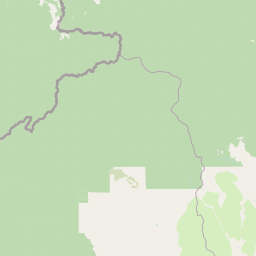
The physical landscape of Parima Tapirapecó reflects the ancient Guayanan Highlands region, characterized by deeply weathered Precambrian shield geology that forms distinctive upland terrain throughout the park. The Parima Mountains, which give the park part of its name, rise in the southern portion of the protected area, creating a complex terrain of ridges, valleys, and elevated plateaus. Elevation differences create environmental gradients that influence vegetation patterns across the park, with lower elevations supporting dense lowland evergreen forests while higher areas transition into submontane and montane forest types. The southern Parima uplands contain extensive areas of savanna, largely secondary in nature, that contrast with the forest-covered valleys and lower slopes. The headwaters of the Orinoco River system pass through the park, with numerous streams and tributaries originating in the highland areas and converging to form the great river that eventually flows north across Venezuela to the Atlantic.
Parima Tapirapecó National Park ecosystems, habitats, and plant life
The park's ecological character is defined by its position within the Guayanan Highlands moist forests ecoregion, one of the most biodiverse regions in South America. The primary vegetation types include extensive evergreen lowland forests that dominate the valley floors and lower slopes, characterized by tall trees, multiple canopy layers, and extraordinary species diversity. As elevation increases, the vegetation transitions through submontane forest zones to montane forest communities adapted to cooler, cloudier conditions at higher elevations. The southern portions of the park, particularly in the Parima uplands, contain large areas of savanna grassland, much of which represents secondary growth following past disturbance. These savannas provide important habitat heterogeneity within the larger forest matrix, supporting different ecological communities and species assemblages than the closed forest environments. The combination of forest types, elevation gradients, and the savanna enclaves creates a mosaic of habitats within the park's boundaries.
Parima Tapirapecó National Park wildlife and species highlights
The wildlife of Parima Tapirapecó reflects the exceptional biodiversity of the Guayanan region, with the park supporting populations of many iconic Amazonian and highland species. The extensive forest environments provide habitat for numerous primate species, including howler monkeys and spider monkeys, while the more open savanna areas support different community compositions. Large mammals including jaguars and tapirs occupy the diverse habitats, with the park's name referencing the tapir (Tapirapecó translates to 'tapir place' in the Yanomami language). Birdlife is particularly diverse, with the park's elevation gradient and habitat mosaic supporting numerous species from lowland rainforest birds to highland specializations. The waterways and riparian corridors provide habitat for aquatic species and serve as movement corridors through the landscape.
Parima Tapirapecó National Park conservation status and protection priorities
Parima Tapirapecó represents a conservation landmark of global significance, designated as an IUCN Category II protected area reflecting its primary purpose of ecosystem preservation. The park's extraordinary size makes it one of the most important large-scale conservation areas in the tropics, providing space for natural processes to continue without significant human interference. The protection of Orinoco headwaters carries immense importance for downstream ecosystems and human communities across Venezuela, as the river system supports enormous biological productivity and provides water resources for millions of people. The integration of Yanomami territorial interests within the park's management framework demonstrates a conservation model that recognizes indigenous peoples as essential partners in ecosystem preservation. The Guayanan Highlands moist forests ecoregion, of which the park forms a core protected component, is recognized as a global biodiversity hotspot requiring conservation attention.
Parima Tapirapecó National Park cultural meaning and human context
Parima Tapirapecó holds profound cultural significance as the ancestral homeland of the Yanomami people, one of the largest indigenous groups remaining in the Amazon region. The Yanomami have inhabited this territory for generations, maintaining traditional lifestyles that include hunting, gathering, and rotational agriculture adapted to the local environment. Their presence gives the park exceptional cultural dimension, as it represents not merely a natural area but a living cultural landscape where indigenous knowledge systems, traditional practices, and unique ways of understanding the environment continue to operate. The park's establishment was intended to protect both the natural environment and the cultural integrity of the Yanomami communities, recognizing that their traditional land use practices and territorial relationships with the landscape form an integral part of what the park preserves. The name Tapirapecó itself derives from the Yanomami language, reflecting the deep connection between the indigenous communities and this territory.
Top sights and standout views in Parima Tapirapecó National Park
The defining highlights of Parima Tapirapecó include its distinction as Venezuela's largest national park and one of the five largest protected areas worldwide, offering unparalleled scale for ecosystem protection. The park protects the headwaters of the Orinoco, one of South America's great river systems, making it critical for downstream ecological and human systems. Its location within the Guayanan Highlands provides access to a remarkable diversity of habitats across elevation gradients. The presence of the Yanomami people as active stewards of the landscape adds irreplaceable cultural dimension to the park's conservation value. The Parima Mountains provide scenic and scientific interest as part of the ancient Guayanan shield formation.
Best time to visit Parima Tapirapecó National Park
Visiting Parima Tapirapecó requires consideration of the tropical climate characteristic of the southern Venezuelan Amazon. The dry season from December through April typically offers more accessible conditions for exploration, with reduced precipitation and more manageable trail conditions. The wet season from May through November brings heavier rainfall that can restrict movement in some areas but also reveals the park's landscapes in full verdant expression. Temperature patterns remain relatively consistent year-round due to the equatorial location, though higher elevations in the Parima Mountains may feel noticeably cooler. Visitors should be prepared for remote conditions with limited infrastructure, and should plan their visit in coordination with park authorities to ensure safe and appropriate access to this sensitive cultural and ecological landscape.