Why Kanashen stands out
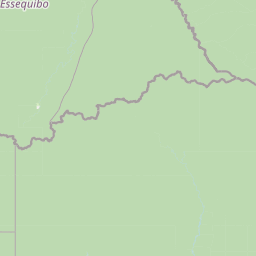
Kanashen is best known as Guyana's pioneering community-owned protected area, representing a model of indigenous-led conservation. The area contains the critical headwaters and southern watershed of the Essequibo River, making it vital for downstream water resources across the country. Its biodiversity is exceptional, with documented populations of globally threatened species including the giant armadillo, harlequin toad, Brazilian tapir, giant river otter, and the impressive harpy eagle. The region supports over 200 bird species, including numerous parrots and macaws, and represents one of the most biologically significant intact rainforest areas in Guyana.
Kanashen history and protected-area timeline
The Kanashen Community Owned Conservation Area was formally established following the relocation of the Wai-Wai community to its current location at Masakenari in January 2000. This move became necessary when flooding forced the community to abandon their previous settlement at Akotopono, six kilometers to the northeast. The Wai-Wai people have historically practiced a semi-nomadic lifestyle, periodically relocating their villages as part of traditional shifting cultivation practices that allow the forest and soil to regenerate. This ancient relationship with the land, combined with their deep spiritual connection to the rainforest and its resources, positioned the community as natural stewards of this vast wilderness area. The formal recognition of their conservation area in 2000 marked a significant milestone in Guyana's protected area system and set a precedent for indigenous-led conservation across the country.
Kanashen landscape and geographic character
The terrain of Kanashen is characterized by rugged mountain ranges rising from the tropical forest floor, with the Wassarai, Yahore, Komoa, and Kaiawakua mountains reaching elevations up to 1,200 meters above sea level. These mountains serve as the hydrological heart of the region, giving rise to multiple major tributaries including the Kassikaityu, Kamoa, Sipu, and Chodikar rivers, which together form the southern watershed of the Essequibo River. The landscape supports four distinct vegetation types that have remained largely intact: tall evergreen highland forest dominates the higher elevations, while tall to medium evergreen lower montane forest covers the mid-slopes. Smaller areas of tall evergreen flooded riparian forest occur along watercourses, and patches of lowland shrub savanna are found in isolated locations. The combination of mountain terrain, intact forest cover, and extensive river systems creates a visually spectacular and ecologically diverse landscape.
Kanashen ecosystems, habitats, and plant life
The ecological character of Kanashen is defined by its extensive old-growth tropical rainforest ecosystems that have remained nearly untouched by human activity. Botanically, the area supports remarkable plant diversity with 192 species recorded, including many species found nowhere else on Earth. The four primary vegetation types create a vertically stratified environment ranging from lowland forest through montane zones. Tall evergreen highland forest and lower montane forest represent the dominant habitats, while riparian forests along the major rivers and isolated savanna patches add ecological variety. The area's relative ecological isolation and minimal human disturbance have allowed natural processes to continue uninterrupted, making it one of the most intact forest ecosystems remaining in Guyana.
Kanashen wildlife and species highlights
Kanashen supports an exceptional diversity of wildlife, with particular significance for several globally threatened species. The mammalian fauna includes the giant armadillo, Brazilian tapir, giant anteater, and jaguar, all of which are species of conservation concern. The giant river otter, South America's largest otter species, inhabits the river systems. The avifauna is exceptionally rich, with over 200 species documented across the protected area, representing approximately 16 percent of Guyana's total bird species. Notable bird groups include the cock of the rock, screaming piha, white-tailed trogon, painted parakeet, golden-headed manakin, and impressive populations of macaws including the scarlet macaw, red-shouldered macaw, and blue-and-yellow macaw. Antbirds and toucans are also well represented. The harpy eagle, one of the world's largest and most powerful raptors, is confirmed to occur in the area.
Kanashen conservation status and protection priorities
Kanashen represents a pioneering model of community-based conservation that demonstrates how indigenous land management can protect vast tracts of critical ecosystem. The legal protection of this area as a Community Owned Conservation Area recognizes the Wai-Wai people's traditional stewardship of the forest and provides formal recognition of their conservation practices. The area's significance extends beyond its borders because it protects the headwaters and southern watershed of the Essequibo River, which supplies water to the majority of Guyana's population. Several globally threatened species depend on the intact habitats found here, including the giant armadillo, harlequin toad, Brazilian tapir, and harpy eagle. The extreme remoteness and low population density have historically served as natural barriers to development pressure, while the community's traditional practices have maintained ecological balance.
Kanashen cultural meaning and human context
The Wai-Wai indigenous people are the sole inhabitants and traditional stewards of Kanashen, maintaining a rich cultural heritage closely tied to the rainforest environment. The community resides in the village of Masakenari, whose name translates to 'the place of the Mosquito' in the Wai-Wai language. The Wai-Wai traditionally practiced shifting cultivation, periodically moving their villages to allow forest regeneration, a practice that reflects their sophisticated understanding of tropical forest ecology. Their spiritual beliefs maintain that certain plants and animals carry the spirit of their hunter or gatherer, influencing their relationship with wildlife. While Christianity has been practiced since the mid-20th century, the community maintains many traditional customs and regularly travels to interact with Wai-Wai groups in Brazil and Suriname. English serves as a second language for external communication, while Wai-Wai remains the primary language of daily life.
Top sights and standout views in Kanashen
The critical importance of Kanashen lies in its role as the protected headwaters for Guyana's principal river system, the environmental services provided by its intact rainforest, and its remarkable biodiversity including globally threatened species. As the nation's first community-owned conservation area, it represents an innovative model that combines indigenous cultural preservation with modern conservation objectives. The area provides crucial habitat for species such as the harpy eagle, giant river otter, and giant armadillo, while supporting over 200 bird species. The Wai-Wai people's successful management demonstrates that indigenous communities can effectively preserve vast wilderness areas while maintaining their traditional livelihoods and cultural identity.
Best time to visit Kanashen
The optimal time to visit Kanashen corresponds to the dry season, typically from September to March, when river levels are sufficient for travel but conditions are generally more stable. The dry season allows access via the airstrip and makes river navigation more predictable. However, visitors should be prepared for the challenging logistics inherent in reaching this remote location, including potential delays due to weather or water conditions. The wet season, from April to August, can render some routes impassable and may isolate the community entirely during periods of heavy rainfall. Regardless of season, the remote nature of the area means that all visits require careful advance planning and coordination with the community.