Why Puinawai Natural Reserve stands out
Puinawai Natural Reserve is distinguished by its extraordinary biodiversity and remarkable state of ecological preservation. The reserve harbours 419 endemic plant species, with 176 of these species endemic to the broader Guyana Shield region, representing one of the highest concentrations of restricted plant diversity in the Amazon. The protected area encompasses a complex mosaic of humid tropical rainforest, tropical open savanna, and transitional ecological zones, creating a diverse habitat matrix that supports both Amazonian and Guianan species assemblages. The reserve's isolation has historically limited human impact, preserving intact ecosystems that have remained largely undisturbed.
Puinawai Natural Reserve history and protected-area timeline
Puinawai Natural Reserve was established in September 1989 as part of Colombia's expansion of its national park system during the late twentieth century. The creation of the reserve coincided with the formal recognition of three indigenous territories within the same geographic area, establishing a model of co-management where traditional indigenous lands received formal legal protection alongside the national park designation. This dual recognition acknowledged that the local indigenous communities had for centuries practiced forms of land use and resource management that were compatible with, and indeed supportive of, the maintenance of ecological integrity. The establishment of the reserve represented a strategic expansion of Colombia's Amazon conservation frontier into the previously under-protected Guainía Department, which at the time remained one of the least开发和度最高的地区之一.
Puinawai Natural Reserve landscape and geographic character
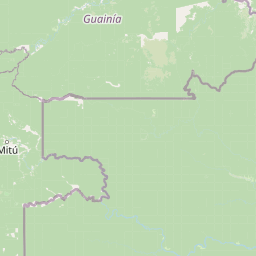
The physical landscape of Puinawai Natural Reserve is characterized by its low-lying terrain, with elevations ranging from 200 to 380 metres above sea level across the protected area. The terrain consists largely of gently undulating plains and low ridges that form part of the broader Amazon floodplain system, punctuated by occasional higher ground that supports distinct vegetation communities. Multiple river channels traverse the reserve, including the Guainía River, Isana River, Cuyari River, and Inírida River, creating a dendritic drainage pattern that shapes local topography and vegetation distribution. The rivers belong to two major basins, with the Guainía, Isana, and Cuyari flowing into the Amazon system while the Inírida carries its waters northward to the Orinoco, placing the reserve at a critical hydrological crossroads.
Puinawai Natural Reserve ecosystems, habitats, and plant life
The ecological character of Puinawai Natural Reserve is defined by a complex mosaic of humid tropical rainforest, tropical open savanna, and ecological transition zones. The primary forest type consists of tall evergreen rainforest adapted to the hot, humid conditions with minimal seasonal variation in temperature and precipitation. These forests support extraordinary plant diversity, with 419 species identified as endemic to the reserve and 176 of these species restricted to the Guyana Shield region, representing a remarkable concentration of restricted biodiversity. The savanna enclaves within the rainforest matrix support distinct plant communities adapted to periodic fire and more pronounced dry seasons, creating ecological diversity that adds to the reserve's overall conservation significance. The combination of Amazonian and Guianan biotic influences, coupled with habitat heterogeneity created by the savanna-forest mosaic, makes this area particularly important for maintaining evolutionary processes and species persistence.
Puinawai Natural Reserve wildlife and species highlights
The fauna of Puinawai Natural Reserve remains relatively poorly documented compared to more accessible Colombian protected areas, but the reserve is recognized as supporting significant populations of Amazonian wildlife. The presence of extensive intact forest, the influence of multiple river systems, and the diversity of habitats all contribute to the likelihood of diverse animal communities including numerous bird species, mammals adapted to forest and savanna environments, and aquatic species in the riverine systems. The local indigenous communities have historically maintained sustainable relationships with wildlife populations, and the reserve's inaccessibility has provided additional protection for species that might otherwise face hunting pressure. The Guyana Shield endemism evident in the plant communities suggests similarly restricted faunal elements may also be present, though detailed surveys remain limited.
Puinawai Natural Reserve conservation status and protection priorities
Puinawai Natural Reserve represents one of the most important conservation areas in Colombia due to its vast size, exceptional state of preservation, and unique ecological character. With only approximately 1% of the reserve affected by deforestation, it ranks among the most intact large protected areas in the Amazon region, providing a critical reference ecosystem for understanding pre-disturbance Amazonian ecology. The reserve protects a significant portion of the Guyana Shield flora, with 176 plant species found nowhere else on Earth, making it a global priority for biodiversity conservation. The dual designation of the protected area alongside indigenous territories creates a management framework that integrates traditional ecological knowledge with modern conservation science, potentially offering lessons for landscape-scale protection in other regions. The reserve's position at the hydrological divide between Amazon and Orinoco basins adds additional significance for maintaining downstream ecosystem function across an enormous geographical area.
Puinawai Natural Reserve cultural meaning and human context
The cultural context of Puinawai Natural Reserve is intimately connected to the indigenous peoples whose ancestral territories the reserve encompasses and coincides with. Three distinct indigenous territories were formally recognized at the same time as the reserve's establishment in 1989, reflecting the historical presence and continued relevance of indigenous communities in this remote corner of Colombia. These communities have maintained sustainable relationships with the landscape for generations, and their traditional land management practices have contributed to the remarkable preservation of ecological integrity that characterizes the reserve today. The reserve thus represents not merely a state-imposed conservation designation but rather a recognition of existing indigenous stewardship systems that have demonstrably maintained biodiversity and ecosystem function over extended time periods.
Top sights and standout views in Puinawai Natural Reserve
Puinawai Natural Reserve stands as Colombia's second-largest national park and one of the most ecologically intact large protected areas in the entire Amazon basin. The reserve protects an exceptional concentration of endemic biodiversity, including 419 plant species found nowhere else in the world and 176 species restricted to the Guyana Shield. Its landscape encompasses a diverse mosaic of humid tropical rainforest, savanna, and transitional zones at a critical biogeographical crossroads between Amazonian and Guianan ecosystems. The protected area serves as a hydrological divide between the Amazon and Orinoco river basins, underscoring its regional significance for maintaining water cycles across vast areas of northern South America.
Best time to visit Puinawai Natural Reserve
Puinawai Natural Reserve is not open to the public for conventional tourism, which limits visitor access considerations. The climate is consistently hot and humid year-round with minimal seasonal variation, and any visit would require special arrangements through Colombia's national parks service and coordination with local indigenous communities. The dry season, typically from December through March, may offer slightly more accessible conditions for any authorized scientific or cultural visits, though the reserve's remote location and lack of tourism infrastructure make it one of the most difficult Colombian parks to access.