Why Cradle Mountain, Lake St Clair National Park stands out
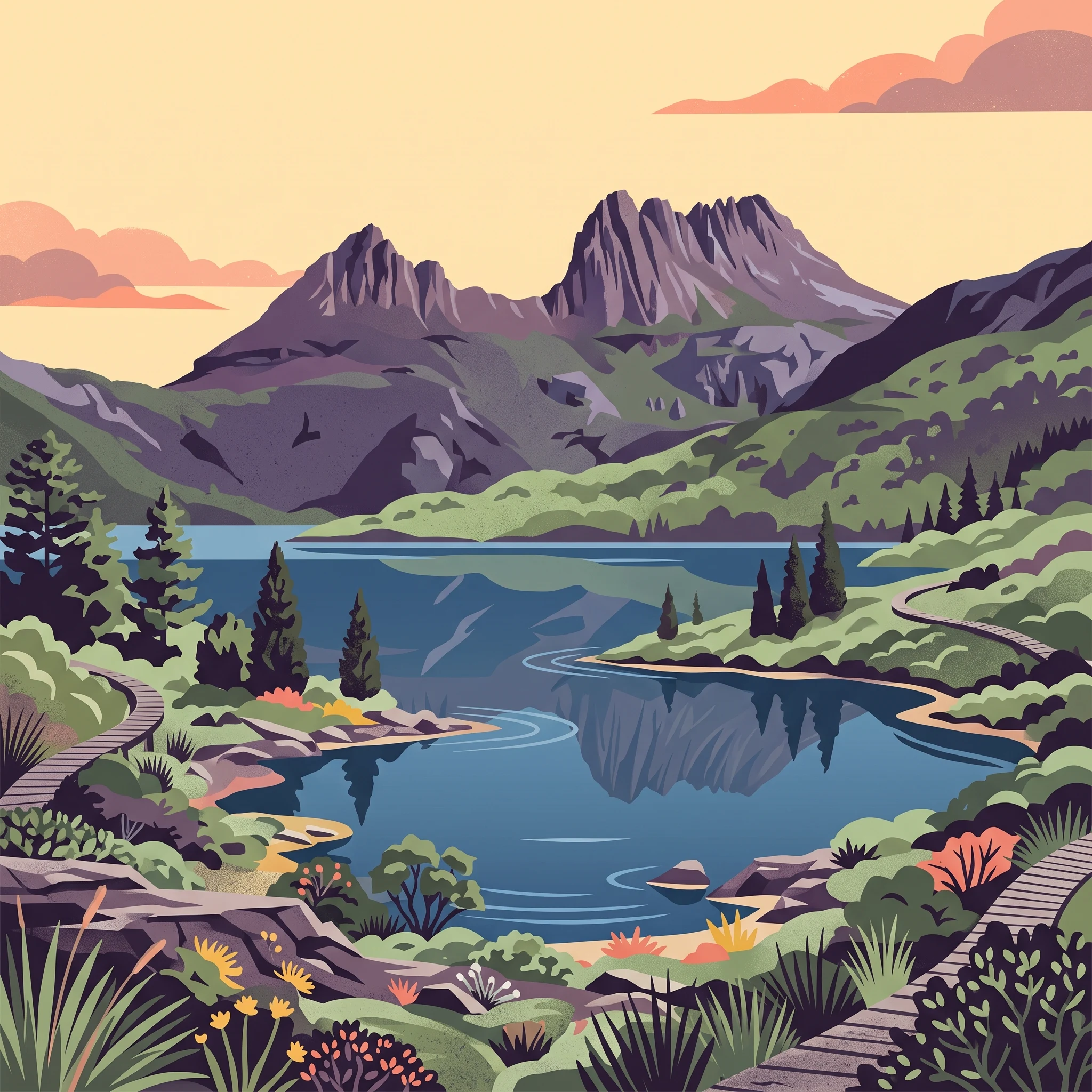
Cradle Mountain, Lake St Clair is best known for its dramatic alpine and glacial landscape characterised by saw-toothed peaks rising above pristine glacial lakes and ancient myrtle beech and pencil pine rainforests. The park contains Tasmania's highest mountain, Mount Ossa, and protects some of the state's most significant wilderness character. The Overland Track has become an iconic wilderness hiking experience internationally, while the image of Cradle Mountain reflected in Dove Lake has become one of Australia's most recognised natural landmarks. The park is also celebrated for its exceptional concentrations of endemic Tasmanian flora and fauna, with significant populations of marsupials including Tasmanian devils, pademelons, and wallabies inhabiting the diverse habitats from valley floors to alpine heaths.
Cradle Mountain, Lake St Clair National Park history and protected-area timeline
The land now protected within Cradle Mountain–Lake St Clair National Park has been inhabited by Aboriginal people for at least 10,000 years, with evidence of seasonal hunting excursions to the Cradle Mountain area during summer months. Archaeological discoveries at Pelion Plains and Lake St Clair have revealed stone tools and artifacts from this ancient occupation, while historical records indicate the last free Aboriginal people in the region were observed between Barn Bluff and Lake Windemere in 1836. European exploration began in 1827 when Joseph Fossey and Henry Hellyer surveyed the area for the Van Diemen's Land Company, with Lake St Clair first sighted by William Sharland in 1832. The late nineteenth century brought mining activity to various locations within what is now the park, including coal near Barn Bluff, copper at Pelion Plains, and tungsten in the Forth Valley, with trappers also establishing huts throughout the area. Beginning in the 1910s, Gustav Weindorfer and Kate Cowle championed the creation of a national park spanning from Cradle Mountain to Lake St Clair, achieving success when the area was declared a scenic reserve in 1922, a wildlife reserve in 1927, and finally designated a national park in 1947. Management of the park transferred to the Tasmania Parks and Wildlife Service in the 1970s following the controversial flooding of Lake Pedder.
Cradle Mountain, Lake St Clair National Park landscape and geographic character
The physical landscape of Cradle Mountain–Lake St Clair National Park presents a breathtaking array of glacial and alpine landforms across an area exceeding 1,600 square kilometres. The northern section is anchored by Cradle Mountain, a distinctive dolerite peak rising dramatically above the surrounding terrain, while Barn Bluff contributes to a dramatic mountain silhouette visible from many vantage points within the park. The central Pelion range forms a high undulating ridge with several named summits, while Mount Ossa at 1,617 metres represents the highest point in Tasmania. Multiple valleys cut through the landscape, carrying rivers and streams that feed the park's numerous lakes and tarns. Lake St Clair extends 17 kilometres in a north-south direction, reaching depths exceeding 167 metres, making it Australia's deepest freshwater lake. Dove Lake occupies a prominent position near the northern entrance, frequently photographed with Cradle Mountain's reflection gracing its surface. The terrain ranges from gentle valley floors to exposed alpine boulder fields, with vegetation patterns closely following elevation and aspect gradients.
Cradle Mountain, Lake St Clair National Park ecosystems, habitats, and plant life
The ecological character of Cradle Mountain–Lake St Clair National Park is defined by a complex mosaic of habitats spanning from lowland forests through montane rainforests to alpine heaths and herbfields. The park's vegetation is exceptionally diverse, with 40 to 55 percent of documented alpine flora being endemic to Tasmania, and 68 percent of higher rainforest species recorded in alpine areas across Tasmania present within the park's boundaries. The park's alpine vegetation has largely escaped the forest fires that have affected neighbouring regions, preserving ancient floristic communities. Myrtle beech (Nothofagus cunninghamii) dominates much of the cool temperate rainforest, while snow gums (Eucalyptus pauciflora) appear at higher elevations and pencil pine (Athrotaxis selaginoides) occupies valley floors and scree slopes. The combination of high rainfall, varied topography, and long period of isolation has produced a distinctive Tasmanian flora with strong endemic character. Fungal diversity is equally remarkable, with several hundred species already recorded, many forming essential mycorrhizal relationships with the park's vegetation.
Cradle Mountain, Lake St Clair National Park wildlife and species highlights
The mammalian fauna of Cradle Mountain–Lake St Clair National Park includes several species characteristic of Tasmanian wilderness, with Tasmanian pademelons and Bennett's wallabies commonly encountered along walking tracks and in more open areas. The park provides habitat for predatory marsupials including quolls and the famous Tasmanian devil, while nocturnal species such as short-beaked echidnas and various possum species occupy the forest canopy and ground layers. Platypuses inhabit streams and lakes, and common wombats are frequently seen, particularly at dusk. The bird fauna includes eleven species endemic to Tasmania, making the park an Important Bird Area, with flame robins, pink robins, and striated fieldwrens among the notable species. Forest ravens and currawongs are common throughout the park, while numerous other bird species occupy specific habitats from creek lines to alpine heaths. The park also supports diverse fungal communities playing essential ecological roles as decomposers and mycorrhizal partners.
Cradle Mountain, Lake St Clair National Park conservation status and protection priorities
Cradle Mountain–Lake St Clair National Park forms the core of a much larger protected area complex within the Tasmanian Wilderness World Heritage Area, recognised under UNESCO conventions for outstanding natural values. The park's protection preserves significant biodiversity including endemic flora and fauna found nowhere else on Earth, while maintaining wilderness character across a substantial landscape. Conservation values are particularly strong in the alpine zones where vegetation has largely escaped the fire regimes that have affected lower altitudes, preserving ancient floristic communities. The park's management balances visitor access with ecological protection, with the Overland Track requiring booking and fees during peak periods to support ranger services, track maintenance, and waste removal from remote hut locations. Phytophthora cinnamomi and other threats are monitored, though the park's intact ecosystems and management focus on preserving natural processes.
Cradle Mountain, Lake St Clair National Park cultural meaning and human context
The park occupies traditional Country of the Big River and Northern Tasmanian Aboriginal nations, with Aboriginal use of the Cradle Mountain area dating back to the last ice age around 10,000 years ago. Seasonal hunting expeditions during summer months constituted the primary pattern of Aboriginal interaction with this highland landscape, with archaeological evidence including stone tools and campsites at Pelion Plains and Lake St Clair. The landscape also bears the imprint of European settlement through mining activity in the late nineteenth and early twentieth centuries, with remnants of mining infrastructure and historic huts, including Du Cane and Pine Valley, surviving as cultural markers. The conservation movement that led to the park's protection in the 1920s and 1940s represents an important chapter in Australian environmental history, with Gustav Weindorfer's advocacy establishing a precedent for wilderness protection in Tasmania.
Top sights and standout views in Cradle Mountain, Lake St Clair National Park
The Overland Track stands as the park's most celebrated experience, a 65-kilometre wilderness walk typically taking six to eight days that traverses from Dove Lake near Cradle Mountain to Lake St Clair, passing through diverse landscapes including rainforests, alpine heaths, and alongside mountain peaks. The image of Cradle Mountain reflected in Dove Lake has become an iconic representation of Australian wilderness. Mount Ossa offers the chance to summit Tasmania's highest point, while numerous shorter walks provide accessible introductions to the park's landscapes from both northern and southern access points. The wildlife viewing opportunities, particularly for Tasmanian devils, wallabies, and endemic birds, draw nature enthusiasts, while the fungal diversity attracts specialist naturalists. The integration of Aboriginal heritage with European settlement history provides cultural context for understanding this landscape.
Best time to visit Cradle Mountain, Lake St Clair National Park
The park can be visited throughout the year, though each season offers distinctly different experiences and conditions. Summer months from December to February bring warmer temperatures and longer daylight hours, making this the most popular period for multi-day hikes including the Overland Track, though this coincides with the highest visitor numbers and requires advance booking for the track. Autumn (March to May) often delivers stable weather with clear skies and spectacular colour changes in the beech forests, while winter transforms the landscape with snow-capped peaks and frozen alpine lakes, creating dramatic scenery though some high-country tracks become challenging or impassable. Spring (September to November) sees the emergence of wildflowers across the alpine heaths and the return of migratory birds, though weather remains variable. The cool temperate climate means rainfall is distributed throughout the year, with the park receiving substantial precipitation that sustains its rainforests and waterfalls. Regardless of season, visitors should be prepared for rapidly changing weather conditions, particularly at higher elevations.