
Why Hurshat Tal National Park stands out
Hurshat Tal is best known for its extraordinary ancient Valonia oak forest, one of the oldest and most significant collections of these trees in Israel. The 240 surviving oaks, some dating back 350 to 400 years, represent a living heritage that predates modern conservation efforts and existed as a protected holy site within local Muslim tradition. Beyond its ecological significance, the park is recognized as a family-friendly recreation destination featuring bungalow accommodations, camping grounds, a swimming pool with water slides, and fishing opportunities, making it distinctive as both a conservation site and a recreational facility.
Hurshat Tal National Park history and protected-area timeline
Hurshat Tal was formally established in 1968 when Israeli authorities declared 765 dunams as national park territory and designated an additional 107 dunams as a nature reserve. The creation of the protected area reflected growing post-state conservation priorities in Israel during the 1960s, a period when the national park system expanded significantly to preserve both natural landscapes and historical sites. However, the history of the oak grove itself extends far deeper than its modern protection status, as these trees survived for centuries within a local Muslim holy site where they received informal protection from the surrounding community. The establishment of formal conservation status ensured that the ancient trees would receive institutional protection beyond traditional community stewardship. The park's development subsequently included construction of visitor facilities including bungalows, cabins, and recreational amenities that transformed the area into a destination for family outings and overnight stays.
Hurshat Tal National Park landscape and geographic character
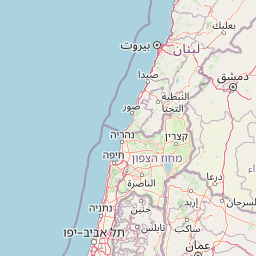
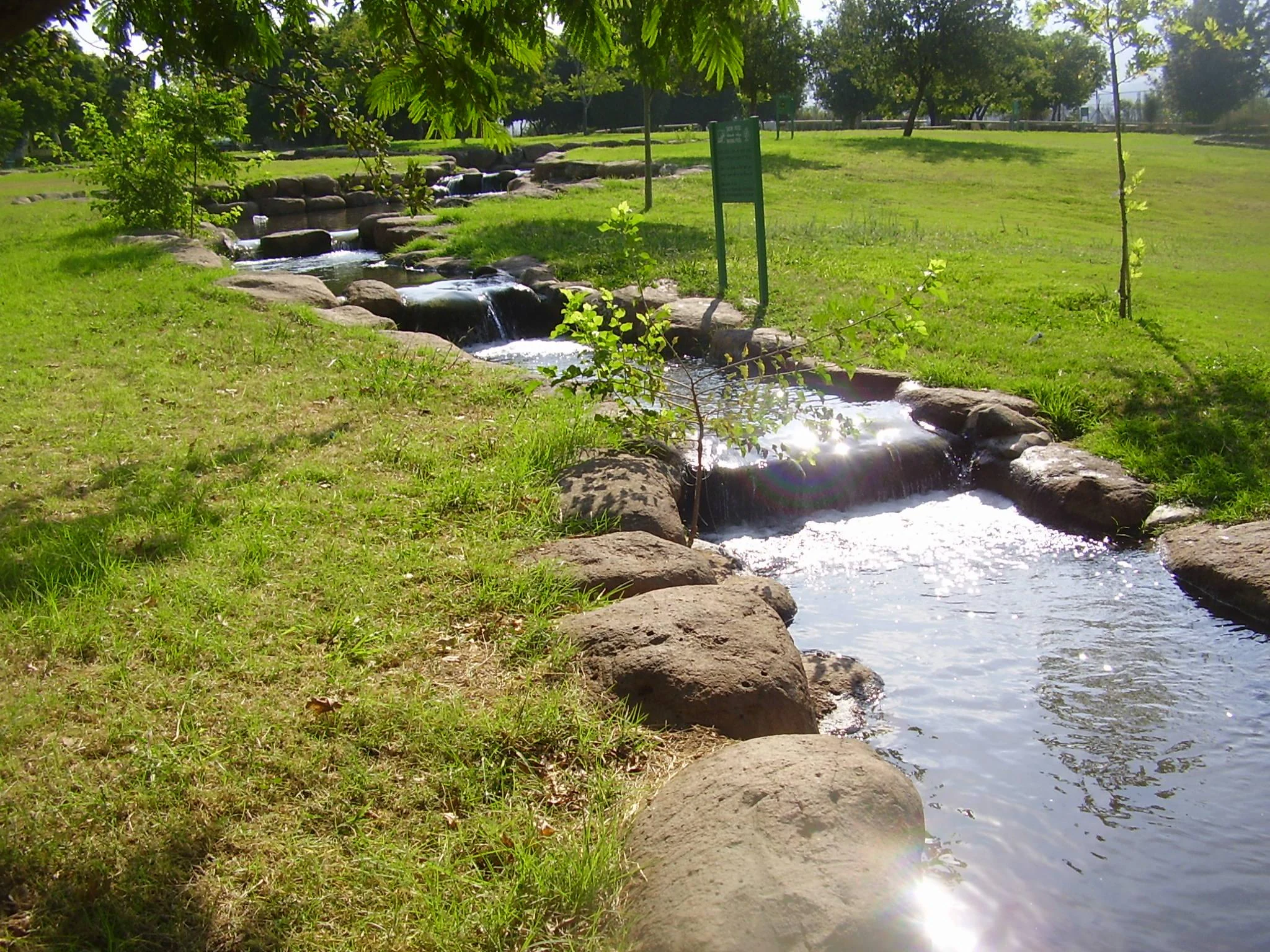
The terrain of Hurshat Tal reflects the geological and hydrological character of the Hula Valley, a flat but fertile basin nestled between higher ground to the east and west. The park sits at a relatively low elevation for a northern Israel protected area, with the landscape shaped by the water systems that flow from the Hermon region toward the Jordan River. A stream branching from the Dan River traverses the park grounds, providing the water source that supports both the natural vegetation and the recreational facilities. The nature reserve portion contains the ancient oak grove, where the trees create a distinctive canopy over the understory below. Beyond the immediate park boundaries, the surrounding Hula Valley continues as agricultural land, though the park itself offers a contrasting green space of trees and water features. The proximity to Mount Hermon, visible on clear days to the northeast, contributes to the scenic quality of the area and explains the reference to Hermon's dew in the park's name.
Hurshat Tal National Park ecosystems, habitats, and plant life
The ecological heart of Hurshat Tal lies in its ancient Valonia oak forest, a habitat type that represents a Mediterranean woodland ecosystem adapted to the climate of northern Israel. Valonia oak (Quercus macrolepis) is a species historically significant throughout the eastern Mediterranean region, and the grove at Hurshat Tal preserves what is likely the oldest collection of these trees in Israel. The 240 oaks, some measuring 350 to 400 years in age, have developed extensive root systems and canopy structures that support a distinctive microclimate within the grove. The presence of a permanent water source from the Dan River tributary contributes to the moisture levels that allow these deciduous oaks to thrive in a region with pronounced seasonal variation. The forest structure creates habitat conditions for various bird species and smaller wildlife that utilize the oak canopy and the stream corridor running through the park.
Hurshat Tal National Park wildlife and species highlights
The ancient oak grove at Hurshat Tal provides habitat for bird species that utilize mature forest environments, with the dense canopy offering nesting sites and the water feature along the stream corridor attracting species associated with wetland edges. The oak trees themselves support insect communities that form the base of the food web for birds and other predators. While the Wikipedia source does not detail specific wildlife species, the combination of old-growth trees, permanent water, and the broader Hula Valley's position along migratory flyways suggests the area hosts both resident and seasonal bird populations. The fishing park within the recreational zone indicates the presence of fish species in the managed water bodies, though these are likely stocked for visitor use rather than representing native aquatic communities.
Hurshat Tal National Park conservation status and protection priorities
The conservation significance of Hurshat Tal centers on its role as a repository of ancient trees that have survived for centuries through a combination of natural hardiness and traditional cultural protection. The Valonia oak grove represents a remnant of the Mediterranean woodland that once covered broader areas of northern Israel before agricultural expansion reduced forest cover. By protecting these 240 oaks, including specimens estimated at 350 to 400 years old, the nature reserve preserves genetic material and ecological structures that cannot be replicated on human timescales. The transition from informal holy site protection to formal nature reserve status demonstrates how traditional community values regarding land and trees can be incorporated into modern conservation frameworks. The dual management approach that accommodates both conservation and recreation reflects careful balancing of objectives within the Israeli national park system.
Hurshat Tal National Park cultural meaning and human context
Hurshat Tal carries cultural significance that extends beyond its ecological value, drawing from both Jewish and Muslim traditions in the region. The Hebrew name חורשת טל, meaning Dew Grove, references a Biblical passage from Psalms 133:3 that speaks of the dew of Hermon, linking the local site to the broader landscape of northern Israel and its scriptural associations. The Arabic name Sejrat el-Asara translates to Grove of the Ten and derives from local folklore describing a group of ten escorts accompanying the Prophet Muhammad who stopped near the site, found no trees to tether their horses, and stuck their walking sticks into the ground where they took root and became the oak trees. This story, whether understood as literal history or symbolic narrative, reflects how the grove became embedded in regional cultural memory and received protection through religious respect. The overlapping cultural associations demonstrate how natural sites in Israel often carry multiple layers of meaning drawn from different communities.
Top sights and standout views in Hurshat Tal National Park
The ancient Valonia oak grove stands as the unmatched highlight of Hurshat Tal, with trees reaching 350 to 400 years of age forming a living forest within a developed national park. The park's family-friendly amenities including swimming pools with water slides, fishing areas, and accommodation options of bungalows and cabins make it distinctive among Israeli protected areas that tend to emphasize wilderness over recreation. The stream from the Dan River provides a consistent water feature that enhances the landscape and supports both the natural oak ecosystem and visitor attractions. The cultural depth of the site, with its Biblical name and Arabic folklore about the Grove of the Ten, adds historical resonance that enriches a visit beyond pure nature appreciation.
Best time to visit Hurshat Tal National Park
The optimal time to visit Hurshat Tal depends on whether visitors prioritize comfortable weather or specific seasonal experiences. The spring months from March through May bring mild temperatures to the Hula Valley, the oak trees display fresh foliage after winter, and the surrounding agricultural landscape shows active growth. Summer months offer warm conditions that make the swimming facilities particularly appealing, though this is also the peak period for family visitors. Autumn provides another pleasant season for walking in the park as temperatures moderate and the oak canopy takes on seasonal coloration. Winter brings cooler conditions and reduced crowds, though some facilities may operate on limited schedules. The park's location in northern Israel means it receives more rainfall than central and southern regions, contributing to the moisture that supports the oak forest.