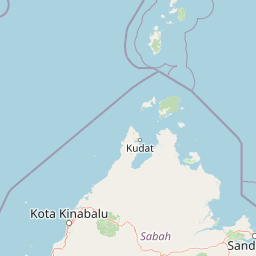
Why Kinabalu National Park stands out
Kinabalu National Park is best known for its extraordinary biodiversity and dramatic alpine landscapes centered around Mount Kinabalu, the highest peak between the Himalayas and New Guinea. The park spans four distinct climate zones, from rich lowland dipterocarp rainforests through montane oak and rhododendron forests to coniferous woodlands and alpine meadows. It is renowned for its exceptional concentration of endemic species, including the giant Kinabalu red leech and Kinabalu giant earthworm, as well as remarkable botanical treasures such as the massive Nepenthes rajah pitcher plant and over 90 orchid species found nowhere else on Earth. The park also features Low's Gully, a spectacular 1.6-kilometer-deep ravine carving along the mountain's slopes.
Kinabalu National Park history and protected-area timeline
The region surrounding Mount Kinabalu has a rich history of exploration and scientific inquiry. British colonial administrator and naturalist Hugh Low led an expedition from Tuaran to the area in 1851, becoming the first recorded person to reach the peak of Mount Kinabalu. The highest point of the mountain, Low's Peak, was subsequently named in his honor. The formal establishment of Kinabalu as a national park in 1964 was influenced by botanical expeditions conducted by E.J.H. Corner for the Royal Society in 1961 and 1964, which highlighted the exceptional scientific and conservation value of the region. The park was designated as Malaysia's first UNESCO World Heritage Site in December 2000, recognizing its outstanding universal values. More recently, in May 2023, the park gained UNESCO Global Geopark status, covering an expanded area of approximately 4,750 square kilometers that includes parts of Kota Belud, Kota Marudu, and Ranau districts, with 46 geosites, 12 biosites, and eight cultural sites.
Kinabalu National Park landscape and geographic character
The landscape of Kinabalu National Park is dominated by the imposing granite mass of Mount Kinabalu, a dramatic mountain whose summit rises nearly 4,100 meters above sea level. The mountain's slopes descend through a series of distinct ecological zones, from the rich lowland forests at the base to the alpine meadows and stunted summit vegetation near the peak. A notable geological feature is Low's Gully, a spectacular ravine that descends 1.6 kilometers vertically and stretches for 10 kilometers along the mountain's side. The park is situated on the Crocker Range, with headquarters at an elevation of approximately 1,563 meters. The terrain is characterized by steep ridges, deep valleys, and the prominent rocky peaks that make Mount Kinabalu one of the most distinctive mountains in Southeast Asia.
Kinabalu National Park ecosystems, habitats, and plant life
The ecological diversity of Kinabalu National Park is extraordinary, with the park containing representatives from at least half of all Borneo plant species across its four distinct climate zones. The lowest elevations feature rich lowland dipterocarp rainforests, giving way to montane oak forests and then to rhododendron-dominated vegetation at higher elevations. Coniferous forests appear above the montane zone, followed by alpine meadow vegetation and finally the stunted bushes characteristic of the summit zone. The park has been identified by UNESCO as a Centre of Plant Diversity for Southeast Asia and contains elements from Chinese, Australian, Himalayan, Malaysian, and pan-tropical floras. The mountain is particularly famous for its diversity of carnivorous plants and orchids, with the giant Nepenthes rajah pitcher plant being one of the most celebrated species.
Kinabalu National Park wildlife and species highlights
Kinabalu National Park supports an impressive array of wildlife, with more than 4,500 species of flora and fauna documented within its boundaries. The park is home to approximately 326 bird species and around 100 mammal species, in addition to over 110 land snail species. Several endemic species are particularly notable, including the Kinabalu giant red leech and the Kinabalu giant earthworm, both found only within the park's boundaries. The park also supports diverse communities of insects, mammals, amphibians, and reptiles. Among the notable bird species is the red-crowned forest bird, which is found nowhere else on Earth. The variety of habitats, from lowland rainforests to alpine zones, supports this remarkable biodiversity.
Kinabalu National Park conservation status and protection priorities
Kinabalu National Park holds exceptional conservation significance as Malaysia's first national park and first UNESCO World Heritage Site, recognized for its outstanding universal values. The park is identified as a Centre of Plant Diversity for Southeast Asia and contains representatives from at least half of all Borneo's plant species. The UNESCO designation in 2000 highlighted its role as one of the most important biological sites in the world. In 2023, the park achieved additional recognition as a Kinabalu UNESCO Global Geopark, becoming part of the Triple Crown of UNESCO designations alongside World Heritage status and Man and the Biosphere. The expanded geopark encompasses approximately 4,750 square kilometers and includes 46 geosites, 12 biosites, and eight cultural sites, providing protection for endemic species including 90 orchid species found only on Mount Kinabalu.
Kinabalu National Park cultural meaning and human context
Mount Kinabalu holds deep cultural significance for the local communities of Sabah, particularly the Kadazan-Dusun peoples who consider the mountain a sacred site. The park's landscape has been shaped by traditional land use practices over generations, and the surrounding areas are home to indigenous communities whose cultural heritage is intertwined with the mountain. The 2023 UNESCO Global Geopark designation explicitly recognizes eight cultural sites within the broader park landscape, acknowledging the human heritage dimension of this natural area.
Top sights and standout views in Kinabalu National Park
Kinabalu National Park offers visitors the opportunity to experience one of the world's most biodiverse mountain ecosystems. The summit climb to Low's Peak represents a premier mountaineering challenge in Southeast Asia, accessible via the Timpohon or Mesilau trails with mandatory guided ascents. The park's botanical riches include the remarkable Nepenthes rajah pitcher plant and over 90 orchid species found nowhere else on Earth. Visitors can explore the Low's Gully area, one of the deepest ravines in the region. The park's diverse habitats support endemic wildlife including the giant red leech and giant earthworm. The recent UNESCO Global Geopark designation highlights the geological significance of this young, still-growing mountain.
Best time to visit Kinabalu National Park
The park can be visited throughout the year, though conditions vary with the seasons. The dry season from March to October generally offers more stable weather for climbing and outdoor activities, with clearer views from the summit. The wet season from November to February brings higher rainfall and cooler temperatures, which can affect visibility and trail conditions. The mountain's high altitude means temperatures at the summit can drop significantly regardless of season, requiring appropriate gear. Climbers should note that accommodation at mountain shelters must be booked in advance, and all summit ascents require a qualified guide.