Why National Park of Upper Niger stands out
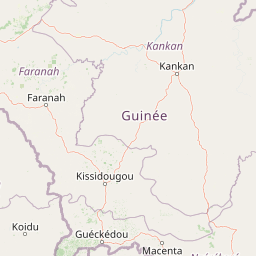
The National Park of Upper Niger is best known for protecting the Mafou Forest, which represents the last remaining area of dry forest in Guinea and one of the few remaining in West Africa. The park is notable for its diverse mammalian fauna, with 94 species recorded including significant populations of ungulates such as kob and waterbuck, carnivores including caracal and multiple mongoose species, and primates such as chimpanzees and Senegal galagos. Its designation as a Lion Conservation Unit highlights its importance for big cat conservation in the region. The park also represents a rare example of relatively intact savanna and forest ecosystems in Guinea, a country where low human impact areas are increasingly scarce.
National Park of Upper Niger history and protected-area timeline
The establishment of the National Park of Upper Niger in January 1997 represented Guinea's commitment to preserving its remaining natural landscapes and biodiversity. The park was gazetted with a core area of 554 square kilometers, though the broader protected territory extends to approximately 6,000 square kilometers including the buffer zone. This designation came at a critical time when understanding of West African biodiversity and conservation priorities was evolving rapidly.
The historical context of the park's territory is notable. The Mafou Forest area within the park is recognized as the last remaining dry forest in Guinea and one of the few intact examples remaining in West Africa. This forest's preservation is largely attributed to historical factors that limited human settlement in the region. The prevalence of onchocerciasis, commonly known as river-blindness, made the area inhospitable for sustained human habitation. Additionally, the region was subjected to devastating military campaigns during the late 19th century by Samory Touré, the Wassoulou Empire leader who conducted resistance operations against French colonial forces. These combined factors resulted in very low population density in the area for over a century, allowing the forest ecosystem to remain comparatively undisturbed.
Since its establishment, the park has been recognized for its conservation significance beyond Guinea's borders. In 2005, the protected area was designated as a Lion Conservation Unit, acknowledging its importance for maintaining viable populations of West African lions, a subspecies that faces significant conservation challenges throughout its range. This international recognition has reinforced the park's importance within regional conservation strategies.
National Park of Upper Niger landscape and geographic character
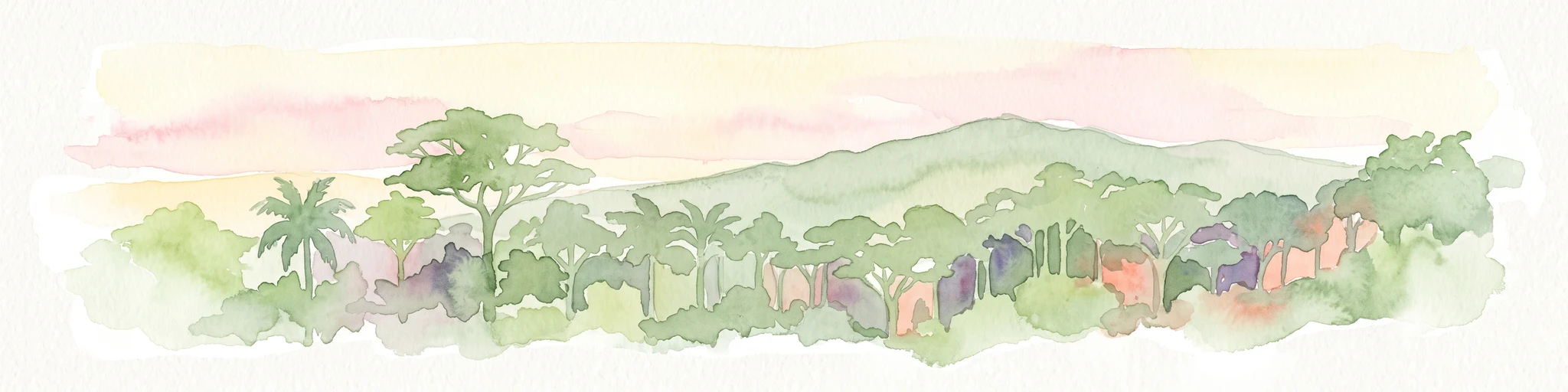
The National Park of Upper Niger encompasses a varied landscape dominated by savanna ecosystems. The predominant terrain consists of woodland and bushland savanna, creating an open landscape punctuated by scattered trees and dense shrub layers. This savanna environment represents the most extensive habitat type within the park's boundaries and defines much of its visual character and ecological function.
Along the major river corridors, the landscape transitions to riparian forest ecosystems. The Niger River, one of West Africa's great waterways, flows through the park area and supports distinct riparian vegetation communities. Similarly, the Mafou River and its associated watercourses harbor forested corridors that contrast sharply with the surrounding savanna. These riparian zones provide critical habitat for numerous species and serve as ecological corridors connecting different parts of the protected area.
The park's landscape includes approximately five percent agricultural land along its edges, representing the interface between protected ecosystems and human land use. The park is also subject to periodic fire events during the dry season, a natural phenomenon that shapes the savanna ecology and maintains the open character of the woodland. These fires, while potentially damaging if improperly managed, play a role in the ecological processes that sustain the savanna ecosystem.
National Park of Upper Niger ecosystems, habitats, and plant life
The National Park of Upper Niger protects several distinct ecological zones that together create a diverse habitat mosaic. The dominant ecosystem is savanna, comprising both woodland and bushland configurations that support characteristic West African savanna flora and fauna. This habitat type covers the majority of the park's extent and represents the typical landscape most visitors to the park will experience.
The riparian forests along the Niger and Mafou Rivers represent a different ecological community, characterized by denser tree cover and species adapted to more humid conditions along watercourses. These forested corridors provide refuge for species that require more sheltered environments and serve as important pathways for wildlife movement through the landscape. The contrast between the open savanna and these forested riparian zones creates a patchwork of habitats that supports ecological diversity.
The significance of the park's protected ecosystems extends beyond their immediate boundaries. The Mafou Forest represents a remnant of dry forest that has largely disappeared from Guinea and much of West Africa. This forest type once covered extensive areas but has been converted to agricultural use or degraded across most of its former range. The park therefore serves as a reservoir for plant and animal species associated with dry forest ecosystems that have lost habitat elsewhere in the region.
National Park of Upper Niger wildlife and species highlights
The National Park of Upper Niger supports a remarkable diversity of mammalian wildlife, with surveys documenting 94 species within the park's boundaries. This mammalian fauna includes representatives from numerous taxonomic groups, reflecting the diverse habitats protected within the park. The ungulate community is particularly well-represented, with species including kob and waterbuck commonly observed along watercourses and in savanna habitats. The giant forest hog, a large and elusive suid, also occurs within the park.
The carnivore community includes several species of conservation interest. The caracal, a medium-sized feline known for its distinctive ear tufts, occurs in the park alongside multiple mongoose species including the Egyptian mongoose and Gambian mongoose. The spot-necked otter represents the park's aquatic carnivore fauna, utilizing the rivers and water bodies within the protected area. The primate community includes both chimpanzees and Senegal galagos, the latter being a nocturnal prosimian that occupies forest habitats within the park.
Notably, the African elephant once occurred within the park but is now locally extinct, representing the broader pattern of elephant population decline throughout West Africa. However, the return of lions to the protected area in 1997, likely dispersing from the Tinkisso River region, represents a positive development for big cat conservation. The park has since been designated as a Lion Conservation Unit, acknowledging its importance for this flagship species. Additional notable species include the African manatee in aquatic habitats and various pangolin species, both giant and tree pangolins, representing unusual and specialized mammals.
National Park of Upper Niger conservation status and protection priorities
The National Park of Upper Niger is recognized as a conservation priority for West Africa, representing one of the few remaining large tracts of relatively intact savanna and forest ecosystems in the region. The park's significance is amplified by the broader context of extensive habitat loss and degradation throughout Guinea and neighboring countries, where natural landscapes have been converted to agriculture or degraded by unsustainable resource use. Protecting the park's ecosystems contributes to maintaining regional biodiversity and ecological processes.
The designation of the park as a Lion Conservation Unit since 2005 underscores its importance for apex predator conservation. West African lion populations have declined dramatically across their range, making protected areas that support viable populations increasingly important. The park's large extent and diverse habitats provide the space and resources necessary to support breeding populations of this flagship species.
The management approach implemented in the park reflects contemporary conservation thinking that emphasizes community involvement and sustainable resource use. Rather than excluding local communities entirely from the protected area, the zoning system allows for sustainable use in the buffer zone while maintaining strict protection in the core area. This approach aims to create incentives for local people to support conservation rather than view it as a barrier to their livelihoods. The park authorities also work to manage the trade in hunted animals, recognizing that sustainable management of wildlife resources is preferable to attempting complete exclusion that often proves unenforceable.
National Park of Upper Niger cultural meaning and human context
The cultural landscape of the National Park of Upper Niger is shaped by both historical events and ongoing human presence. The territory within the park has relatively low human population density compared to much of Guinea, a condition attributable to historical factors including disease prevalence and 19th-century conflict. The region was profoundly affected by the military campaigns of Samory Touré, the leader of the Wassoulou Empire who conducted prolonged resistance against French colonial forces in the late 1800s. The areas now within the park's boundaries bear the historical imprint of this turbulent period.
The prevalence of onchocerciasis, or river-blindness, throughout the Niger River basin also contributed to low population density in the region. This parasitic disease, transmitted by blackflies that breed in riverine habitats, made the river valleys particularly hazardous for human settlement. The resulting low population density allowed ecosystems within the park to remain comparatively intact, as agricultural expansion and other land conversions were limited by both disease risk and historical conflict.
Today, local communities continue to interact with the park through the buffer zone system. These communities practice farming and collect non-timber forest products, operating within management frameworks developed in cooperation with park authorities. This interaction reflects the reality that protected areas in West Africa exist within cultural landscapes where human communities have maintained connections to the land for generations. Effective conservation must account for these relationships rather than treating protected areas as isolated wildernesses.
Top sights and standout views in National Park of Upper Niger
The National Park of Upper Niger offers visitors access to some of West Africa's most significant remaining natural landscapes. The park's diverse habitats support outstanding wildlife viewing opportunities, with the chance to observe species including kob, waterbuck, chimpanzees, and an increasing lion population. The riparian forests along the Niger and Mafou Rivers provide different wildlife viewing experiences from the savanna landscapes, with species adapted to forest environments including various primates and the elusive pangolin.
The park's ecological significance is amplified by the rarity of intact ecosystems in Guinea and West Africa more broadly. The Mafou Forest represents a unique opportunity to experience dry forest that has disappeared from most of the region. The combination of savanna and forest habitats within a single protected area creates diverse exploration opportunities. The park's community-based management approach also offers insights into how conservation and local livelihoods can be integrated, making it relevant for those interested in conservation practice as well as natural history.
Best time to visit National Park of Upper Niger
The National Park of Upper Niger is best visited during the dry season, typically from November through May, when wildlife viewing conditions are most favorable. During this period, vegetation is less dense and animals congregate more visibly around remaining water sources, making wildlife observation easier. The dry season also corresponds with cooler temperatures and more comfortable conditions for outdoor exploration.
The wet season, from June through October, brings heavier vegetation that can make wildlife viewing more challenging but also transforms the landscape with lush green growth. The park experiences regular fires during the dry season, which is a natural part of the savanna ecology and shapes the landscape's character. Visitors interested in experiencing the full ecological dynamics of the park should consider how seasonal patterns influence both the landscape and wildlife behavior. The transition periods at the start and end of the wet season can offer particularly rewarding conditions, with landscapes showing fresh growth while wildlife remains accessible.