
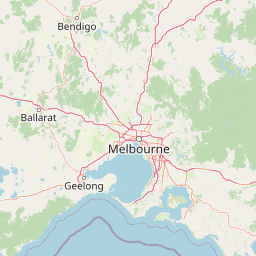
Explore the mapped boundaries of this significant national park on the Mornington Peninsula.
Point Nepean National Park represents a crucial protected coastal landscape situated at the southern tip of Victoria's Mornington Peninsula. As a national park, it guards the entrance to Port Phillip Bay, offering a distinct geographic setting defined by dramatic limestone and sandstone headlands. This atlas-focused page provides insight into the park's mapped boundaries, its significant coastal ecosystems, and its unique place within regional Australian geography and natural heritage.
Point Nepean National Park
National park
Structured park overview, official facts, and landscape profile for Point Nepean National Park
Point Nepean National Park is a protected coastal area located on the Mornington Peninsula in Victoria, Australia. The park encompasses the dramatic headland at the southern tip of the peninsula, where it guards the entrance to Port Phillip Bay. This area represents an important coastal ecosystem with significant historical heritage value, having served as a military defense site during different periods of Australia's colonial and federal history. The park's limestone and sandstone formations create distinctive cliff landscapes, while its position at the edge of Bass Strait makes it strategically significant for maritime navigation and coastal observation.
Point Nepean National Park occupies a prominent coastal position at the southern end of the Mornington Peninsula in Victoria. The park protects a dramatic headland landscape characterized by limestone and sandstone cliffs, coastal heath communities, and remnant woodlands. Historically, the area served as a defense installation with fortifications constructed during the late 19th and early 20th centuries. The park is managed by Parks Victoria and forms part of a broader network of coastal protected areas along the peninsula.
Geography guide, regional context, and park location map for Point Nepean National Park
Australia is a constitutional monarchy and federal parliamentary democracy comprising six states and ten territories. With a population of nearly 28 million, it is one of the world's most urbanised countries, with most people concentrated on the eastern seaboard. The country has a high Human Development Index and is known for its cultural diversity, ancient Aboriginal heritage, and unique wildlife.
Australia occupies the entire Australian continent, the island of Tasmania, and numerous smaller islands. It is the world's flattest and driest inhabited continent, featuring vast deserts in the interior (the Outback), tropical rainforests along the eastern coast, and a coastline bordering the Indian and Pacific Oceans.
Common questions about visiting, size, designation, and location context for Point Nepean National Park
Deepen your exploration by continuing the structured search for national parks and protected areas worldwide. Utilize the comprehensive filtering capabilities to compare different conservation landscapes and refine your understanding of global park geography. Discover more about the distribution and characteristics of protected natural areas.
