Why Awash National Park stands out
Awash National Park is best known for its remarkable concentration of wildlife in a semi-arid Ethiopian setting, particularly populations of Beisa oryx that thrive in the acacia savanna. The park's dramatic landscape, where the Awash River cascades through gorges to create the iconic Awash Falls, provides one of the most visually striking natural features in Ethiopian protected areas. Mount Fentale, the dormant stratovolcano that dominates the western skyline, offers a distinctive volcanic backdrop and the Filwoha hot springs with their remarkable palm grove oases. The park also hosts significant populations of primates including olive baboons, guerezas, grivets, and hamadryas baboons, while the bird checklist exceeds 450 species including seven endemics.
Awash National Park history and protected-area timeline
Awash National Park was formally established in 1966, though the legislative act authorizing its creation was not fully completed until three years later in 1969. The park's creation was part of a broader post-colonial Ethiopian initiative to establish a national park system that would showcase the country's natural wonders while promoting conservation. However, the establishment of Awash National Park, along with the nearby Metehara Sugar Plantation to the south, had significant consequences for the indigenous Karayyu Oromo people whose traditional lands and livelihoods were disrupted by the new protected area designation. This displacement of local communities, contrary to stated government intentions that such establishments would benefit local populations, represents a recurring challenge in Ethiopian conservation history. Despite these social challenges, the park has persisted as one of Ethiopia's primary protected areas and has weathered periods of inadequate funding, poaching pressure, and habitat encroachment that have affected many African parks.
Awash National Park landscape and geographic character
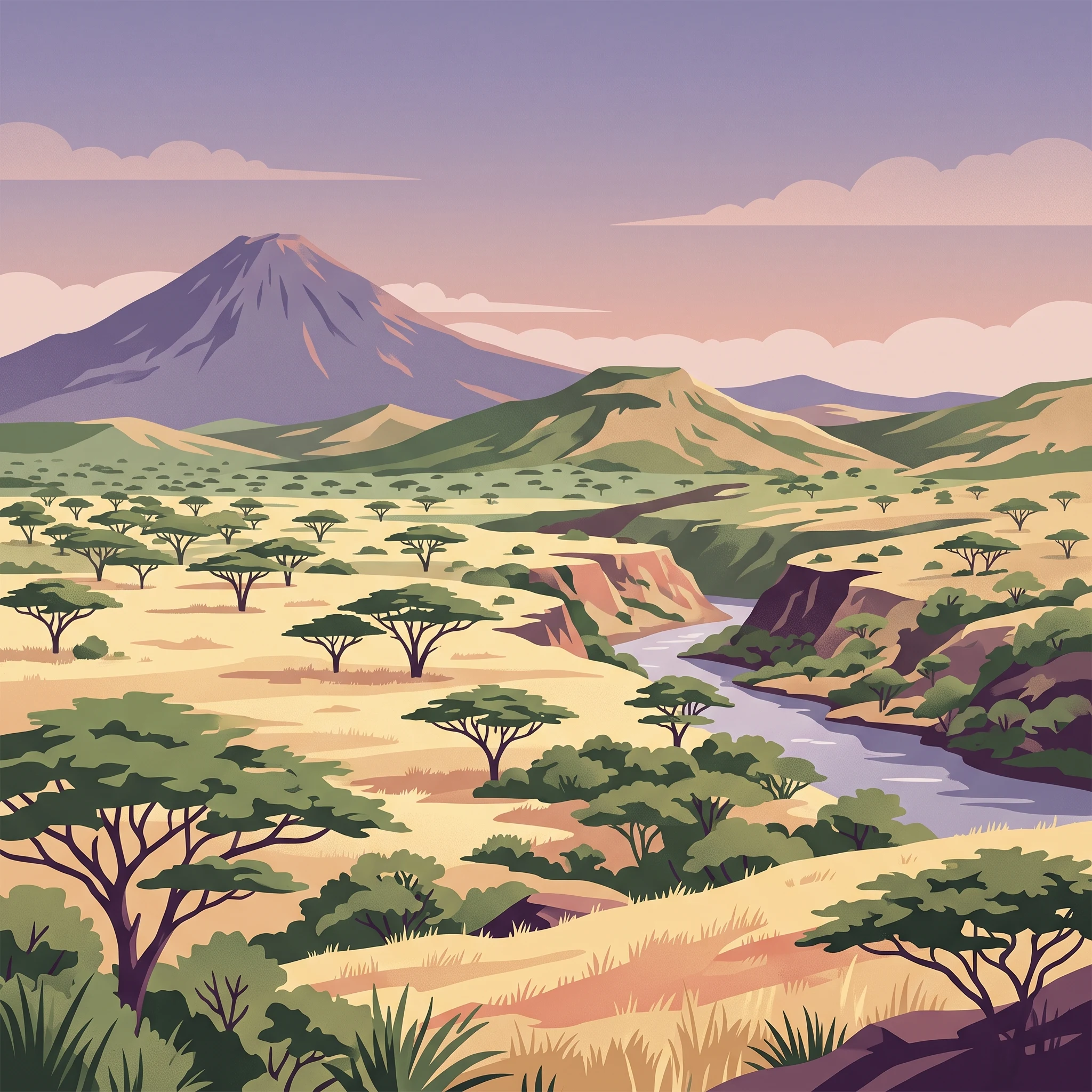
The physical landscape of Awash National Park is defined by the dramatic interplay of volcanic terrain, river systems, and semi-arid savanna. Mount Fentale, a dormant stratovolcano in the western sector, rises to 2,007 meters and provides a commanding backdrop while its slopes contribute volcanic soils to the surrounding terrain. The Awash River carves a spectacular gorge along the southern boundary, with the renowned Awash Falls creating a waterfall of considerable beauty where the river descends from the higher plateau. In the upper Kudu Valley near Filwoha, hot springs emerge amid groves of doum palm trees, creating a unique microhabitat where geothermal activity supports lush vegetation in otherwise arid surroundings. The terrain ranges from flat plains of the Illala Saha to rolling hills in the Kudu Valley, with the vegetation transitioning from dense acacia woodland in the valleys to more open grassland on the higher ground. The park's location at the transition between the Ethiopian highlands and the Afar depression contributes to this varied topography.
Awash National Park ecosystems, habitats, and plant life
The ecological character of Awash National Park is defined by four distinct ecosystems that create a mosaic of habitats supporting remarkable biodiversity. The arid acacia woodlands dominate the park's central areas, with scattered acacia trees providing critical shade and browse for herbivores across extensive savanna grasslands. Thorned bushlands occupy transitional zones where denser vegetation provides shelter for smaller mammals and birds. The grazing savannas support some of the park's most productive wildlife habitat, particularly for large herbivores like oryx and gazelles. Perhaps most significant are the riverine wetlands along the Awash River, where permanent water and denser vegetation create a dramatically different environment supporting hippos, crocodiles, and diverse birdlife. The Filwoha and Doha sites feature distinctive doum palm trees and desert date trees that create palm grove habitats unique within the Ethiopian protected area network.
Awash National Park wildlife and species highlights
Awash National Park supports an impressive mammalian diversity with more than 81 species recorded within its boundaries. The Beisa oryx is perhaps the most iconic large mammal, with stable populations roaming the acacia savanna throughout the park. Antelope species are particularly well-represented, with Soemmerring's gazelles, Defassa waterbucks, lesser kudus, greater kudus, Salt's dik-diks, and Swayne's hartebeests all present. Predators include lions, leopards, cheetahs, spotted hyenas, and striped hyenas, while smaller carnivores include caracals, servals, aardvarks, and aardwolves. Primates are abundant, with olive baboons, guerezas, grivets, and hamadryas baboons commonly observed. The park once supported elephants, rhinos, zebras, and Cape buffalo, but these species have been extirpated since the 1960s due to hunting and habitat loss. Reptile diversity is equally impressive with 43 species, including Nile crocodiles in the Awash River, rock pythons in riverine forests, and numerous snake species including black mambas and puff adders. The bird checklist exceeds 453 species, including seven endemics such as wattled ibis, thick-billed raven, and Abyssinian ground hornbills, with the Somali ostrich representing the park's largest avian resident.
Awash National Park conservation status and protection priorities
Awash National Park holds significant conservation importance as one of Ethiopia's oldest protected areas and one of the few remaining strongholds for savanna ecosystems in the country. The park protects critical habitat for species like the Beisa oryx that have declined across their former range, while the riverine ecosystems provide refuge for species dependent on permanent water sources in an otherwise semi-arid landscape. The bird diversity, particularly the seven endemic species found within the park, makes Awash an important site for avian conservation in the Horn of Africa. However, the park faces considerable conservation challenges including the extirpation of several flagship species, pressure from agricultural expansion in the surrounding areas, and the impacts of the highway that bisects the park. The displacement of the Karayyu Oromo people during the park's establishment also represents a historical conservation social justice concern that continues to influence local attitudes toward protection efforts.
Awash National Park cultural meaning and human context
The cultural context of Awash National Park is shaped primarily by the historical presence of the Karayyu Oromo people whose ancestral lands were incorporated into the park at its establishment in 1966. The Oromo communities had maintained traditional pastoral and agricultural lifestyles in the Awash River basin for generations, and the creation of the protected area disrupted these practices and displaced communities from lands they had long inhabited. This displacement illustrates a recurring theme in the history of African protected areas where conservation initiatives created without adequate consideration of indigenous rights led to both social hardship and long-term resentment that undermined park management. The Awash River itself holds cultural significance for local communities as a vital water source in the semi-arid environment, and the hot springs at Filwoha likely hold traditional importance as well given their scenic and geothermal qualities.
Top sights and standout views in Awash National Park
Awash National Park offers several standout features that distinguish it within Ethiopia's protected area network. The Awash Falls provide the park's most iconic scenic attraction where the river crashes through a dramatic gorge. Mount Fentale's volcanic cone creates a striking backdrop and offers hiking opportunities to its summit. The Filwoha hot springs with their palm groves represent a unique ecological niche and create an otherworldly landscape within the park. The diversity of large mammals, particularly the reliable sightings of Beisa oryx, makes Awash a prime wildlife viewing destination. The primate populations, especially the troops of hamadryas baboons that display complex social behavior, provide excellent wildlife observation opportunities. The birdlife, with over 450 species including rare endemics, makes the park significant for ornithological tourism.
Best time to visit Awash National Park
The best time to visit Awash National Park corresponds to the seasons that balance wildlife viewing conditions with accessibility. The park experiences a bimodal rainfall pattern with a primary rainy season typically occurring from June to September followed by a long dry season that can extend for up to ten months. The dry season, particularly from October through April, generally offers better wildlife viewing as animals concentrate around remaining water sources and vegetation thins, improving visibility. However, the landscape is most lush and scenic during and immediately after the rainy season. The period from November to March coincides with cooler temperatures and represents peak visitor season, though this coincides with the dry season when some water sources may be reduced. Visitors should be aware that the park's semi-arid environment means conditions can be hot year-round, with temperatures coolest during the elevated dry season months.