
Why Black River Gorges National Park stands out
The park is renowned as the last refuge of Mauritius's endemic bird species, protecting all eight of the island's endemic birds including the critically endangered Mauritius kestrel, the pink pigeon, and the Mauritius parakeet. It contains the majority of Mauritius's remaining rainforest, despite substantial degradation from invasive plants such as Chinese guava and privet, and introduced animals including rusa deer and wild pigs. The park has been designated an Important Bird Area by BirdLife International, recognizing its global significance for the conservation of threatened avian species.
Black River Gorges National Park history and protected-area timeline
The national park was formally proclaimed on June 15, 1994, following years of growing recognition that Mauritius's native ecosystems required formal protection. The creation of the park reflected increasing concern about the fate of the island's endemic species, many of which had been driven to the brink of extinction by habitat loss, introduced predators, and invasive species. Prior to national park status, the area had already been recognised for its ecological importance and had been the focus of conservation efforts by the Mauritian Wildlife Foundation and government agencies. The establishment of the park provided a framework for coordinated management of the remaining forest, implementation of invasive species control programmes, and expansion of research activities. The park's creation also acknowledged the cultural and historical significance of the Black River Gorges area, which had long been recognised as a distinctive landscape within Mauritius.
Black River Gorges National Park landscape and geographic character
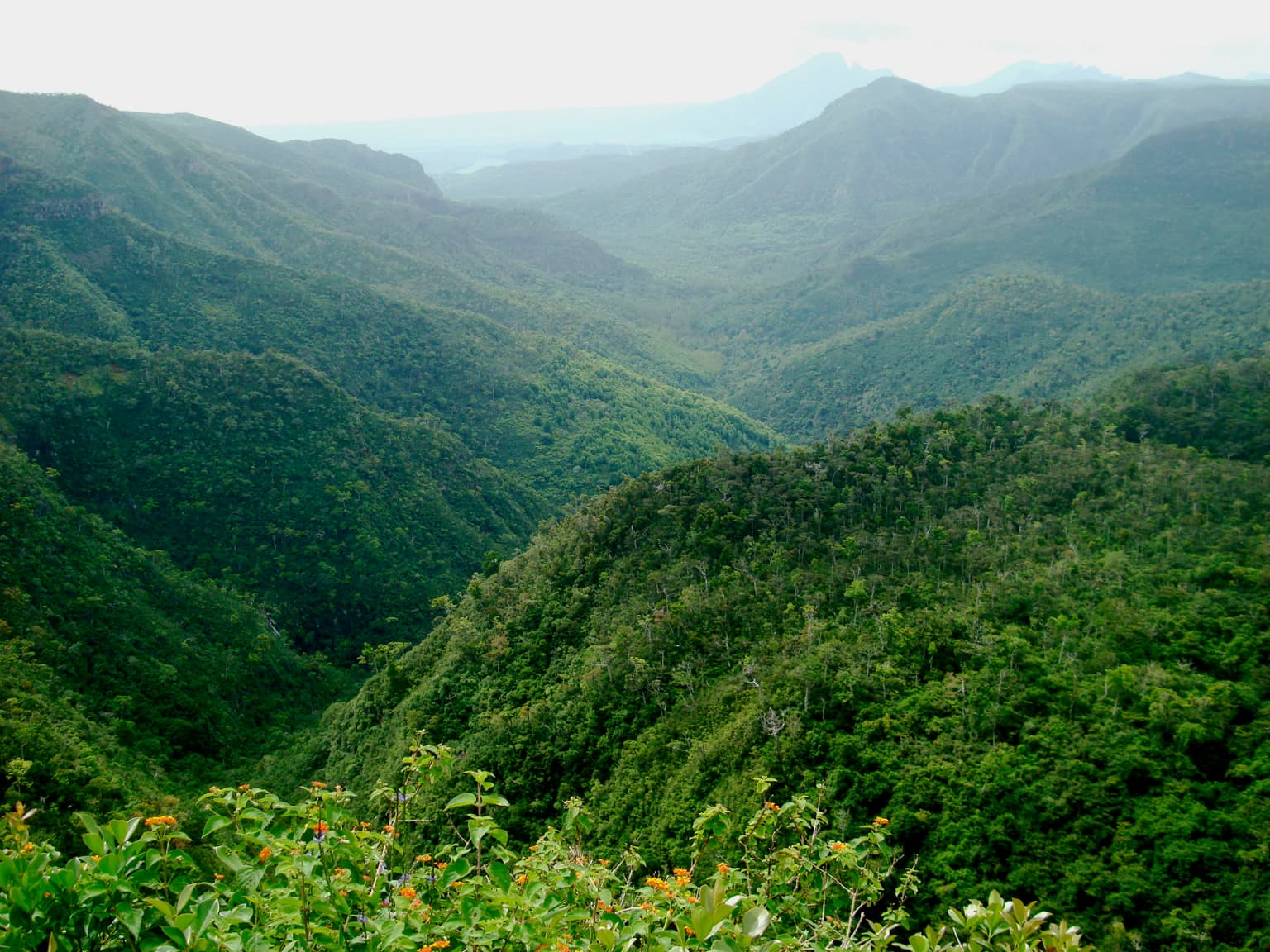
The physical landscape of Black River Gorges National Park is defined by the rugged topography of Mauritius's south-western highlands, featuring deep gorges carved by water flow, steep forested slopes, and elevated plateaus that rise from the surrounding coastal plain. The terrain creates a complex mosaic of microhabitats, with north-facing slopes retaining moisture and supporting more humid forest types while south-facing areas tend towards drier conditions. Throughout the park, rocky outcrops and cliff faces add visual complexity and provide specialised habitats for certain plant and animal species. The Black River itself, while not directly traversing the park, has carved the dramatic gorge system that gives the protected area its name and contributes to the region's distinctive character. Elevation changes within the park create visual and ecological transitions from the lowland margins up to the higher ridge systems.
Black River Gorges National Park ecosystems, habitats, and plant life
The ecological character of Black River Gorges National Park centres on the island's remaining rainforest ecosystems, which represent the last substantial fragments of Mauritius's original vegetation. The park contains three primary habitat types: humid upland forest in the higher elevations where moisture is highest, drier lowland forest in the lower areas, and marshy heathland in poorly drained sections. Despite the park's protected status, these forests have suffered significant degradation from invasive species, particularly Chinese guava and privet which have spread extensively through the canopy layer. Introduced mammals including rusa deer and wild pigs have also caused substantial damage to understory vegetation and soil structure. Conservation teams have implemented fencing programmes in several areas to exclude invasive animals and allow native vegetation to recover, creating refugia where endangered species can persist. The park forms part of a broader network of protected areas that together represent Mauritius's attempt to maintain functional ecosystems in a highly modified island environment.
Black River Gorges National Park wildlife and species highlights
The wildlife of Black River Gorges National Park is remarkable for the extraordinary concentration of endemic species, many of which survive nowhere else on Earth. All eight of Mauritius's endemic bird species occur within the park, making it globally significant for avian conservation. The Mauritius kestrel, once reduced to just four individuals, has been saved from extinction through intensive captive breeding and is now one of the rarest birds in the world. The pink pigeon, Mauritius parakeet, Mauritius cuckooshrike, Mauritius bulbul, Mauritius olive white-eye, Mauritius grey white-eye, and Mauritius fody all rely on the park's forest habitats for their survival. The park also protects the Mauritian flying fox, the island's only remaining native mammal, which plays important roles in pollination and seed dispersal. Invasive species remain a major threat, with introduced deer and pigs damaging habitat and competing with native wildlife for resources.
Black River Gorges National Park conservation status and protection priorities
Black River Gorges National Park represents Mauritius's primary tool for conserving its terrestrial biodiversity and protecting the island's remaining native ecosystems. The park's designation as an Important Bird Area by BirdLife International acknowledges its global significance for threatened bird species, several of which are found nowhere else on the planet. Conservation programmes within the park focus on invasive species control, habitat restoration, and species recovery for the most endangered inhabitants. Fenced exclusion areas have been established to protect key habitat patches from introduced mammals, and ongoing efforts to remove invasive plants aim to restore native forest composition. The collaboration between the National Parks and Conservation Service and the Mauritian Wildlife Foundation provides a model for integrated conservation management, combining government authority with NGO expertise and resources. The park also serves as a baseline for understanding what remains of Mauritius's original ecology and as a reference for restoration efforts across the island.
Black River Gorges National Park cultural meaning and human context
The Black River Gorges area holds significance beyond its ecological value as the traditional landscape of Mauritius's southern highlands. The communities of Chamouny, Chamarel, and La Preneuse lie near the park boundaries and have historical connections to the land now protected. The area's name reflects the presence of the Black River system that carved the dramatic gorges, and this hydrological feature has shaped both the physical landscape and human settlement patterns in the region. The park's establishment has created opportunities for local employment and community involvement in conservation activities, linking rural communities in the south-west to the broader effort to preserve Mauritius's natural heritage.
Top sights and standout views in Black River Gorges National Park
Black River Gorges National Park protects the majority of Mauritius's remaining rainforest and all eight of the island's endemic bird species, making it one of the most significant conservation areas in the Indian Ocean. The recovery of the Mauritius kestrel from near extinction stands as one of the great success stories in modern conservation, with the species now breeding within the park's protected boundaries. Visitors can explore over 60 kilometres of trails through varied terrain, with information centres providing context for understanding the park's ecological importance. The combination of rugged scenery, unique wildlife, and conservation significance makes this the essential destination for anyone seeking to understand Mauritius's natural heritage.
Best time to visit Black River Gorges National Park
The park can be visited throughout the year, though the warmer summer months from October to April generally offer more comfortable conditions for walking the trail network. The winter months from June to September tend to be cooler and drier, which can be pleasant for exploring the forests but may bring reduced visibility in the higher terrain due to mist. The wetter summer season brings lush vegetation and active birdlife, while the drier winter period may offer clearer views from the ridge tops. Wildlife viewing is rewarding year-round, though early morning visits typically provide the best chances to see active birds and the Mauritian flying fox.