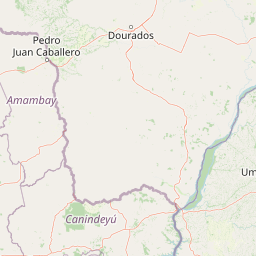
Understanding the mapped boundaries and regional context of this Paraguayan national park.
Cerro Corá National Park represents a significant protected area within the geographic atlas of Paraguay. As a designated national park, it offers a unique point of discovery for understanding the mapped landscapes and regional terrain of central South America. This page focuses on the park's specific identity as a protected entity, providing context for its boundaries and its contribution to the broader natural geography of Paraguay.
Cerro Corá National Park
National park
Structured park overview, official facts, and landscape profile for Cerro Corá National Park
Geography guide, regional context, and park location map for Cerro Corá National Park
Paraguay is a landlocked presidential republic in central South America with a population of approximately 6.4 million. Originally inhabited by the Guaraní people, it was colonized by Spain in the 16th century and gained independence in 1811. The country is notable for its strong Guarani cultural influence, economic growth driven by soybean and beef exports, and significant hydroelectric power generation. Asunción is both the capital and largest city.
Paraguay is located in the central region of South America, completely landlocked but with Atlantic Ocean access via the Paraná-Paraguay Waterway. It borders Bolivia to the northwest and north, Brazil to the northeast and east, and Argentina to the southeast, south, and west. The terrain consists mostly of rolling plains and lowlands, with the Paraguay River dividing the country into eastern and western regions.
Common questions about visiting, size, designation, and location context for Cerro Corá National Park
Deepen your exploration by continuing the structured search for national parks and protected areas worldwide. Utilize the comprehensive filtering capabilities to compare different conservation landscapes and refine your understanding of global park geography. Discover more about the distribution and characteristics of protected natural areas.