Why Deux Mamelles National Park stands out
Deux Mamelles National Park is best known for protecting one of Haiti\u2019s last significant tracts of cloud forest, a critically endangered ecosystem type in the Caribbean. The park\u2019s U-shaped mountain, Morne Deux Mamelles, harbors primary forest growing on dissected limestone rock at elevations exceeding 1,000 meters. This highland forest provides critical watershed protection and habitat for species found nowhere else, making it a biodiversity hotspot of national and regional importance. The park\u2019s inaccessibility has paradoxically served as a natural conservation buffer, preserving ecological integrity that more reachable Haitian forests have lost.
Deux Mamelles National Park history and protected-area timeline
Deux Mamelles National Park was officially established on September 23, 2015, making it one of Haiti\u2019s most recently designated national parks. The park\u2019s creation was directly prompted by a 2011 exploratory visit conducted by founders of the Haiti National Trust, who accessed the remote area by helicopter due to the absence of any road infrastructure reaching the mountain. During this initial survey, the team collected biological data that revealed the area\u2019s remarkable biodiversity and the critical conservation value of its remaining cloud forest. The findings from this expedition provided the scientific foundation for advocating formal protected area status. Prior to this survey, the Morne Deux Mamelles area had received limited scientific attention despite its ecological significance, and its remote character had largely preserved it from the extensive deforestation that has affected other Haitian forests.
Deux Mamelles National Park landscape and geographic character
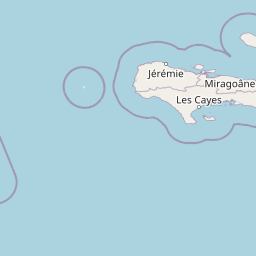
The landscape of Deux Mamelles National Park is dominated by the U-shaped mountain formation of Morne Deux Mamelles, which rises to 1,276 meters and stands as the highest peak at the western end of Haiti\u2019s Tiburon Peninsula. The terrain features highly dissected limestone rock, creating a rugged and complex topography with numerous ridges, valleys, and cliff faces. The mountain\u2019s elevation and positioning within the Tiburon Peninsula create a distinct highland environment where cloud-forming conditions are frequent. The limestone substrate weathers into distinctive karst-like features, with exposed rock outcrops and steep slopes characterizing much of the park\u2019s terrain. Below the cloud forest zone, the landscape transitions through lowerelevation vegetation zones before meeting the more degraded agricultural and pastoral lands that surround the protected area.
Deux Mamelles National Park ecosystems, habitats, and plant life
The nature of Deux Mamelles National Park centers on its cloud forest ecosystem, one of the most threatened forest types in the Caribbean and among the rarest in Haiti. The primary forest that remains intact above 1,000 meters elevation represents a critical refuge for biodiversity in a country where most original forest has been cleared. The cloud forest develops on the highly dissected limestone substrate, where frequent mist and moisture create conditions for epiphytic vegetation, specialized plant communities, and unique ecological interactions. This ecosystem type serves critical watershed functions, capturing moisture from clouds and releasing it as streams that feed lower-elevation watersheds. The combination of high rainfall, persistent cloud cover, and limestone geology produces a distinctive ecological community with species adapted to these specific conditions.
Deux Mamelles National Park wildlife and species highlights
While the source material does not provide detailed species lists, the cloud forest ecosystem of Deux Mamelles National Park almost certainly supports significant biodiversity, including numerous bird species, amphibians, insects, and other fauna adapted to highland forest conditions. Cloud forests throughout the Caribbean are known to harbor endemic species, and the isolated nature of Morne Deux Mamelles increases the likelihood of unique species presence. The forest provides critical habitat for migratory bird species that use Caribbean flyways, while resident birds depend on the intact forest for nesting and feeding. Amphibians, particularly sensitive to environmental changes, find sanctuary in the moist cloud forest conditions. The 2011 biological survey conducted by the Haiti National Trust likely documented specific wildlife observations that formed the basis for the park\u2019s establishment, though detailed species records are not available in this source.
Deux Mamelles National Park conservation status and protection priorities
Deux Mamelles National Park represents a critical conservation asset for Haiti, protecting one of the nation\u2019s last remaining intact cloud forest ecosystems. The park\u2019s establishment addresses a significant gap in Haiti\u2019s protected area network, which historically has underrepresented highland forest environments. The cloud forest ecosystem provides essential watershed protection, regulating water flow and preventing erosion on the steep limestone terrain. The park\u2019s relative inaccessibility has paradoxically served conservation goals by limiting human impact and forest clearing that has devastated other Haitian forests. Conservation challenges include the need for ongoing protection enforcement, research to document biodiversity, and community engagement to ensure sustainable relationships between local populations and the protected area.
Deux Mamelles National Park cultural meaning and human context
The cultural context of Deux Mamelles National Park is closely tied to the rural communities of the Tiburon Peninsula, where agriculture and small-scale land use have historically shaped the landscape surrounding the protected area. The park\u2019s name, Deux Mamelles, refers to the twin peaks or ridges of the U-shaped mountain, reflecting local geographic knowledge and naming conventions. The area\u2019s remote character has preserved both ecological integrity and traditional land-use patterns, though the surrounding lands have experienced forest loss typical of rural Haitian development. The park\u2019s recent establishment in 2015 represents a modern conservation approach applied to a landscape with deep historical roots in agricultural and pastoral use.
Top sights and standout views in Deux Mamelles National Park
The standout features of Deux Mamelles National Park include its status as a recent addition to Haiti\u2019s protected area network, preserving one of the country\u2019s last significant cloud forest ecosystems. The park protects Morne Deux Mamelles, the highest mountain at the western end of the Tiburon Peninsula, rising to 1,276 meters with intact primary forest above 1,000 meters. Its remote, roadless character has naturally preserved ecological values that more accessible areas have lost. The limestone-based cloud forest represents a distinctive habitat type within the Caribbean, providing watershed benefits and biodiversity refuge in a region where forest conservation remains urgently needed.
Best time to visit Deux Mamelles National Park
Visiting Deux Mamelles National Park presents significant challenges due to the absence of road access, making the park extremely difficult to reach through conventional means. The 2011 scientific expedition accessed the area by helicopter, and no infrastructure exists for regular visitor access. For those able to arrange specialized access, the dry season typically offers more favorable conditions for outdoor activity in Haiti, though cloud forest environments are inherently moist year-round. The park\u2019s remote character means that visit planning requires substantial logistical advance preparation and dependence on local knowledge and permission.