Why Kirthar National Park stands out
Kirthar National Park is best known for its population of Sindh ibex, a distinctive wild goat subspecies found only in this region, and for its population of Indian leopards, which persist in this mountainous desert environment despite severe habitat fragmentation across the subcontinent. The park also supports significant herds of urial (a wild sheep species) and chinkara gazelles, along with a remarkable diversity of raptors including bearded vulture, various eagle species, and multiple vulture species that migrate through or reside in the area.
Kirthar National Park history and protected-area timeline
Kirthar National Park traces its formal protection history to 1972 when the area was first designated as a wildlife sanctuary. Two years later, on January 31, 1974, it received national park status, becoming only the second such protected area in Pakistan after Lal Suhanra National Park in Punjab. This early establishment placed Pakistan among the first South Asian nations to develop a formal national park system. The park's designation reflected growing recognition in the 1970s of the need to protect representative samples of Pakistan's diverse ecosystems, particularly those harboring significant wildlife populations. The subsequent designation of the park and adjacent Hub Dam area as an Important Bird and Biodiversity Area in 2004 further reinforced its conservation significance at an international level.
Kirthar National Park landscape and geographic character
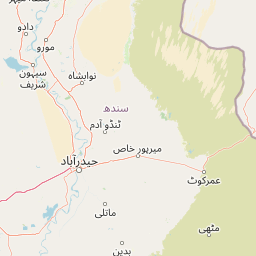
The Kirthar Mountains form the backbone of this protected area, comprising a series of parallel ridges and valleys that extend in a roughly northwest-southeast direction. The terrain is characterized by steep-sided valleys, rocky outcrops, and exposed cliff faces that provide habitat for cliff-dwelling species. Elevation within the park ranges from around 300 meters in the valley floors to over 1,500 meters at higher peaks, creating varied microclimates across the gradient. The area receives limited rainfall, making it a semi-arid environment where water availability strongly influences vegetation patterns and wildlife distribution. Seasonal streams and natural springs provide critical water sources during dry periods, and the geology includes formations that help retain groundwater.
Kirthar National Park ecosystems, habitats, and plant life
The vegetation of Kirthar National Park reflects its arid to semi-arid climate, dominated by sparse grasslands and drought-resistant shrub species. Grasses such as Cymbopogon, Pennisetum, and Panicum occur in patches, particularly in areas with better soil moisture. Woody vegetation includes Prosopis cineraria, various acacia species, and Salvadora oleoides, with Tamarix found near water sources. The plant community supports a diverse arthropod fauna and provides browse for herbivores. The park's position at the interface of multiple ecological zones, from the Sindhi plains into the Balochistan highlands, gives it a transitional character that contributes to its biodiversity value.
Kirthar National Park wildlife and species highlights
Kirthar National Park supports an impressive array of wildlife despite its harsh environment. The mammal fauna includes 38 documented species, headlined by the Indian leopard, a predator that persists here at the edge of its range in surprisingly good numbers. The Sindh ibex, a subspecies of wild goat endemic to this region, remains the park's most iconic resident, inhabiting the rocky cliffs and ridges. Urial populations thrive on the steeper slopes, while chinkara gazelles occupy valley floors and more open terrain. Striped hyenas, Indian wolves, and caracals represent the diverse carnivore community, supported by smaller predators including various mongoose species and the honey badger. The bird fauna is particularly noteworthy with over 165 species recorded, including significant populations of vultures and eagles. The reintroduction project for blackbuck represents an important conservation effort for this species that has been extirpated from much of its former range.
Kirthar National Park conservation status and protection priorities
As one of Pakistan's oldest and largest national parks, Kirthar represents a critical conservation asset in a region where natural habitats have been extensively modified. The park provides essential refuge for species that have declined across their ranges, particularly the Sindh ibex and Indian leopard, both of which face significant threats outside protected areas. Its Important Bird and Biodiversity Area designation recognizes the site's significance for raptors and migratory birds, including several vulture species that have suffered catastrophic population declines across South Asia. The blackbuck reintroduction project demonstrates active management for species recovery. However, the park faces ongoing challenges from grazing pressure, fuel wood collection, and the broader issue of habitat connectivity in a densely populated region.
Top sights and standout views in Kirthar National Park
The mountain landscapes of Kirthar, with their dramatic ridges and deep valleys, offer a distinctive visual character unlike the more famous Himalayan parks of Pakistan. The sight of Sindh ibex navigating impossibly steep cliff faces represents one of the region's most remarkable wildlife viewing opportunities. The diversity of raptors, particularly during winter months when vultures and eagles are more active, makes Kirthar significant for bird enthusiasts. The park's size and relative remoteness provide a wilderness experience increasingly rare in the populated Indus plains.
Best time to visit Kirthar National Park
The optimal period for visiting Kirthar National Park spans from October through March when temperatures are moderate and wildlife activity is highest. Summer months from May to September bring extreme heat that limits both visitor activity and wildlife sightings, as animals become more nocturnal and seek shade during daylight hours. The winter season brings cooler temperatures ideal for hiking and wildlife observation, though some higher-elevation areas may experience cold nights. The monsoon season from July to September can bring brief but intense rainfall that may affect access to certain areas of the park.