Why Periyar National Park stands out
Periyar is renowned as a premier tiger and elephant habitat within the Western Ghats, one of the world's eight biodiversity hotspots. The park protects critical elephant corridors and serves as a vital watershed for Kerala's major rivers. Its reputation as Periyar Tiger Reserve stems from successful conservation of both Bengal tigers and Asian elephants, with occasional sightings of white tigers. The park's dramatic landscape of misty hills, the reservoir lake, and dense evergreen forests creates one of India's most scenic protected landscapes.
Periyar National Park history and protected-area timeline
The conservation history of Periyar began in 1934 when the Maharaja of Travancore, Chithira Thirunal Balarama Varma, declared the forests surrounding Periyar Lake a private reserve to prevent encroachment by tea plantations. This area was initially known as Nellikkampatty Reserve. After India's political integration in 1950, the reserve was consolidated as a wildlife sanctuary. The sanctuary joined Project Tiger in 1978, receiving formal designation as Periyar Tiger Reserve. In 1982, the core area of 350.54 square kilometers was declared a national park. Further expansion occurred in 2007 when 148 square kilometers of the Goodrical Range were added, followed by additional evergreen forest at Ponnambalamedu in 2012. The park was brought under Project Elephant in 1991 and assessed as having "very good" management by India's National Tiger Conservation Authority in 2011.
Periyar National Park landscape and geographic character
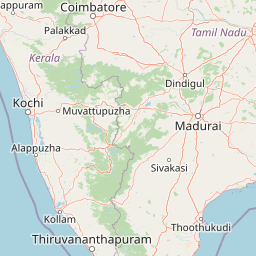
The park sits within the Cardamom Hills, a mountainous region characterized by steep and rolling terrain thickly covered with forest. The landscape transitions from high ridges exceeding 1,700 meters along the eastern boundary to a 1,200-meter plateau in the western section before descending into the deep Pamba River valley at around 100 meters elevation. The most prominent peak is Kottamala at 2,019 meters, notable as the southernmost peak in India above 2,000 meters. Other significant peaks include Pachayarmala, Vellimala, Sunderamala, Chokkampetti mala, and Karimala. Periyar Lake dominates the lower terrain, its undulating shoreline winding around forested hillsides. The surrounding landscape includes plantations of tea, cardamom, and coffee in lower elevation zones.
Periyar National Park ecosystems, habitats, and plant life
Periyar supports tropical and subtropical moist broadleaf forests, montane grasslands and shrublands, montane savannas, eucalyptus plantations, wetlands, and lake ecosystems. A total of 1,965 flowering plant taxa have been documented, including 171 grass species and 140 orchid species. Seventeen plant taxa are possibly extinct. Forest composition includes deciduous, evergreen, and semi-evergreen species such as teak, rosewoods, terminalia, sandalwoods, mango, jamun, tamarind, banyan, sacred fig, and bamboo. The park contains the only south Indian conifer, Nageia wallichiana. Endemic flora includes Habenaria periyarensis and Syzygium periyarense. The medicinal gloriosa lily also grows within the reserve. These diverse habitats provide the ecological foundation for the park's significant wildlife populations.
Periyar National Park wildlife and species highlights
The park supports 35 mammal species including significant populations of Bengal tigers (approximately 40 individuals counted in 2017) and Asian elephants. Other notable mammals include gaur, sambar deer, wild pig, Indian giant squirrel, Travancore flying squirrel, jungle cat, dhole, sloth bear, Nilgiri tahr, lion-tailed macaque, Nilgiri langur, and Nilgiri marten. Bird diversity includes about 266 species, with endemic varieties such as the Malabar grey hornbill, Nilgiri wood pigeon, blue-winged parakeet, Nilgiri flycatcher, and black-necked stork. The park harbors 45 reptile species including king cobra, Malabar pit viper, and striped coral snake. Amphibians include the Malabar gliding frog and bicolored frog. Approximately 40 fish species inhabit the lake and rivers, including endemic species like Periyar trout, Periyar latia, and Periyar barb. Insect diversity includes roughly 160 butterfly taxa, with the southern birdwing being South India's largest butterfly.
Periyar National Park conservation status and protection priorities
Periyar holds significant conservation value as part of the Western Ghats, recognized as a global biodiversity hotspot. The reserve provides critical habitat for endangered species including Bengal tigers and Asian elephants, both benefiting from dedicated government conservation projects. The ecosystem generates substantial benefits valued at approximately 17.6 billion rupees annually, including gene-pool protection, water provisioning to Tamil Nadu districts, wildlife habitat services, and recreation value. The park serves as a crucial watershed, with both the Periyar and Pamba Rivers originating within its boundaries, supplying water to downstream regions. Its designation as both a Project Tiger and Project Elephant reserve reflects its national importance for large mammal conservation.
Periyar National Park cultural meaning and human context
The region around Periyar was historically part of the princely state of Travancore, with the maharaja's decision in 1934 to establish the private reserve representing an early conservation initiative in Kerala. The reserve surrounds Periyar Lake, whose creation through the Mullaperiyar Dam in 1895 reflects human modification of the landscape. Local communities inhabit areas surrounding the park, with agricultural plantations of tea, cardamom, and coffee occupying lower elevations. The park's proximity to Kumily and Thekkady creates opportunities for community-based tourism and employment generation, with the reserve providing approximately 25 million rupees in annual employment benefits to local populations.
Top sights and standout views in Periyar National Park
Periyar offers a rare combination of significant tiger and elephant populations within a scenic Western Ghats landscape. The reservoir lake with its submerged trees creates a distinctive visual character unlike other Indian parks. The park's elevation range from 100 to 2,019 meters supports exceptional biodiversity across multiple habitat types. Endemic species including the lion-tailed macaque, Nilgiri tahr, and numerous Western Ghats-restricted birds and butterflies add scientific value to the tourism experience. The Periyar River's role as a major watershed for Kerala underscores the park's importance beyond wildlife conservation.
Best time to visit Periyar National Park
The park experiences a tropical highland climate with temperatures ranging from 15 degrees Celsius in December and January to 31 degrees Celsius in April and May. Annual rainfall averages between 2,000 and 3,000 millimeters, with approximately two-thirds falling during the southwest monsoon from June to September. The northeast monsoon brings additional rainfall between October and December. The winter months from November to February offer pleasant temperatures and clearer visibility for wildlife viewing, though the monsoon season creates lush green landscapes. Summer months can be warm but still provide good opportunities to observe animals at the lake's water sources.