Why Sanjiangyuan National Park stands out
Sanjiangyuan is best known as the source region of three of Asia's most important rivers, supplying water to hundreds of millions of people across China and Southeast Asia. The park protects the critical headwater ecosystems of the Yellow River, which is China's second-long river and historically important for Chinese civilization; the Yangtze, the longest river in Asia; and the Mekong, which flows through multiple countries in Southeast Asia. The region is also renowned for its extensive high-altitude wetlands, including the Xingxing Hai, A'nimaqin, and Zhaling-Eling Hu marshland areas, which serve as crucial water retention and purification systems. Sanjiangyuan is further distinguished by its populations of endangered flagship species, particularly the snow leopard and Tibetan antelope (chiru), which inhabit the rugged mountain terrain and open grasslands. The park's designation as China's first national park under the modern national park system also gives it special significance in China's conservation history.
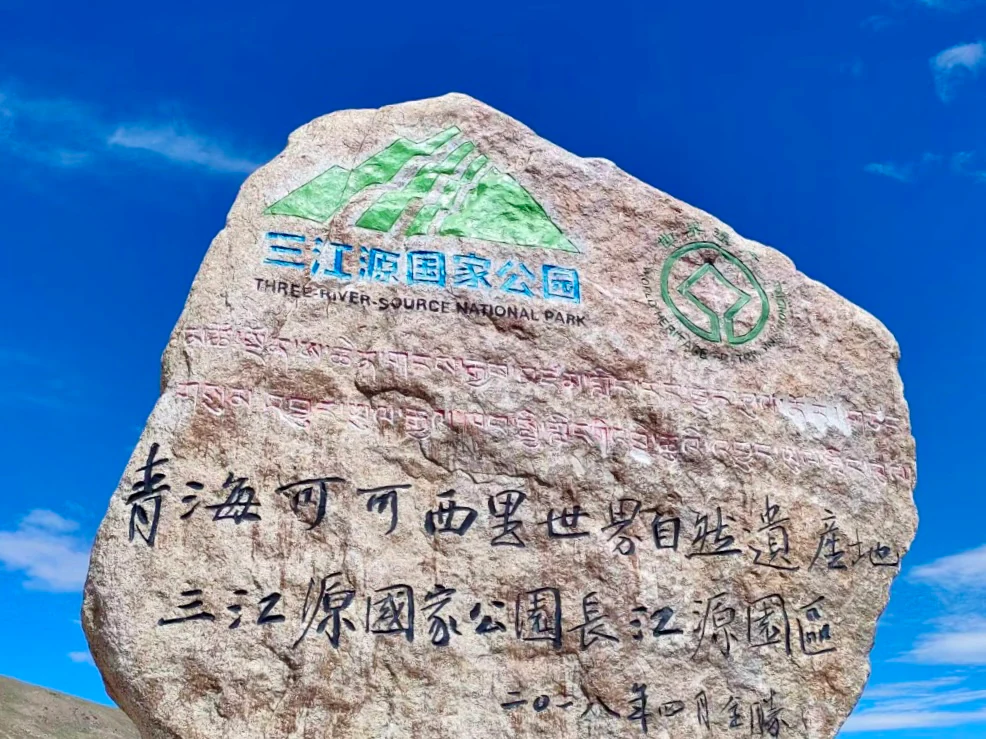
Sanjiangyuan National Park history and protected-area timeline
The protection history of Sanjiangyuan began with the establishment of the Sanjiangyuan National Nature Reserve in May 2000, formally approved by the State Council of China. The Management Bureau was established in September 2001, and the reserve achieved national-level status in January 2003, reflecting its importance in China's conservation framework. The reserve originally covered approximately 152,300 square kilometers, larger than England and Wales combined, and was organized into 18 subareas managed under a three-zone system: core zones with strict protection and no grazing, buffer zones with limited rotational grazing, and experimental zones allowing sustainable use and scientific research. In 2015, the Chinese government announced plans to establish a new national park system, with Sanjiangyuan designated as a pilot area. The park was formally established in late 2021, becoming China's first national park under this modern system. The transition incorporated the former Sanjiangyuan National Nature Reserve as well as the Hoh Xil nature reserve into a unified protected area. Significant ecological restoration efforts have accompanied these administrative changes, including the relocation of pastoralists from core zones, restrictions on mining and grazing, and programs to restore degraded grasslands. These conservation measures have faced challenges, including questions about the effectiveness of resettlement programs and ongoing concerns about the impacts of climate change on the fragile alpine ecosystem.
Sanjiangyuan National Park landscape and geographic character
The landscape of Sanjiangyuan National Park is defined by its extraordinary altitude and the vast, open terrain of the Tibetan Plateau. The park straddles several major mountain ranges, with the main Kunlun Mountains分布在公园北部, while the Altun Shan, Bayan Har Mountains, and Tanggula Mountains form the western, eastern, and southern boundaries respectively. The central and western portions of the park feature wide valley floors and broad, flat plains interspersed with rolling hills, where extensive areas of alpine swamp meadow and marsh wetlands have developed atop permafrost foundations. These wetlands, including the Xingxing Hai and Guozong Mucha areas, form the critical sponge systems that regulate water flow to the three rivers. The southeastern section, particularly the northern foothills of the Tanggula Mountains, features a more varied terrain of low mountains,高原河湖盆地, and ice-affected permafrost landforms. The park contains significant glacial features, with over 5,000 square kilometers of glaciers concentrated primarily on the Tanggula, Kunlun, and Bayan Har ranges, serving as vital freshwater reservoirs. Lakes are numerous throughout the park, with more than 188 lakes exceeding 0.5 square kilometers in area, including the significant Zhaling and Eling lakes in the Yellow River headwater region. The overall terrain character is one of vast, horizontal openness broken only by mountain ridges and the sinuous lines of rivers and lakes.
Sanjiangyuan National Park ecosystems, habitats, and plant life
Sanjiangyuan hosts a complex of high-altitude ecosystems that are both ecologically significant and environmentally fragile. The dominant ecosystem types include alpine meadow and alpine steppe, which together cover approximately 69.5% of the park's area and form the primary grazing lands for local pastoralists. Alpine wetlands, encompassing over 31,700 square kilometers, represent another critical ecosystem type, providing essential water regulation services and habitat for numerous species. Forest and shrubland ecosystems are more limited in extent, covering approximately 496 square kilometers, with main concentrations of juniper forest in the high canyons of the Lancang (Mekong) source region. The park supports remarkable biodiversity, with records of more than 2,200 species of vascular plants and 310 species of vertebrates. Seven major vegetation type groups have been documented, including forest, shrubland, meadow, steppe, desert, alpine冻原with sparse vegetation, and wetland aquatic vegetation. The ecosystems are characterized by their vulnerability to climate change and human disturbance, with permafrost degradation, grassland deterioration, and wetland shrinkage identified as significant environmental concerns. The park's ecological significance stems primarily from its role as a water source, with the three rivers' headwaters providing fresh water to hundreds of millions of people downstream.
Sanjiangyuan National Park wildlife and species highlights
Sanjiangyuan National Park supports a diverse assemblage of wildlife adapted to the harsh high-altitude environment. The mammal fauna includes notable populations of snow leopard, Tibetan antelope (chiru), wild yak, and blue sheep, representing species of significant conservation concern. The snow leopard inhabits the rocky mountain terrain throughout the park and serves as an emblematic flagship species for conservation efforts. The Tibetan antelope, once severely threatened by poaching, has recovered in recent decades thanks to intensive protection measures. Other mammals include the Himalayan wolf, red fox, Tibetan sand fox, Pallas cat, Eurasian lynx, kiang (Tibetan wild ass), argali, and various small mammals such as the plateau pika and Himalayan marmot. The avifauna is particularly rich, with over 237 bird species recorded, including the endangered black-necked crane, various raptors such as the golden eagle and saker falcon, and numerous waterfowl that inhabit the wetland areas. The bird list includes species such as the Tibetan snowcock, bar-headed goose, and various finches adapted to the high-altitude environment. The park's wildlife faces pressures from climate change, habitat fragmentation, and human-wildlife conflict, making the protected area status crucial for maintaining viable populations of these species.
Sanjiangyuan National Park conservation status and protection priorities
Sanjiangyuan National Park represents a flagship example of China's commitment to large-scale ecosystem conservation and water resource protection. The park's primary conservation significance lies in its role as the source region for three of Asia's major river systems, making it a critical area for maintaining downstream water security across vast regions of China and Southeast Asia. The protected area status aims to safeguard the integrity of alpine wetland ecosystems, which function as natural water storage and filtration systems, and to preserve the habitat of endangered species including the snow leopard and Tibetan antelope. Conservation challenges include combating grassland degradation, which has affected significant portions of the park due to climate change and historical overgrazing, and managing the complex relationship between conservation objectives and the traditional pastoral livelihoods of local communities. The park operates under a zonation system that attempts to balance strict protection in core areas with sustainable use in general control zones. International attention focuses on this area as a model for community-based conservation in high-altitude environments, with programs to resettle pastoralists from core zones and develop alternative livelihoods intended to reduce pressure on fragile ecosystems.
Sanjiangyuan National Park cultural meaning and human context
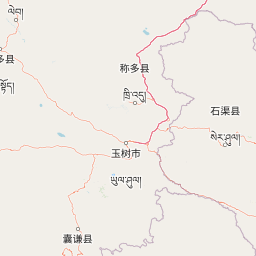
The Sanjiangyuan region is home to a predominantly Tibetan population, with ethnic Tibetans comprising over 97% of the approximately 116,000 residents within the park boundaries. These communities have practiced traditional pastoral nomadism for generations, moving their herds across the vast grasslands in response to seasonal conditions and maintaining a way of life intimately connected to the landscape. The park encompasses parts of four Tibetan autonomous prefectures in Qinghai: Yushu, Guoluo, Hainan, and Huangnan, as well as portions of the Haixi Mongol and Tibetan Autonomous Prefecture. Tibetan Buddhist culture is deeply embedded in the region, with numerous monasteries and religious sites located within the park boundaries, including the Baiyu Temple, Jiegu Temple, and Lajia Monastery. Historical sites reflect the area's long human history, including the remains of ancient settlements and the legendary palace of King Gesar, a cultural hero in Tibetan tradition. The traditional knowledge of local pastoralists regarding grassland management and animal husbandry represents valuable cultural heritage, though modernization pressures and conservation policies are transforming these traditional practices. The relationship between these communities and the land they inhabit represents a model of human-nature interaction that conservation programs must consider.
Top sights and standout views in Sanjiangyuan National Park
Sanjiangyuan National Park offers exceptional opportunities to experience some of the most remote and pristine high-altitude terrain in Asia. The黄河源园区(Yellow River Source Area) encompasses the lakes of Zhaling and Eling, significant Buddhist cultural sites, and the headwaters where the Yellow River begins its long journey eastward. The长江源园区(Yangtze Source Area) incorporates the former Hoh Xil region, now a World Heritage site, featuring the vast permafrost landscapes, glaciers, and the source tributaries of Tuotuo River, Dangqu, and Chumar River. The澜沧江园区(Mekong Source Area) protects the upstream waters of this Southeast Asian river, with its high canyon landscapes and relatively more developed forest vegetation. The park provides habitat for snow leopard, Tibetan antelope, and black-necked crane, making it one of China's most important areas for large mammal conservation. The extensive wetlands, including Xingxing Hai and other marshland areas, represent critical water regulation systems and important bird habitats. Visitors can experience the traditional culture of Tibetan pastoralist communities and visit significant religious sites such as the New Zhaisar Muni City and the Wencheng公主Temple, associated with the legendary Tang dynasty princess who entered Tibet along the ancient Tang-Bohotan route.
Best time to visit Sanjiangyuan National Park
The optimal visiting season for Sanjiangyuan National Park is during the summer months of June through September, when temperatures are relatively milder and the high-altitude environment is most accessible. During this period, average temperatures range from -5.6°C to 7.8°C, and the grassland blooms with wildflowers across the vast alpine meadows. The monsoon season brings rainfall that sustains the wetlands and rivers, creating lush green landscapes characteristic of the region's brief growing season. Late summer often offers the best wildlife viewing opportunities as animals are more active in the relatively warmer conditions. Winter visits are possible but present significant challenges, with temperatures dropping well below freezing, heavy snow covering much of the terrain, and many facilities closed. The cold season from October through May features temperatures that can fall far below zero, limited oxygen at high altitude, and harsh conditions that restrict access to much of the park. Spring and early summer (May-June) bring strong winds and unpredictable weather, while autumn (September-October) offers clear skies and the golden colors of dried grasslands, though temperatures begin to decline rapidly. Visitors should note that the park's extreme altitude means that even summer temperatures can be cold, and that altitude sickness is a significant concern for visitors arriving from lower elevations.