Mori Atlas logo
National parkShiretoko National Park

Discover the mapped protected area boundaries and regional natural landscape context of this Japanese national park.

Shiretoko National Park: Hokkaido National Park Atlas and Protected Landscape Geography

(Shiretoko Kokuritsu Kōen)

Shiretoko National Park represents a significant protected area within Hokkaido, Japan, offering a unique lens for exploring regional geography and natural landscapes. This page provides detailed insight into its mapped boundaries and geographic identity, essential for understanding its context within the broader atlas of protected lands. Engage with the park's specific landscape characteristics and its place within the natural terrain of Hokkaido.

Brown bear habitatWorld Heritage SiteRemote peninsulaCoastal cliffsTemperate forestSubalpine environment

Shiretoko National Park

National park

Park overview

Structured park overview, official facts, and landscape profile for Shiretoko National Park

Shiretoko National Park park facts, protected area profile, and essential visitor context
Review the core facts for Shiretoko National Park, including designation, size, terrain, visitor scale, habitats, and operating context in one park-focused overview.

About Shiretoko National Park

Shiretoko National Park protects the wild heart of one of Japan's most isolated peninsulas, a landscape where ancient forests descend to dramatic sea cliffs and where the cold currents of the Sea of Okhotsk support extraordinary marine life. The peninsula juts northward from Hokkaido, creating a biological crossroads where species from mainland Asia meet Arctic influences from the north. The park's terrain encompasses elevations from sea level to over 1,500 meters, supporting a succession of habitats from coastal wetlands through temperate forest to subalpine zones. Beyond the forest line, dense thickets of Siberian dwarf pine create an almost impenetrable green wall across the high ground. The park's remote character has preserved ecological processes that have been heavily modified elsewhere in Japan, making it a living laboratory for understanding northern temperate ecosystem dynamics.

Quick facts and research context for Shiretoko National Park

Shiretoko National Park covers 386.36 square kilometers along the Shiretoko Peninsula in northeastern Hokkaido. The park is administered by Japan's Ministry of the Environment and holds IUCN Category II protected area status. It is home to Japan's largest concentration of brown bears, estimated at several hundred individuals. The park features dramatic sea cliffs, temperate and subalpine forests, and significant marine ecosystems in the Sea of Okhotsk. The area is also notable for its hot springs waterfall called Kamuiwakka Falls, where geothermal waters cascade directly into the ocean.

Park context

Deeper park guide and search-rich context for Shiretoko National Park

Shiretoko National Park history, landscape, wildlife, and travel context
Explore Shiretoko National Park through its history, landscape character, ecosystems, wildlife, conservation priorities, cultural context, and seasonal travel timing in a structured park guide built for atlas discovery and search intent.

Why Shiretoko National Park stands out

Shiretoko is best known for harboring Japan's largest population of brown bears, with the peninsula supporting one of the highest densities of this iconic species anywhere in the country. The park is also renowned for its dramatic coastal scenery, where sheer cliffs meet the productive waters of the Sea of Okhotsk, creating opportunities to observe marine mammals including spotted seals, orcas, and sperm whales. The area is a critical habitat for Steller's sea eagle and white-tailed eagle, two of Japan's most impressive raptors. The park offers rare views toward Kunashiri Island, part of the disputed Kuril Islands, adding geopolitical dimension to the landscape.

Shiretoko National Park history and protected-area timeline

Shiretoko National Park was established on June 1, 1964, as part of Japan's growing post-war commitment to nature conservation. The designation came during a period when Japan was systematically identifying and protecting its most significant natural areas, following the earlier establishment of Nikko and Nikoyama national parks in the 1930s. In 2005, the park achieved international recognition when UNESCO inscribed it as a World Heritage Site, citing its outstanding natural value under criteria ix and x related to ecological processes and biodiversity conservation. The World Heritage listing noted the potential for developing the property as a transboundary peace park with Russia's Kuril Islands, though this collaborative framework has not yet been realized. The designation generated controversy among the indigenous Ainu people, who pointed to their long history of settlement and cultural connection to the Shiretoko landscape, arguing that the natural heritage recognition overlooked their human heritage.

Shiretoko National Park landscape and geographic character

The Shiretoko Peninsula presents a landscape of remarkable vertical contrast, with terrain rising sharply from sea level to mountain ridges that form the spine of this narrow landform. The coastline features some of Hokkaido's most dramatic cliffs, where basalt columns and erosion-carved formations meet the productive waters of the Sea of Okhotsk. The peninsula's interior contains a series of volcanic peaks including Mount Rausu, whose slopes support the park's extensive forest cover. The landscape is dissected by numerous streams that descend from the uplands, cutting through forested valleys before reaching the sea. The Kamuiwakka Falls represent a unique geological feature where hot spring water emerges from volcanic strata and cascades directly into the ocean, creating a rare geothermal coastal waterfall.

Shiretoko National Park ecosystems, habitats, and plant life

The forests of Shiretoko represent a transition between temperate and subalpine zones, with species composition reflecting the peninsula's northerly position and the influence of continental climates from the Asian mainland. Sakhalin fir dominates the coniferous component of the forests, while Erman's birch and Mongolian oak provide the deciduous element in this mixed forest ecosystem. Above the forest limit, which varies with elevation and exposure, dense thickets of Siberian dwarf pine form a nearly impassable barrier across the high ridges. The park's marine environments are strongly influenced by the cold Sea of Okhotsk, which supports productive food chains that sustain diverse marine mammals and seabirds. The interface between terrestrial and marine ecosystems here is particularly dynamic, with no buffer zones separating the forest from the rocky coastline.

Shiretoko National Park wildlife and species highlights

Shiretoko harbors Japan's most significant population of brown bears, with the peninsula supporting densities that are unmatched elsewhere in the country. These apex predators move freely across the landscape, utilizing both the forest interior and coastal areas where they forage for marine foods including fish and shellfish. The park's avian fauna includes impressive concentrations of Steller's sea eagles and white-tailed eagles, which winter along the coast and feed on fish and carrion. Marine mammals are a major attraction, with spotted seals breeding on the offshore ice and orcas and sperm whales commonly seen in the surrounding waters. The ecosystem supports a complete food web from primary producers through apex predators, making it one of Japan's most ecologically intact protected areas.

Shiretoko National Park conservation status and protection priorities

Shiretoko's World Heritage designation recognizes that the park represents one of Japan's last remaining wilderness areas where natural processes continue largely without significant human interference. The high density of brown bears reflects the health of the ecosystem and the effectiveness of protection measures that have limited human disturbance in core areas. The marine environment receives protection as an integral part of the park, recognizing that the ecological integrity of the peninsula depends on the health of the surrounding sea. The potential for a transboundary World Heritage site linking Shiretoko with Russia's Kuril Islands reflects the ecological continuity across this maritime boundary, though political differences have prevented such collaboration.

Shiretoko National Park cultural meaning and human context

The Shiretoko Peninsula has been home to the Ainu people for generations, and the park's name itself derives from the Ainu language. The Ainu have maintained deep cultural connections to this landscape, which provided traditional foods, materials, and spiritual meaning. The controversy surrounding the World Heritage designation highlighted ongoing tensions between conservation frameworks that emphasize wilderness and indigenous peoples who have shaped and been shaped by these landscapes over centuries. The Ainu perspective emphasizes that Shiretoko has never been a wilderness in the sense of being untouched by human presence, but rather a cultural landscape where human and natural communities have co-evolved.

Top sights and standout views in Shiretoko National Park

Shiretoko offers Japan's most reliable opportunities to observe brown bears in the wild, with viewing programs operating during the salmon season when bears congregate at coastal streams. The peninsula provides exceptional birdwatching, particularly for Steller's sea eagles and white-tailed eagles that winter along the coast. The Kamuiwakka hot springs waterfall presents a unique geological phenomenon where geothermal waters meet the sea. Hiking the peninsula's trails reveals a progression from coastal cliffs through old-growth forest to subalpine vegetation. The remote character of the area, accessible only by foot or boat, ensures a wilderness experience increasingly rare in Japan.

Best time to visit Shiretoko National Park

The optimal season for visiting Shiretoko runs from late spring through early autumn, with June through October offering the most reliable access to trails and wildlife viewing opportunities. The summer months bring extended daylight and relatively mild temperatures ideal for hiking, while autumn offers spectacular fall color in the deciduous forests. Winter access is severely limited due to heavy snowfall and the remote nature of the peninsula, though the frozen landscape has its own stark beauty. Wildlife viewing intensifies during the salmon running season in late summer and early autumn, when brown bears are most active along coastal streams.

Park location guide

Geography guide, regional context, and park location map for Shiretoko National Park

Shiretoko National Park park geography, regions, and map view in Japan
Understand where Shiretoko National Park sits in Japan through a broader geographic reading of the surrounding landscape, nearby location context, and its mapped position within the national park landscape.

How Shiretoko National Park fits into Japan

Japan is an island nation in East Asia comprising over 14,000 islands in the Pacific Ocean. The country operates as a unitary parliamentary constitutional monarchy with Emperor Naruhito as the reigning monarch and Prime Minister Sanae Takaichi leading the government. With a population of approximately 123 million, Japan is the world's 11th most populous country and a major economic power with one of the strongest militaries, though it has constitutionally renounced its right to declare war.

Wider geography shaping Shiretoko National Park in Japan

Japan is an island nation in the Pacific Ocean, bordered to the west by the Sea of Japan and extending from the Sea of Okhotsk in the north to the East China Sea in the south. The Japanese archipelago lies off the northeast coast of the Asian mainland. Approximately 75% of Japan's terrain is mountainous and heavily forested, with agricultural land and urbanized populations concentrated along the eastern coastal plains. The country is divided into 47 administrative prefectures and eight traditional regions.

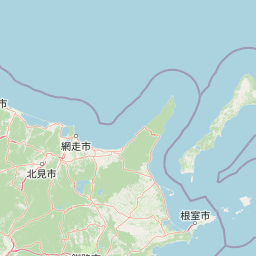
Map view of Shiretoko National Park

Use this park location map to pinpoint Shiretoko National Park in Japan, understand its exact geographic position, and read its mapped placement within the surrounding landscape more clearly.

Pigeon | © OpenStreetMap contributors

Location context for Shiretoko National Park

HokkaidoNemuro SubprefectureOkhotsk Subprefecture
Park atlas

Browse a curated atlas of nearby protected areas and compare the diverse geographic landscapes surrounding Japan's remote Shiretoko Peninsula.

Discover Other National Parks and Protected Areas Near Shiretoko National Park, Japan
After exploring Shiretoko National Park, delve into a geographic comparison of other protected areas, tracing the regional spread of diverse conservation landscapes across Hokkaido and beyond. Examine adjacent coastal zones, volcanic terrain, and forest reserves to understand how various protected areas connect within Japan's northern frontier and compare their unique conservation profiles.
Watercolor painting of a wetland landscape with reeds, trees, and distant hills
National parkHokkaido

Kushiro-Shitsugen National Park: Protected Wetland Ecosystems and Landscape

Explore the mapped terrain of eastern Hokkaido's vital peatlands.

Kushiro-Shitsugen National Park is a national park in eastern Hokkaido, Japan, safeguarding the nation's largest wetland and peatland. The park encompasses the expansive Kushiro Wetlands, characterized by vast reedbeds and a network of meandering rivers, making it a critical habitat for species like the endangered red-crowned crane. This protected area offers a unique landscape for understanding Japan's freshwater ecosystems and their geographic distribution within the region.

Area
268.61 km²
Established
1987
IUCN
II
Visitors
460K annual
National parkJapan

Daisetsuzan National Park: Japan's Premier Volcanic Alpine Protected Landscape

Explore Hokkaido's largest national park and its vast mountain terrain.

Daisetsuzan National Park is a monumental protected area, covering extensive mountainous territory in Hokkaido, Japan. This national park is characterized by its dramatic volcanic geography, featuring numerous peaks over 2,000 meters and a rugged backcountry that defines Japan's northern alpine wilderness. Delve into the mapped boundaries and regional context of this significant protected landscape to understand its unique geological identity and ecological importance.

Area
2,267.64 km²
Established
1934
IUCN
II
Visitors
6M annual
Abstract watercolor painting with soft green and light blue hues on white background
National parkHokkaido

Hidakasanmyaku-Erimo-Tokachi National Park: Japan's Largest Protected Landscape Atlas

Volcanic peaks, coastal cliffs, and Hokkaido's expansive geography.

Hidakasanmyaku-Erimo-Tokachi National Park represents Japan's largest national park, offering a comprehensive exploration of its protected landscape. This vast area in Hokkaido combines the rugged topography of the Hidaka volcanic mountain range with the striking maritime environment of Cape Erimo. Users can explore detailed geographic contexts, understand the park's extensive boundaries, and appreciate its role as a crucial protected natural area at the intersection of alpine and coastal ecosystems.

Area
2,456.68 km²
Established
2024
IUCN
II
Relief
Mountain
National parkHokkaido

Rishiri-Rebun-Sarobetsu National Park: Volcanic Islands and Coastal Wetlands of Northern Hokkaido

Explore its mapped geography and unique subarctic alpine flora.

Rishiri-Rebun-Sarobetsu National Park in Hokkaido, Japan, offers a unique exploration of dramatic volcanic islands and vital coastal wetland ecosystems. This protected area showcases striking geological formations, from the conical peaks of Rishiri and Rebun islands to the vast peat bogs of the Sarobetsu Plain. Its subarctic environment supports a rich tapestry of alpine flora, providing a distinct case study in protected landscape geography and mapping for the region.

Area
241.66 km²
Established
1974
IUCN
II
Visitors
730K annual
National parkHokkaido

Shikotsu-Tōya National Park: Hokkaido's Premier Volcanic National Park with Caldera Lakes

Explore mapped terrain, geothermal features, and active volcanoes.

Shikotsu-Tōya National Park, located in Hokkaido, Japan, is a prime example of a protected area defined by its intense volcanic geology. The park features prominent caldera lakes, including Lake Shikotsu and Lake Tōya, surrounded by active volcanic cones and dramatic geothermal landscapes. Its distinctive terrain makes it a key destination for understanding regional geography and the mapped protected areas of Japan's northern island, offering a unique glimpse into dynamic geological processes.

Area
994.73 km²
Established
1949
IUCN
II
Relief
Mountain
National parkJapan

Towada-Hachimantai National Park: Mapping Japan's Volcanic and Alpine Protected Landscapes

Explore the geography of this northern Honshu national park.

Towada-Hachimantai National Park offers a unique atlas perspective on Japan's dynamic volcanic geology and alpine ecosystems. This national park protects a vast expanse of rugged terrain, featuring the iconic caldera of Lake Towada and the expansive volcanic plateaus of the Hachimantai region. Understanding its mapped boundaries reveals the distribution of its characteristic landscapes, from old-growth beech forests along river valleys to subalpine environments crowning volcanic peaks, providing a deep dive into its protected natural geography.

Area
855.34 km²
Established
1936
IUCN
II
Visitors
5.9M annual
National parkTōhoku

Sanriku Fukkō National Park: National Park Protected Landscape and Regional Geography

Explore mapped boundaries and natural terrain in Tōhoku.

Sanriku Fukkō National Park serves as a pivotal protected area within the Tōhoku region, offering rich geographic detail for atlas exploration. This national park's identity is intrinsically linked to its mapped landscape and protected boundaries, providing valuable insights into northeastern Japan's natural terrain. Through its representation, users gain a structured understanding of the park's place within the regional geography, facilitating a deeper dive into protected land contexts.

Area
285.37 km²
Established
2013
IUCN
II
Relief
Lowland
Watercolor painting showing a river flowing through a forested valley with mountains in the background
National parkPrimorsky Krai

Bikin National Park: A Vast Protected Landscape in Primorsky Krai's Sikhote-Alin Mountains

Explore Russia's largest old-growth forest and Amur tiger stronghold.

Bikin National Park is a monumental protected area safeguarding the largest remaining tract of old-growth temperate rainforest in the Northern Hemisphere. Situated within Primorsky Krai, it serves as a vital refuge for an estimated 10% of the world's wild Amur tigers, making its mapped boundaries essential for conservation. Recognized as a World Heritage Site, the park's extensive forests and complex terrain offer a unique glimpse into one of Asia's last great wilderness areas, supporting unparalleled biodiversity and crucial ecological processes.

Area
11,600 km²
Established
2015
IUCN
II
Relief
Mountain

Common questions about visiting, size, designation, and location context for Shiretoko National Park

Shiretoko National Park FAQs for park facts, access, geography, and protected area context
Find quick answers about Shiretoko National Park, including protected-area facts, park geography, trail and visitor context, and how the park fits into its surrounding country and regional landscape.
MoriAtlas Explorer

Continue Your Protected Areas Search Across the Global Atlas

Deepen your exploration by continuing the structured search for national parks and protected areas worldwide. Utilize the comprehensive filtering capabilities to compare different conservation landscapes and refine your understanding of global park geography. Discover more about the distribution and characteristics of protected natural areas.

Global natural geography