Why Bunya Mountains National Park stands out
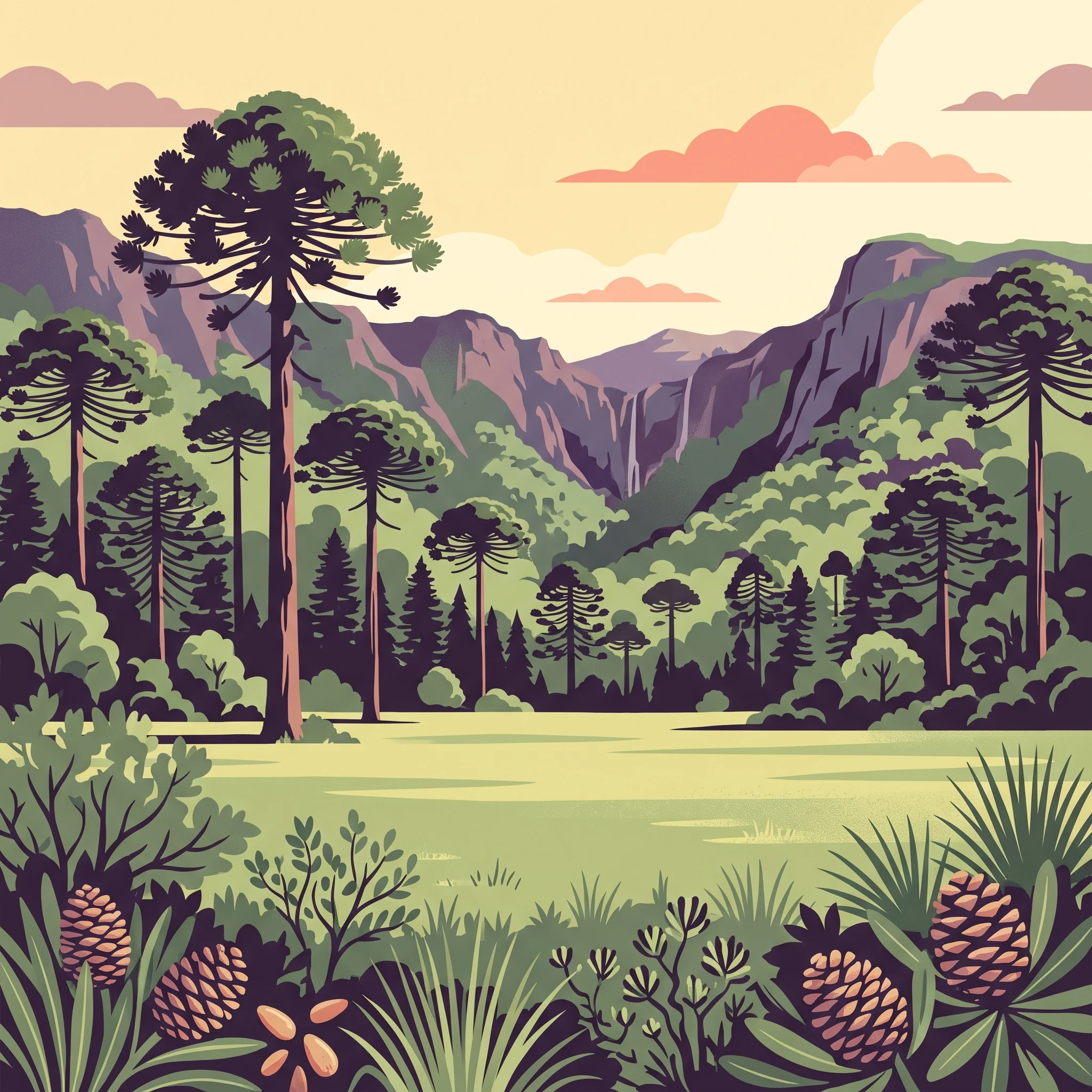
The park is best known for its ancient bunya pine forests, which represent the largest remaining population of this species anywhere in the world. The bunya pines, some reaching 25 metres in height and 600 years of age, create a distinctive and majestic landscape. Equally significant is the network of grassy balds, which are natural clearings maintained through centuries of Indigenous fire management. These balds support higher biodiversity than the surrounding rainforests and represent one of the most important cultural landscapes in Australia. The mountains also contain permanent waterfalls and support populations of rare species including the black-breasted button-quail, considered to have its largest population in the park.
Bunya Mountains National Park history and protected-area timeline
The Bunya Mountains have been a place of profound Indigenous significance for thousands of years, serving as the largest pan-tribal gathering site in eastern Australia. The Wakka Wakka, Jarowair, and Barrumgum peoples are the traditional owners of this landscape and maintained it through sophisticated traditional land-use management practices for millennia. The Bunya Feasts drew thousands of people from surrounding tribes across Queensland and New South Wales, making these mountains one of the most important cultural landscapes on the continent. Archaeological evidence, including core samples, confirms that Indigenous fire management was practiced on the Bunya Mountains as far back as 9,000 years during the Holocene era. This practice of fire-stick farming created what is considered the largest estate management system in Australia, performed through ceremonies for land control, food production, and native yam harvesting. The arrival of European settlers in the 1860s brought dramatic change, with Indigenous communities forcibly removed from the mountains and logging operations commencing for red cedar, bunya pine, and hoop pine. The Bunya Sawmill opened in 1883, and by 1908 the 9,112-hectare national park was declared, making it Queensland's second-oldest national park. An additional area was donated by WA Russell MLA in 1927. Timber extraction continued within the park until approximately 1917, with the last sawmill closing in 1961. The first walking tracks were constructed in 1939, beginning the park's transition from a timber resource to a protected area and visitor destination.
Bunya Mountains National Park landscape and geographic character
The Bunya Mountains form a prominent mountain range rising from the South Burnett agricultural region of Queensland. The park encompasses the mountain's ridgelines, steep valleys, and rocky outcrops, creating a landscape dramatically different from the surrounding plains. The topography is characterized by steep and winding mountain roads that access the higher elevations where the park's most distinctive features are found. The most unusual landscape elements are the grassy balds, approximately 100 natural clearings scattered throughout the mountain forests. These balds are caused by a combination of bushfires and geological conditions, particularly where slabs of unfractured basalt create conditions where root penetration is impossible, leaving patches of open grassland within the forest. The park contains permanent waterfalls, including Tim Shea Falls and Mcgrory Falls, which add to the scenic character of the mountain environment. Views from the mountain lookouts extend across the South Burnett region and Darling Downs, taking in the surrounding agricultural landscapes that contrast sharply with the forested mountain slopes.
Bunya Mountains National Park ecosystems, habitats, and plant life
The Bunya Mountains support a remarkable diversity of ecosystems within a relatively small area. The park contains the most westerly extent of subtropical rainforest in southern Queensland, a vegetation type that is unusual so far inland and at this latitude. The rainforests contain pockets of ferns, vines, stinging nettles, and wild raspberries, with canopy species including white beech and silky oaks. The bunya pine forests represent a dominant feature of the landscape, with some trees estimated to be up to 600 years old and reaching 25 metres in height. These conifers are among the oldest living organisms in the Australian subtropics. The grassy balds, while seemingly unusual in a forest environment, are of significant ecological importance, supporting higher biodiversity than the dense rainforests because they provide habitat for bird and rodent species not found in the forest interior. Grass trees growing on Mount Kiangarow can reach nearly 5 metres tall, with some individuals being several hundred years old. The interaction between fire-maintained grasslands and fire-excluded rainforest creates a complex mosaic of habitats that supports the park's exceptional species diversity.
Bunya Mountains National Park wildlife and species highlights
Bunya Mountains National Park supports an exceptional diversity of wildlife, with more than 200 species of frogs and reptiles recorded within its boundaries. The marsupial fauna includes pademelons, rock wallabies, swamp wallabies, and an endemic subspecies of ringtail possum found only on the mountain peaks. Reptile species present include blue-tongued skinks, land mullets, carpet snakes, red-bellied black snakes, and brown tree snakes. The avifauna is particularly notable, with 120 species recorded in the park. The mountains are part of an Important Bird Area containing what is thought to be the largest population of the black-breasted button-quail. Significant bird species include wedge-tailed eagles, peregrine falcons, grey goshawks, brown cuckoo-doves, rose robins, eastern yellow robins, large-billed gerygones, and Australian golden whistlers. The park supports the most westerly populations of many rainforest-dwelling species including green catbirds, regent bowerbirds, paradise riflebirds, eastern whipbirds, noisy pittas, and Australian logrunners. More commonly observed species include pied currawongs, laughing kookaburras, Australian king parrots, crimson rosellas, sulphur-crested cockatoos, and brush turkeys.
Bunya Mountains National Park conservation status and protection priorities
Bunya Mountains National Park represents a significant conservation area due to its unique combination of ancient landscapes, rare species, and Indigenous cultural values. The park protects the largest remaining population of bunya pines in the world, a species of ancient evolutionary origin. The grassy balds, created and maintained through thousands of years of Indigenous fire management, are considered a cultural landscape and an enduring symbol of Indigenous land management. These grasslands have persisted since the last ice age but are now under threat due to the cessation of traditional burning practices since the 1860s. Current conservation efforts focus on restoring the fire regime through prescribed burning, with 27 percent of unburnt balds being burnt for the first time in many years during the late 1990s. There have been difficulties in recovering some balds that have developed established forest canopies due to decades of non-burning. Management priorities include partnerships with traditional owners using traditional fire techniques, supported by Australian Government initiatives such as the Working on Country Program. The park's significance as an Important Bird Area and its role in protecting the most westerly populations of many rainforest species add to its conservation importance.
Bunya Mountains National Park cultural meaning and human context
The Bunya Mountains hold exceptional significance in Indigenous Australian heritage as the largest pan-tribal gathering place in eastern Australia. The Wakka Wakka, Jarowair, and Barrumgum peoples are the traditional owners of this landscape and have inhabited and managed the mountains through traditional land-use management for thousands of years. The Bunya Feasts were major cultural events that would see thousands of people from surrounding tribes in Queensland and New South Wales gather in the mountains. These gatherings involved ceremonial activities, food harvesting, and social exchange across Indigenous nations. The grasslands, known as balds, are a product of Indigenous fire management practices, created through a technique called fire-stick farming or fire farming. Recent core samples have confirmed Indigenous fire management was occurring on the Bunya Mountains as far back as 9,000 years during the Holocene. This fire management created what is considered the largest estate management system in the world in the Australian continent, performed for ceremonies, land control, food production, and native yam harvesting. The balds remain culturally significant to Indigenous people today, representing an enduring symbol of their land management practices. The arrival of European settlers ended active Indigenous fire management from the 1860s onwards.
Top sights and standout views in Bunya Mountains National Park
The ancient bunya pine forests represent the park's most distinctive natural feature, with some trees reaching 600 years of age and 25 metres in height. The network of grassy balds, created through thousands of years of Indigenous fire management, is both a remarkable landscape feature and an important conservation priority. The park supports exceptional biodiversity including over 120 bird species and more than 200 frog and reptile species. Permanent waterfalls such as Tim Shea Falls and Mcgrory Falls add to the scenic appeal. The mountain's cultural significance as a historic Indigenous gathering place equals its ecological importance. The park's establishment in 1908 makes it Queensland's second-oldest national park, reflecting its long-recognized conservation and cultural value.
Best time to visit Bunya Mountains National Park
The Bunya Mountains can be visited throughout the year, though the climate is cooler than the surrounding lowlands due to the elevation. The mild climate means morning and evening temperatures are noticeably lower than daytime highs, and visitors should be prepared for these temperature variations. The park is accessible via steep and winding roads from Toowoomba, Kingaroy, Dalby, and Nanango, though travel with caravans and trailers is not recommended due to the gradients. The best time to experience the park's natural features depends on what visitors hope to see; the wetter months typically bring enhanced waterfall flows, while the drier periods may offer better conditions for walking and wildlife viewing. The campgrounds at Dandabah, Burton's Well, and Westcott, along with the visitor information centre, provide facilities for those wishing to explore the network of walking tracks and scenic lookouts.