Why Butterleaf National Park stands out
Butterleaf National Park is best known for its old-growth forest containing massive trees with natural hollows that provide essential habitat for arboreal marsupials and nocturnal birds. The park supports populations of powerful owls, yellow-bellied gliders, and greater gliders, species that have declined significantly across much of their former range due to habitat loss and forest fragmentation. The hollow-bearing trees represent a critical resource in the landscape, as these features take decades to develop and are scarce in younger forests. This makes the park's old-growth stands particularly valuable for biodiversity conservation in the New England region.
Butterleaf National Park history and protected-area timeline
Butterleaf National Park was established in 1999 as part of the expansion of NSW national parks that occurred during the late 1990s. The park was created to protect remaining old-growth forest remnants in the New England region, an area that had experienced extensive land clearing for agriculture. The NSW National Parks and Wildlife Service assumed management responsibility for the park at its establishment. The selection of this area for protection reflected scientific surveys that identified significant biodiversity values, particularly the presence of hollow-dependent wildlife species. The park represents a relatively recent addition to the NSW protected area network compared to many older parks that were established in the mid-twentieth century or earlier.
Butterleaf National Park landscape and geographic character
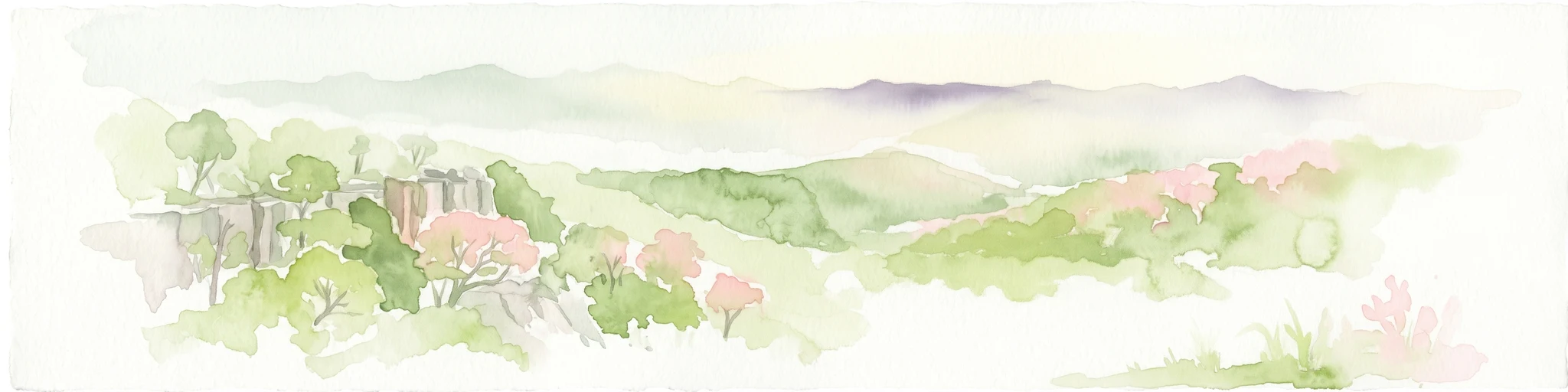
The landscape of Butterleaf National Park consists of gently undulating terrain with tall eucalypt forest covering the slopes and valleys. The forest features large, mature trees with thick bark and expansive canopies, many of which contain natural hollows formed through decades of growth and decay. The forest floor supports a layer of leaf litter, fallen branches, and native grasses, with scattered shrubs providing additional structural complexity. The landscape reflects the broader characteristics of the New England region, which features a mix of cleared agricultural land and remaining forest patches on steeper or less productive terrain.
Butterleaf National Park ecosystems, habitats, and plant life
The park protects old-growth eucalypt forest that represents a diminishing ecosystem type in the New England region. The forest contains a mix of eucalypt species adapted to the local climate and soil conditions. The complex vertical structure of the old-growth forest, with multiple canopy layers and accumulated dead wood, supports diverse ecological communities. The hollow-bearing trees are the most distinctive feature of the forest, providing essential habitat for species that cannot survive in younger forest stands. The park contributes to regional biodiversity by protecting a rare ecosystem type that has been largely eliminated from surrounding landscapes.
Butterleaf National Park wildlife and species highlights
Butterleaf National Park is notable for supporting populations of three hollow-dependent species: the powerful owl, yellow-bellied glider, and greater glider. The powerful owl is one of Australia's largest owl species and relies on large tree hollows for nesting. The yellow-bellied glider is a small arboreal marsupial that feeds on nectar, pollen, and insects, using tree hollows for shelter during daylight hours. The greater glider is a larger marsupial that also depends on hollow-bearing trees for shelter and maintains relatively small home ranges within suitable forest habitat. These species represent a guild of hollow-dependent fauna that depends on the presence of mature trees with suitable cavities.
Butterleaf National Park conservation status and protection priorities
The protection of Butterleaf National Park contributes to the conservation of old-growth forest ecosystems in the New England region, an area that has experienced significant habitat loss. The park provides protected habitat for hollow-dependent species that require large, mature trees with natural cavities, a resource that is limited in younger forests and agricultural landscapes. The old-growth forest also stores carbon and provides ecosystem services including water regulation and soil protection. The park forms part of the NSW protected area network managed by the NSW National Parks and Wildlife Service, which aims to maintain biodiversity and ecosystem integrity across the state's protected lands.
Top sights and standout views in Butterleaf National Park
Butterleaf National Park protects critical old-growth forest habitat featuring hollow-bearing trees that support populations of powerful owls, yellow-bellied gliders, and greater gliders. The park represents one of the few remaining old-growth forest remnants in the extensively cleared New England region. The tall eucalypt forest with its complex canopy structure and accumulated dead wood provides essential habitat for cavity-nesting birds and arboreal marsupials. The park's establishment in 1999 reflects recognition of the ecological importance of preserving these remaining forest remnants.