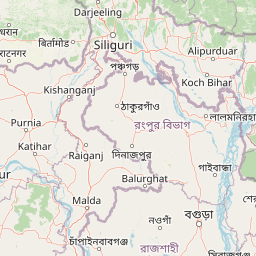
Why Buxa Tiger Reserve stands out
Buxa Tiger Reserve is best known as a critical tiger and elephant habitat at the eastern edge of the Indian subcontinent, serving as a vital corridor for transboundary wildlife movement between India and Bhutan. The reserve is recognized for its exceptional biodiversity in the Indo-Malayan region, with particularly significant populations of Asian elephants, gaur, and various felids including the clouded leopard and Indian leopard. The park's diverse forest types, ranging from moist sal savannah to East Himalayan subtropical wet hill forest, support over 450 tree species and 284 bird species, making it one of the botanically richest protected areas in eastern India.
Buxa Tiger Reserve history and protected-area timeline
Buxa Tiger Reserve was created in 1983 as the 15th tiger reserve established in India, reflecting the country's commitment to protecting its flagship species and their habitats. In 1986, Buxa Wildlife Sanctuary was formally constituted over 314.52 square kilometers of the reserve forests, providing legal protection to the core conservation area. Additional protection came in 1991 when 54.47 square kilometers were incorporated into the wildlife sanctuary. The Government of West Bengal declared its intention in 1992 to constitute a national park over 117.10 square kilometers of the Buxa Wildlife Sanctuary, and the national park was finally declared in December 1997 through notification No.3403-For/11B-6/95. This gradual expansion of protected status reflects the evolving understanding of the area's ecological significance and the need for comprehensive conservation measures.
Buxa Tiger Reserve landscape and geographic character
The terrain of Buxa Tiger Reserve spans a remarkable elevation gradient from 60 meters in the Gangetic Plains to 1,750 meters where the reserve meets the Himalayan foothills. The Sinchula hill range rises along the northern boundary, creating a dramatic mountainous backdrop that contrasts with the lower-lying plains and river valleys. The landscape includes hilly tracts, the Bhabhar zone (a characteristic Terai transition area), and extensive riverine tracts traversed by the Jayanti River and Raidak River. The geology of the region is particularly noteworthy, as Buxa is contiguous with the Buxa Formation of Mamley in Sikkim, featuring stromatolite-bearing dolomite limestones that have been declared a national geological monument. This combination of mountainous terrain, rolling hills, river valleys, and plains creates a visually diverse landscape that supports varied ecological communities.
Buxa Tiger Reserve ecosystems, habitats, and plant life
The ecological diversity of Buxa Tiger Reserve is extraordinary, encompassing at least nine distinct forest types that reflect the transition from Himalayan to tropical biomes. These forest types include northern dry deciduous forest, eastern Bhabhar and Terai sal forest, East Himalayan moist mixed deciduous forest, sub-Himalayan secondary wet mixed forest, eastern sub-montane semi-evergreen forest, northern tropical evergreen forest, East Himalayan subtropical wet hill forest, moist sal savannah, low alluvium, and savannah woodland. The botanical richness is exceptional, with more than 450 tree species, 250 shrub species, 400 herb species, 150 orchid species, and significant representations of bamboo, cane, grass, and aquatic flora. This botanical diversity underpins the complex ecological relationships that sustain the reserve's wildlife populations.
Buxa Tiger Reserve wildlife and species highlights
Buxa Tiger Reserve supports impressive wildlife diversity with 73 mammal species, 284 recorded bird species, 65 fish species, 41 reptile species, and 4 amphibian species. The mammalian community includes significant populations of Asian elephants, gaur, sambar deer, chital, wild boar, and various felids including the Bengal tiger, Indian leopard, clouded leopard, and Asian golden cat. Notably, both plain and spotted Asiatic golden cats were recorded in the reserve for the first time in February 2018. The avifauna is particularly noteworthy, featuring species such as the rufous-necked hornbill, great hornbill, Oriental pied hornbill, and chestnut-breasted partridge. Migratory birds including the black-necked crane, black stork, and ferruginous pochard utilize the lake and river habitats. The reserve also supports several endangered species including the Bengal florican, Chinese pangolin, hispid hare, hog deer, and various vulture species.
Buxa Tiger Reserve conservation status and protection priorities
Buxa Tiger Reserve serves as a critical node in regional conservation efforts, functioning as an international corridor that enables Asian elephant migration between India and Bhutan. This transboundary connectivity is essential for maintaining viable populations of large mammals in the eastern Himalayan region. The reserve's inclusion in the network of India's tiger reserves demonstrates its national importance for flagship species conservation, while the diversity of endangered species present, including the Bengal florican, Chinese pangolin, and multiple vulture species, underscores its broader conservation significance. The geological importance of the Buxa Formation, with its stromatolite-bearing dolomite limestones, adds a dimension of geological conservation to the protected area's mandate.
Buxa Tiger Reserve cultural meaning and human context
While Buxa Tiger Reserve is primarily known for its ecological values, the region has historical significance as part of the broader Dooars region of West Bengal, which has been inhabited by various communities engaged in traditional forest use and agriculture. The Jayanti River and Raidak River that traverse the reserve have supported local communities historically, and the reserve's boundary with Bhutan reflects the historical connections between the region's peoples. The forest areas have historically provided livelihoods through non-timber forest product collection, though this use creates ongoing conservation challenges.
Top sights and standout views in Buxa Tiger Reserve
Buxa Tiger Reserve stands out as the easternmost tiger reserve in India, located at a critical biogeographic crossroads between the Himalayas and the Gangetic Plains. The reserve's significance as an international elephant corridor linking protected areas in India and Bhutan makes it essential for transboundary conservation. Its exceptional botanical diversity, with over 450 tree species and 150 orchids, supports remarkable faunal richness including elephants, tigers, leopards, and the endangered rufous-necked hornbill. The presence of the Buxa Formation geological monument adds geological significance to the protected area.
Best time to visit Buxa Tiger Reserve
The optimal time to visit Buxa Tiger Reserve is during the winter months from November through February, when the weather is cool and dry and wildlife visibility improves as animals congregate near water sources. The monsoon season from June to September brings heavy rainfall to the region, which can make some areas inaccessible and increase the risk of flooding in riverine tracts. Summer months from March to May can be extremely hot and may limit wildlife sighting opportunities, though they do provide access to different areas of the reserve.