Why Conkouati-Douli National Park stands out
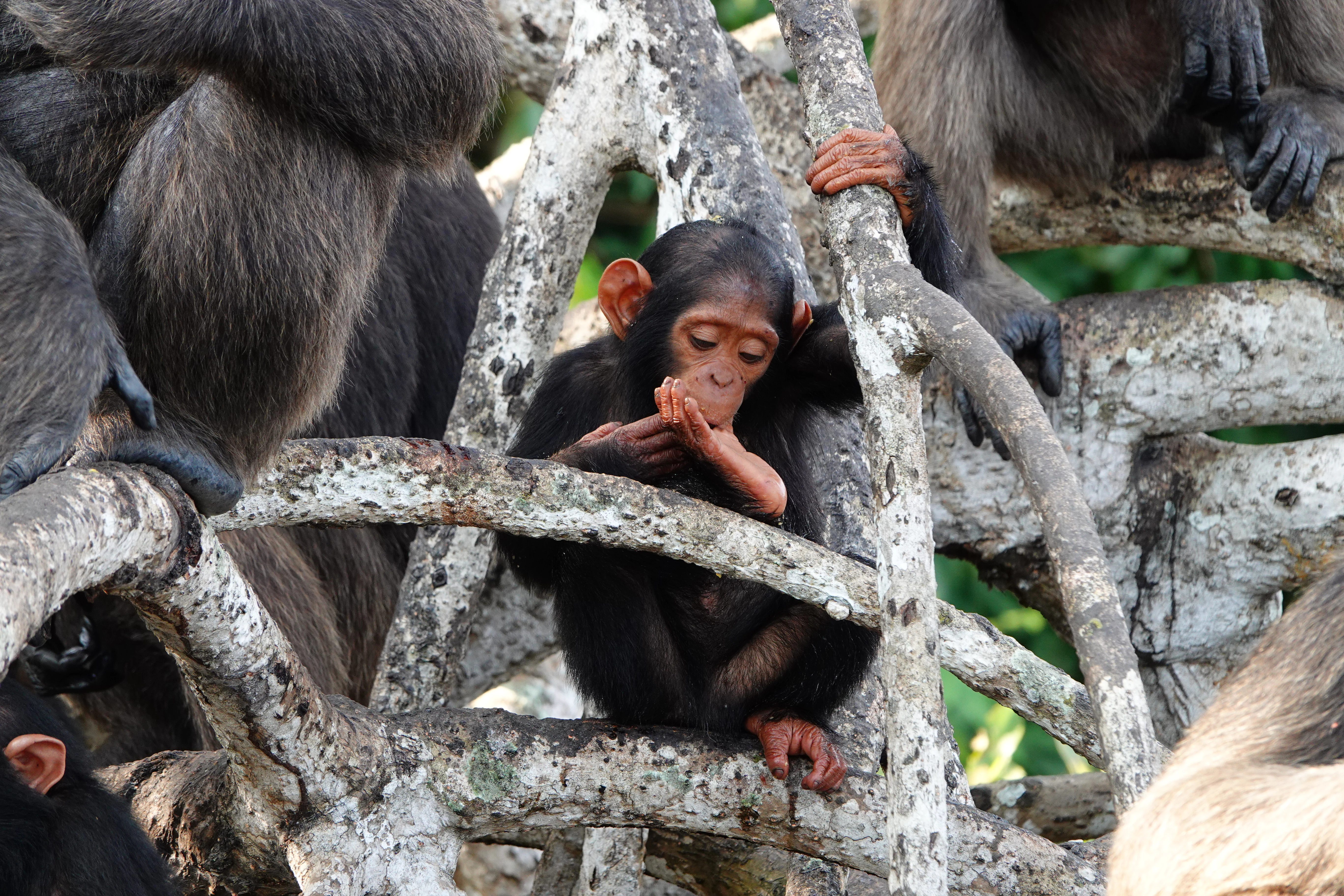
Conkouati-Douli National Park is best known for its extraordinary great ape populations, particularly the approximately 7,000 central chimpanzees and 900 western lowland gorillas that inhabit its dense forest ecosystems, making it a priority site in the IUCN great ape conservation action plan. The park is also globally significant for its marine biodiversity, featuring the only protected marine area in the Republic of Congo and hosting one of the world's most important nesting beaches for leatherback sea turtles. Its coastal mangroves, floodplain forests, and wetland systems support a remarkable concentration of biodiversity that includes forest elephants, mandrills, and over 100 humpback dolphins. The park's position at the mouth of the Congo River creates a unique ecological interface between terrestrial and marine environments, supporting both Congo Basin forest species and coastal marine life.
Conkouati-Douli National Park history and protected-area timeline
Conkouati-Douli National Park has evolved through several distinct phases of protection and management. The area was originally part of a larger reserve established in the early 1980s, which covered nearly 300,000 hectares before a legal provision in 1989 reduced it to 144,294 hectares. During the period from 1994 to 1999, the International Union for Conservation of Nature recognized the area as critically endangered and collaborated with PROGECAP-GEF Congo, financed by the World Bank, in partnership with Congolese authorities to address the urgent conservation needs. Following its formal establishment as a national park in 1999, Conkouati-Douli was managed by the Ministry for National Forestry Commission in partnership with the Wildlife Conservation Society until that collaboration concluded in 2018. The transition to new management arrangements saw Noé, a conservation organization founded in 2001, assume responsibility for the park's conservation initiatives beginning in 2019. The partnership was formalized through a 20-year management mandate signed on 13 April 2021, representing a renewed commitment to biodiversity conservation and sustainable development. The park holds deep cultural significance for the approximately 7,800 residents living in its 31 villages, predominantly the Vili people who settled along the coast in the 13th century as fishers and traders, while villages along the forest road contain a mix of over 30 different ethnic groups who arrived with the industrial forestry sector less than a century ago.
Conkouati-Douli National Park landscape and geographic character
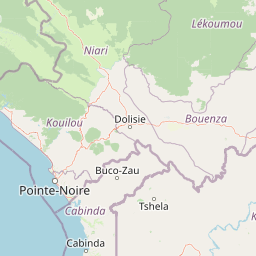
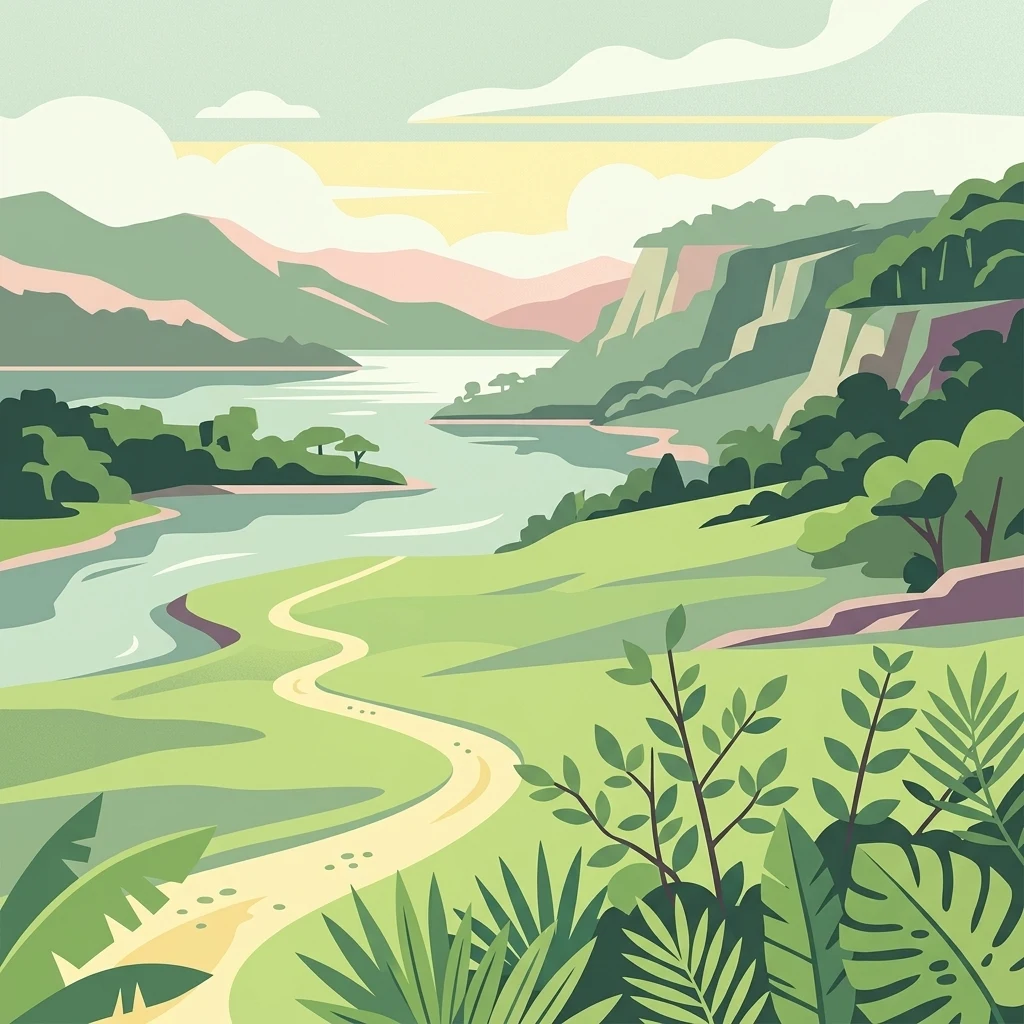
The landscape of Conkouati-Douli National Park displays remarkable diversity, shaped by the transition from Congo Basin forests to coastal marine environments. The terrestrial portion encompasses approximately 3,833 square kilometers of land dominated by dense tropical forests that intermingle with extensive wetland systems, floodplain forests, and coastal lagoons. The Noumbi River flows through the heart of the park, its waters weaving through the forested landscape and connecting to the broader drainage system. Along the coast, extensive mangrove forests dominated by Rhizophora racemosa and Avicennia germinans create a distinctive tidal ecosystem where land and sea meet. The marine portion of the park covers 4,121 square kilometers, encompassing coastal waters, beaches, and the productive waters of the Atlantic where the Congo River's sediments create unusually fertile fishing grounds. In the southwestern and northeastern reaches, the forest gives way to savanna formations characterized by different grass species: the southwestern savannas feature Ctenium newtonii, Elytonrus brazzae, and Pobeguinea arrecta, while the northeastern savannas around Cotovindou are dominated by Hyparrhenia diplandra, Panicum phragmitoides, and Pobeguinea arrecta. The park's terrain ranges from flat coastal lowlands to slightly elevated forest ridges, with the landscape creating natural corridors that enable wildlife movement between the forest interior and the coast.
Conkouati-Douli National Park ecosystems, habitats, and plant life
Conkouati-Douli National Park stands as the most biodiverse protected area in the Republic of the Congo, representing a critical stronghold for Central African biodiversity. The park's ecological significance stems from its unique position as the country's only protected marine area, creating a seamless continuum between terrestrial and marine ecosystems. The vegetation patterns reflect this diversity: dense evergreen forests dominate the interior, characterized by the complex stratified structure typical of Congo Basin rainforests, while wetlands and floodplain forests occupy the lower-lying areas where seasonal flooding creates distinct habitat zonation. The mangrove systems along the coast represent some of the most productive ecosystems in the region, providing nursery grounds for fish and crustaceans while stabilizing the shoreline and filtering sediments from incoming waters. Freshwater aquatic vegetation in lakes and lagoons includes species such as Vossia cuspidata, adapted to the variable water conditions. The savanna enclaves within the forest matrix represent fire-maintained or edaphic grassland formations that persist due to local soil conditions or historical disturbance patterns. This mosaic of habitats supports extraordinary species richness, making the park a priority conservation area not only for Congo but for the broader Central African region.
Conkouati-Douli National Park wildlife and species highlights
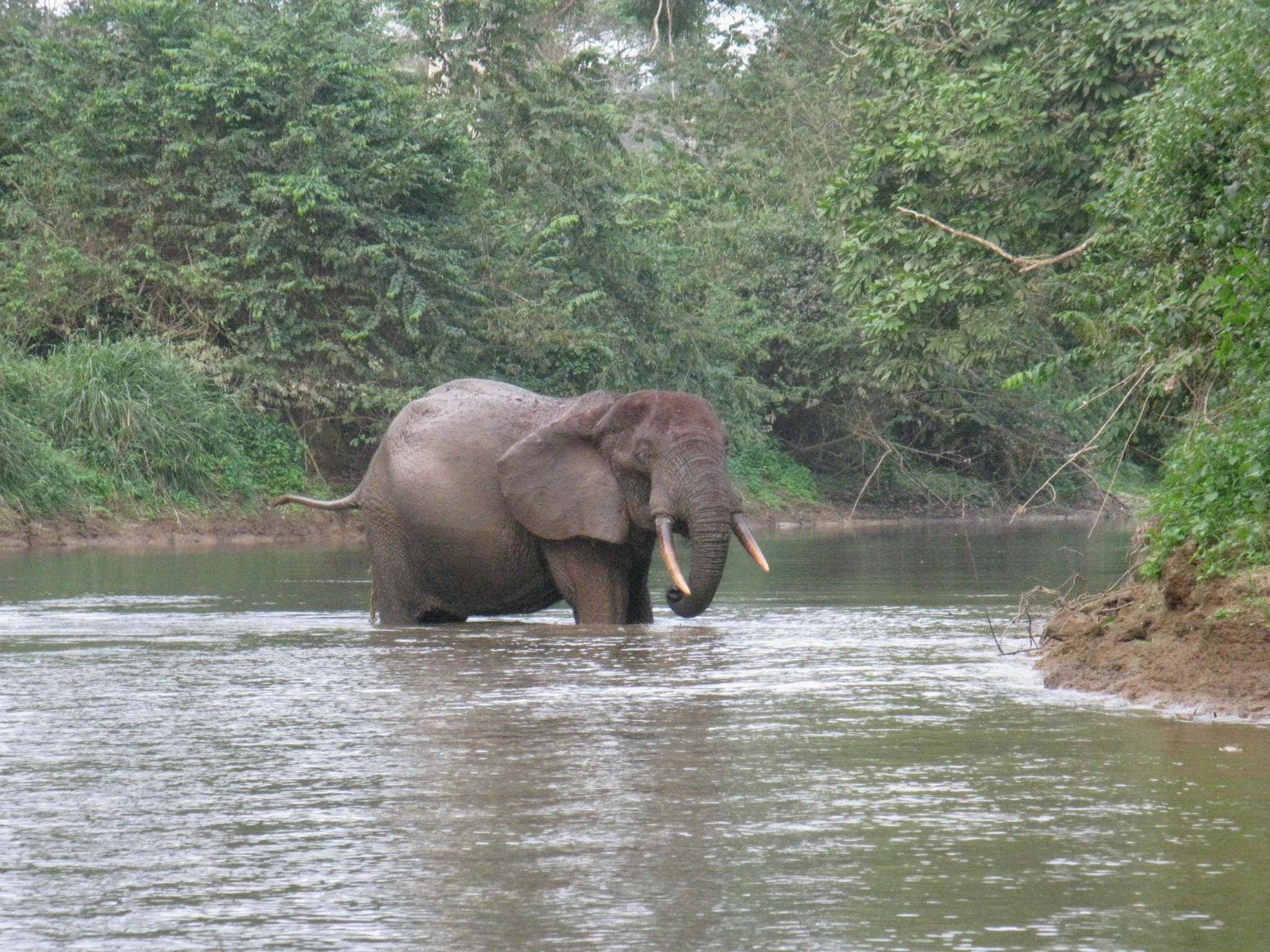
The wildlife of Conkouati-Douli National Park represents one of the most significant concentrations of biodiversity in Central Africa. The park hosts exceptional populations of great apes, with an estimated 7,000 central chimpanzees and 900 western lowland gorillas inhabiting its forest ecosystems, prompting its designation as a priority site in the IUCN great ape conservation action plan. Forest elephants, numbering approximately 900 individuals, traverse the park's interior, though their populations face significant pressure from poaching. The mammalian fauna includes African buffaloes, leopards, red river hogs, sitatungas adapted to wetland environments, and large troops of mandrills that move through the forest understory. The park's significance extends to marine species, with its beaches ranking among the world's most important nesting sites for leatherback sea turtles, while the coastal waters support a population of approximately 100 humpback dolphins. As a Ramsar site and Important Bird Area, the park provides critical habitat for migratory and wetland birds, with numerous species dependent on the lagoon systems and coastal environments. The diverse habitats support a rich avifauna, though precise species counts vary with seasonal movements and survey efforts.
Conkouati-Douli National Park conservation status and protection priorities
Conkouati-Douli National Park represents a critical conservation priority for both the Republic of the Congo and the broader Central African region, recognized through multiple international designations including UNESCO status, Ramsar Convention listing, and Important Bird Area recognition by BirdLife International. The park's conservation value stems from its exceptional biodiversity, including significant populations of great apes, forest elephants, and marine species, as well as its role as the only marine protected area in Congo. However, the park faces substantial threats from industrial activities including logging, mining, petroleum production, and commercial fishing, with poachers using the coastal and forest roads to access rare animals. The proximity to Pointe-Noire creates ongoing pressure from bushmeat hunting and wood extraction to meet the city's growing demands. Chinese-owned trawler boats pose a significant threat to marine ecosystems, while the planned oil drilling by Congo Holding United since 2024 represents a new and potentially severe threat to both biodiversity and indigenous communities. Conservation efforts are coordinated through the Ministry of Forest Economy and Sustainable Development in partnership with the NGO Noé, supported by technical and financial partners including the Wildlife Conservation Society, African Parks Network, Jane Goodall Institute, and various international donors including the European Union and United States Fish and Wildlife Service.
Conkouati-Douli National Park cultural meaning and human context
Conkouati-Douli National Park is deeply intertwined with the cultural landscape of the Congolese coast, home to approximately 7,800 people distributed across 31 villages within and adjacent to its boundaries. The coastal residents are predominantly Vili people, an ethnic group with roots as fishers and traders who settled in the region during the 13th century and maintain traditional connections to the marine environment. The villages along the forest road contain a more diverse population, with over 30 different ethnic groups represented, many of which arrived within the past century in association with the industrial forestry sector that developed in the region. These communities maintain relationships with the land that include both traditional resource use and more recent patterns of settlement and economic activity. The park's management framework recognizes the importance of community involvement, with the eco-development zone explicitly permitting sustainable resource use by residents and incorporating socio-economic activities into the broader conservation approach. The cultural context reflects the complex interplay between long-established coastal traditions and more recent patterns of migration and economic development that together shape the human dimension of this protected landscape.
Top sights and standout views in Conkouati-Douli National Park
Conkouati-Douli National Park offers exceptional opportunities to experience some of Central Africa's most iconic wildlife in a coastal setting unique within the region. Visitors can explore vast mangrove forests by boat, observe chimpanzee and gorilla populations in their natural forest habitat, witness leatherback sea turtles nesting on pristine beaches, and encounter humpback dolphins in the coastal waters. The park's zonation system allows for different visitor experiences, from regulated wildlife viewing in protected areas to cultural engagement with local communities in the eco-development zone. The diversity of habitats, from dense forest to coastal savanna to marine environments, supports remarkable species richness within a relatively compact area. The park's status as the most biodiverse in Congo, combined with its UNESCO recognition and Ramsar designation, underscores its international conservation significance while providing visitors with meaningful encounters with some of Africa's most threatened species and ecosystems.
Best time to visit Conkouati-Douli National Park
The optimal time to visit Conkouati-Douli National Park depends on the specific experiences sought, though the dry season from June to September generally offers more accessible trail conditions and clearer visibility for wildlife viewing in the forest interior. This period coincides with lower water levels in wetlands and lagoons, which can concentrate wildlife around remaining water sources and facilitate sightings of forest elephants, chimpanzees, and gorillas. The coastal marine activities may be more comfortable during the slightly cooler dry season months, though leatherback sea turtle nesting occurs year-round with peaks that may vary. The wet season brings renewed vitality to the forest and increased bird activity, with migratory species arriving to exploit the abundant food resources in the wetlands and lagoons. Visitors should note that the park's remote location and limited infrastructure require advance planning, and the zonation system means that access to certain areas requires permits and guided arrangements. The park's management recommends checking current conditions and requirements before planning visits, as conservation activities and community schedules can affect availability.