
Why Dibru-Saikhowa National Park stands out
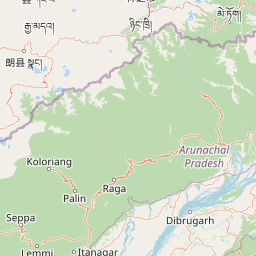
Dibru-Saikhowa National Park is best known for being the largest salix swamp forest in northeastern India, a rare and ecologically significant habitat type that supports specialized flora and fauna. The park serves as a critical refuge for endangered species including the Bengal tiger, clouded leopard, Asian elephant, and the endangered Ganges dolphin. Its bird diversity is exceptional, with notable species such as the white-bellied heron, Bengal florican, and white-winged wood duck calling the area home. The presence of feral horses descended from army horses released after World War II adds a distinctive historical element to the park's character. The combination of riverine ecosystems, swamp forests, and grasslands creates a unique mosaic of habitats within the Brahmaputra floodplain that is unmatched elsewhere in the region.
Dibru-Saikhowa National Park history and protected-area timeline
The conservation history of Dibru-Saikhowa spans more than a century, beginning with the declaration of the Dibru Reserved Forest in 1890. This initial protection established the foundation for the area's long-term conservation, though subsequent decades would see incremental additions and changes to the protected status. In 1920, additional territory was incorporated into the Dibru Reserve Forest, expanding the protected area. The establishment of Saikhowa Reserve Forest in 1929 added another component to the emerging network of protected lands in the region.
Further expansion occurred in 1933 when more territory was added to the Dibru Reserved Forest. The modern conservation trajectory accelerated in 1986 when an area of approximately 650 square kilometers was preliminarily declared as a wildlife sanctuary. This preliminary designation was refined in 1995 when 340 square kilometers were finally declared as a wildlife sanctuary. The year 1997 marked a significant milestone with the designation of the Dibru-Saikhowa Biosphere Reserve, encompassing 765 square kilometers including a core area of 340 square kilometers and a buffer zone of 425 square kilometers. In 1999, the core area was elevated to national park status, completing the evolution from reserved forest to fully protected national park.
A notable contemporary development occurred in December 2020 when the Gauhati High Court stayed permissions granted to Oil India Limited for hydrocarbon exploration at seven locations within the protected area, reflecting ongoing tensions between conservation interests and resource extraction pressures.
Dibru-Saikhowa National Park landscape and geographic character
The physical landscape of Dibru-Saikhowa National Park is fundamentally shaped by its position within the Brahmaputra River floodplain, where alluvial processes and hydrological dynamics create a terrain of exceptional complexity. The park occupies low-lying ground averaging 118 meters above sea level, with elevation ranging from 110 to 126 meters. This gentle topography is punctuated by the winding courses of the Brahmaputra and Lohit Rivers to the north and the Dibru River to the south, which serve as both boundaries and ecological drivers for the entire protected area.
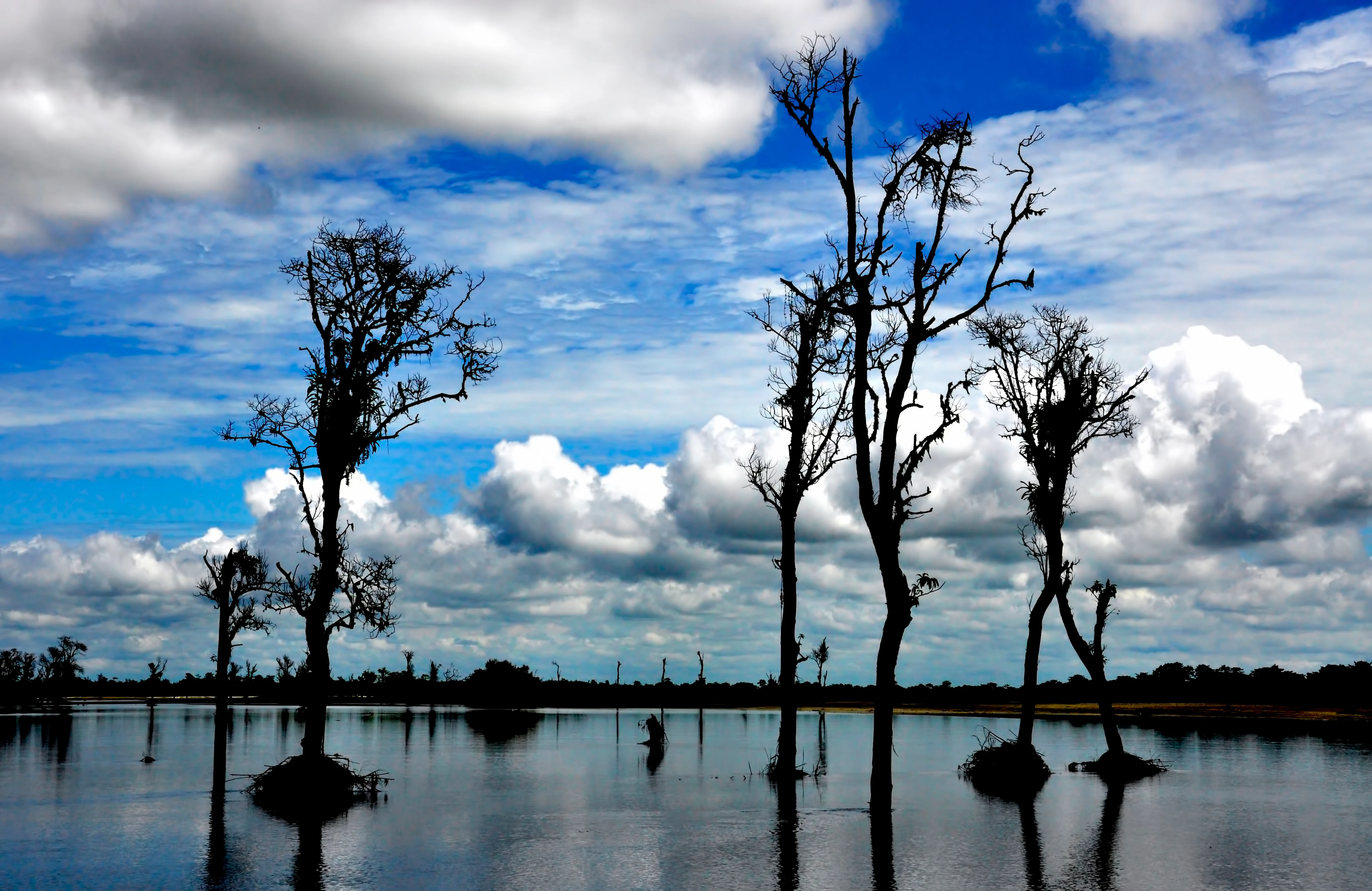
The landscape features a mosaic of landforms including river channels, islands, sandbars, marshy depressions, and forested zones. The extensive wetlands represent the most distinctive feature, particularly the salix swamp forests that constitute the largest such formation in northeastern India. These swamp forests develop in areas of consistent water availability and are characterized by dense stands of salix species growing in seasonally inundated conditions. Beyond the swamps, the terrain supports patches of semi-evergreen and deciduous forest, while open grasslands occur in areas with different hydrological regimes. The overall impression is one of a dynamic, water-dominated landscape where land and water intermingle in complex patterns across the floodplain.
Dibru-Saikhowa National Park ecosystems, habitats, and plant life
The ecological character of Dibru-Saikhowa is defined by the interplay of riverine processes, forest communities, and wetland systems within the Brahmaputra floodplain. The forest vegetation includes moist mixed semi-evergreen formations, moist mixed deciduous forests, littoral and swamp forests, and patches of wet evergreen forest. Approximately 36 percent of the park area consists of moist mixed forest, while degraded forest covers about 9.5 percent and grasslands account for roughly 21 percent. This mosaic creates diverse habitats that support different ecological communities across the protected area.
The salix swamp forests represent the most distinctive ecological feature, being the largest such formation in northeastern India. These wetlands support specialized plant species adapted to seasonal flooding and saturated soil conditions. Beyond the dominant tree species, the park supports remarkable orchid diversity with 35 epiphytic and eight terrestrial species recorded. The grasslands maintain their own distinct plant communities dominated by species such as Arundo donax, Imperata cylindrica, Phragmites karka, and Saccharum ravennae. The tropical monsoon climate drives the ecological rhythm, with annual rainfall between 2,300 and 3,800 millimeters creating the moisture conditions that sustain these diverse forest and wetland communities.
Dibru-Saikhowa National Park wildlife and species highlights
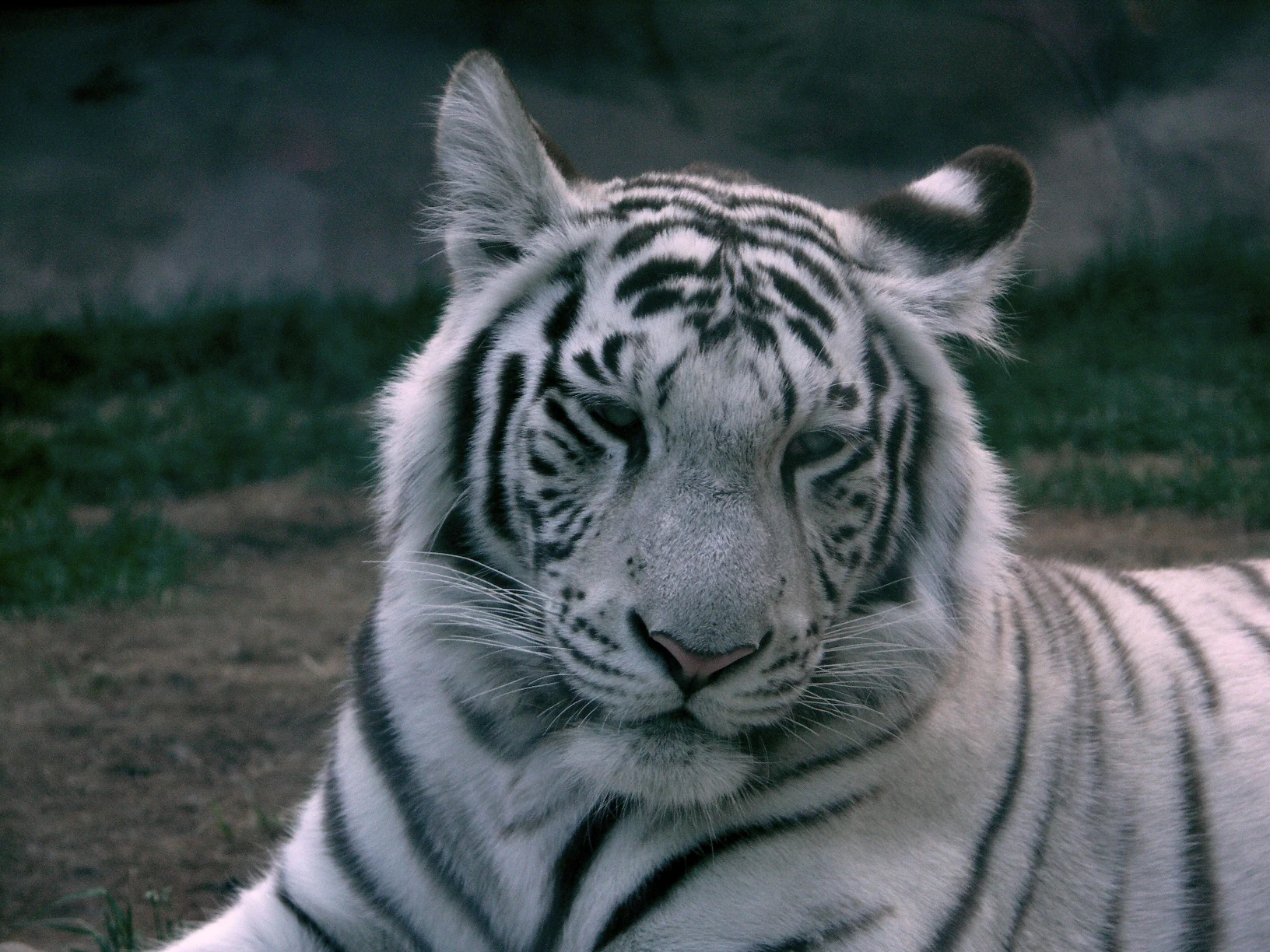
Dibru-Saikhowa National Park supports remarkable wildlife diversity, with 36 mammal species recorded including twelve that are listed in Schedule 1 of India's Wildlife Protection Act. The large predator community includes the Bengal tiger, Indian leopard, and clouded leopard, representing apex predators that depend on the park's diverse prey base. The prey species include sambar deer, hog deer, barking deer, and wild boar, which support the predator populations. Asian elephants move through the forested areas, while wild water buffalo occupy wetland zones.
The primate community is particularly diverse, with capped langur, Hoolock gibbon, pig-tailed macaque, Assamese macaque, and rhesus macaque all present. The park also supports smaller mammals including the sloth bear, dhole, small Indian civet, Malayan giant squirrel, Chinese pangolin, slow loris, and the distinctive feral horses that are descendants of army animals released after World War II.
Bird diversity is exceptional, with the park supporting numerous waterfowl, raptors, and forest birds. Notable species include the white-bellied heron, spot-billed pelican, white-winged wood duck, Bengal florican, and various storks, ibises, and ducks. The white-winged wood duck is particularly significant as a species of conservation concern. Raptors present include the white-tailed eagle, Pallas's fish eagle, grey-headed fish eagle, and greater spotted eagle, reflecting the park's importance as a hunting ground for these predators.
Dibru-Saikhowa National Park conservation status and protection priorities
Dibru-Saikhowa National Park holds significant conservation importance as the largest protected salix swamp forest in northeastern India and a critical habitat for numerous threatened species. The designation as a Biosphere Reserve in 1997 reflected recognition of the area's exceptional biodiversity value and the need for coordinated conservation approaches. The national park status established in 1999 provides the highest level of protection for the core conservation zone.
The park's conservation significance is underscored by the presence of multiple species listed in Schedule 1 of India's Wildlife Protection Act, including the Bengal tiger, clouded leopard, Asian elephant, and Ganges dolphin. The bird community includes several globally threatened species whose survival depends on protected habitats like those found in Dibru-Saikhowa. The wetland systems serve important ecological functions including flood regulation, water filtration, and carbon sequestration, while also supporting fish populations that maintain ecological connections with larger river systems.
Conservation challenges include pressures from surrounding landscapes and industrial interests. The legal intervention in 2020 to halt hydrocarbon exploration within the park demonstrates ongoing efforts to balance development pressures with conservation needs. The buffer zone arrangement within the biosphere reserve framework provides space for sustainable human activities while protecting core ecological values.
Dibru-Saikhowa National Park cultural meaning and human context
Dibru-Saikhowa National Park exists within a landscape that has been inhabited by human communities for generations, though the primary focus here is on the ecological rather than cultural dimensions. The area's history as a reserved forest dates to 1890, establishing a long tradition of recognized land management. The park's location in Assam places it within a region of significant cultural diversity, though the protected area itself is managed primarily for ecological conservation rather than as a cultural heritage site.
The presence of feral horses in the park represents an interesting historical artifact, as these animals are descendants of army horses released after the conclusion of World War II. This population has adapted to living in the wild and now constitutes a distinctive element of the park's wildlife, though they are not part of the original native fauna. The broader landscape of the Brahmaputra floodplain supports communities whose lives are intertwined with the river systems, though the specific cultural context of the national park area is not extensively documented in available sources.
Top sights and standout views in Dibru-Saikhowa National Park
Dibru-Saikhowa National Park offers several standout features that distinguish it within India's protected area network. The salix swamp forests represent the largest such formation in northeastern India, creating a rare and ecologically significant habitat type. The park supports all four of India's large cats, including Bengal tiger, leopard, clouded leopard, and jungle cat, a remarkable assemblage of apex predators. The bird diversity is exceptional, with species such as the white-bellied heron, white-winged wood duck, and Bengal florican representing conservation priorities. The presence of the Ganges dolphin in the river systems adds a significant aquatic mammal to the park's biodiversity profile.
The landscape itself is distinctive, combining river channels, islands, wetlands, and forests in a complex pattern that reflects the dynamics of the Brahmaputra floodplain. The feral horse population provides a unique historical dimension, connecting the park to World War II history. The park's evolution from reserved forest to national park represents a century-long conservation commitment that has protected this critical ecosystem through multiple designations and expansions.
Best time to visit Dibru-Saikhowa National Park
Dibru-Saikhowa National Park experiences a tropical monsoon climate with distinct seasons that influence the visitor experience. The summer months from April to June are hot and wet, while the monsoon season from July to September brings the heaviest rainfall, with annual precipitation ranging from 2,300 to 3,800 millimeters. The winter months from November to February are cooler and generally drier, offering more comfortable conditions for exploration. The post-monsoon period in October and November sees receding floodwaters and emerging grasslands that can provide excellent wildlife viewing opportunities. The dry winter months typically offer the most accessible conditions for park visits, though specific operational details would require local verification.