Why Doña Juana-Cascabel Volcanic Complex National Natural Park stands out
The park is distinguished primarily as a volcanic protected area harboring three named stratovolcanoes within a relatively compact territory. This volcanic complex represents a significant geological feature within the Colombian portion of the Andean volcanic belt, a region known for its high concentration of active and dormant volcanoes. The presence of three distinct volcanic centers, Doña Juana, Petacas, and Las Ánimas, within a single protected area makes this park particularly notable for geological and volcanic studies. The landscape showcases the characteristic features of stratovolcano terrain, including volcanic slopes, crater remnants, and the diverse habitats that develop on volcanic substrates.
Doña Juana-Cascabel Volcanic Complex National Natural Park history and protected-area timeline
The park was established on March 23, 2007, making it one of Colombia's more recently designated national parks. This establishment reflected Colombia's ongoing efforts to expand its protected areas network and provide formal conservation status to ecologically and geologically significant landscapes. The creation of the park recognized that the Doña Juana-Cascabel volcanic complex represented a natural feature of sufficient importance to warrant national-level protection within Colombia's National System of Protected Areas. Prior to formal designation, the volcanic complex likely existed as unprotected mountainous terrain used for various agricultural and pastoral activities, common throughout the Colombian Andes. The transition to protected status brought the area under the governance of SINAP, which manages Colombia's national park system.
Doña Juana-Cascabel Volcanic Complex National Natural Park landscape and geographic character
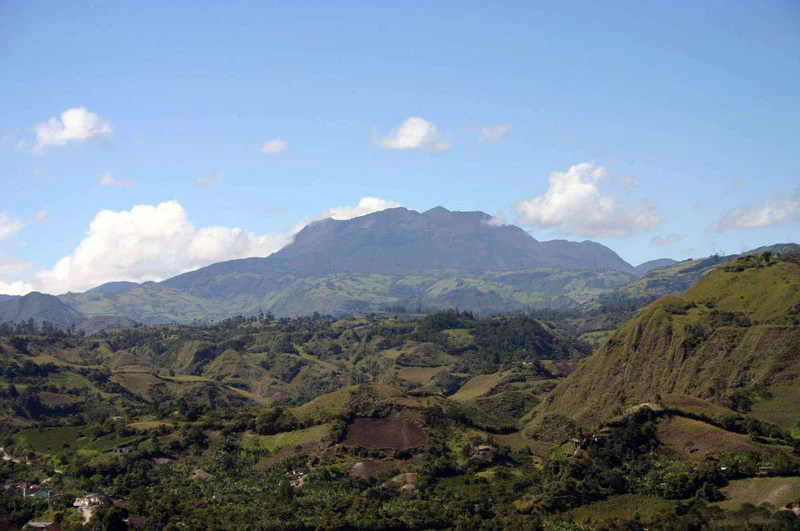
The landscape of Doña Juana-Cascabel Volcanic Complex National Natural Park is defined by its volcanic origin and Andean setting. The terrain encompasses the slopes, craters, and associated features of three stratovolcanoes that collectively form a dramatic volcanic skyline in southern Colombia. The volcanic slopes rise to elevations typical of the high Andes, with the terrain showing the characteristic patterns of volcanic landscapes including ridge lines radiating from volcanic centers, areas of older volcanic deposits, and the more rugged terrain associated with volcanic edifices. The combination of volcanic geology and high-altitude climate has shaped a landscape of considerable visual and geological interest, with the volcanic peaks providing prominent landmarks visible from surrounding lower-elevation terrain.
Doña Juana-Cascabel Volcanic Complex National Natural Park ecosystems, habitats, and plant life
The natural environment of the park reflects the intersection of high-Andean ecosystems with volcanic terrain. The volcanic soils, derived from the weathering of volcanic rocks and ash deposits, tend to be fertile and support vegetation communities adapted to the high-altitude conditions. The park lies within a biogeographic zone characterized by significant biodiversity due to the presence of multiple ecological transitions as the Andes rise from lower-elevation tropical environments to higher-elevation paramo and alpine communities. While specific botanical details are limited in available sources, the general pattern would include transitions from forest communities on lower slopes through shrubland and grassland communities at higher elevations, typical of the Andean vertical zonation.
Doña Juana-Cascabel Volcanic Complex National Natural Park wildlife and species highlights
The wildlife communities within Doña Juana-Cascabel Volcanic Complex would be expected to reflect the high-Andean character of the park's environment. The diverse habitats created by the volcanic landscape, varying elevations, and vegetation communities support characteristic Andean fauna including numerous bird species adapted to high-altitude environments, mammals ranging from smaller rodents to larger species that inhabit the Andean forests and paramo zones, and various reptile and amphibian species that thrive in the moisture-laden environments of the Colombian Andes. The presence of volcanic terrain with varied topography creates microhabitats that support biodiversity, while the protected status of the area provides refuge for species that might otherwise face habitat loss in the surrounding agricultural landscape.
Doña Juana-Cascabel Volcanic Complex National Natural Park conservation status and protection priorities
As an IUCN Category II protected area, Doña Juana-Cascabel Volcanic Complex National Natural Park benefits from formal national protection that restricts harmful activities within its boundaries. The national park designation recognizes both the geological significance of the volcanic complex and the ecological value of the Andean ecosystems it contains. Conservation of this area addresses several important objectives: protecting representative examples of Andean volcanic landscapes, preserving the biodiversity associated with high-altitude Andean environments, and maintaining the ecosystem services provided by these mountainous areas including water regulation and soil protection. The park contributes to Colombia's broader conservation network, which aims to protect the country's diverse ecological regions and the species they harbor.
Doña Juana-Cascabel Volcanic Complex National Natural Park cultural meaning and human context
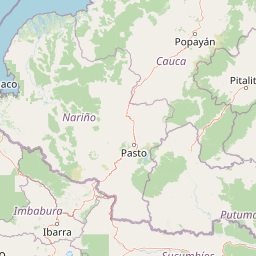
The park exists within a region of significant human presence, with the protected area boundaries encompassing municipalities in both Nariño and Cauca departments. The local communities surrounding the park maintain traditional land-use patterns typical of the Colombian Andes, including agriculture, livestock husbandry, and settlements dispersed throughout the mountain terrain. The volcanoes after which the park is named carry cultural significance as prominent landscape features that have shaped local identity and place names. The municipalities of El Tablón, San Bernardo, La Cruz, and San Pablo in Nariño Department, along with Bolívar and Santa Rosa in Cauca Department, represent the human communities situated in the vicinity of this protected volcanic landscape.
Top sights and standout views in Doña Juana-Cascabel Volcanic Complex National Natural Park
The defining highlight of Doña Juana-Cascabel Volcanic Complex National Natural Park is its status as a protected volcanic complex encompassing three named stratovolcanoes: Doña Juana, Petacas, and Las Ánimas. This concentration of volcanic centers within a single protected area provides exceptional opportunities for volcanic landscape study and appreciation. The park offers access to the distinctive scenery of Andean volcanic terrain, with the volcanic peaks serving as visual anchors for the protected landscape. The establishment of this national park in 2007 represents a relatively recent addition to Colombia's protected areas, reflecting contemporary conservation priorities that recognize the importance of preserving volcanic landscapes within the Andean region.
Best time to visit Doña Juana-Cascabel Volcanic Complex National Natural Park
While specific seasonal guidance is not readily available for this park, visitors to high-altitude Andean protected areas in Colombia generally benefit from understanding the equatorial climate patterns of the region. The Andean environment experiences relatively modest temperature variations throughout the year, with precipitation patterns being a more significant factor in visit planning. The park's high elevation means that temperatures will be cool to cold regardless of season, and visitors should prepare for the variable conditions typical of mountainous terrain.