
Why Douglas-Apsley National Park stands out
Douglas-Apsley National Park is best known for its exceptional dry forest ecosystem, which represents a relatively rare habitat type in Tasmania's conservation estate. The park preserves some of the finest examples of east coast dry sclerophyll forest, characterized by towering eucalypts, diverse understory species, and an impressive display of wildflowers including triggerplants, wattles, and grass-trees. The deeply incised gorges carved by the park's three main watercourses create visually striking landscapes with exposed rock faces, small waterfalls, and shaded riparian zones. The park's significance as an Important Bird Area, supporting eleven of Tasmania's endemic bird species, further establishes its conservation value.
Douglas-Apsley National Park history and protected-area timeline
Douglas-Apsley National Park was officially declared on December 27, 1989, making it one of the newer additions to Tasmania's national park system. The establishment of the park followed surveys and advocacy that highlighted the ecological significance of the east coast dry forests, which had been subject to partial clearing for agriculture and timber extraction in preceding decades. The park was named for the Douglas River and the Apsley River, two of the primary watercourses flowing through the area and feeding into the park's catchments. The creation of the park protected what remained of a largely intact dry forest landscape that had survived relatively minor disturbance compared to other east coast areas. The Tasmania Parks and Wildlife Service assumed management responsibility, implementing a conservation-focused approach that balanced public access with habitat protection.
Douglas-Apsley National Park landscape and geographic character
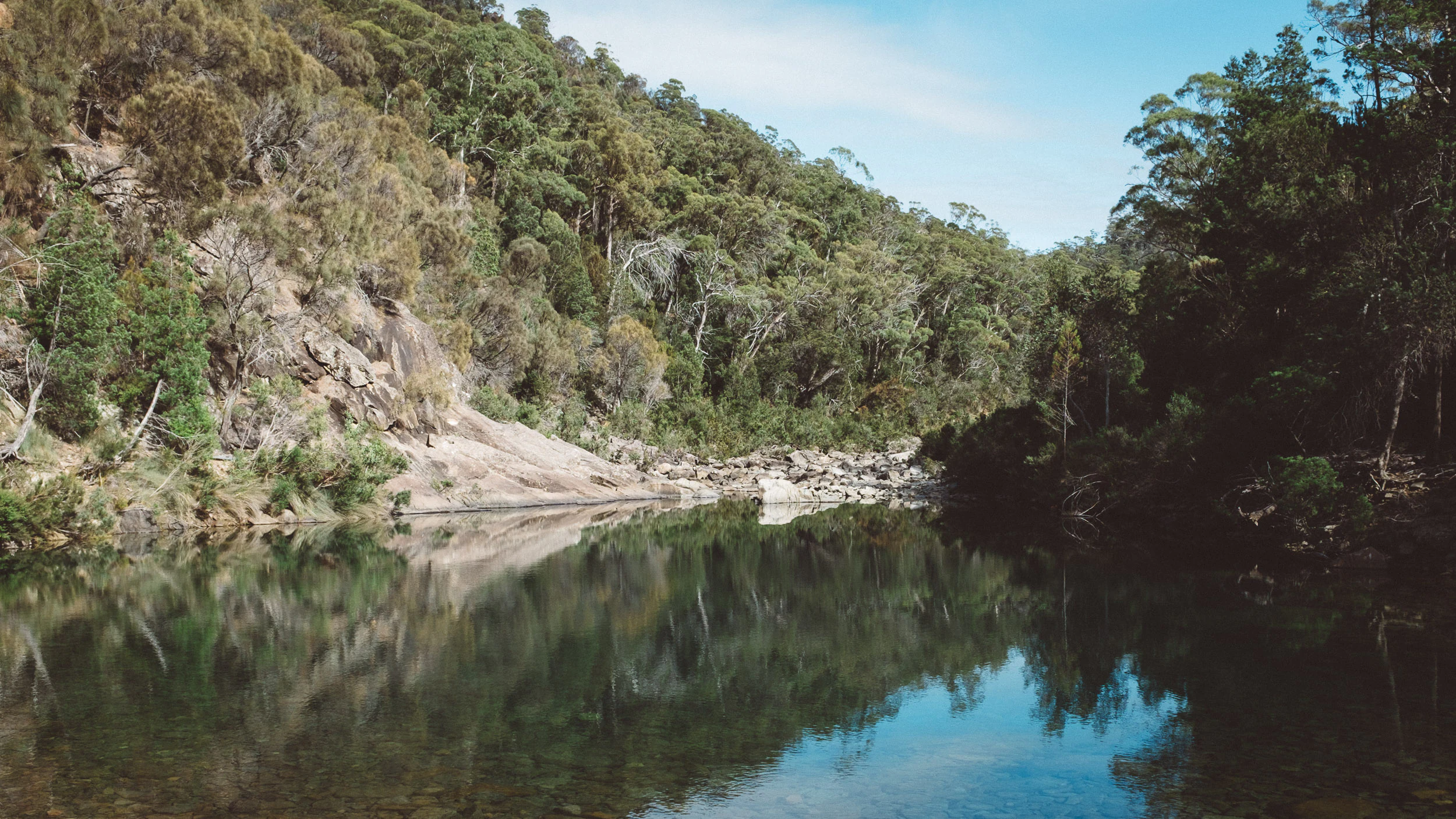
The landscape of Douglas-Apsley National Park is defined by a series of steep ridgelines and deep gorges carved into the ancient geological formations of the east coast. The terrain rises from the valley floors where the Apsley River, Denison Rivulet, and Douglas River flow, creating a complex topography of cliff faces, rock ledges, and cascading water. The dry sclerophyll forest dominates the slopes and ridges, with exposed granite and dolerite outcrops adding visual interest throughout the park. The valley floors support gallery forests along the watercourses, where taller trees and denser vegetation create a contrast with the more open woodland on the ridges. Seasonal wildflower displays transform the understory, particularly in spring and early summer, with displays of purple, yellow, and white flowers providing seasonal color.
Douglas-Apsley National Park ecosystems, habitats, and plant life
The ecological character of Douglas-Apsley centers on its dry sclerophyll forest ecosystem, which supports a distinctive suite of plant and animal species adapted to the relatively drier conditions of Tasmania's east coast. The forest canopy is dominated by various eucalypt species including messmate, stringybark, and Tasmanian peppermint, with an understory that varies from dense shrubland to more open grassy areas depending on aspect and soil conditions. The park's three permanent streams provide critical habitat for aquatic species and maintain riparian zones that support different plant communities than the surrounding slopes. The forest structure provides nesting and foraging habitat for numerous bird species, while the diverse plant community supports invertebrate populations that form the base of the food web. The combination of forest, rock, and water habitats creates a mosaic of environments supporting the park's biodiversity.
Douglas-Apsley National Park wildlife and species highlights
Douglas-Apsley National Park has been identified by BirdLife International as an Important Bird Area, recognizing its exceptional significance for bird conservation. The park supports eleven of Tasmania's endemic bird species, making it a critically important location for birds found nowhere else on Earth. Notable species include the endangered swift parrot, which migrates to the Australian mainland in winter but breeds in Tasmania's eucalypt forests during the warmer months. The flame robin and pink robin add color to the forest understory, while a range of honeyeaters, parrots, and cockatoos exploit the seasonal nectar resources. The park's streams provide habitat for platypus and various fish species, while the forest canopy and ground layer support populations of possums, wallabies, and bandicoots.
Douglas-Apsley National Park conservation status and protection priorities
The protection of Douglas-Apsley National Park represents an important contribution to Tasmania's conservation network, specifically addressing the under-representation of dry forest ecosystems in the protected area system. The park's designation as an Important Bird Area by BirdLife International highlights its global significance for threatened bird species, particularly the swift parrot which is listed as endangered. The dry forest ecosystem has been significantly altered across its former range by clearing for agriculture and forestry, making the relatively intact landscapes within Douglas-Apsley increasingly valuable for biodiversity conservation. The park also protects water catchments that feed into downstream ecosystems, contributing to broader landscape-scale conservation across the east coast region.
Douglas-Apsley National Park cultural meaning and human context
Douglas-Apsley National Park lies within the traditional Country of Tasmanian Aboriginal peoples, who have lived on the island for tens of thousands of years. The park's rivers and forested landscapes would have supported Aboriginal communities through the provision of food, water, and materials for tools and shelters. While the park does not contain widely publicized archaeological sites, the broader Tasmanian landscape holds evidence of Aboriginal occupation throughout the region. European settlement of the east coast brought clearing for agriculture and limited timber extraction, though the dry forests of the Douglas-Apsley area remained relatively intact compared to other regions. The park's establishment in 1989 marked a shift toward recognizing the value of both natural and cultural heritage in conservation planning.
Top sights and standout views in Douglas-Apsley National Park
The deep gorges of the Apsley River, Denison Rivulet, and Douglas River rank among the park's most striking features, offering scenic beauty and opportunities for exploration. The seasonal wildflower displays transform the forest understory, particularly in spring when triggerplants, wattles, and other wildflowers bloom across the park. The network of walking tracks ranges from short easy walks suitable for families to a challenging three-day trek for experienced bushwalkers seeking a deeper wilderness experience. The birdlife, especially the endemic species and the chance to spot swift parrots, flame robins, and pink robins, draws visitors with specific interest in Tasmania's avifauna.
Best time to visit Douglas-Apsley National Park
The park can be visited year-round, though the mild east coast climate makes autumn and spring particularly appealing seasons. Spring brings the most spectacular wildflower displays as the understory bursts into color, while autumn offers comfortable walking conditions and often clear skies. Summer months can be warm but the forest provides shade along the tracks, while winter brings cooler temperatures and potentially muddy conditions on lower-elevation trails. The chance to observe birds is good throughout the year, though swift parrots are most reliably seen during the breeding season from late summer to autumn.