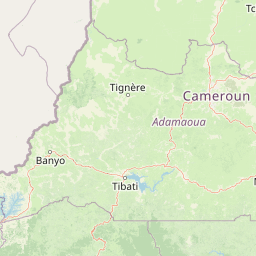
Why Faro National Park stands out
Faro National Park is best known for protecting the largest hippopotamus population in Central and West Africa, a distinction that makes it particularly significant within the regional protected area network. The park also stands out for its diverse large mammal assemblage, which includes African elephants, lions, cheetahs, and black rhinoceros, all of which face conservation challenges across their ranges. The combination of Sudano-Sahelian savanna ecosystems with interspersed forest habitats creates a mosaic landscape that supports this remarkable biodiversity.
Faro National Park history and protected-area timeline
Faro National Park was officially incorporated into Cameroon’s protected area system in 1980 by government decree, with formal establishment as a national park following in 1989. The park was created as part of Cameroon’s commitment to conserving its natural heritage and fulfilling obligations under regional and international conservation frameworks. From its inception, the park was designed to function within a broader Central African protected landscape that transcended national boundaries, linking with Nigeria’s Gashaka Gumti National Park to form a transfrontier conservation area. This strategic alignment reflected growing recognition that effective wildlife conservation required coordinated approaches across jurisdictions, particularly for migratory species and ecosystems that naturally span borders. The governance of the park falls under Cameroon National Parks, the national body responsible for managing the country’s protected area network.
Faro National Park landscape and geographic character
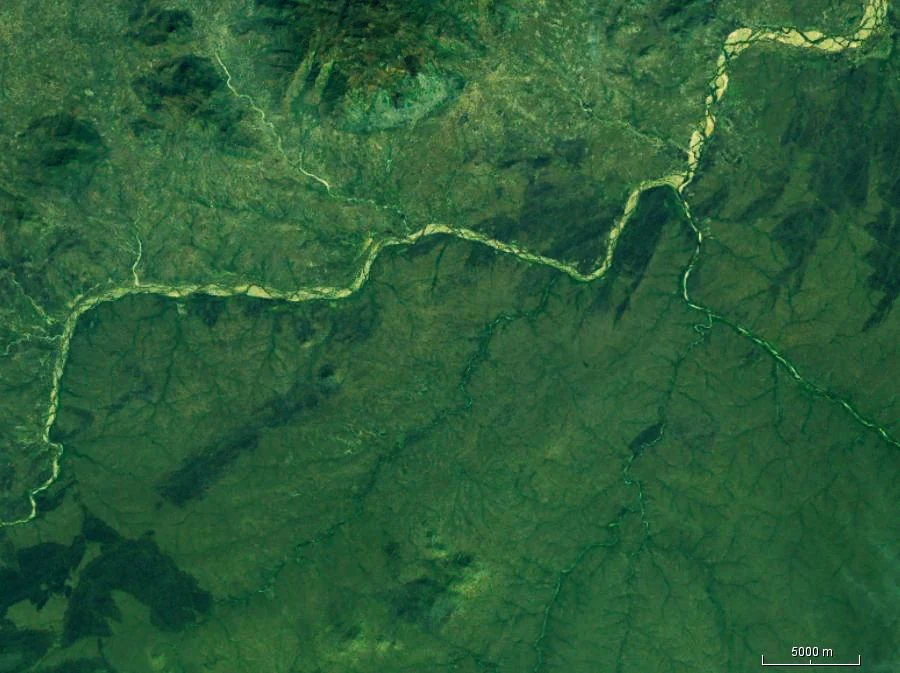
The landscape of Faro National Park is defined by its position within the Sudano-Sahelian transitional zone, where the characteristics of the Sahel meet the more lush Sudanian ecosystems to the south. The terrain consists predominantly of savanna plains with an undulating character, broken by river valleys that carry the Faro and Déo rivers through the protected area. Scattered hilltops rise above the general plain elevation, adding topographic variation to the landscape while the river valleys provide lower-lying corridors with distinct vegetation. The park’s elevation ranges from approximately 250 metres in the valley bottoms to around 700 metres on higher ground, creating a relatively modest but meaningful range of microclimatic conditions. The river systems are seasonally variable, with water levels fluctuating significantly between wet and dry seasons. During the dry season, the rivers recede to expose sandy embankments along their margins, changing the visual character of the landscape and altering available habitat for riverine species. The combination of open savanna, woodland patches, river corridors, and elevated ground creates a heterogeneous landscape that supports diverse ecological communities.
Faro National Park ecosystems, habitats, and plant life
The vegetation of Faro National Park reflects the park’s position within the Sudano-Sahelian transition zone, featuring a mosaic of habitats that varies from south to north. The southern portions of the park support Sudanian savanna woodlands, where taller trees provide canopy cover amid seasonal grasses. Moving northward, the character shifts toward mixed grasslands with more open savanna conditions. Throughout the park, dense deciduous and semi-evergreen forests occur as interspersed patches, particularly in areas with more favourable moisture conditions such as river valleys and lower slopes. This forest vegetation provides critical habitat for species that require more cover than the open savanna offers. The presence of multiple habitat types within a relatively compact area creates ecological diversity that supports a wide range of species. The park’s own microclimate, influenced by the combination of savanna and forest habitats, contributes to the biological richness that distinguishes Faro from more uniform surrounding landscapes.
Faro National Park wildlife and species highlights
Faro National Park is distinguished by its substantial populations of large mammals, making it one of Cameroon’s most significant protected areas for megafauna. The park supports colonies of hippopotamus that represent the largest population of this species in both Central and West Africa, a remarkable concentration that ranks among the park’s most notable ecological features. African elephants traverse the savanna and woodland habitats, while African lions persist as apex predators within the ecosystem. Cheetahs occur in the more open grassland areas, where their speed provides advantage in hunting prey species. Black rhinoceros, though facing severe pressure throughout their range, continue to occupy suitable habitat within the park’s boundaries. These species collectively represent a significant assembly of large mammals that depends on the protected status that Faro provides. The combination of savanna, woodland, and forest habitats creates conditions that support this diverse megafauna community, with different species occupying different habitat niches throughout the park.
Faro National Park conservation status and protection priorities
Faro National Park faces multiple conservation challenges that require ongoing attention and resources. Commercial poaching represents a significant threat to large mammal populations, particularly elephants for ivory and rhinos for their horns, both of which face intense illegal demand. Climate change introduces additional uncertainty, potentially altering the seasonal patterns that wildlife and local communities depend upon. Illegal fishing in the park’s rivers affects aquatic ecosystems and species such as hippopotamus that rely on riverine environments. Mining activities in the surrounding region can create pressure on park boundaries and contribute to habitat degradation. Human-wildlife conflict arises from cross-border livestock rearing, as herders from Nigeria and Cameroon move animals through the region, sometimes entering the park and creating tensions with wildlife. Conservation organisations work collaboratively with the Cameroon government to address these challenges while ensuring that the needs of local communities and Indigenous peoples are incorporated into management approaches.
Top sights and standout views in Faro National Park
Faro National Park protects Central and West Africa’s largest hippopotamus population within a Sudano-Sahelian landscape of savanna, woodland, and river valleys. The park forms part of a transboundary conservation network with Nigeria’s Gashaka Gumti National Park, creating a protected landscape that spans the international border. Large mammals including elephants, lions, cheetahs, and black rhinoceros occupy the park’s varied habitats, making it one of Cameroon’s most significant areas for megafauna conservation.
Best time to visit Faro National Park
The best time to visit Faro National Park falls during the dry season from November to April, when wildlife congregates more visibly around remaining water sources and vegetation is less dense, improving visibility for observation. The landscape character changes noticeably between seasons, with the dry season revealing sandy river embankments as water levels recede while the wet season brings green vegetation and increased water flow through the river systems. Visitors interested in wildlife viewing should consider how seasonal conditions affect both animal distribution and the practicalities of park exploration.