Why Gio National Forest stands out
Gio National Forest is primarily known for its role as a remaining tract of tropical forest in Liberia, a country that has experienced significant deforestation over recent decades. The forest was historically notable for supporting chimpanzee populations, though according to a 2003 study, these populations have either disappeared or now exist only in very small groups. The forest represents an important habitat within Liberia's broader forest estate and serves as a reminder of the region's ecological past.
Gio National Forest history and protected-area timeline
Gio National Forest was established in 1960 during a period when Liberia still retained extensive forest cover across much of its territory. The creation of the protected area reflected early recognition of the need to set aside forest land for conservation purposes, even before the full scale of deforestation pressures became apparent. The forest was designated under IUCN category IV, indicating its primary management focus on maintaining habitats and protecting species populations. Over the decades since its establishment, the forest has faced increasing pressures from surrounding communities seeking land for agriculture, a challenge common to many protected areas in Liberia. The establishment of the forest predates modern integrated conservation approaches and reflects the simpler protected area concepts of the mid-twentieth century.
Gio National Forest landscape and geographic character
The landscape of Gio National Forest consists of tropical forest terrain typical of southeastern Liberia. The area sits at relatively low elevation, approximately 268 meters above sea level, with terrain that is generally undulating rather than mountainous. The forest landscape features the characteristic structure of tropical moist forest, with a canopy layer formed by broadleaf tree species, a diverse understory, and the layered vegetation structure that supports diverse ecological communities. The forest exists within a broader landscape mosaic that includes agricultural lands and settlements, making the protected area a critical island of forest habitat within a partially modified landscape.
Gio National Forest ecosystems, habitats, and plant life
The forest exists within a tropical forest vegetation class and supports the ecological processes characteristic of such environments. The ecosystem provides habitat structure for various species, though the forest's ecological integrity has been affected by surrounding land use pressures. The forest represents what remains of the extensive forest ecosystems that once covered Liberia, a country that has lost significant forest cover to agricultural expansion, logging, and other development pressures. The continued existence of Gio National Forest as a protected area maintains the potential for ecological processes to function within a designated conservation framework, even as the surrounding landscape has been modified.
Gio National Forest wildlife and species highlights
Gio National Forest was historically notable for its chimpanzee populations, with the forest formerly supporting some populations of these primates. However, a study published in 2003 indicated that chimpanzee populations in the forest have either disappeared or now occur only in very small groups, reflecting the broader pattern of wildlife decline across Liberia's forest areas. This loss of chimpanzee populations represents a significant ecological change for the protected area, as chimpanzees are a flagship species for forest conservation in West Africa. The forest likely continues to provide habitat for various other species, though specific documentation of the current wildlife community is limited in the available source material.
Gio National Forest conservation status and protection priorities
Gio National Forest holds importance as one of Liberia's larger remaining forest protected areas, representing a remnant of the country's forest estate in the face of widespread deforestation. The forest is designated under IUCN category IV, which focuses on habitat and species management areas, indicating its conservation purpose. However, the protected area faces significant challenges from agricultural expansion as local communities clear land for farming within the forest boundaries. The decline of chimpanzee populations documented in the 2003 study highlights the conservation challenges facing the forest, where even protected areas have not been immune to the pressures that have reduced wildlife populations across Liberia. The forest's continued protection is important for maintaining forest cover in a country that has experienced substantial environmental change.
Top sights and standout views in Gio National Forest
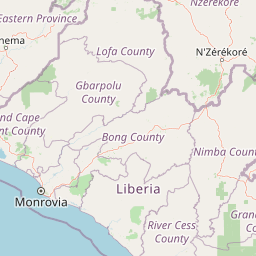
Gio National Forest represents one of the largest forest reserves in Liberia, established in 1960 to protect tropical forest habitat in the country's southeastern region. The forest covers approximately 327 square kilometers in Nimba County and was historically home to chimpanzee populations, though these have likely declined significantly. As an IUCN category IV protected area, the forest is managed for habitat and species conservation purposes. The area faces ongoing pressure from agricultural expansion, threatening its long-term ecological integrity.