Why Khenifiss National Park stands out
Khenifiss National Park is best known for its remarkable ecological diversity, where a coastal lagoon system meets Saharan desert terrain. The Khenfiss lagoon stands as the largest lagoon on the Moroccan coast and serves as a vital bird sanctuary, particularly for migratory waterbirds that winter in significant numbers. The park's landscape encompasses a rare combination of coastal dunes, sabkha salt flats, and limestone plateaus representing typical Sahara ecosystems. Its dual designation as a Ramsar Wetland and Important Bird Area underscores its international importance for biodiversity conservation in a region where such wetlands are scarce.
Khenifiss National Park history and protected-area timeline
The protection history of Khenifiss spans several decades of increasing recognition and institutional development. The area was first designated as a natural reserve in 1960, establishing initial legal protection for its significant coastal and wetland resources. In 1980, the site achieved international recognition through its classification as a wetland of international importance under the Ramsar Convention, formally becoming the Baie de Khnifiss Ramsar site. This designation reflected the area's significance as a bird habitat and wetland ecosystem. Three years later, in 1983, the natural reserve was upgraded to the status of Permanent Biological Reserve, providing enhanced legal protection and institutional framework for resource management. The site's importance was further acknowledged when it was added to UNESCO's World Heritage Tentative List in October 1998 in the natural category. Finally, on September 26, 2006, the area was formally established as Khenifiss National Park, completing its evolution from a protected reserve to a nationally designated park with full IUCN Category II status.
Khenifiss National Park landscape and geographic character
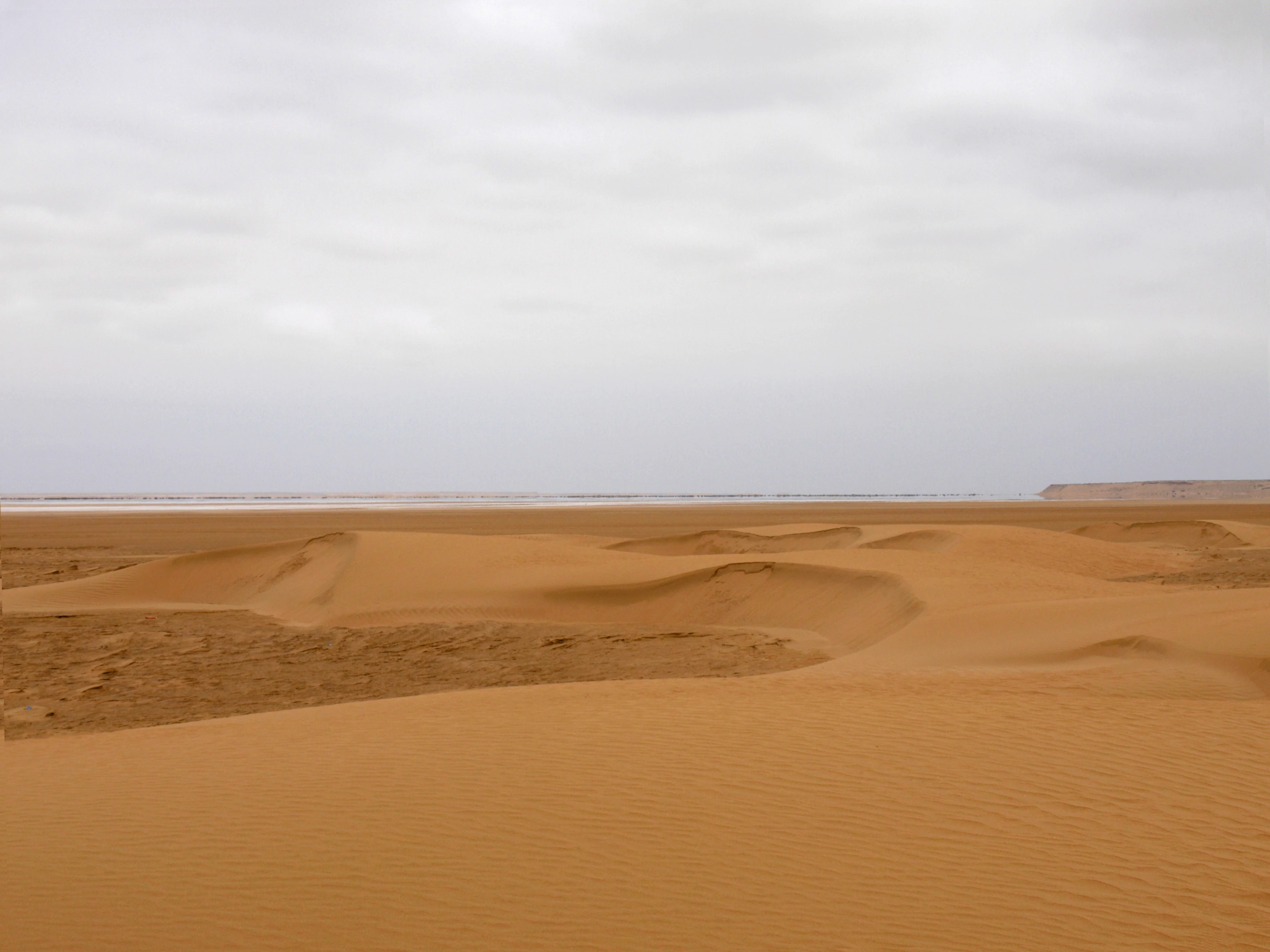
The landscape of Khenifiss National Park encompasses three principal terrain types arranged along a gradient from the Atlantic coast inland. The coastal zone features the prominent Khenfiss lagoon, a substantial tidal lagoon separated from the open ocean by a narrow barrier beach. This lagoon system includes extensive mudflats, salt marshes, and shallow water bodies that create a complex wetland habitat. The lagoon represents the largest lagoon on the Moroccan coast and forms the ecological heart of the park. Moving inland, the terrain transitions through a zone of coastal sand dunes before entering the true desert environment characterized by broad sabkha flats, which are salt-encrusted depressions typical of arid coastal regions. The park's interior also includes areas of limestone plateau that add topographical variation to the desert landscape. This combination of coastal lagoon, dune systems, sabkhas, and plateaus creates a visually diverse landscape where the meeting of sea and desert produces distinctive environmental conditions.
Khenifiss National Park ecosystems, habitats, and plant life
The ecological character of Khenifiss National Park is defined by the interaction between its coastal lagoon system and the surrounding desert environment, creating a biodiversity hotspot in an otherwise arid region. The Khenfiss lagoon supports a rich community of waterbirds throughout the year, with several species maintaining permanent residence in the area. The lagoon provides critical habitat for ruddy shelducks, marbled ducks, and Audouin's gulls, all of which inhabit the area year-round. During the winter months, the lagoon hosts substantial migratory bird populations, with approximately 20,000 birds utilizing the area as a wintering ground. The park has been designated an Important Bird Area by BirdLife International specifically because it supports significant wintering populations of waterbirds. The surrounding desert and coastal dune environments support specialized adapted species suited to arid conditions, creating a stark contrast with the wetland-dependent bird communities of the lagoon. This ecological diversity within a single protected area makes the park particularly valuable for conservation.
Khenifiss National Park wildlife and species highlights
Khenifiss National Park's wildlife significance centers primarily on its avifauna, particularly the waterbird communities associated with the Khenfiss lagoon system. The lagoon provides essential habitat for several bird species that maintain permanent populations within the park, including ruddy shelducks, marbled ducks, and Audouin's gulls. These species have adapted to the lagoon's mix of open water, mudflats, and surrounding wetland vegetation. The park gains particular importance during the winter migration season when substantial numbers of birds arrive to overwinter in the lagoon area. The approximate figure of 20,000 birds spending the winter in the lagoon region reflects the site's regional significance as a migratory bird destination. While the Wikipedia source emphasizes birdlife, the combination of lagoon, coastal, and desert habitats suggests the presence of other wildlife adapted to these environments, though detailed faunal records are limited in the source material.
Khenifiss National Park conservation status and protection priorities
Khenifiss National Park holds significant conservation importance at both national and international levels, with its protected status reflecting multiple layers of recognition. The park's designation as a Ramsar Wetland since 1980 identifies it as a wetland of international importance under the Ramsar Convention, specifically recognizing its value as a bird habitat and wetland ecosystem. BirdLife International has further designated the area as an Important Bird Area, formalizing its significance for supporting significant wintering populations of waterbirds. The park's creation in 2006 with IUCN Category II status reflects Morocco's commitment to maintaining this coastal desert ecosystem as a national park. The combination of Ramsar and IBA designations alongside national park status provides multiple frameworks for conservation protection. The government's stated intention to develop the park as a major ecotourism attraction indicates an approach that seeks to balance conservation with sustainable use, potentially supporting both habitat protection and regional economic development.
Khenifiss National Park cultural meaning and human context
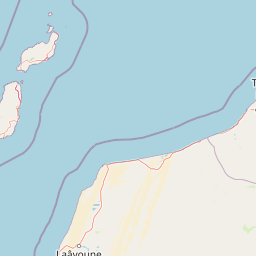
The cultural context of Khenifiss National Park relates to its position in the Laâyoune-Sakia El Hamra region of Morocco, an area with distinct historical and cultural ties to Saharan and Atlantic coastal traditions. The park lies along National Route 1, the main coastal road connecting Moroccan cities along the Atlantic seaboard. The nearby towns of Tan-Tan and Tarfaya represent established settlements with historical connections to maritime activity and trans-Saharan trade routes. The region has been subject to geopolitical considerations related to Western Sahara, with the park situated north of the disputed territory's border. The traditional land use patterns in this coastal desert zone have historically involved small-scale fishing, pastoral activities, and trade, though the specific indigenous or Berber cultural dimensions of the immediate park area are not extensively documented in the available source material.
Top sights and standout views in Khenifiss National Park
Khenifiss National Park's standout features include its unique position as Morocco's largest coastal lagoon system, its role as a critical wintering ground for migratory waterbirds, and its remarkable transition from Atlantic wetland to Sahara desert within a single protected area. The park provides accessible opportunities to observe diverse bird species including flamingos, ruddy shelducks, marbled ducks, and Audouin's gulls in their natural habitat. The landscape itself offers distinctive visual contrast between the blue waters of the lagoon, golden coastal dunes, and the vast Saharan terrain beyond. The park's multiple conservation designations, including Ramsar Wetland and Important Bird Area status, underscore its recognized international importance. The combination of coastal, wetland, and desert environments within easy reach of the main Atlantic coastal road makes this park particularly valuable for visitors seeking to experience Morocco's ecological diversity.
Best time to visit Khenifiss National Park
The best time to visit Khenifiss National Park aligns with the winter months when bird populations reach their peak and the lagoon hosts its maximum number of migratory waterbirds. From approximately November through March, the park experiences its highest bird activity with around 20,000 birds present during the winter season. This period offers optimal wildlife viewing opportunities for observing the various duck species, gulls, and other waterbirds that inhabit the lagoon. The shoulder seasons of spring and autumn may offer more moderate conditions, though the park's desert location means that temperatures can be extreme during summer months. Visitors interested in birdwatching should plan their visit during the winter season to take advantage of the peak migratory bird presence, while those preferring more moderate climate conditions might find the spring and autumn periods preferable for general exploration of the park's landscapes.