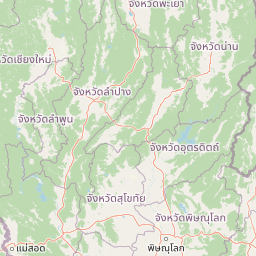
Why Khwae Noi National Park stands out
Khwae Noi National Park is distinguished by its network of multi-tiered waterfalls, including the prominent nine-tiered Namtok Kaeng Pu Ten and five-tiered Namtok Kaeng Suea, alongside the unusual hot waterfall Namtok Pu Daeng Ron. The park's forest composition is particularly notable, combining multiple forest types in a relatively compact mountain landscape, supporting species such as Afzelia xylocarpa, Hopea odorata, and large deciduous timber species. The protected area also preserves habitat for langurs, Asian palm civets, Malayan porcupines, and a documented bird community including the Indochinese roller and white-throated kingfisher.
Khwae Noi National Park history and protected-area timeline
Khwae Noi National Park was originally established under the name Kaeng Chet Kwae National Park, reflecting an earlier designation that centered on one of the park's prominent waterfall areas. Over time, the protected area was expanded and renamed to Khwae Noi National Park to incorporate a broader territory encompassing multiple forest zones and the various scenic features distributed across the mountainous landscape. Since 2002, the park has been administered through Protected Areas Regional Office 11, based in Phitsanulok, which coordinates management across a network of protected areas in the province. This regional management structure replaced earlier arrangements and integrated the park into a coordinated conservation framework covering not only national parks but also wildlife sanctuaries in the surrounding area. The park's evolution reflects a broader Thai approach to expanding and consolidating protected areas to create more ecologically meaningful conservation units that encompass complete watersheds and forest ecosystems.
Khwae Noi National Park landscape and geographic character
The physical landscape of Khwae Noi National Park is characterized by mountainous terrain of considerable complexity, featuring long continuous mountain ridges that create an interlocking pattern of valleys and slopes. The elevation changes within the park produce steep-sided valleys where water cascades have carved distinctive waterfall features. Rocky terrain is interspersed throughout the mountains, with exposed granite and other bedrock creating cliff faces and boulder-strewn sections that add visual diversity to the forest-covered slopes. The waterfall systems represent some of the most visually striking landscape features, ranging from the nine-tiered Namtok Kaeng Pu Ten to the five-tiered Namtok Kaeng Suea and the geothermal-influenced Namtok Pu Daeng Ron hot waterfall. The terrain transitions from higher ridgelines down to valley bottoms where streams form the headwaters of the Khwae Noi river system, creating a vertically structured landscape that supports the diverse forest types found within the park boundaries.
Khwae Noi National Park ecosystems, habitats, and plant life
The ecological character of Khwae Noi National Park is defined by the coexistence of multiple forest types within a relatively compact mountainous area. Mixed deciduous forest dominates many slopes, characterized by species that lose their leaves during the dry season and create a dynamic visual character as the forest transitions through seasonal cycles. Dipterocarp forests occur in areas with more constant moisture, with species like Dipterocarpus alatus and Hopea odorata forming tall canopy layers. Hill evergreen forest persists in areas with higher elevation or more sheltered conditions, while dry evergreen forest occupies specific sites with particular soil moisture characteristics. This forest type diversity creates a complex habitat structure that supports varied wildlife communities. The park's forest zones are managed as distinct units, with reserved forest designations in Wat Bot, Chat Trakan, Nakhon Thai, and Wang Thong districts reflecting the ecological complexity and management requirements of different forest communities within the overall protected area.
Khwae Noi National Park wildlife and species highlights
Khwae Noi National Park supports a range of mammal species typical of Thai forest environments, including several primate species represented by langurs, arboreal mammals such as the Asian palm civet, and ground-dwelling species including Malayan porcupine, barking deer, and wild boar. Macaques and other monkeys are also present within the park boundaries. The bird community has been documented with approximately 18 species, combining both passerine and non-passerine forms. Passerine species include the barn swallow, black-collared starling, black-headed bulbul, brown shrike, chestnut-capped babbler, hair-crested drongo, Indochinese bush lark, paddyfield pipit, taiga flycatcher, and white-rumped munia. Non-passerine birds documented in the park include the black-winged kite, green-billed malkoha, Indochinese roller, little egret, and white-throated kingfisher. Reptiles are represented by the Bengal monitor, a large ground-dwelling lizard species commonly found in forested areas throughout Thailand.
Khwae Noi National Park conservation status and protection priorities
Khwae Noi National Park functions as a protected area of IUCN Category II, representing a national park designation that combines biodiversity conservation with sustainable visitor use. The park's multiple forest types, including rare combinations of dipterocarp, hill evergreen, and dry evergreen formations, represent important conservation values within Thailand's protected area network. The forest parks and reserved forest units within the park boundaries are managed as integrated components of the overall protection framework, with the regional office coordination ensuring consistent conservation approaches. The waterfall systems and mountain landscapes provide tourism and recreation values that support the park's sustainable financing while the forest cover maintains watershed protection functions for downstream communities. The park's location within the Phitsanulok regional protected area network connects it to adjacent wildlife sanctuaries and other national parks, creating a broader conservation landscape that facilitates wildlife movement and ecological connectivity.
Khwae Noi National Park cultural meaning and human context
The name Khwae Noi, meaning 'small tributary' in Thai, reflects the traditional relationship between local communities and the watercourses that flow from the mountain forests. The park spans traditional settlement areas in four districts of Phitsanulok Province, where communities have historically utilized forest resources and water from the mountain streams. The hot waterfall at Namtok Pu Daeng Ron represents a natural feature that has attracted local interest and visitation over generations. While the park does not encompass major archaeological sites or formally designated indigenous territories, the local communities in the surrounding districts maintain connections to the landscape through traditional land use practices and seasonal resource gathering that predate the formal protected area designation.
Top sights and standout views in Khwae Noi National Park
The waterfall network, particularly the nine-tiered Namtok Kaeng Pu Ten and five-tiered Namtok Kaeng Suea, represents the park's most distinctive recreational attraction. The Kaeng Chet Khwae nature trail provides visitor access to forest environments, while the Khwae Noi Bamrung Dan dam and reservoir offers additional recreational opportunities. The forest type diversity, combining mixed deciduous, dipterocarp, hill evergreen, and dry evergreen forests in a relatively compact area, creates a distinctive ecological character. The presence of valuable timber species including Afzelia xylocarpa, Hopea odorata, and Pterocarpus macrocarpus indicates the forest's conservation significance. The hot waterfall provides a unique natural feature not commonly found in Thai national parks.
Best time to visit Khwae Noi National Park
The optimal period for visiting Khwae Noi National Park corresponds to the cool dry season from November through February, when temperatures are more comfortable for hiking and the forest landscape retains its green character. The wet season from May through October brings increased rainfall that can enhance waterfall flow but may make some trails more difficult to navigate. The hot waterfall at Namtok Pu Daeng Ron maintains its appeal year-round due to its geothermal nature. Visitors interested in birdwatching may find the dry season months most productive as bird activity becomes more concentrated around water sources. The park's mountain setting means that temperatures are generally cooler than in the central plains of Thailand, providing a more comfortable environment for outdoor activities during the cooler months.