Why Lopé National Park stands out
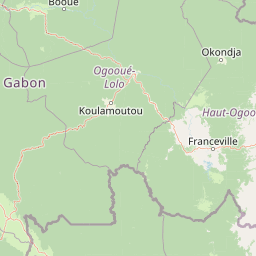
Lopé National Park is best known for its extraordinary ecological transition zone where tropical rainforest meets ancient savanna, a landscape configuration found nowhere else in Central Africa with this degree of preservation. The park contains one of the world's largest concentrations of wild primates, with over 1,000 individuals, including the only significant protected population of the sun-tailed monkey anywhere on Earth. Its forest elephant population reaches seasonal densities of approximately 1.5 elephants per square kilometer in the northern areas, making it among the highest recorded anywhere globally. The park is also renowned for its remarkable archaeological heritage, with over 1,600 petroglyphs (rock carvings) providing evidence of continuous human presence for nearly half a million years, representing one of the longest occupation sequences on the African continent.
Lopé National Park history and protected-area timeline
The history of human occupation in the Lopé region represents one of the most remarkable archaeological narratives in Central Africa, with evidence of continuous or near-continuous human presence stretching back nearly 400,000 years. The Ogooué River Valley has served as a natural corridor between the Atlantic coast and Africa's interior, and archaeological investigations at sites such as Elarmékora have yielded the oldest Stone Age tools currently known on the African continent. During the Neolithic period, approximately 3,500 to 2,000 years ago, Bantu-speaking peoples moving during the great Bantu expansion utilized the valley, leaving behind polished stone axes and pottery fragments that document their passage. The subsequent Iron Age brought significant transformation around 2,000 years ago, with hilltop villages growing in size, iron furnaces appearing near settlements, and agriculture becoming established as a foundation of daily life. It was during this period that the extraordinary rock art tradition emerged, with over 1,600 petroglyphs carved into the landscape, representing spiritual expression and cultural identity that continues to intrigue researchers today. The valley appears to have been abandoned between approximately 600 and 1200 AD before being repopulated by the present-day Okanda people in the 14th and 15th centuries. The modern protected area history began in 1946 when the Lopé-Okanda Wildlife Reserve was established, making it the first protected area in Gabon, and it achieved national park status in 2002 before receiving World Heritage designation in 2007.
Lopé National Park landscape and geographic character
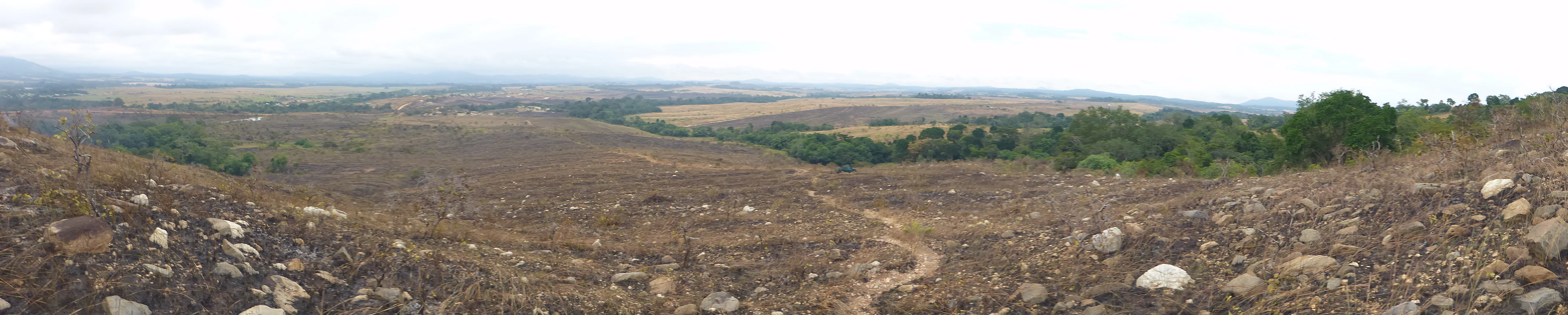
The physical landscape of Lopé National Park is defined by its unique position within a transition zone between major ecological systems, creating terrain of remarkable diversity within a relatively compact area. The park spans the Ogooué River Valley, with the river itself forming a prominent northern boundary and the Chaillu Massif rising to the south, creating a backdrop of ancient crystalline highlands. The terrain is predominantly covered by monsoon forest in the central and southern portions, but the park's most distinctive feature is the savanna that persists in the northern areas, representing the last remnants of grass savannas that once covered much of Central Africa during the last ice age, approximately 15,000 years ago. The park's unusual climate, being in the rain shadow of the Chaillu Massif and experiencing a band of low rainfall along the Ogooué River, has allowed this savanna ecosystem to persist even as forests have expanded elsewhere. The landscape contains a complex mosaic where dense tropical rainforest patches alternate with open savanna grasslands, creating an ecotone of extraordinary ecological richness. River systems and wetlands punctuate this terrain, providing crucial water sources and additional habitat diversity within the broader savanna-forest mosaic.
Lopé National Park ecosystems, habitats, and plant life
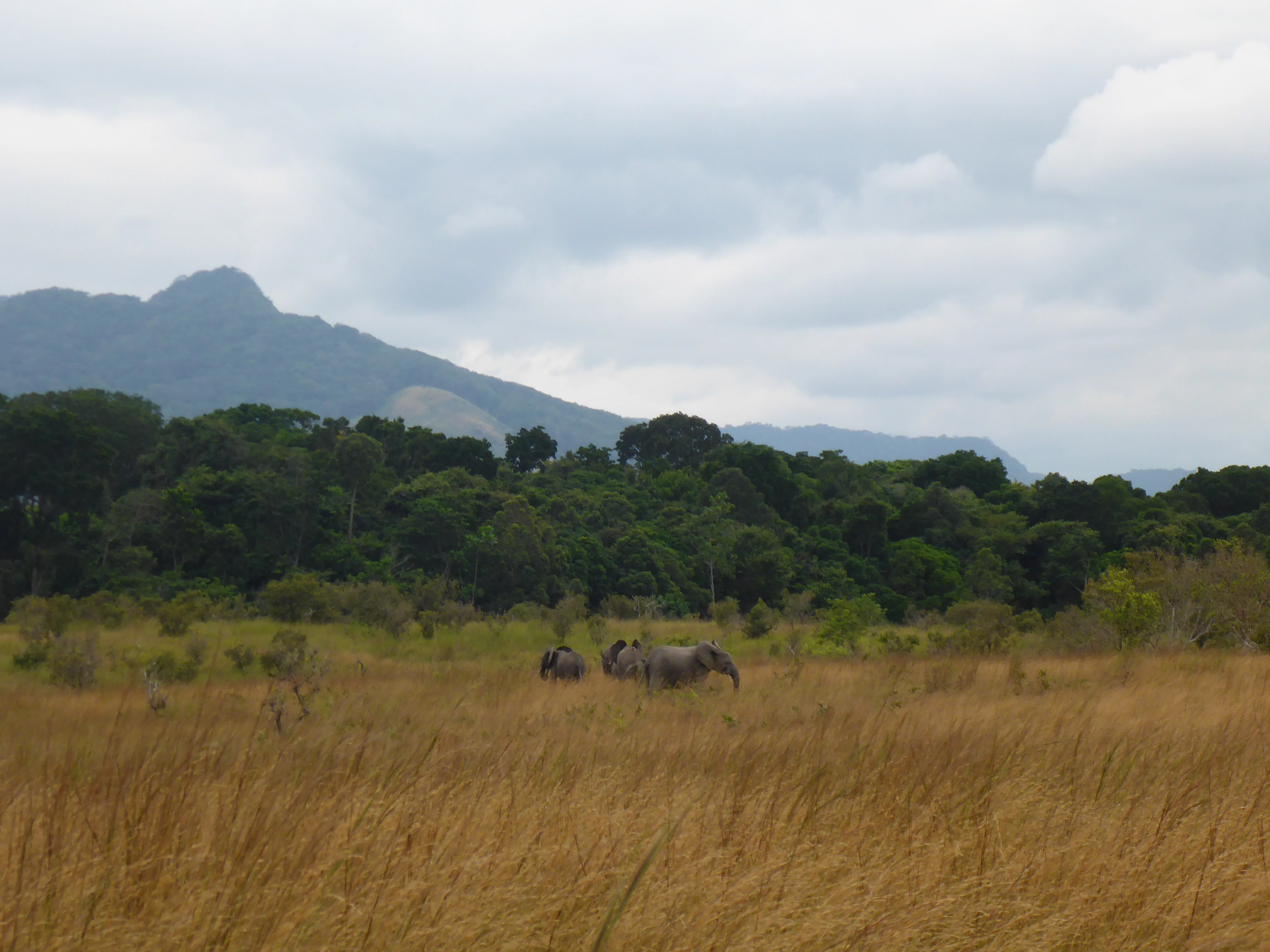
The ecological character of Lopé National Park is defined by its transitional position between the Congo Basin rainforest and Central African savanna ecosystems, creating a biodiversity hotspot of exceptional significance. The complex mosaic of habitats has resulted in unusual biological diversity across many taxonomic groups, with over 1,550 plant species documented within the park boundaries and numerous areas still awaiting comprehensive scientific survey. The park sits in a rain shadow created by the Chaillu Massif, resulting in drier conditions than surrounding Gabon, which has allowed the persistence of the ancient savanna ecosystem that represents a relict landscape from the last glacial period. This ecological boundary has shifted over the millennia since the ice age, with rainforest gradually expanding into savanna areas, though the current dry climate has permitted the savanna ecosystem to maintain its presence in the northern portions of the park. The transition zone between forest and savanna creates distinctive ecological conditions that support species characteristic of both ecosystems, as well as specialist species adapted to the unique environmental gradients found in this transitional landscape.
Lopé National Park wildlife and species highlights
Lopé National Park supports extraordinary wildlife populations that reflect its position as an ecological crossroads between forest and savanna environments. The park contains one of the world's largest concentrations of primates in the wild, with population estimates exceeding 1,000 individuals, including the only significant protected population of the sun-tailed monkey anywhere on Earth, a species found nowhere else in the world. Forest elephant populations in the northern savanna areas reach densities of approximately 1.5 elephants per square kilometer during optimal seasons, ranking among the highest elephant densities documented globally. The park provides critical habitat for leopards and maintains healthy populations of prey species including red river hogs, African forest buffalo, and cane rats that support this apex predator. The mammal fauna also includes both giant pangolin and tree pangolin, species that often share nesting sites with micro bats in the forest canopy. As an Important Bird Area designated by BirdLife International, the park supports significant populations of numerous bird species, contributing to its designation as a critical area for avian conservation. The land snail survey conducted in the park documented 74 species from 12 different families, further illustrating the exceptional biodiversity that extends across even less prominently featured taxonomic groups.
Lopé National Park conservation status and protection priorities
Lopé National Park represents a conservation priority of global significance, recognized both through national protection and international designation as a UNESCO World Heritage Site. The park was Gabon's first protected area when established as the Lopé-Okanda Wildlife Reserve in 1946, and its subsequent designation as a national park in 2002 and World Heritage Site in 2007 reflects the growing understanding of its outstanding universal value. The mixed natural and cultural criteria for World Heritage designation (iii, iv, ix, x) acknowledge both the ecological significance of the forest-savanna transitional ecosystem and the exceptional archaeological heritage that documents nearly 400,000 years of human occupation. Conservation challenges include the impacts of climate change, which is causing the dense forest ecosystem to expand into the savanna areas, leading to loss of habitat diversity. In response, park management has implemented annual controlled burns of the savanna to reduce forest encroachment and maintain the conditions required by savanna-dependent species such as forest buffalo. The park hosts research infrastructure including a research station at Mikongo operated by the Zoological Society London and the CEDAMM Training Centre run by the Wildlife Conservation Society, supporting ongoing scientific research and conservation capacity building.
Lopé National Park cultural meaning and human context
The cultural heritage of Lopé National Park is exceptionally rich, with archaeological evidence demonstrating nearly 400,000 years of continuous or near-continuous human occupation, representing one of the longest documented sequences of human presence on the African continent. The Ogooué River Valley provided a natural migration corridor during the great Bantu expansion, and the region was inhabited by Bantu peoples during the Neolithic period who left polished stone axes and pottery as evidence of their presence. The subsequent Iron Age brought significant cultural development around 2,000 years ago, with larger hilltop villages, iron production, and the emergence of an elaborate rock art tradition that produced over 1,600 petroglyphs carved into the landscape. The present-day Okanda people repopulated the valley in the 14th and 15th centuries, continuing a tradition of cultural connection to this landscape that extends deep into human history. This extraordinary archaeological heritage, combined with the living cultural traditions of the Okanda communities, contributed to the park's World Heritage designation under criteria recognizing cultural landscape values, making it one of the few African protected areas recognized for both natural and cultural significance.
Top sights and standout views in Lopé National Park
Lopé National Park stands as one of Central Africa's most remarkable protected areas, combining extraordinary ecological diversity with incomparable archaeological significance. The park's savanna-forest mosaic represents the last remnants of ancient Central African savanna ecosystems and supports the highest recorded seasonal densities of forest elephants anywhere in the world. Its primate populations include the only significant protected population of the sun-tailed monkey, a species found nowhere else on Earth. The archaeological heritage spans nearly half a million years, with over 1,600 petroglyphs documenting the spiritual and cultural life of past civilizations. As Gabon's first protected area and a UNESCO World Heritage Site, Lopé represents the intersection of ecological preservation and cultural stewardship, where one of Africa's longest human occupation histories meets some of the continent's most significant biodiversity.
Best time to visit Lopé National Park
The optimal time to visit Lopé National Park depends on the specific experience sought, though the dry season typically offers easier wildlife viewing as animals concentrate around remaining water sources. The park's location in the rain shadow of the Chaillu Massif means it experiences less rainfall than surrounding areas of Gabon, creating conditions that support the unusual savanna ecosystem. Visitors interested in observing forest elephants and other wildlife may find the dry season months most productive for sighting opportunities, while the green season offers the chance to see the landscape at its most verdant with the forest and savanna at full vitality. The controlled burns that occur annually are a distinctive management practice that shapes the savanna landscape and may be of interest to those studying conservation approaches in tropical environments. The park's research stations and tourism infrastructure operate year-round, though visitors should check current conditions and plan according to their specific interests in wildlife observation, archaeological sites, or ecological research.