Why Manda National Park stands out
Manda National Park is best known for its role as a savanna protected area in Chad and its designation as an Important Bird Area by BirdLife International. The park was originally established specifically to protect the giant eland, an impressive antelope species that once inhabited the region. While both giant eland and African elephants have disappeared from the park since the 1980s, the area remains significant for its avian diversity, supporting species such as the yellow penduline tit, blackcap babbler, and white-collarded starling. The park's location along the Chari River corridor and its positioning within the Sudanian savanna zone gives it ecological importance for migratory and resident bird populations.
Manda National Park history and protected-area timeline
Manda National Park was originally established as a faunal reserve in 1953, representing early conservation efforts in Chad to protect wildlife populations in the southern regions of the country. The area was formally designated as a national park in 1969, elevating its protection status and formalizing its role within Chad's protected area network. The park's creation was specifically motivated by the need to protect populations of giant eland, a striking and large antelope species that was once present in the savanna landscapes of southern Chad. During the initial decades of protection, the park also supported populations of African elephants, though these animals disappeared from the park by the end of the 1980s, reflecting broader trends of elephant decline across Central African regions. The park's designation as an Important Bird Area by BirdLife International represents a later recognition of its biodiversity value, specifically for bird species that depend on the savanna and associated habitats.
Manda National Park landscape and geographic character
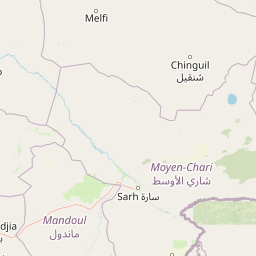
Manda National Park occupies a savanna landscape typical of southern Chad, characterized by expansive grasslands punctuated by scattered trees and woody vegetation. The terrain is generally flat to gently rolling, typical of the Sudanian plateau region. The Chari River forms a prominent feature along the eastern boundary of the park, providing a permanent water source that shapes the local ecology and supports riparian vegetation zones along its banks. The river corridor also creates a contrast with the surrounding savanna, offering more dense vegetation cover that attracts different wildlife species. The park's position near Sarh places it within a region that experiences pronounced seasonal variation, with a distinct wet season producing lush growth and a dry season when vegetation becomes more sparse and wildlife concentrates around remaining water sources. The southwestern boundary along the Sarh-Ndjamena road provides human infrastructure interface with the protected area.
Manda National Park ecosystems, habitats, and plant life
The ecological character of Manda National Park is defined by its position within the Sudanian savanna zone, a region that experiences seasonal rainfall patterns and supports distinctive vegetation communities adapted to these conditions. The savanna ecosystem features a mixture of grass species and deciduous trees, with density varying across the park. The Chari River corridor adds ecological diversity, supporting more lush vegetation and creating habitat conditions that differ from the surrounding savanna. The park's classification as an Important Bird Area by BirdLife International reflects the presence of significant bird communities, with records of multiple species including yellow penduline tit, Senegal eremomela, blackcap babbler, white-collarded starling, bush petronia, rufous cisticola, Gambaga flycatcher, and red-faced pytilia. The riverine areas and savanna habitats together support this avian diversity, though the park has experienced declines in larger mammal species over recent decades.
Manda National Park wildlife and species highlights
Manda National Park supports wildlife populations characteristic of Chad's southern savanna regions. Large mammals present in the park include lions, which are most readily observable during the dry season when they congregate around remaining water sources. African wild dogs are also present, representing a species of conservation concern across their African range. The park was originally established with the specific goal of protecting giant eland populations, making this antelope species particularly significant to the park's identity, though giant eland no longer occur within the park boundaries. African elephants were also present historically but have disappeared from the park since the end of the 1980s. The avian wildlife is notably diverse, with the park's Important Bird Area designation reflecting populations of multiple bird species adapted to savanna and riverine habitats. The seasonal patterns of wildlife visibility, particularly for larger species, reflect the broader savanna ecology where water availability shapes animal movements and concentrations.
Manda National Park conservation status and protection priorities
Manda National Park holds IUCN Category II designation as a national park, representing a significant protected area within Chad's conservation framework. The park's designation as an Important Bird Area by BirdLife International acknowledges its importance for bird conservation at an international scale. The park has experienced notable conservation challenges, with both giant eland and African elephants disappearing from the protected area since the 1980s, reflecting broader pressures on wildlife populations in the region. Despite these losses, the park continues to function as a protected area supporting wildlife including lions, African wild dogs, and diverse bird communities. The protection of the Chari River corridor and savanna habitats provides ongoing conservation value, maintaining habitat for species adapted to these ecosystems.
Manda National Park cultural meaning and human context
Manda National Park is located near Sarh, a regional center in southern Chad. The park's establishment in 1969 reflects modern conservation planning in Chad, with earlier protection beginning in 1953. The landscape has historical connections to traditional land use patterns in the Sudanian zone of Chad, though detailed cultural heritage information specific to the park area is not prominently documented in available sources. The park's location along the Chari River, a major river system flowing through southern Chad, connects to broader regional geography that supports local communities and wildlife alike.
Top sights and standout views in Manda National Park
Manda National Park serves as Chad's Important Bird Area in the Sudanian savanna zone, supporting diverse avian communities along the Chari River corridor. The park was specifically created to protect giant eland, making this historical conservation purpose central to the park's identity. Lions and African wild dogs represent the larger mammal species still present in the park, with visibility best during the dry season. The park's location near Sarh provides access to a major regional center while maintaining protected savanna landscapes. The combination of riverine and savanna habitats creates ecological diversity within a single protected area.
Best time to visit Manda National Park
The best time to observe wildlife at Manda National Park is during the dry season, when animals congregate around remaining water sources including the Chari River. During this period, larger mammals such as lions become more visible and accessible for wildlife observation. The dry season typically runs from November through May in this region, with the hottest months occurring from March to May. The wet season brings lush vegetation but animals become more dispersed across the landscape, making wildlife viewing more challenging. Visitors interested in bird observation may find value in different seasons, though the dry season offers the advantage of concentrated wildlife around water.